RHSA-2015:0795-1: Important: qemu-kvm-rhev security update

Red Hat Enterprise Linux: Updated qemu-kvm-rhev packages that fix one security issue are now
available for Red Hat Enterprise Linux OpenStack Platform 5.0 for Red Hat
Enterprise Linux 7.

Red Hat Product Security has rated this update as having Important security
impact. A Common Vulnerability Scoring System (CVSS) base score, which
gives a detailed severity rating, is available from the CVE link in the
References section.
CVE-2014-8106

RHSA-2015:0794-1: Moderate: krb5 security update

Red Hat Enterprise Linux: Updated krb5 packages that fix multiple security issues are now available
for Red Hat Enterprise Linux 6.

Red Hat Product Security has rated this update as having Moderate security
impact. Common Vulnerability Scoring System (CVSS) base scores, which give
detailed severity ratings, are available for each vulnerability from the
CVE links in the References section.
CVE-2014-5352, CVE-2014-5353, CVE-2014-5355, CVE-2014-9421, CVE-2014-9422

USN-2560-1: Linux kernel vulnerabilities

Ubuntu Security Notice USN-2560-1

8th April, 2015

linux vulnerabilities

A security issue affects these releases of Ubuntu and its
derivatives:

  • Ubuntu 12.04 LTS

Summary

Several security issues were fixed in the kernel.

Software description

  • linux
    – Linux kernel

Details

An integer overflow was discovered in the stack randomization feature of
the Linux kernel on 64 bit platforms. A local attacker could exploit this
flaw to bypass the Address Space Layout Randomization (ASLR) protection
mechanism. (CVE-2015-1593)

An information leak was discovered in the Linux Kernel’s handling of
userspace configuration of the link layer control (LLC). A local user could
exploit this flaw to read data from other sysctl settings. (CVE-2015-2041)

An information leak was discovered in how the Linux kernel handles setting
the Reliable Datagram Sockets (RDS) settings. A local user could exploit
this flaw to read data from other sysctl settings. (CVE-2015-2042)

Update instructions

The problem can be corrected by updating your system to the following
package version:

Ubuntu 12.04 LTS:
linux-image-3.2.0-80-highbank

3.2.0-80.116
linux-image-3.2.0-80-omap

3.2.0-80.116
linux-image-3.2.0-80-generic-pae

3.2.0-80.116
linux-image-3.2.0-80-powerpc64-smp

3.2.0-80.116
linux-image-3.2.0-80-virtual

3.2.0-80.116
linux-image-3.2.0-80-generic

3.2.0-80.116
linux-image-3.2.0-80-powerpc-smp

3.2.0-80.116

To update your system, please follow these instructions:
https://wiki.ubuntu.com/Security/Upgrades.

After a standard system update you need to reboot your computer to make
all the necessary changes.

ATTENTION: Due to an unavoidable ABI change the kernel updates have
been given a new version number, which requires you to recompile and
reinstall all third party kernel modules you might have installed. If
you use linux-restricted-modules, you have to update that package as
well to get modules which work with the new kernel version. Unless you
manually uninstalled the standard kernel metapackages (e.g. linux-generic,
linux-server, linux-powerpc), a standard system upgrade will automatically
perform this as well.

References

CVE-2015-1593,

CVE-2015-2041,

CVE-2015-2042

USN-2561-1: Linux kernel (OMAP4) vulnerabilities

Ubuntu Security Notice USN-2561-1

8th April, 2015

linux-ti-omap4 vulnerabilities

A security issue affects these releases of Ubuntu and its
derivatives:

  • Ubuntu 12.04 LTS

Summary

Several security issues were fixed in the kernel.

Software description

  • linux-ti-omap4
    – Linux kernel for OMAP4

Details

It was discovered that the Linux kernel’s Infiniband subsystem did not
properly sanitize its input parameters while registering memory regions
from userspace. A local user could exploit this flaw to cause a denial of
service (system crash) or to potentially gain administrative privileges.
(CVE-2014-8159)

An integer overflow was discovered in the stack randomization feature of
the Linux kernel on 64 bit platforms. A local attacker could exploit this
flaw to bypass the Address Space Layout Randomization (ASLR) protection
mechanism. (CVE-2015-1593)

An information leak was discovered in the Linux Kernel’s handling of
userspace configuration of the link layer control (LLC). A local user could
exploit this flaw to read data from other sysctl settings. (CVE-2015-2041)

An information leak was discovered in how the Linux kernel handles setting
the Reliable Datagram Sockets (RDS) settings. A local user could exploit
this flaw to read data from other sysctl settings. (CVE-2015-2042)

Update instructions

The problem can be corrected by updating your system to the following
package version:

Ubuntu 12.04 LTS:
linux-image-3.2.0-1462-omap4

3.2.0-1462.82

To update your system, please follow these instructions:
https://wiki.ubuntu.com/Security/Upgrades.

After a standard system update you need to reboot your computer to make
all the necessary changes.

ATTENTION: Due to an unavoidable ABI change the kernel updates have
been given a new version number, which requires you to recompile and
reinstall all third party kernel modules you might have installed. If
you use linux-restricted-modules, you have to update that package as
well to get modules which work with the new kernel version. Unless you
manually uninstalled the standard kernel metapackages (e.g. linux-generic,
linux-server, linux-powerpc), a standard system upgrade will automatically
perform this as well.

References

CVE-2014-8159,

CVE-2015-1593,

CVE-2015-2041,

CVE-2015-2042

USN-2562-1: Linux kernel (Trusty HWE) vulnerabilities

Ubuntu Security Notice USN-2562-1

8th April, 2015

linux-lts-trusty vulnerabilities

A security issue affects these releases of Ubuntu and its
derivatives:

  • Ubuntu 12.04 LTS

Summary

Several security issues were fixed in the kernel.

Software description

  • linux-lts-trusty
    – Linux hardware enablement kernel from Trusty

Details

Sun Baoliang discovered a use after free flaw in the Linux kernel’s SCTP
(Stream Control Transmission Protocol) subsystem during INIT collisions. A
remote attacker could exploit this flaw to cause a denial of service
(system crash) or potentially escalate their privileges on the system.
(CVE-2015-1421)

Marcelo Leitner discovered a flaw in the Linux kernel’s routing of packets
to too many different dsts/too fast. A remote attacker on the same subnet can exploit this
flaw to cause a denial of service (system crash). (CVE-2015-1465)

An integer overflow was discovered in the stack randomization feature of
the Linux kernel on 64 bit platforms. A local attacker could exploit this
flaw to bypass the Address Space Layout Randomization (ASLR) protection
mechanism. (CVE-2015-1593)

An information leak was discovered in the Linux Kernel’s handling of
userspace configuration of the link layer control (LLC). A local user could
exploit this flaw to read data from other sysctl settings. (CVE-2015-2041)

An information leak was discovered in how the Linux kernel handles setting
the Reliable Datagram Sockets (RDS) settings. A local user could exploit
this flaw to read data from other sysctl settings. (CVE-2015-2042)

Update instructions

The problem can be corrected by updating your system to the following
package version:

Ubuntu 12.04 LTS:
linux-image-3.13.0-49-generic

3.13.0-49.81~precise1
linux-image-3.13.0-49-generic-lpae

3.13.0-49.81~precise1

To update your system, please follow these instructions:
https://wiki.ubuntu.com/Security/Upgrades.

After a standard system update you need to reboot your computer to make
all the necessary changes.

ATTENTION: Due to an unavoidable ABI change the kernel updates have
been given a new version number, which requires you to recompile and
reinstall all third party kernel modules you might have installed. If
you use linux-restricted-modules, you have to update that package as
well to get modules which work with the new kernel version. Unless you
manually uninstalled the standard kernel metapackages (e.g. linux-generic,
linux-server, linux-powerpc), a standard system upgrade will automatically
perform this as well.

References

CVE-2015-1421,

CVE-2015-1465,

CVE-2015-1593,

CVE-2015-2041,

CVE-2015-2042

USN-2563-1: Linux kernel vulnerabilities

Ubuntu Security Notice USN-2563-1

8th April, 2015

linux vulnerabilities

A security issue affects these releases of Ubuntu and its
derivatives:

  • Ubuntu 14.04 LTS

Summary

Several security issues were fixed in the kernel.

Software description

  • linux
    – Linux kernel

Details

Sun Baoliang discovered a use after free flaw in the Linux kernel’s SCTP
(Stream Control Transmission Protocol) subsystem during INIT collisions. A
remote attacker could exploit this flaw to cause a denial of service
(system crash) or potentially escalate their privileges on the system.
(CVE-2015-1421)

Marcelo Leitner discovered a flaw in the Linux kernel’s routing of packets
to too many different dsts/too fast. A remote attacker on the same subnet can exploit this
flaw to cause a denial of service (system crash). (CVE-2015-1465)

An integer overflow was discovered in the stack randomization feature of
the Linux kernel on 64 bit platforms. A local attacker could exploit this
flaw to bypass the Address Space Layout Randomization (ASLR) protection
mechanism. (CVE-2015-1593)

An information leak was discovered in the Linux Kernel’s handling of
userspace configuration of the link layer control (LLC). A local user could
exploit this flaw to read data from other sysctl settings. (CVE-2015-2041)

An information leak was discovered in how the Linux kernel handles setting
the Reliable Datagram Sockets (RDS) settings. A local user could exploit
this flaw to read data from other sysctl settings. (CVE-2015-2042)

Update instructions

The problem can be corrected by updating your system to the following
package version:

Ubuntu 14.04 LTS:
linux-image-3.13.0-49-powerpc-e500mc

3.13.0-49.81
linux-image-3.13.0-49-powerpc-e500

3.13.0-49.81
linux-image-3.13.0-49-powerpc-smp

3.13.0-49.81
linux-image-3.13.0-49-powerpc64-smp

3.13.0-49.81
linux-image-3.13.0-49-powerpc64-emb

3.13.0-49.81
linux-image-3.13.0-49-lowlatency

3.13.0-49.81
linux-image-3.13.0-49-generic

3.13.0-49.81
linux-image-3.13.0-49-generic-lpae

3.13.0-49.81

To update your system, please follow these instructions:
https://wiki.ubuntu.com/Security/Upgrades.

After a standard system update you need to reboot your computer to make
all the necessary changes.

ATTENTION: Due to an unavoidable ABI change the kernel updates have
been given a new version number, which requires you to recompile and
reinstall all third party kernel modules you might have installed. If
you use linux-restricted-modules, you have to update that package as
well to get modules which work with the new kernel version. Unless you
manually uninstalled the standard kernel metapackages (e.g. linux-generic,
linux-server, linux-powerpc), a standard system upgrade will automatically
perform this as well.

References

CVE-2015-1421,

CVE-2015-1465,

CVE-2015-1593,

CVE-2015-2041,

CVE-2015-2042

USN-2564-1: Linux kernel (Utopic HWE) vulnerabilities

Ubuntu Security Notice USN-2564-1

9th April, 2015

linux-lts-utopic vulnerabilities

A security issue affects these releases of Ubuntu and its
derivatives:

  • Ubuntu 14.04 LTS

Summary

Several security issues were fixed in the kernel.

Software description

  • linux-lts-utopic
    – Linux hardware enablement kernel from Utopic

Details

An integer overflow was discovered in the stack randomization feature of
the Linux kernel on 64 bit platforms. A local attacker could exploit this
flaw to bypass the Address Space Layout Randomization (ASLR) protection
mechanism. (CVE-2015-1593)

An information leak was discovered in the Linux Kernel’s handling of
userspace configuration of the link layer control (LLC). A local user could
exploit this flaw to read data from other sysctl settings. (CVE-2015-2041)

An information leak was discovered in how the Linux kernel handles setting
the Reliable Datagram Sockets (RDS) settings. A local user could exploit
this flaw to read data from other sysctl settings. (CVE-2015-2042)

Update instructions

The problem can be corrected by updating your system to the following
package version:

Ubuntu 14.04 LTS:
linux-image-3.16.0-34-generic-lpae

3.16.0-34.45~14.04.1
linux-image-3.16.0-34-lowlatency

3.16.0-34.45~14.04.1
linux-image-3.16.0-34-generic

3.16.0-34.45~14.04.1
linux-image-3.16.0-34-powerpc64-emb

3.16.0-34.45~14.04.1
linux-image-3.16.0-34-powerpc-smp

3.16.0-34.45~14.04.1
linux-image-3.16.0-34-powerpc64-smp

3.16.0-34.45~14.04.1
linux-image-3.16.0-34-powerpc-e500mc

3.16.0-34.45~14.04.1

To update your system, please follow these instructions:
https://wiki.ubuntu.com/Security/Upgrades.

After a standard system update you need to reboot your computer to make
all the necessary changes.

ATTENTION: Due to an unavoidable ABI change the kernel updates have
been given a new version number, which requires you to recompile and
reinstall all third party kernel modules you might have installed. If
you use linux-restricted-modules, you have to update that package as
well to get modules which work with the new kernel version. Unless you
manually uninstalled the standard kernel metapackages (e.g. linux-generic,
linux-server, linux-powerpc), a standard system upgrade will automatically
perform this as well.

References

CVE-2015-1593,

CVE-2015-2041,

CVE-2015-2042

USN-2565-1: Linux kernel vulnerabilities

Ubuntu Security Notice USN-2565-1

9th April, 2015

linux vulnerabilities

A security issue affects these releases of Ubuntu and its
derivatives:

  • Ubuntu 14.10

Summary

Several security issues were fixed in the kernel.

Software description

  • linux
    – Linux kernel

Details

An integer overflow was discovered in the stack randomization feature of
the Linux kernel on 64 bit platforms. A local attacker could exploit this
flaw to bypass the Address Space Layout Randomization (ASLR) protection
mechanism. (CVE-2015-1593)

An information leak was discovered in the Linux Kernel’s handling of
userspace configuration of the link layer control (LLC). A local user could
exploit this flaw to read data from other sysctl settings. (CVE-2015-2041)

An information leak was discovered in how the Linux kernel handles setting
the Reliable Datagram Sockets (RDS) settings. A local user could exploit
this flaw to read data from other sysctl settings. (CVE-2015-2042)

Update instructions

The problem can be corrected by updating your system to the following
package version:

Ubuntu 14.10:
linux-image-3.16.0-34-generic-lpae

3.16.0-34.45
linux-image-3.16.0-34-lowlatency

3.16.0-34.45
linux-image-3.16.0-34-generic

3.16.0-34.45
linux-image-3.16.0-34-powerpc64-emb

3.16.0-34.45
linux-image-3.16.0-34-powerpc-smp

3.16.0-34.45
linux-image-3.16.0-34-powerpc64-smp

3.16.0-34.45
linux-image-3.16.0-34-powerpc-e500mc

3.16.0-34.45

To update your system, please follow these instructions:
https://wiki.ubuntu.com/Security/Upgrades.

After a standard system update you need to reboot your computer to make
all the necessary changes.

ATTENTION: Due to an unavoidable ABI change the kernel updates have
been given a new version number, which requires you to recompile and
reinstall all third party kernel modules you might have installed. If
you use linux-restricted-modules, you have to update that package as
well to get modules which work with the new kernel version. Unless you
manually uninstalled the standard kernel metapackages (e.g. linux-generic,
linux-server, linux-powerpc), a standard system upgrade will automatically
perform this as well.

References

CVE-2015-1593,

CVE-2015-2041,

CVE-2015-2042

How to find the best protection for your Android phone? Independent tests.

Recently we told you about malware inside of Google Play and we also alerted you to the resurrection of Simplocker, a dangerous ransomware that has started its second infection wave. Hopefully,  you are convinced that you need to seek a top security application for your Android device. It’s just not safe out there any longer.
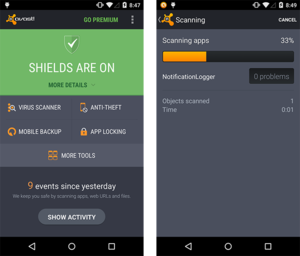
AV-Test of Avast Mobile SecurityHowever, how can you be sure that our security application is doing its job correctly and extensively?

Some people doubt marketing talk on vendor websites, but we know you cannot start testing every apk file or entering the dark side site of Internet just to see if our solution works. That’s why Avast has chosen to submit our products to third party, independent testing labs.

AV-TEST runs Avast Mobile Security through the paces

AV-TEST is a well-known testing laboratory for mobile security. Recently, they tested 31 mobile security products for Android focusing “on malware detection and usability, including performance and false positives”.

They used 2,950 different malware samples and Avast Mobile Security blocked 100% of them. The malware set was a very recent one: malware in the wild in the last 4 weeks.

More?

Avast Mobile Security did not commit any mistake when tested with 1,932 legitimate apps from the Google Play Store and 981 legitimate apps from third party app stores. The better of the two worlds: protection and usability.

In addition, all this protection, according to AV-TEST, did not “impact the battery life”, or “slow down the device during normal usage”, and “does not generate too much traffic”.

Avast Mobile Security earned the AV-TEST certification.

Avast Mobile Security earned the AV-TEST certification.

The testing Lab gives a thumbs up for all the other security features that you can find in Avast Mobile Security:

  • Anti-Theft for remote lock, wipe and locate your lost or stolen device. NOTE: For those of you who do not have automatic update turned on, please do an update ASAP so you can keep Anti-theft working optimally.
  • Call Blocker from specific or unknown numbers and a SMS Filter for unwanted content.
  • Safe Browsing that protects against malicious websites and/or phishing.
  • Backup for personal data on cloud storage.
  • Firewall that allows control over your connection usage over 3G/4G/Wi-Fi/Roaming.
  • Network Meter that gives you easy to understand information about your data plans.

Don’t you want to try it? You can download Avast Mobile Security for free on Google Play.