USN-2678-1: Linux kernel vulnerabilities

Ubuntu Security Notice USN-2678-1

23rd July, 2015

linux vulnerabilities

A security issue affects these releases of Ubuntu and its
derivatives:

  • Ubuntu 12.04 LTS

Summary

Several security issues were fixed in the kernel.

Software description

  • linux
    – Linux kernel

Details

A flaw was discovered in the user space memory copying for the pipe iovecs
in the Linux kernel. An unprivileged local user could exploit this flaw to
cause a denial of service (system crash) or potentially escalate their
privileges. (CVE-2015-1805)

Daniel Borkmann reported a kernel crash in the Linux kernel’s BPF filter
JIT optimization. A local attacker could exploit this flaw to cause a
denial of service (system crash). (CVE-2015-4700)

Update instructions

The problem can be corrected by updating your system to the following
package version:

Ubuntu 12.04 LTS:
linux-image-3.2.0-88-generic-pae

3.2.0-88.126
linux-image-3.2.0-88-powerpc64-smp

3.2.0-88.126
linux-image-3.2.0-88-virtual

3.2.0-88.126
linux-image-3.2.0-88-omap

3.2.0-88.126
linux-image-3.2.0-88-generic

3.2.0-88.126
linux-image-3.2.0-88-powerpc-smp

3.2.0-88.126
linux-image-3.2.0-88-highbank

3.2.0-88.126

To update your system, please follow these instructions:
https://wiki.ubuntu.com/Security/Upgrades.

After a standard system update you need to reboot your computer to make
all the necessary changes.

ATTENTION: Due to an unavoidable ABI change the kernel updates have
been given a new version number, which requires you to recompile and
reinstall all third party kernel modules you might have installed. If
you use linux-restricted-modules, you have to update that package as
well to get modules which work with the new kernel version. Unless you
manually uninstalled the standard kernel metapackages (e.g. linux-generic,
linux-server, linux-powerpc), a standard system upgrade will automatically
perform this as well.

References

CVE-2015-1805,

CVE-2015-4700

USN-2679-1: Linux kernel (OMAP4) vulnerabilities

Ubuntu Security Notice USN-2679-1

23rd July, 2015

linux-ti-omap4 vulnerabilities

A security issue affects these releases of Ubuntu and its
derivatives:

  • Ubuntu 12.04 LTS

Summary

Several security issues were fixed in the kernel.

Software description

  • linux-ti-omap4
    – Linux kernel for OMAP4

Details

A flaw was discovered in the user space memory copying for the pipe iovecs
in the Linux kernel. An unprivileged local user could exploit this flaw to
cause a denial of service (system crash) or potentially escalate their
privileges. (CVE-2015-1805)

Daniel Borkmann reported a kernel crash in the Linux kernel’s BPF filter
JIT optimization. A local attacker could exploit this flaw to cause a
denial of service (system crash). (CVE-2015-4700)

Update instructions

The problem can be corrected by updating your system to the following
package version:

Ubuntu 12.04 LTS:
linux-image-3.2.0-1468-omap4

3.2.0-1468.89

To update your system, please follow these instructions:
https://wiki.ubuntu.com/Security/Upgrades.

After a standard system update you need to reboot your computer to make
all the necessary changes.

ATTENTION: Due to an unavoidable ABI change the kernel updates have
been given a new version number, which requires you to recompile and
reinstall all third party kernel modules you might have installed. If
you use linux-restricted-modules, you have to update that package as
well to get modules which work with the new kernel version. Unless you
manually uninstalled the standard kernel metapackages (e.g. linux-generic,
linux-server, linux-powerpc), a standard system upgrade will automatically
perform this as well.

References

CVE-2015-1805,

CVE-2015-4700

USN-2680-1: Linux kernel (Trusty HWE) vulnerabilities

Ubuntu Security Notice USN-2680-1

23rd July, 2015

linux-lts-trusty vulnerabilities

A security issue affects these releases of Ubuntu and its
derivatives:

  • Ubuntu 12.04 LTS

Summary

Several security issues were fixed in the kernel.

Software description

  • linux-lts-trusty
    – Linux hardware enablement kernel from Trusty

Details

A flaw was discovered in the user space memory copying for the pipe iovecs
in the Linux kernel. An unprivileged local user could exploit this flaw to
cause a denial of service (system crash) or potentially escalate their
privileges. (CVE-2015-1805)

A flaw was discovered in the kvm (kernel virtual machine) subsystem’s
kvm_apic_has_events function. A unprivileged local user could exploit this
flaw to cause a denial of service (system crash). (CVE-2015-4692)

Daniel Borkmann reported a kernel crash in the Linux kernel’s BPF filter
JIT optimization. A local attacker could exploit this flaw to cause a
denial of service (system crash). (CVE-2015-4700)

A flaw was discovered in how the Linux kernel handles invalid UDP
checksums. A remote attacker could exploit this flaw to cause a denial of
service using a flood of UDP packets with invalid checksums.
(CVE-2015-5364)

A flaw was discovered in how the Linux kernel handles invalid UDP
checksums. A remote attacker can cause a denial of service against
applications that use epoll by injecting a single packet with an invalid
checksum. (CVE-2015-5366)

Update instructions

The problem can be corrected by updating your system to the following
package version:

Ubuntu 12.04 LTS:
linux-image-3.13.0-58-generic

3.13.0-58.97~precise1
linux-image-3.13.0-58-generic-lpae

3.13.0-58.97~precise1

To update your system, please follow these instructions:
https://wiki.ubuntu.com/Security/Upgrades.

After a standard system update you need to reboot your computer to make
all the necessary changes.

ATTENTION: Due to an unavoidable ABI change the kernel updates have
been given a new version number, which requires you to recompile and
reinstall all third party kernel modules you might have installed. If
you use linux-restricted-modules, you have to update that package as
well to get modules which work with the new kernel version. Unless you
manually uninstalled the standard kernel metapackages (e.g. linux-generic,
linux-server, linux-powerpc), a standard system upgrade will automatically
perform this as well.

References

CVE-2015-1805,

CVE-2015-4692,

CVE-2015-4700,

CVE-2015-5364,

CVE-2015-5366

USN-2681-1: Linux kernel vulnerabilities

Ubuntu Security Notice USN-2681-1

23rd July, 2015

linux vulnerabilities

A security issue affects these releases of Ubuntu and its
derivatives:

  • Ubuntu 14.04 LTS

Summary

Several security issues were fixed in the kernel.

Software description

  • linux
    – Linux kernel

Details

A flaw was discovered in the user space memory copying for the pipe iovecs
in the Linux kernel. An unprivileged local user could exploit this flaw to
cause a denial of service (system crash) or potentially escalate their
privileges. (CVE-2015-1805)

A flaw was discovered in the kvm (kernel virtual machine) subsystem’s
kvm_apic_has_events function. A unprivileged local user could exploit this
flaw to cause a denial of service (system crash). (CVE-2015-4692)

Daniel Borkmann reported a kernel crash in the Linux kernel’s BPF filter
JIT optimization. A local attacker could exploit this flaw to cause a
denial of service (system crash). (CVE-2015-4700)

A flaw was discovered in how the Linux kernel handles invalid UDP
checksums. A remote attacker could exploit this flaw to cause a denial of
service using a flood of UDP packets with invalid checksums.
(CVE-2015-5364)

A flaw was discovered in how the Linux kernel handles invalid UDP
checksums. A remote attacker can cause a denial of service against
applications that use epoll by injecting a single packet with an invalid
checksum. (CVE-2015-5366)

Update instructions

The problem can be corrected by updating your system to the following
package version:

Ubuntu 14.04 LTS:
linux-image-3.13.0-58-powerpc64-smp

3.13.0-58.97
linux-image-3.13.0-58-powerpc-e500

3.13.0-58.97
linux-image-3.13.0-58-generic

3.13.0-58.97
linux-image-3.13.0-58-powerpc-smp

3.13.0-58.97
linux-image-3.13.0-58-powerpc64-emb

3.13.0-58.97
linux-image-3.13.0-58-generic-lpae

3.13.0-58.97
linux-image-3.13.0-58-lowlatency

3.13.0-58.97
linux-image-3.13.0-58-powerpc-e500mc

3.13.0-58.97

To update your system, please follow these instructions:
https://wiki.ubuntu.com/Security/Upgrades.

After a standard system update you need to reboot your computer to make
all the necessary changes.

ATTENTION: Due to an unavoidable ABI change the kernel updates have
been given a new version number, which requires you to recompile and
reinstall all third party kernel modules you might have installed. If
you use linux-restricted-modules, you have to update that package as
well to get modules which work with the new kernel version. Unless you
manually uninstalled the standard kernel metapackages (e.g. linux-generic,
linux-server, linux-powerpc), a standard system upgrade will automatically
perform this as well.

References

CVE-2015-1805,

CVE-2015-4692,

CVE-2015-4700,

CVE-2015-5364,

CVE-2015-5366

USN-2682-1: Linux kernel (Utopic HWE) vulnerabilities

Ubuntu Security Notice USN-2682-1

23rd July, 2015

linux-lts-utopic vulnerabilities

A security issue affects these releases of Ubuntu and its
derivatives:

  • Ubuntu 14.04 LTS

Summary

Several security issues were fixed in the kernel.

Software description

  • linux-lts-utopic
    – Linux hardware enablement kernel from Utopic

Details

A flaw was discovered in the kvm (kernel virtual machine) subsystem’s
kvm_apic_has_events function. A unprivileged local user could exploit this
flaw to cause a denial of service (system crash). (CVE-2015-4692)

A flaw was discovered in how the Linux kernel handles invalid UDP
checksums. A remote attacker could exploit this flaw to cause a denial of
service using a flood of UDP packets with invalid checksums.
(CVE-2015-5364)

A flaw was discovered in how the Linux kernel handles invalid UDP
checksums. A remote attacker can cause a denial of service against
applications that use epoll by injecting a single packet with an invalid
checksum. (CVE-2015-5366)

Update instructions

The problem can be corrected by updating your system to the following
package version:

Ubuntu 14.04 LTS:
linux-image-3.16.0-44-generic-lpae

3.16.0-44.59~14.04.1
linux-image-3.16.0-44-lowlatency

3.16.0-44.59~14.04.1
linux-image-3.16.0-44-powerpc-e500mc

3.16.0-44.59~14.04.1
linux-image-3.16.0-44-powerpc64-emb

3.16.0-44.59~14.04.1
linux-image-3.16.0-44-powerpc64-smp

3.16.0-44.59~14.04.1
linux-image-3.16.0-44-generic

3.16.0-44.59~14.04.1
linux-image-3.16.0-44-powerpc-smp

3.16.0-44.59~14.04.1

To update your system, please follow these instructions:
https://wiki.ubuntu.com/Security/Upgrades.

After a standard system update you need to reboot your computer to make
all the necessary changes.

ATTENTION: Due to an unavoidable ABI change the kernel updates have
been given a new version number, which requires you to recompile and
reinstall all third party kernel modules you might have installed. If
you use linux-restricted-modules, you have to update that package as
well to get modules which work with the new kernel version. Unless you
manually uninstalled the standard kernel metapackages (e.g. linux-generic,
linux-server, linux-powerpc), a standard system upgrade will automatically
perform this as well.

References

CVE-2015-4692,

CVE-2015-5364,

CVE-2015-5366

USN-2683-1: Linux kernel (Vivid HWE) vulnerabilities

Ubuntu Security Notice USN-2683-1

23rd July, 2015

linux-lts-vivid vulnerabilities

A security issue affects these releases of Ubuntu and its
derivatives:

  • Ubuntu 14.04 LTS

Summary

Several security issues were fixed in the kernel.

Software description

  • linux-lts-vivid
    – Linux hardware enablement kernel from Vivid

Details

A flaw was discovered in the kvm (kernel virtual machine) subsystem’s
kvm_apic_has_events function. A unprivileged local user could exploit this
flaw to cause a denial of service (system crash). (CVE-2015-4692)

Daniel Borkmann reported a kernel crash in the Linux kernel’s BPF filter
JIT optimization. A local attacker could exploit this flaw to cause a
denial of service (system crash). (CVE-2015-4700)

A flaw was discovered in how the Linux kernel handles invalid UDP
checksums. A remote attacker could exploit this flaw to cause a denial of
service using a flood of UDP packets with invalid checksums.
(CVE-2015-5364)

A flaw was discovered in how the Linux kernel handles invalid UDP
checksums. A remote attacker can cause a denial of service against
applications that use epoll by injecting a single packet with an invalid
checksum. (CVE-2015-5366)

Update instructions

The problem can be corrected by updating your system to the following
package version:

Ubuntu 14.04 LTS:
linux-image-3.19.0-23-powerpc64-smp

3.19.0-23.24~14.04.1
linux-image-3.19.0-23-generic

3.19.0-23.24~14.04.1
linux-image-3.19.0-23-powerpc-smp

3.19.0-23.24~14.04.1
linux-image-3.19.0-23-powerpc64-emb

3.19.0-23.24~14.04.1
linux-image-3.19.0-23-generic-lpae

3.19.0-23.24~14.04.1
linux-image-3.19.0-23-lowlatency

3.19.0-23.24~14.04.1
linux-image-3.19.0-23-powerpc-e500mc

3.19.0-23.24~14.04.1

To update your system, please follow these instructions:
https://wiki.ubuntu.com/Security/Upgrades.

After a standard system update you need to reboot your computer to make
all the necessary changes.

ATTENTION: Due to an unavoidable ABI change the kernel updates have
been given a new version number, which requires you to recompile and
reinstall all third party kernel modules you might have installed. If
you use linux-restricted-modules, you have to update that package as
well to get modules which work with the new kernel version. Unless you
manually uninstalled the standard kernel metapackages (e.g. linux-generic,
linux-server, linux-powerpc), a standard system upgrade will automatically
perform this as well.

References

CVE-2015-4692,

CVE-2015-4700,

CVE-2015-5364,

CVE-2015-5366

USN-2684-1: Linux kernel vulnerabilities

Ubuntu Security Notice USN-2684-1

23rd July, 2015

linux vulnerabilities

A security issue affects these releases of Ubuntu and its
derivatives:

  • Ubuntu 15.04

Summary

Several security issues were fixed in the kernel.

Software description

  • linux
    – Linux kernel

Details

A flaw was discovered in the kvm (kernel virtual machine) subsystem’s
kvm_apic_has_events function. A unprivileged local user could exploit this
flaw to cause a denial of service (system crash). (CVE-2015-4692)

Daniel Borkmann reported a kernel crash in the Linux kernel’s BPF filter
JIT optimization. A local attacker could exploit this flaw to cause a
denial of service (system crash). (CVE-2015-4700)

A flaw was discovered in how the Linux kernel handles invalid UDP
checksums. A remote attacker could exploit this flaw to cause a denial of
service using a flood of UDP packets with invalid checksums.
(CVE-2015-5364)

A flaw was discovered in how the Linux kernel handles invalid UDP
checksums. A remote attacker can cause a denial of service against
applications that use epoll by injecting a single packet with an invalid
checksum. (CVE-2015-5366)

Update instructions

The problem can be corrected by updating your system to the following
package version:

Ubuntu 15.04:
linux-image-3.19.0-23-powerpc64-smp

3.19.0-23.24
linux-image-3.19.0-23-generic

3.19.0-23.24
linux-image-3.19.0-23-powerpc64-emb

3.19.0-23.24
linux-image-3.19.0-23-powerpc-smp

3.19.0-23.24
linux-image-3.19.0-23-generic-lpae

3.19.0-23.24
linux-image-3.19.0-23-lowlatency

3.19.0-23.24
linux-image-3.19.0-23-powerpc-e500mc

3.19.0-23.24

To update your system, please follow these instructions:
https://wiki.ubuntu.com/Security/Upgrades.

After a standard system update you need to reboot your computer to make
all the necessary changes.

ATTENTION: Due to an unavoidable ABI change the kernel updates have
been given a new version number, which requires you to recompile and
reinstall all third party kernel modules you might have installed. If
you use linux-restricted-modules, you have to update that package as
well to get modules which work with the new kernel version. Unless you
manually uninstalled the standard kernel metapackages (e.g. linux-generic,
linux-server, linux-powerpc), a standard system upgrade will automatically
perform this as well.

References

CVE-2015-4692,

CVE-2015-4700,

CVE-2015-5364,

CVE-2015-5366

New Study: 10 Out of 10 Smartwatches Vulnerable

A new study on the Internet of Things with focus on smartwatches released by HP revealed that of 10 smartwatches that were tested, all contain significant vulnerabilities and are a “risk that goes beyond the device”.

So what exactly are we talking about? According to the study (PDF) “the results of the research were disappointing, but not surprising.” There are deficiencies when it comes to authentication and authorization, privacy concerns, and problems with the implementation of SSL/TSL.

Their key takeaways are as following:

  • “Data collected initially on the watch and passed through to an application is often sent to multiple backend destinations (often including third parties)
  • Watches that include cloud interfaces often employed weak password schemes, making them more susceptible to attack
  • Watch communications are trivially intercepted in 90% of cases
  • Seventy percent of watch firmware was transmitted without encryption
  • Fifty percent of tested devices offered the ability to implement a screen lock (PIN or Pattern), which could hinder access if lost or stolen
  • Smartwatches that included a mobile application with authentication allowed unrestricted account enumeration
  • The combination of account enumeration, weak passwords, and lack of account lockout means 30% of watches and their applications were vulnerable to Account Harvesting, allowing attackers to guess login credentials and gain access to user account”

So yes, it’s basically the same cycle as with most of the ‘newer’ tech gadgets. They get released, there is a big hype, but security becomes only important after lots and lots of reports on hacks, vulnerabilities, and the inevitable bad press. Think nothing of it guys, everything is just the way it always was …

The post New Study: 10 Out of 10 Smartwatches Vulnerable appeared first on Avira Blog.

Can hackers get under the hood of your car?

Driving under the influence of alcohol or texting while driving is still a bigger risk to your safety on the road, but the hacking experiments conducted on technology-heavy cars might be an indicator of break-downs to come.

Security researchers have proven that modern cars can be hacked.

Security researchers have proven that modern cars can be hacked.

Two security engineers proved that a car is not just a transportation device to get from point A to point B, but a vulnerable combination of individual software systems that can be hacked.

Back in 2013, Charlie Miller and Chris Valasek hacked a 2010 Ford Escape and a Toyota Prius. The two researchers demonstrated the ability to send commands from their laptop that did things like jerk the steering wheel, give false readings on the speedometer and odometer, sound the horn continuously, and slam on the brakes while going down the road.

They have done it again, this time with a 2014 Jeep Grand Cherokee.

When the hackers first did their experiment, they hardwired their MacBook directly into the vehicle. This year, they’ve gone wireless, breaking into a few of the 50 vulnerable attack points available to them.

Wired reporter Andy Greenberg acted as Miller and Valasek’s crash test dummy, as he did in the original demonstration. As he was driving the Jeep Cherokee at 70 mph down the interstate, the two hackers sat miles away in Miller’s basement and bombarded Greenberg with multiple attention diverting events at once. The air conditioner blasted cold air, the radio station changed and played at full volume, the windshield wipers came on and blinded his view with wiper fluid.

But it wasn’t only distracting annoyances that the hackers threw at Greenberg. The scary part started when they remotely cut the transmission. Remember, at the time he was driving down the interstate at 70 mph. The Jeep quickly lost speed and slowed to a snail-like crawl. On a busy interstate with zooming cars and an 18-wheeler closing in, you can imagine the fright that Greenberg felt.

Cybersecurity in the auto industry

At the Center for Automotive Research conference this year, it was acknowledged that almost every automaker in the U.S. has a connected “telematics” service, like GM’s OnStar, Ford SYNC, Chrysler’s Uconnect, and BMW Assist. The panelists said that these services are the first point of attack for hackers, and can be used as a springboard to gain access to the owner’s personal data. Because connected vehicles include easy access to smartphone and onboard apps, the driver’s credit cards, bank accounts, or other financial information could be accessed through the cloud. It’s also possible to access location data, vehicle locator, travel direction, and cell phone number.

The security risks presented by Miller and Valasek in 2013 got the attention of U.S. Senators Edward Markey and Richard Blumenthal. This past Tuesday they introduced legislation that would establish federal standards to secure our cars and protect drivers privacy.

 Do drivers need to worry about their vehicle getting hacked?

Drivers don’t need to get worried yet. Besides thieves opening car doors with wireless hacks as we described in Mr. Robot Review: da3m0ns.mp4, only one malicious car hacking attack has been documented. In February 2010, a disgruntled employee hacked a fleet with more than 100 cars in Austin, Texas. He infiltrated their web-based vehicle-immobilization systems and essentially “bricked” their vehicles and caused the horns to blast uncontrollably.

How to protect your car from being hacked

  • Think of your vehicle not as a simple car anymore, but a sophisticated device like your mobile phone. Familiarize yourself with the new electronic control units. These days that includes the lighting system, the engine and transmission, steering and braking, vehicle access system, and airbags.
  • Apply updates and patches when your car manufacturer issues them. For example, Chrysler just notified owners of vehicles with the Uconnect feature that a software update is available.
  • If you use services like OnStar, GM’s auto security & information service, don’t leave your documents or password in the car for a thief to find.
  • If you use your car as a Wi-Fi hotspot, use a strong password to protect it.

Follow Avast on FacebookTwitterYouTube, and Google+ where we keep you updated on cybersecurity news every day.


How one IT guy gained control of 500 devices with Avast for Business

The rule of thumb for managing devices is one IT Administrator for every 100 computers or devices. Five hundred is difficult to manage for an entire IT department, let alone one IT Administrator. But, Gary Myers is up to the task.

The Avast team caught up with Myers recently to see what he thinks about the new Avast for Business product. “They say you should have one person for every 100 devices so it’s definitely a challenge.”

Gary explained how he chose new Avast for Business as his security solution. “I’ve been using Avast for a long, long time, so when I saw that there was a new business product, I knew I should give it a try.” Myers says that Avast is a step above the rest and he switched to Avast for Business because he wanted the new features of the cloud-based product.

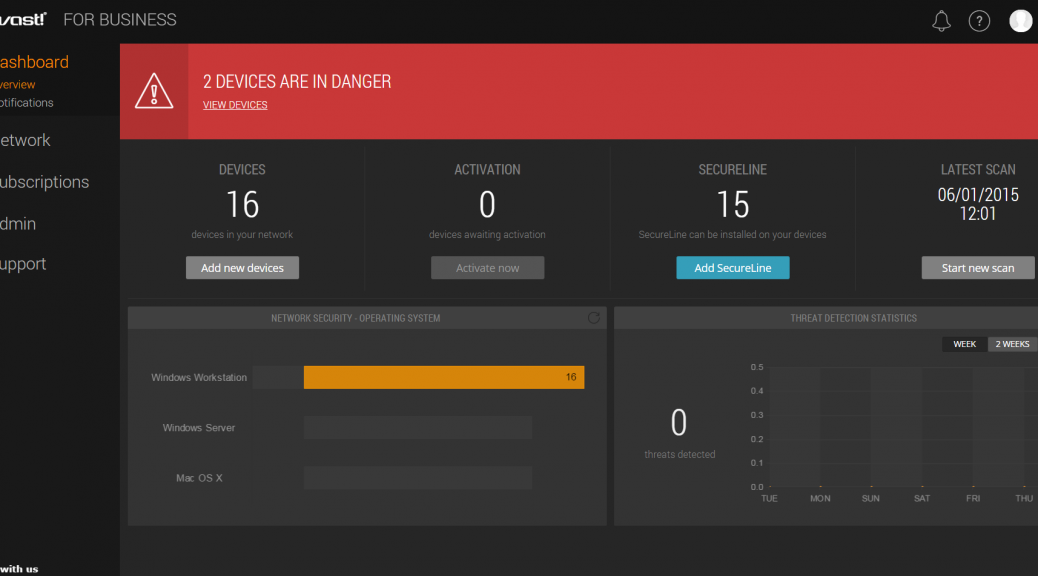
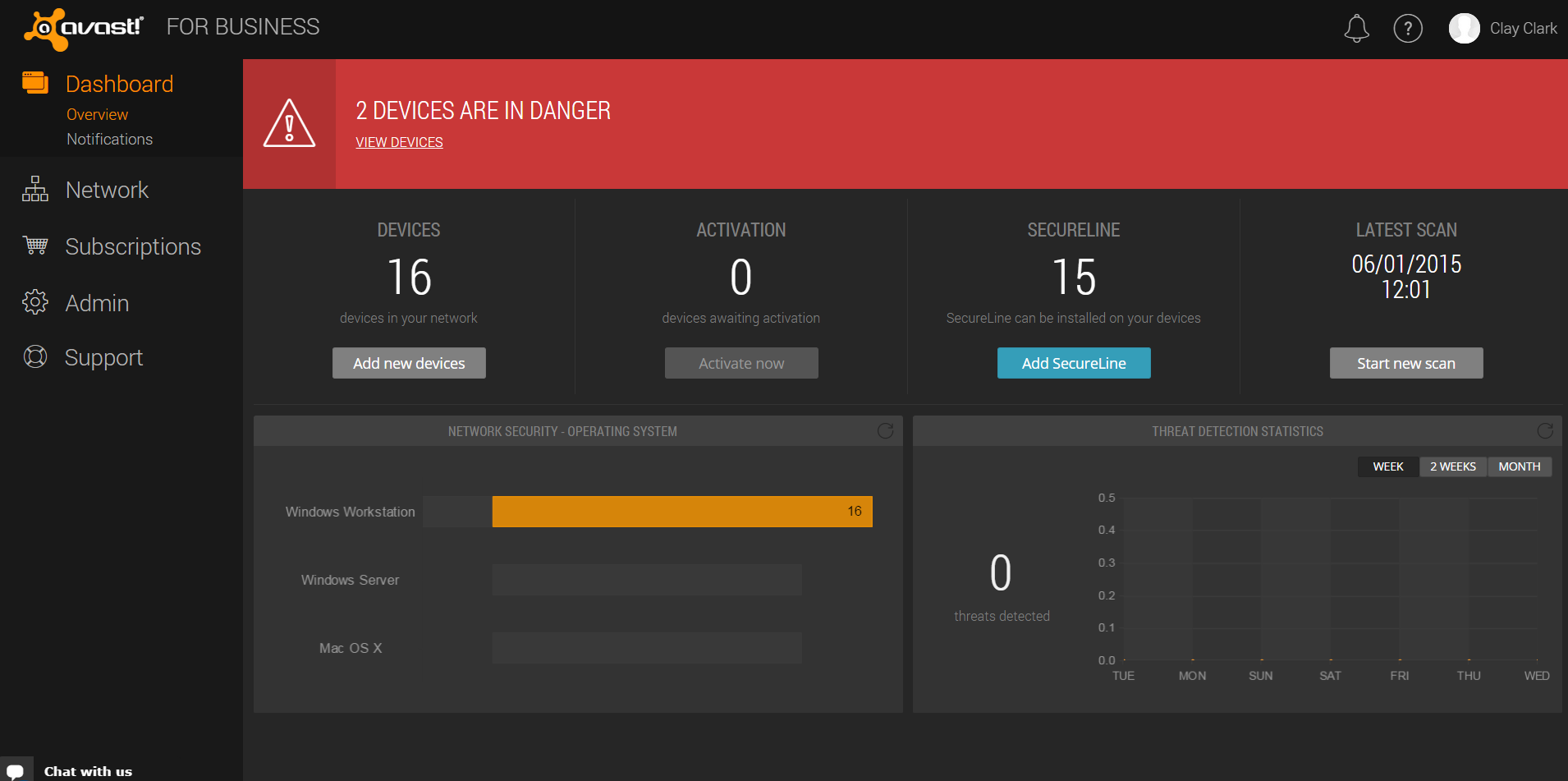
Avast for Business web console

Our easy-to-use Web console lets you see and manage devices, reports, and alerts from anywhere.

Myers said the upside of the new cloud-managed antivirus is obvious. “I’m seeing advantages with the software being cloud-based. The web-console allows me to see everything I need to see at once and everything is up-to-date.”

Streamed updates and the cloud-managed console certainly make life easier for an IT administrator that manages as many devices as Myers.

Budget is often a huge factor when IT professionals purchase antivirus software but for Myers, the free product “works, and it’s low overhead.”

Avast for Business is completely free forever – which makes it the ultimate cost-cutting, money saver.

Sign up for Avast for Business and save money and time for your company.