This paper is about the work involved in modifying firmware images with the test case focused on Cisco IOS. It will show how it is a common misconception that doing such a thing involves advanced knowledge or nation state level resources. This paper provides sound methodologies, shows how to approach the subject, and walks the reader through the entire process while providing the necessary knowledge so that by the end of the paper, if the reader is to follow it completely through, they will have a basic but functional firmware rootkit.
Monthly Archives: October 2015
Obama Won't Seek Encryption Backdoor Legislation
Netgear Router Exploited Detected
In A First, Chinese Hackers Are Arrested At Behest Of US Government
HP SiteScope DNS Tool Command Injection
This Metasploit module exploits a command injection vulnerability discovered in HP SiteScope 11.30 and earlier versions (tested in 11.26 and 11.30). The vulnerability exists in the DNS Tool allowing an attacker to execute arbitrary commands in the context of the service. By default, HP SiteScope installs and runs as SYSTEM in Windows and does not require authentication. This vulnerability only exists on the Windows version. The Linux version is unaffected.
Belkin N300 Wifi N Router F9K1010 Arbitrary File Disclosure
Belkin N300 Wifi N Router F9K1010 suffers from an arbitrary file disclosure vulnerability.
Debian Security Advisory 3371-1
Debian Linux Security Advisory 3371-1 – Frediano Ziglio of Red Hat discovered several vulnerabilities in spice, a SPICE protocol client and server library. A malicious guest can exploit these flaws to cause a denial of service (QEMU process crash), execute arbitrary code on the host with the privileges of the hosting QEMU process or read and write arbitrary memory locations on the host.
More malware found on third party app stores
As Google Play tightens their security measures on mobile apps, hackers are moving to third party app stores. Fake apps imitating popular apps were found on the Windows Phone Store earlier this week. Now a new batch of infected Android apps imitating the real deal have been found on unofficial third-party Android app stores.
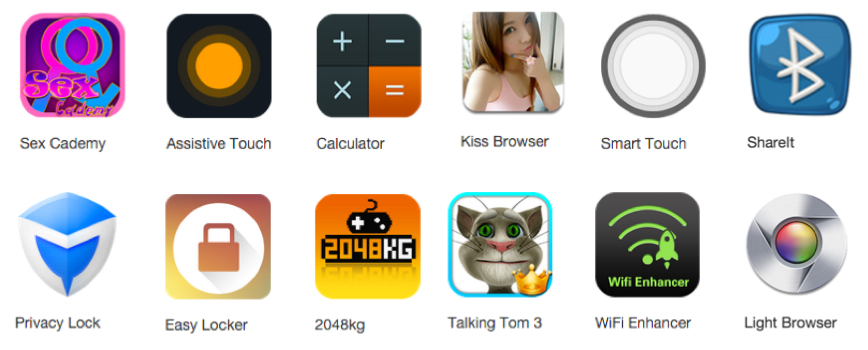
image via the FireEye blog
The new malicious adware, dubbed Kemoge, reported Wednesday by security researchers at FireEye, also disguises itself as popular applications. The apps trick the user into installing them through in-app ads and ads promoting the download links via websites. The legitimate appearing apps aggressively display unwanted advertisements which seem annoying, but in the FireEye blog researcher Yulong Zhong writes, ” it soon turns evil.”
The fake apps gain root access and gathers device information such as the phones IMEI, IMSI, and storage information, then sends the data to a remote server.
Infections have been discovered in more than 20 countries, including the United States, China, France, Russia, and the United Kingdom. Because of Chinese characters found in the code, it is believed that the malware was written by Chinese developers or controlled by Chinese hackers. The apps included Talking Tom 3, WiFi Enhancer, Assistive Touch, PinkyGirls, and Sex Cademy.
How to protect your Android device from infection
- Only install apps from trusted stores like Google Play
- Avoid clicking on links from ads, SMS, websites, or emails
- Keep your device and apps up up-to-date
- Install protection that scans apps like Avast Mobile Security
Follow Avast on Facebook, Twitter, YouTube, and Google+ where we keep you updated on cybersecurity news every day.
