An exploitable stack based buffer overflow vulnerability exists in the ipNameAdd functionality of Iceni Argus Version 6.6.04 (Sep 7 2012) NK – Linux x64 and Version 6.6.04 (Nov 14 2014) NK – Windows x64. A specially crafted pdf file can cause a buffer overflow resulting in arbitrary code execution. An attacker can send/provide malicious pdf file to trigger this vulnerability.
Monthly Archives: October 2016
Raffle: What’s your favorite Avira product?
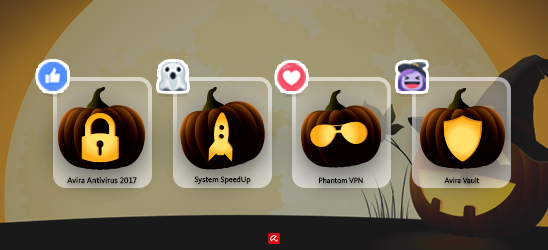
Seize the chance to win a 1-year license key for your favorite product! So what’s your favorite Avira product?
The post Raffle: What’s your favorite Avira product? appeared first on Avira Blog.
CVE-2016-7919
Moodle 3.1.2 allows remote attackers to obtain sensitive information via unspecified vectors, related to a “SQL Injection” issue affecting the Administration panel function in the installation process component.
CVE-2016-8579
docker2aci <= 0.12.3 has an infinite loop when handling local images with cyclic dependency chain.
CVE-2016-8580
PHP object injection vulnerabilities exist in multiple widget files in AlienVault OSSIM and USM before 5.3.2. These vulnerabilities allow arbitrary PHP code execution via magic methods in included classes.
CVE-2016-8581
A persistent XSS vulnerability exists in the User-Agent header of the login process of AlienVault OSSIM and USM before 5.3.2 that allows an attacker to steal session IDs of logged in users when the current sessions are viewed by an administrator.
CVE-2016-8582
A vulnerability exists in gauge.php of AlienVault OSSIM and USM before 5.3.2 that allows an attacker to execute an arbitrary SQL query and retrieve database information or read local system files via MySQL’s LOAD_FILE.
CVE-2016-8583
Multiple GET parameters in the vulnerability scan scheduler of AlienVault OSSIM and USM before 5.3.2 are vulnerable to reflected XSS.
CVE-2016-8596
Buffer overflow in the csp_can_process_frame in csp_if_can.c in the libcsp library v1.4 and earlier allows hostile components connected to the canbus to execute arbitrary code via a long csp packet.
CVE-2016-8597
Buffer overflow in the csp_sfp_recv_fp in csp_sfp.c in the libcsp library v1.4 and earlier allows hostile components with network access to the SFP underlying network layers to execute arbitrary code via specially crafted SFP packets.