Category Archives: Antivirus Vendors

Antivirus Vendors

New CryptoLocker variant emerges in Czech Republic

What is ransomware?

As we witnessed with CryptoLocker earlier this year, ransomware is a type of malware which encrypts certain files on your system and then extorts a ransom to unlock them.

Which files are affected?

Most ransomware does not target important system files but instead looks for user files to encrypt. These can be everything from JPG images to office documents and emails, anything personal that could be a value to the user.

What is new about this variant?

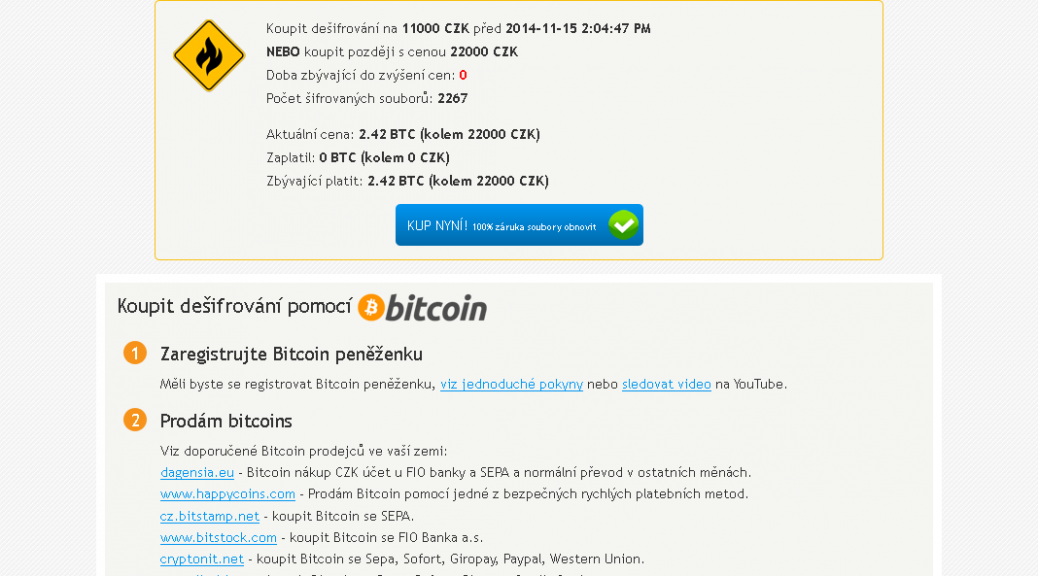
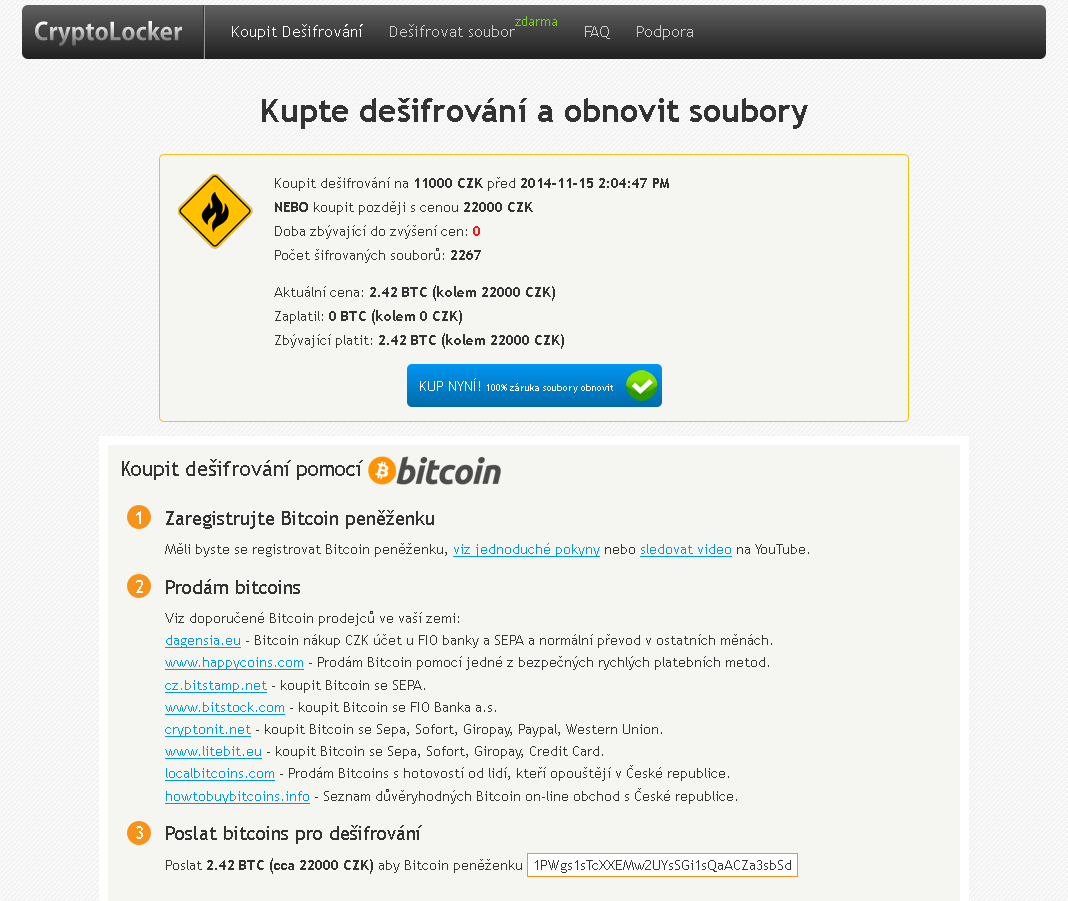
Previous ransomware variants had weak or flawed encryption, which meant that files often could be recovered. This new variant contains a much stronger algorithm and encrypted files are almost impossible to recover without the encryption key, which is only held by the attacker. Interestingly the ransom can be paid in cryptocurrency as well as Czech Koruna.
Is there any way to recover my files without paying the ransom?

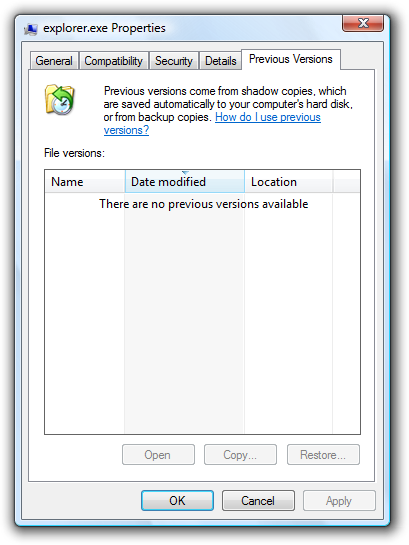
Historically, it has been possible to restore files using Shadow Copy, a tool that allows users to backup parts of their system even while they are in use. Sadly most new ransomware variants are resistant to recovery with Shadow Copy. Always seek advice before taking any drastic action to recover data encrypted by ransomware.
How can you stay protected?

  • Always backup -remember that malware has ability to encrypt files on all disks connected to your computer (including external USB disks, etc.) so be careful of leaving your backup connected to your machine or plugging in a backup to an infected device.
  • Think before you click – If you are unsure whether a link or file is untrustworthy, it is always safer to ignore it and delete it. Never download a file or follow a link from an untrustworthy source.
  • Get protection – As new variants emerge, they are continuously added to the database of definitions maintained by security companies like AVG. Up-to-date virus definitions are your front line protection against malware.
  • Get some Identity Protection tools – Security software like AVG has specially designed tools to protect your personal data from fraudsters and malware.


Story from Tomas Prochazka

Malware figures beat records with more than 20 million new samples identified in the third quarter of the year

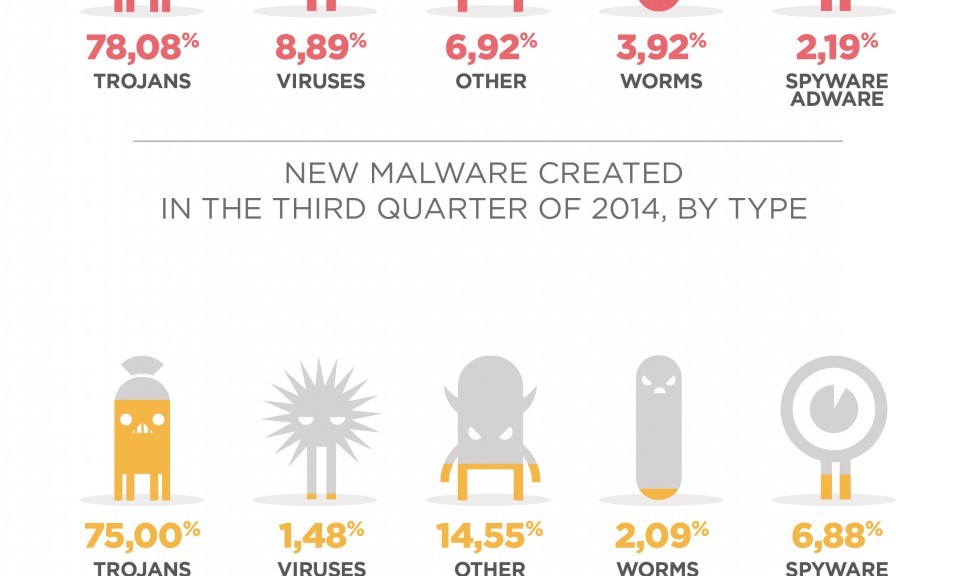
Panda Security, The Cloud Security Company, has released the latest data from the PandaLabs Quarterly Report for the third quarter of the year. The main conclusions of the study include an increase in the malware created compared to the previous quarter, with a total of 20 million new samples created worldwide, and at an average rate of 227,747 new samples every day.

The global infection rate was 37.93%, compared to 36.87% the previous quarter.

Trojans are increasing

Trojans are still the most common malware type (78.08%), increasing compared to the second quarter of the year. In second place, and a long way behind, are viruses (8.89%) and worms (3.92%).

“Over recent months cyber-crime has continued growing. Cyber-crooks are still creating malware in order to infect as many computers as possible and access confidential data”, says Luis Corrons, Technical Director of PandaLabs at Panda Security. “But corporate environments have also come under attack. For example, over the last three months large companies have been the subjects of some scandals, such as the infamous “Celebgate”, in which photos of actresses and models hosted on Apple’s iCloud service were leaked, or the theft of Gmail and Dropbox passwords”.

Trojan infections are up while PUPs are dow

Furthermore, Trojans were again the most malware prolific threat during the period, accounting for 75% of infections, compared to 62.80% in the previous quarter. PUPs are still second in the ranking, representing 14.55% of the total, which is a lower rate than in the second quarter when infections that used this technique amounted to 24.77%. These are followed by adware/spyware (6.88%), worms (2.09%) and viruses (1.48%).

01_ENInfections by country

The data recorded for each country shows that China is still at the top, reaching an infection rate of 49.83%, falling for the first time in a long time from 50% of computers infected. China is followed by Peru (42.38%) and Bolivia (42.12%).


As you can see the ranking of countries with the highest infection rate is dominated by Asia and Latin America.

The full report is available here.

The post Malware figures beat records with more than 20 million new samples identified in the third quarter of the year appeared first on MediaCenter Panda Security.

The top three questions the Avast Mobile Security team got asked at CARTES

It was great to see so many people who recognize the Avast brand and use our products at CARTES. We would like to say once more: Thank you so much! Every couple of minutes, we had a friendly visit from some of our fans and we always tried to talk to them for a while. Sometimes we got some interesting questions. We would like to share those that occurred the most.

1. Are you guys from the Netherlands?

No. :) Despite the orange color all over the place, Avast is a Prague- (that beautiful city in the Czech Republic that you read about in the travel magazines) based company with offices all over the world including Silicon Valley, Austin, Munich, and Hong Kong.

prague castle

A view of the beautiful Prague castle.

2. How do you make money if your products are free?

In general, we monetize our products both directly (via premium subscriptions or paid product versions) and indirectly (via ads in our applications, or partnerships / referrals, i.e.). On mobile, we are not making much money these days, compared to our desktop products. However, mobile apps are a great part of our product ecosystem. They help us build the brand and engage with people who use them. Our mobile products solve real problems and make the world a better, more secure place. In the future, we see a good potential to monetize mobile applications indirectly, due to our multi-million user base.

3. Why are you a better desktop Antivirus than XYZ?

“Better” is never a good word when talking about competition with modesty and respect. We have some compelling features in our Antivirus products. Check out the Home Network Security, SafeZone or process virtualization in our Avast 2015 version. Or you can try the Free version for yourself and compare our product with the Antivirus you have at the moment.

Did you like the article? Follow the author at @joshis_tweets.

Avast Software’s security applications for PC, Mac, and Android are trusted by more than 200-million people and businesses. Please follow us on Facebook, Twitter and Google+.

Be an Avast Mobile Security beta tester

This is your chance to be an Avast beta tester!

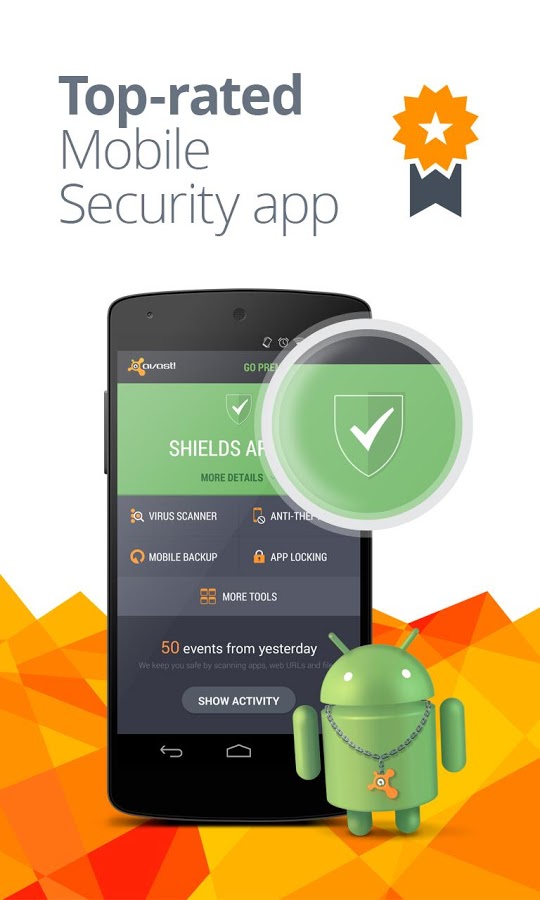
top rated AMS

You can influence the future direction of Avast Mobile Security when you are a beta tester.

Avast customers who have Android smartphones and tablets have played a significant role in the development of our mobile products. Now you can be part of the team by participating in our new beta version of Avast Mobile Security!

Why you should be an Avast beta tester

  • YOU GET EXCLUSIVE ACCESS  – Participants in the Avast Mobile Security Beta program have access to early versions of our Avast Mobile Security application. You get to be the first one to see all the new functions, before the official release.
  • YOU HELP CREATE THE PRODUCT – When you are a beta tester, we want your feedback, so that means that your suggestions and your critical evaluation of the application actively influence how Avast Mobile Security will work and what it will look like in the future.
  • YOU ARE AN ELITE MEMBER OF THE TEAM – We are looking for people with vision and enthusiasm from all over the world. You are not an ordinary Avast user – we identify you as a powerful influencer and we listen to what you have to say.

How to become an Avast beta tester

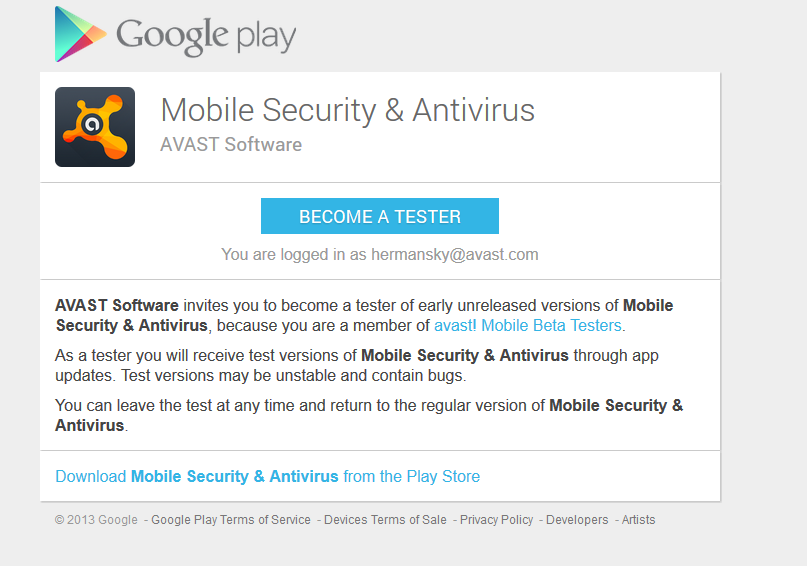
  • Join our beta community on Google+
  • Click on the Avast Mobile Security (beta) link
  • Click on BECOME A TESTER
  • Download  the beta version through Google Play on your device

Avast Mobile Security beta test

Join our Google+ Beta Testers community to test the latest version and give your feedback and suggestions.

Avast Software’s security applications for PC, Mac, and Android are trusted by more than 200-million people and businesses. Please follow us on Facebook, Twitter and Google+.


How to change your router DNS settings and avoid hijacking

If your home router is hacked, you have a serious situation on your hands.

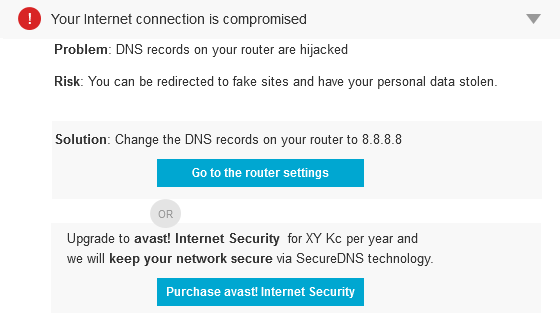
When an Avast Home Network Security scan finds that your router is already compromised, this notification will appear.

Your WiFi network is not secured

Your WiFi network is not secured

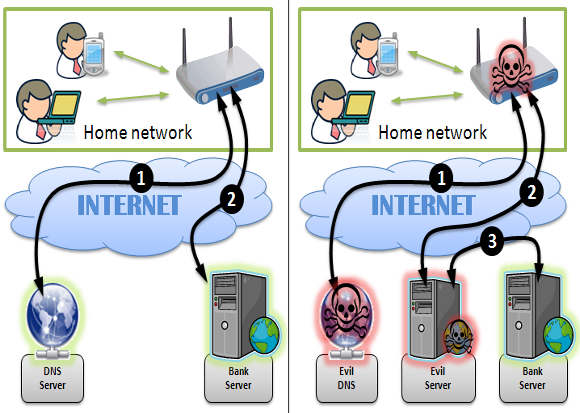
This means that the router has been hacked and the DNS settings have been modified to serve hacked contents to a cyberthief. This is a pretty serious situation. When hackers exploit router vulnerabilities, gain access to it, and modify the DNS servers settings, all your Internet traffic can be forwarded to rogue servers. This is called a man-in-the-middle attack.

The DNS or Domain Name System, is the “phone book” of the Internet, and an IP address is what’s listed in the book. DNS names computers, services, or any resource connected to the Internet or a private network. It translates easily memorized domain names, for instance, www.example.com, to the unique numerical IP addresses needed to locate the service worldwide.

What happens when your router is hacked?

Instead of connecting to a clean site or service, when your router is hacked, you’ll visit a rogue and hacked one. It’s obvious that your privacy will be violated, and your banking information could be captured – by the man-in-the-middle mentioned above. Even the usually secure SSL, the HTTPS protocol we have all been instructed to look for to indicate a secure site, won’t assure you’re protected. Instead, you’ll be proxied through malicious servers and the encrypted connection is cut in the middle. This illustration shows what happens.


Your WiFi network is not secured

Source: http://www.cert.pl//news/8019/langswitch_lang/en

This could also happen if your router is set to default/weak/factory password. So, the worst scenario of hacking is not that uncommon. See the latest news about webcams being hacked because of the owner’s using default passwords. Vincent Steckler, CEO of Avast, told VentureBeat that consumers are notorious for not updating default passwords, just as I’m talking about here. Some 63 percent of wireless routers run with default passwords, says Steckler.

The problem goes further than just one user or one device. The malicious effects can spread to all users in the local network, regardless of the operating system used.

How to protect ourselves against this plague?

First, scan your home network with Avast Home Network Security to verify if your device is compromised. If Avast alerts you, it’s already too late. You’ve already been compromised. You need to manually check the DNS servers in the router configuration.

By default, your router uses DNS servers automatically acquired from your Internet provider. All the devices on your network — PCs, smartphones, tablets, game consoles, and anything else connected to the network — get their DNS server from the router. You can change the DNS server on your router, therefore changing every other device on your network.

There are several good articles on the Internet about changing your DNS. Here’s one from howtogeek.com.

You also need to pay attention to your browser address bar. The HTTPS indicator should be there all the time. If it comes and goes, you may have already been compromised. In these cases, or for any other strange symptom you could be experiencing: Disable your Internet connection immediately and change the router username and password to unique ones (consult the router manual for instructions).

But, be warned, neither of these will be enough because if the router is vulnerable, it will take the attacker no time to change the settings back. Updating the router firmware or even changing it completely – as described in previous article – will be necessary.

Avast Software’s security applications for PC, Mac, and Android are trusted by more than 200-million people and businesses. Please follow us on Facebook, Twitter and Google+.


Â