Category Archives: Antivirus Vendors

Antivirus Vendors

AVG CloudCare scoops award in independent tests

AVG CloudCare’s AntiVirus 2014 component has just received an award following its first ever participation in one of the industry’s top security comparison tests. The latest Virus Bulletin gave us a score of 91.2 out of a possible 100 in both Reactive and Proactive tests.

In an age where security breaches are common and a company trades more than ever on its reputation, small businesses simply cannot afford to take any chances when it comes to protecting their confidential or customer data.

In fact a recent eMarketer study shows that undetected malware and cloud-based security are still among the top security concerns for small businesses.
That’s why I’m delighted that the Virus Bulletin test singled out AVG CloudCare for its scanning and detection performance. It is a strong indicator that we design our product wholly with users in mind and are addressing their very real concerns.

smb issues

Here’s what Virus Bulletin had to say:

“Scanning was very fast indeed, even in the initial runs, and overheads were pretty light, barely detectable once files had been checked for the first time. Our set of activities ran through in good time, and resource use was low. Detection was very strong indeed with excellent scores throughout our sets, and with no issues to report in the WildList or clean sets, a VB100 award is well deserved, adding another good result to that strong score.”


Our customers are echoing this sentiment:

Thomas Keats of Rainbow Computers, a small business and AVG IT partner told us “I love so much about AVG CloudCare, it’s increasing the bottom line, increasing interaction with the customer on more than one level, keeping me and my shop more in their mind each step of the way.”

If you are a small business looking for a way to stay ahead of the security curve why not ask a local IT contractor about AVG CloudCare? Your company’s security would be one less thing to worry about!

Learn more about AVG CloudCare at: www.avg.com/cloudcare

Learn more about the Virus Bulletin 100 test at: https://www.virusbtn.com/virusbulletin/archive/2014/06/vb201406-comparative

Hospitals targeted by cyber-criminals

The last few months have witnessed a rise in attacks on hospital IT systems with a view to stealing sensitive data. So far in 2014 there has been a 600% increase in such crimes.

Despite the benefits for hospitals of sharing patient data, this trend is posing a serious security problem for the healthcare industry. The reason is simple, medical information can be highly valuable.

To give you some idea, while credit card details could be worth a few euros on the black market, someone’s medical records could fetch as much as 80 euros. That’s a big difference. The reason is that this information includes not just medical details but also detailed personal information (social security numbers, addresses, bank account details, etc.) that can be used for identity theft.

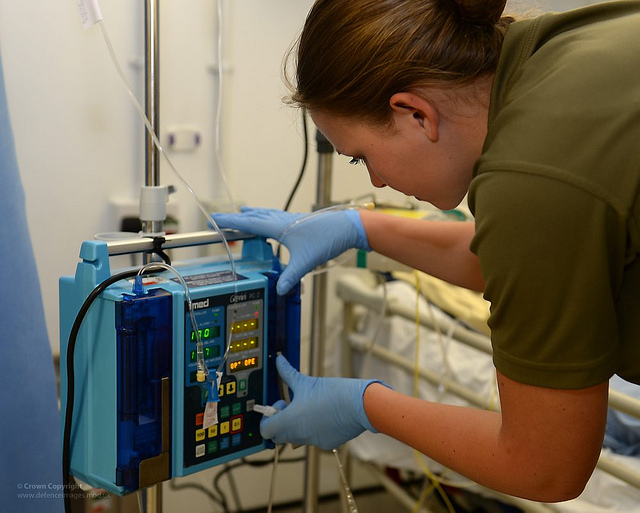
perfusion-pump

It’s also important to bear in mind that in the USA (where the problem is greatest) healthcare is expensive and is mostly run by publicly-traded firms. That’s why they have a general interest in suppressing concerns about this issue (albeit a difficult task).

This August saw one of the largest thefts of medical data so far recorded, though it certainly wasn’t the first, or probably not the last. The personal details of over four million patients from the Community Health Systems organization were compromised.

Now no hospitals or health centers or health departments or healthcare companies are safe. Anyone who had received treatment in any center related to this healthcare group could be affected.

For this reason the FBI has said that it would be “committing significant resources and efforts to target, disrupt, dismantle and arrest the perpetrators“. It has launched an investigation to determine where were the attacks originated: the cyber-criminals were apparently working from China and used sophisticated malware. They are experienced in spying on the healthcare industry, stealing formulas for medications and drugs, and have been active for over than four years, although their impact is now greater thanks to the technological modernization of the sector.

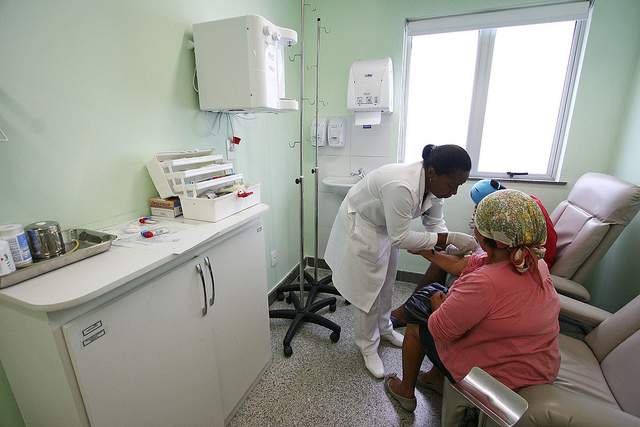
doctor-patients

The FBI also warned healthcare companies of the need to take all possible security measures. The agency has recently been releasing alerts to provide businesses with technical information they can use to either prevent or identify cyber-attacks.

What’s more, hospitals are rarely prepared for this kind of attack, much less when many of the devices they use every day are connected to the Internet. However, with the emergence of the ‘Internet of Things’, it is essential that they adapt to the new environment. According to Kristopher Kusche, an expert in medical IT services, there are currently about 20,000 healthcare devices in the country connected to the Web.

doctors-at-the-OR

For this reason he believes it is essential for organizations to carry out risk assessment audits for their facilities with Internet access. Nevertheless, the most difficult thing is to quickly train people in prevention to deal with the attacks that are already happening. One of the easiest ways to start however, is to install programs that can detect malware, which could in the short term help protect devices against infection.

In addition, these attacks are creating a great deal of insecurity in the medical environment, which goes beyond just data theft, as many of these devices are routinely used to care for patients. Doctors are concerned whether someone could hack devices in order to affect people’s health. It wouldn’t be the first time that someone managed to tamper with a pacemaker…

The post Hospitals targeted by cyber-criminals appeared first on MediaCenter Panda Security.

Cleaning Up Your Right-Click Menu

Does it take several seconds for the right click menu (called the “context menu”) to load when you right-click on a file, a folder or even just the desktop?

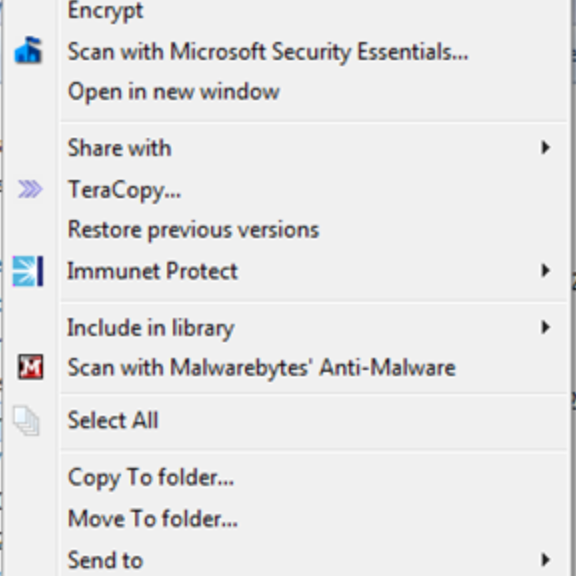
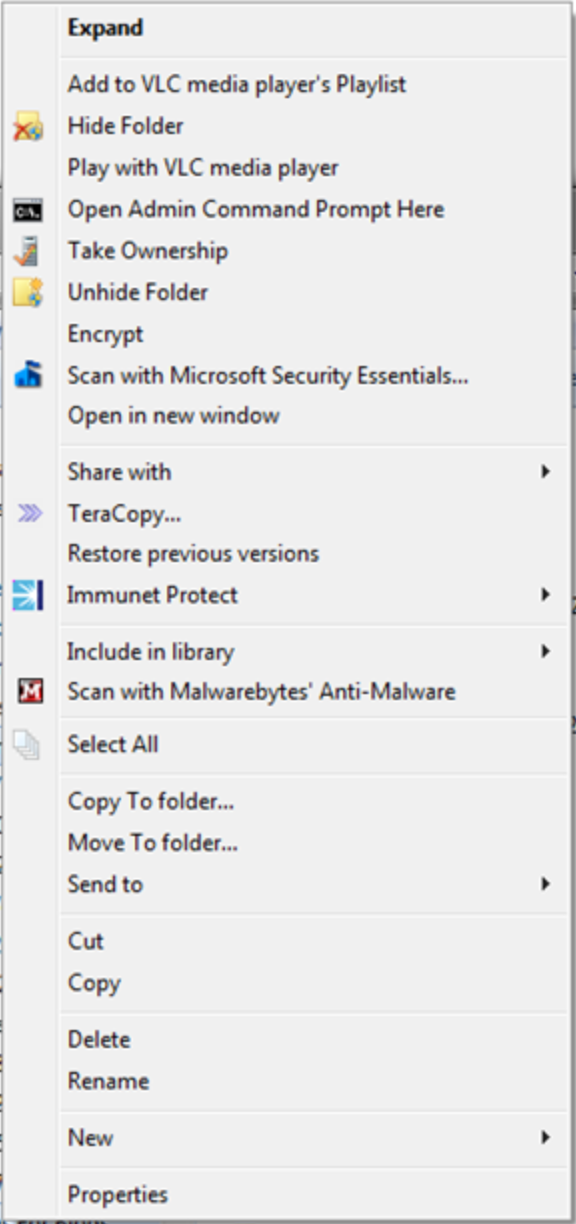
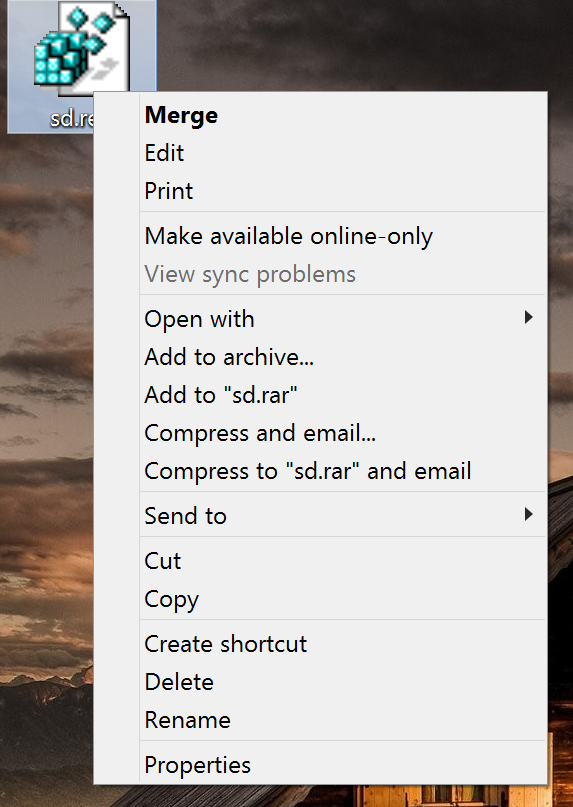
Are you tired of looking at completely overblown context menus like this:

2014-10-07_04-10-57

Then it’s time to clean up!

In this blog post, we’ll show you how to easily clean up your context menu in no time. It requires a little bit of tinkering with Windows, but if you follow our instructions you’ll find it easy to follow. Let’s do it:

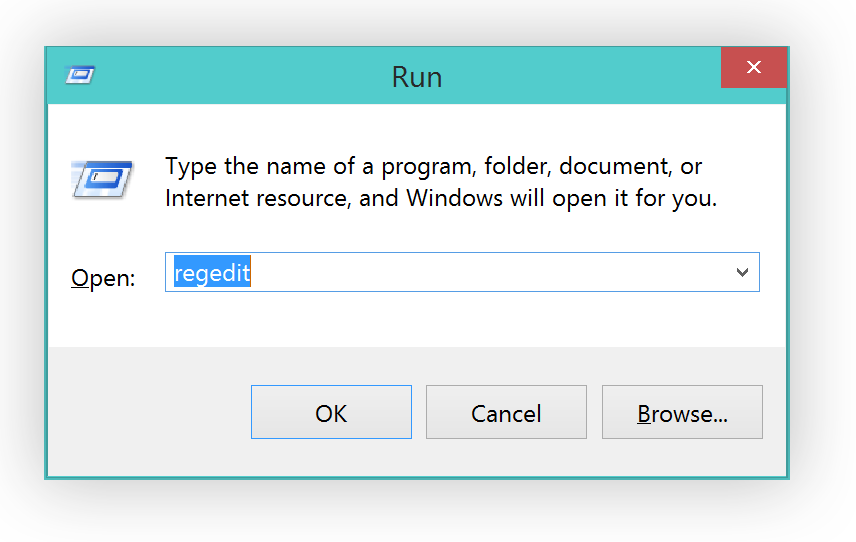
    1. All entries that show up under your “Right-click menu” or “Context menu” are stored in a rather secret location, called the Windows registry. Here’s how to open it: Hold down the “WINDOWS” key on your keyboard and then press the “R” button. This will bring up the following screen:
      2014-10-04_19-09-45
      Type in “regedit” and hit Enter.


    1. Before we make any changes, I strongly recommend you perform a backup of the entire folder structure so you can go back to the original menus any time you want. To do that, simply click on “FileExport” and type in the file name.


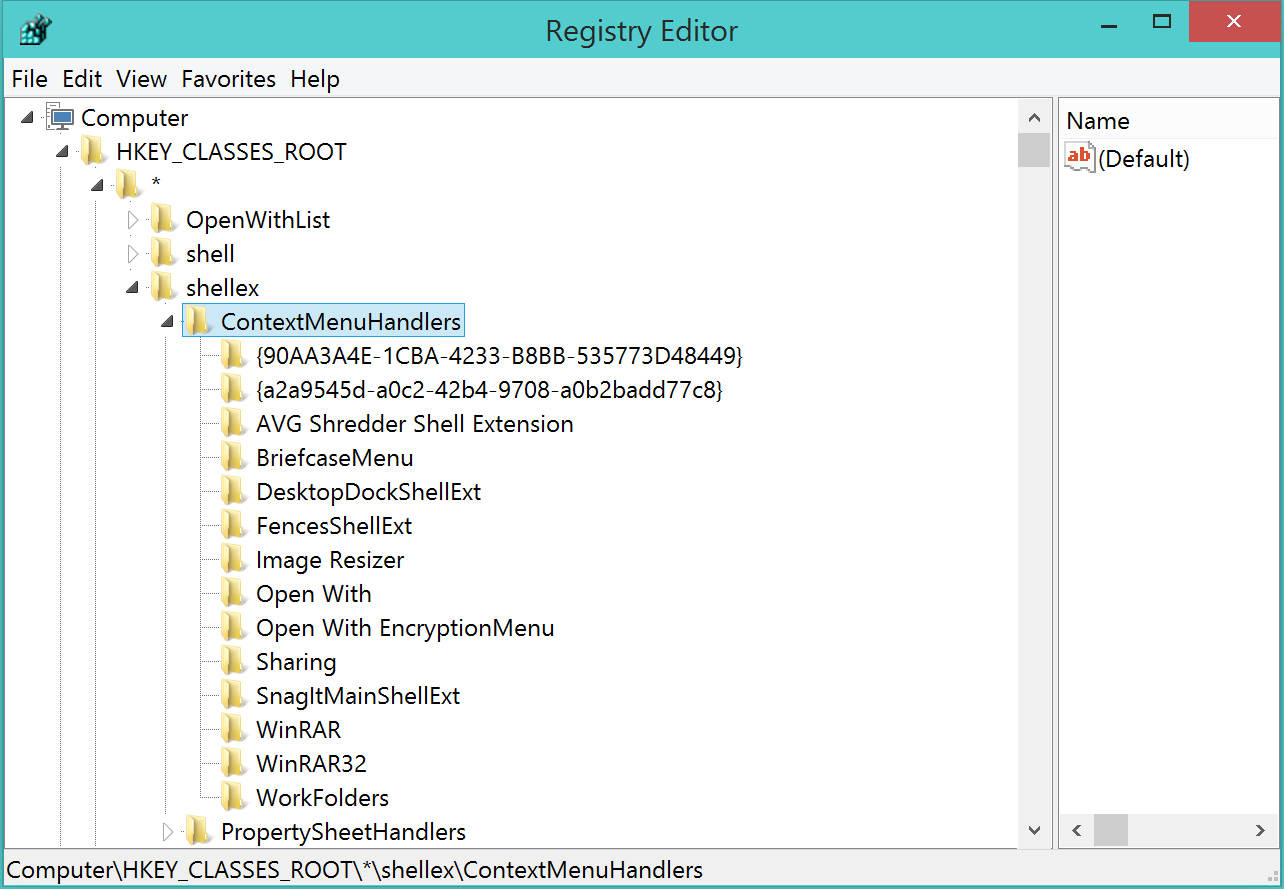
  1. Next, open the following folders: HKEY_CLASSES_ROOT*shellexContextMenuHandlers. All the folders you see below represent entries in the right-click menu:
    2014-10-04_19-11-21
  2. Ok, let’s move on to actually getting rid of that folder. So, for example, the “AVG Shredder Shell Extension” folder represents the following item:If you like to get rid of it, simply delete that entire “Folder”. So for example, I wanted to get rid of the entry for a nice desktop organization tool called “Fences” that I use a lot:So I click on “FencesShellExt” (don’t tough the OpenWith or WorkFolders entries, though!) and hit the “Delete” key on my keyboard. Now, once I cleaned it up, my context menu looks very clean:2014-10-07_06-36-04Plus, you may even be able to solve problems related to the context menus and delays when working with files.


Pro Tip:

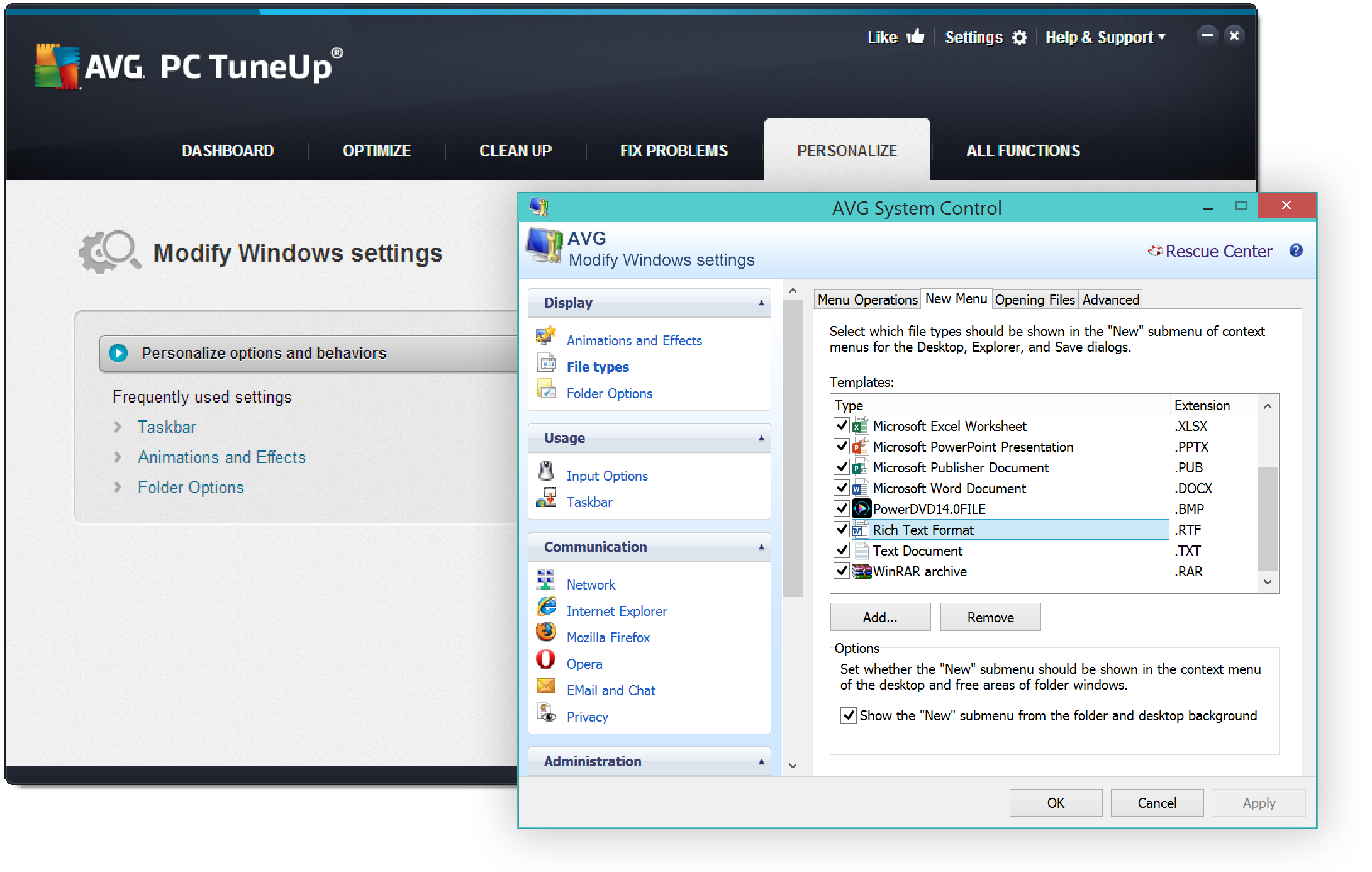
If you’d like to add or remove items in your “Create New…” menu there’s a great (and much easier) solution for you. All you need is AVG PC TuneUp (you can get the trial here: http://www.avg.com/us-en/avg-pctuneup):

Once installed, go to “Personalize” and click on the “Personalize and behaviors”.   Head over to “File Types” and “New”:In this are you can easily get rid (or even add!) items that appear under the “New” menu, which I personally like to keep very clean as I only create a few files that way:

2014-10-07_06-45-46

Got any questions? Let us know!

The Ebola virus becomes the latest bait used by fraudsters

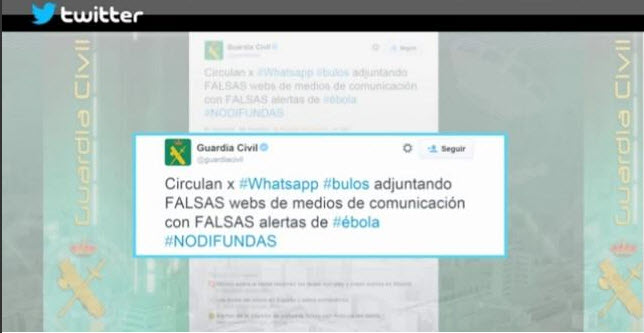
The Spanish Civil Guard has warned via Twitter of a number of Ebola-related hoaxes that have appeared over recent days.

Once again, WhatsApp has become the main channel for such scams, which include bogus reports of new cases of Ebola or the canceling of classes at the CEU San Pablo University in Madrid due to a possible infection.

Spanish-Civil-Guard

Hackers often exploit such situations for financial gain, and it was never in doubt that the first confirmed case of Ebola in Spain would give rise to these types of scams.

The Spanish Civil Guard have asked users to help avoid generating panic by not distributing these messages. They also encourage people to get their information through what they refer to as “serious channels of communication.”

The post The Ebola virus becomes the latest bait used by fraudsters appeared first on MediaCenter Panda Security.

Week in security: Dubai Police use Google Glass facial recognition, Bugzilla gets bugged and ‘Unpatchable’ USB exploit lands on GitHub

This week in security, we covered a full range of privacy and malware, with controversial plans to equip police officers with facial recognition packed Google Glass in Dubai, and the BadUSB malware finding its way on to GitHub.

The post Week in security: Dubai Police use Google Glass facial recognition, Bugzilla gets bugged and ‘Unpatchable’ USB exploit lands on GitHub appeared first on We Live Security.