Category Archives: Antivirus Vendors

Antivirus Vendors

Hacker Experience. The game about IT security caused a sensation on the Internet

A developer created a game that became an Internet sensation in just a few hours. Overwhelmed by the success of his work, he decided to sell it.

This is similar to what happened with Flappy Bird. Vietnamese game developer Dong Nguyen, decided to sell the famous app as soon as it became successful.

Yet in this case the game is not about birds and tubes, rather viruses and IT security. The game is called Hacker Experience and its creator, a computer science student at the University of Winnipeg, has been saturated by the response to this simulator.
hacker experience

I’m tired. So I’m selling my game that just went viral “. With these words, Renato Massaro, who is just 21 years old, has terminated his relation with ‘Hacker Experience’, the game he was working on for two-and-a-half years.

The game is a hacking simulator, where players can play the role of a cyber-criminal trying to become rich and powerful working for an evil corporation. In this game, you can hack virtual servers, develop new software, mine bitcoins, work on missions, hack banks, etc.

But it’s only a game; everything that happens is just a simulation, so players are not really handling viruses that could damage their computers or destroying the hardware on other people’s systems. It’s all a work of fiction, a simulator that you can play online and which became an incredible success within just a few hours.

“It went viral in a matter of minutes,” says Massaro, who goes on to explain how he launched ‘Hacker Experience‘ at 4pm on September 13 and, “…by the end of the day, it had 2000 registered users and 1000 online.”

This instant success was largely down to two news aggregators: Hacker News and Reddit who made the name of this game spread like wildfire and the number of users rocket in no time at all.

What this Brazilian student had been working on for so long, suddenly became a sensation. “Now, about 30 hours later, there are 6000 registered users and 1500+ online,” said Massaro, as he realized that the situation was simply too much for him.
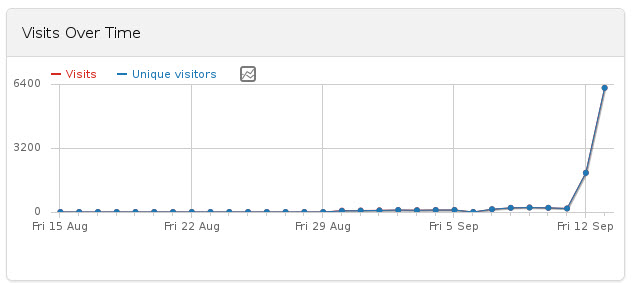
hacker experience success

In just a few hours the situation had become unbearable for the young student having received thousands of emails and messages. Overwhelmed by the situation, the creator of the simulator decided to put ‘Hacker Experience’ up for sale.

What was the asking price? There wasn’t one. Massaro waited for offers via email. He was selling the game, the code and the NeoArt Labs brand, under which he had launched the game, but as he had never before sold software, he had no idea what price to put on his game.

He did however tell potential buyers that this was the result of more than two and a half years work and that ‘Hacker Experience’ was already a lucrative source of income.

hacker experience game


According to his calculations, revenue from Google AdSense and Premium account users (‘Hacker Experience’ is based around the ‘freemium’ model, where players pay for certain features that give them an advantage or make the game quicker) would offer a minimum return of $1000 (about 800 euros) a month. However, Massaro also claims that with a few adjustments and offering more advantages to Premium users, ‘Hacker Experience’ could soon be offering returns of up to $5000 (almost 4000 euros) per month.

Nevertheless, any potential buyer should also be aware the game’s users have already found flaws and have been sending them via email to the creator as well as publishing them on the Hacker Experience wikipedia page and forum.

The game is still operating, though probably it is now under new ownership. In exchange, the creator will have received a decent sum (according to his own calculations, Massaro suggests that a price of some 60,000 dollars for the game would be easily recovered within the space of one year) and above all he can now enjoy the peaceful life that was so rudely interrupted by ‘Hacker Experience‘, the virus game that went viral.

The post Hacker Experience. The game about IT security caused a sensation on the Internet appeared first on MediaCenter Panda Security.

Why There’s Room for RealPad

In my last blog, I discussed the current disconnect —or lag—with some seniors, especially older ones, when it comes to smartphone adoption.

As research by Pew and others has suggested, the reasons many older people have lagged in adoption of smartphones seems rooted in the footprint of the device, i.e. size of the user interface and thus ease of reading, viewing and manipulation.  This is evident in the rapid adoption of larger devices  like tablets and e-readers – by this demographic.

In recognition of the stumbling blocks for some seniors, earlier this month AARP launched its new RealPad tablet. The $189 device, produced in partnership with Intel, includes larger text and icons. But it also smartly packages all-hour tech support and video tutorials – tools designed expressly for seniors. And it comes preloaded with an AARP app, eBook reader, email (Gmail), photo sharing, video chat, games, tools and other features like a retirement and health calculators. Additional apps will be available on Google Play.

It’s basically a tablet—about the size of an iPad mini—that runs Google Android 4.4 with a custom app launcher featuring large icons.  AARP says the tablet is designed for anyone who is apprehensive about using tablets and embracing technology and going digital.

AARP specifically targets 70-million 50+-age group, who haven’t adopted tablet technology. But I think the sweet spot for this product really isn’t most Boomers, but older seniors – the generation born before 1946. As we’ve discussed before, many Boomers are plenty tech savvy – and I also would be remiss if I didn’t mention that some seniors I’ve come across are plenty tech savvy…but not all.

OK, so why should you consider it for or recommend it to the seniors in your life? I like the design concept and larger icons and readability, but more than that, I like the addition of its one-click RealQuick Fix troubleshooting feature and 24/7-tech support. (Amazon’s Kindle Fire HDX also offers 24/7 support).

In terms of security, AARP has also made a smart move: It allows, among other free downloads, “Protecting Yourself Online for Dummies.” As it says, “Don’t let news about Internet risks deter you from taking full advantage of its benefits.”

My previous post had some of our own safety suggestions for seniors. I’m not clear on AARP’s entire security offering. We at AVG offer strong security apps on the Android platform, check out our Google Play page.

Is the RealPad the right choice for everyone over the age of 50? Probably not. But it was designed with an older adult in mind who needs a little extra care – and I applaud that.

I agree with AARP, there’s just too much value in the digital world for seniors to be shut off.  Tablets and larger format smartphones can really enrich their lives. In addition to providing grandparents with a digital photo album of their grandkids and a social platform to stay connected with family and friends, it’s a ready-made platform and market for important things like health monitoring and management apps. RealPad is a great step in the right direction to address that need.

We should all be interested in addressing the needs of this market. After all, we are all likely to be seniors someday.

Cyber awareness month – stay safe online

Bad URLs can steal your identity, track your every movement, and violate your privacy. Bad URLs have been around for many years, and they are still wreaking havoc. It is exactly why you should always be careful where you click.

Clicking on an infected or bad URL has happened to millions across the globe in probably every country, and the reason people sometimes make the mistake of clicking something they shouldn’t is the very reason that the bad guys keep putting those bad URL’s in various places (websites, emails, pop up ads, etc.) to trick us. They keep doing it because we keep clicking where we shouldn’t.

This October we celebrated Cyber Awareness Month and Avira wants to make sure users don’t click on anything bad and end up on a website that is dangerous. Avira Browser Safety is a browser extension that ensures that when users browse various sites on the Internet, they don’t accidentally click on a bad URL.

Avira Browser Safety is browser extension which protects a user’s online privacy and blocks malicious websites before they load. Right now it’s available to Avira users for free.

If you don’t have browser security installed on your PC, please consider installing Avira Browser Security. It’s important to make sure you’re doing everything possible to remain safe while online, and set in motion good browsing habits that last throughout the year.

The post Cyber awareness month – stay safe online appeared first on Avira Blog.

Was your email hacked in recent data breaches?

In early September, reports of a massive Gmail password breach came to light across the globe. In all, there were up to 5 million stolen Gmail accounts and passwords and all were published on a Russian forum.

Luckily, many of the passwords do not match the Gmail accounts with which they are associated. Google announced that only 1 to 2 % of the passwords match and that it has secured those. It has also stated that its systems were not breached in any way. But, the damage is done and another breach has occurred.

It could be that passwords stolen from previous security breaches such as Adobe or LinkedIn happened to be the same ones that people used for Gmail and the hacker put together different data sets to come up with this list.

In mid-September, Russia’s largest email providers mail.ru and Yandex were hit by data breaches. Around 5 million mail.ru email accounts and 1 million Yandex email accounts were breached and passwords released on Russian forums. The companies said that their systems were not compromised and these accounts were stolen using phishing attacks. The analysis of these accounts showed that they were at least partially genuine.

In what seemed to be a busy month for hackers, JP Morgan Chase announced that over 76 million households in the US were affected by a breach that compromised personal contact information like addresses, email addresses and phone numbers.

No matter how many times breaches happen all over the globe, you can always check to see if your personal email address has been compromised. By downloading Avira’s Identity Safeguard to your mobile device, you can instantly scan the Avira database and check to see if you’re identity has been compromised. To check your email address, download the free Identity Safeguard app for Avira’s iOS or Android mobile apps.

The post Was your email hacked in recent data breaches? appeared first on Avira Blog.

JP Morgan acknowledges that 76 million accounts were hacked

jp morgan chase

US bank, JPMorgan Chase has acknowledged that 76 million current accounts and 7 million small business accounts were affected by a hacker attack last August.

The bank presented an official report to the Securities and Exchange Commission (SEC), specifying the type of data that had been compromised in the attack on the Web and mobile apps of JPMorgan Chase.

Data obtained by the cyber-criminals included customers’ names, addresses, phone numbers and email addresses, as well as internal company data. There is still no evidence that this data theft has compromised account numbers, passwords, ID numbers, dates of birth or social security numbers.

Cyber-attack on JP Morgan Chase

JPMorgan Chase was one of five US organizations to suffer an attack, the real purpose of which is still under investigation.

The FBI have been trying to determine the origin since August and determine whether the motive is purely financial or if it is part of an international espionage operation.

The bank has also asked customers to come forward if they are aware of any irregular transactions, though for the moment, they have no evidence of any fraud related with this data theft.

 *** Update

Luis Corrons, technical Director of PandaLabs, has drawn similarities between this attack and the one suffered by Orange some months ago. In neither case were passwords stolen, which is typically the prime target of cyber-criminals, probably because this data is stored on systems with greater security.

Nevertheless, Luis Corrons has also pointed out that companies are attacked every day around the world and a small percentage of these attacks are successful. This should serve to remind businesses that they need to improve defenses against cyber-attacks and ensure they have the best business antivirus.

More | 10 reasons why you need the best business antivirus

The post JP Morgan acknowledges that 76 million accounts were hacked appeared first on MediaCenter Panda Security.