Tag Archives: featured1

Crucial Security Tips for a Stress-Free Vacation

Vacation time is just around the corner. It probably bums you thinking that you’ll need to stay connected during your break (checking emails, going over urgent documents, responding to coworkers…) but the good news is you can probably do it with your toes in the sand!

Disconnecting our minds is, on our minds. With the sun and the sand, it is easy to forget cybercriminals and the problems they bring, but we can’t let our guards down. Cybercriminals never go on vacation. On the contrary, we need to take into account the risks that are especially critical during this part of the year.

What security issues are important during the summertime
1607-tips-cibersecurity-holidays-en-01

These days it is very common to wait for long amounts of time in airports, stations, cafes… but while you’re sipping your coffee, make sure you are careful with public Wi-Fi networks. Only connect to official Wi-Fi networks. Networks that ask you for private information give cybercriminals a Golden opportunity to access your personal data (they can even use this as a way to hijack your device). With public Wi-Fi networks, the risks are high and we must take extreme precautions.


1607-tips-cibersecurity-holidays-en-02

We all enjoy snapping and uploading photos, and giving our friends the opportunity to live vicariously through our vacations while we enjoy a refreshing drink at a beachside restaurant. That is all fun and well as long as you don’t overshare. That information, combined with your public profile, could be very useful for someone who knows where you live, and that your house is empty.


1607-tips-cibersecurity-holidays-en-03It is not enough to be discreet about what you publish on social media, you also have to take precaution and disconnect the GPS in your mobile devices to prevent one of your favorite applications from betraying you and publicizing your coordinates.


1607-tips-cibersecurity-holidays-en-04If you decide to take you laptop or smartphone on vacation, don’t forget to make a back-up of everything and leave it at home. Not only can your device be stolen while you are on vacation, but you never know when you may lose it or have an unfortunate accident.


1607-tips-cibersecurity-holidays-en-05Before a big trip, many people like to download apps that will keep them occupied while they are traveling. Make sure you always download the apps from official stores! Although this is not malware-free guaranteed, Google Play and the Apple Store have security measures that make it quite difficult for malicious programs to be distributed.
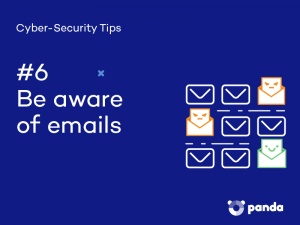


1607-tips-cibersecurity-holidays-en-06Never respond to emails that ask you for bank account information. Although it is common to book hotels or buy plane tickets online, banks should never ask you for your personal information by email. Cyber delinquents use job titles and content in these alarming emails to get the response they want from you: your bank account details.


1607-tips-cibersecurity-holidays-en-07Your web browser would not alert you with those annoying messages if you were in fact surfing a secure website. Take your time, pay attention, and follow this tip!


1607-tips-cibersecurity-holidays-en-08When you click shortened links with bit.ly without looking at the website it’s taking you to, you are making a big mistake. The well-known ow.ly from Hootsuite or goo.gl from Google are both very commonly used, but they are much more dangerous than we think, like we have said on previous occasions. This summer, while you are on social media, keep this in mind and only click on secure links.


1607-tips-cibersecurity-holidays-en-09Take every security measure before you go on your vacation.If you plan on copying or sharing anything from a USB device to a computer, first scan your USB with an antivirus. Danger does not only exist on the net, it can also exist on hardware. A USB stick could be contagious.


1607-tips-cibersecurity-holidays-en-10Entrusting in a good antivirus, is the best barrier that you could put between your computer and cybercriminals. Remember: everyday 227,000 new threats are detected. We should never let our guard down, not even on vacation.


Have a fun and safe summer break!


The post Crucial Security Tips for a Stress-Free Vacation appeared first on Panda Security Mediacenter.

What we can learn from the hacks on season one of Mr. Robot

Mr. Robot is coming back to USA Network on Wednesday, July 13th at 9/10 pm Central (tonight!) for its second season and I cannot wait (especially since I missed Sunday’s sneak preview)! Season one was full of complex hacks that were, for the most part, accurately portrayed. By speaking to various Avast experts, I learned a lot about the hacks on the show last summer and how they could affect consumers like you and I.

Mr_Robot_season_2.jpg

Image via: USA Network @whoismrrobot

Here’s a recap of what we learned from the hacks in season one of Mr. Robot:

“Android-specific ransomware and mobile banking Trojans are issued around the world”- Paul Chung

chung

If there is something that stands out from my +17 years in the security field, it is the bright people I’ve met from all over the globe, that protect users from the cyber-attacks threatening us every day. In this new section, I am going to interview people from different parts of the world, who will tell us about their experiences and perspectives in the security environment.

For my first interview, I’d like to present you to Paul Chung. Paul is from South Korea and his Korean name is 정택준. He works at AhnLab as a Security Evangelist in the Next Tech & Strategy Division.


1.- How did you get involved in security?

Actually, I was trying to get out of the computer science field when I was at school. I was confused at the time and I decided to join the Navy for a change. I was assigned CERT in Central Computing Center, where I managed network and security systems. I’ve been fascinated with security since then.

2.- Tell us a bit about your career at AhnLab.

When I was in the Navy, I learned about the network threats, but I was always curious about the file based threats. That is why I joined ASEC (AhnLab Security Emergency Response Center) at AhnLab. I’ve worked as a malware researcher for eight years and now I’m working on preparing our company for the future. I am learning about new technologies which we could adopt and what kind of new infrastructure we need.

3.- South Korea is the country with the highest Internet speed in the world, and among other things it is known for its gamer community. Do you have specific threats targeting gamers in your country?

Korea has a multi-billion dollar game industry, which is fifth in the world, and over 80% of them are online games. Because of the geological location and ‘Korean Wave’ in Asia, a lot of Korean games are distributed to nearby countries. I think that this is tempting for attackers. Not only to target Korean gamers, but everyone has who played that particular game. That is why we see a lot of online game hacks related malwares. Most of the malwares tries to steal the gamer’s credentials and some of the ransomware encrypts game related files and demands money to decrypt it.

Smishing, or SMS phishing, attacks are very popular in Korea.

4.- South Korea is also the country in the world with the highest smartphone ownership. Are there cyber-crime gangs specifically targeting South Korean smartphone users, or do you get the same kind of threats as the rest of the world?

According to one of the researchers (Pew Research Center) in 2015, 88% of Korea’s population owns a smartphone. From my point of view, android-specific ransomware and mobile banking Trojans are issued around the world. In Korea, Smishing (SMS phishing) attacks are very popular and mobile banking Trojans are on the rise.

5.- As a highly developed and technological country, South Korea has already suffered cyberattacks coming from other nations. Some countries have been already created commands that focus on cyber-defense of critical assets for the country, such as the United States Cyber Command. Are there similar initiatives in South Korea?

We do have an Armed Forces Cyber Command which is subordinate to the Ministry of Defense. Also, we have a National Cyber Security Center which is run by National Intelligence Service. Both of them grown large to defend cyber-attacks from the Strategy Cyber Command which is made by Kim Jung-un from the North.

But when it comes to security, one or two organization is not enough. As a security company we also work with our government to defend such an attack.

6.- Currently, what is the most desirable sector for cyber-delinquents? How do you think security in this sector has evolved?

I think what they are most interested in is money. So a lot of malware you see these days are related to ransomware or online banking. I think they are also interested in SCADA and ICS systems. We will see more of these attacks too.

A lot of industries are preparing for the attacks which we have seen already. But there are more to come. I think we need to cooperate with each other more than ever. Not just security companies but also with the government and other related industries. There is a lot of data out there, which we are missing. If we could gather meaningful data and share it, I think we will have a good chance to secure the net.

7.- What do you foresee in the next 5 years? What threats will we have to face? How is the security industry going to be like in the next decade?

This is a hard question for me. Because, who knows what will happen in the future? Though, I might have few things to forecast.

Threats aimed at IoT devices and connected cars will be the trend in the future.

I think we will see more threats on IoT devices and Connected Cars. IoT devices are very vulnerable when it comes to security, like everybody knows. Also, cars are evolving fast. From the Gartner report, in 2020, 250 million cars will be connected to the network. And from BI Intelligence, the market will grow into a 123 billion dollar industry by that time.

As the environment changes, threats will change too. As a security company, we need to carefully look at where the changes are being made and research how we could defend it. But it won’t be done by one man or a company, we all need to work together to figure it out.

Now that we understand how important cybersecurity is for our everyday lives, don’t hesitate any longer!  Boost your business with advanced cybersecurity solutions that allow you to manage, control and protect your business’s entire IT park.

The post “Android-specific ransomware and mobile banking Trojans are issued around the world”- Paul Chung appeared first on Panda Security Mediacenter.

What businesses can learn about cybersecurity from season one of Mr. Robot

Season one of last summer’s hit new TV show, Mr. Robot, was filled with interesting and, for the most part, accurately portrayed hacks. The hacks were carried out by the show’s main character Elliot and hacker group fsociety. Their goal throughout the season was to take down the multi-national conglomerate, E Corp.

Mr.Robot_season_2_premier.jpg

Image via: USA Network @whoismrrobot

Although the hacks on the show were rather complex and to a certain extent elaborate, there are a few things SMBs can learn from them.

Reselling Business and Home User Information

pandasecurity-hard-drivesIt is important to protect businesses against threats that lurk in the cyberworld. The threats may seem innocent at first, but usually, those are the ones that cause the most damage. Reselling your hard drive, for example, may seem like a simple task, but it could actually open the door for cyber delinquents.

A recent investigation found that, out of 200 hard drives bought off of second-hand websites like eBay or Craigslist, more than 2/3 still contained highly sensitive information from the previous owner. A good amount (11%) stored private data from businesses.

Some of the gems that the investigators were able to rescue from the storage devices included social security number, CVs, corporate emails (9%), CRM records (1%), spreadsheets with projected sales or inventories (5%). Imagine what an ill-intentioned hacker could do with this lot of private information.

Formatting: The Bare Minimum

The scariest part of it all is that most owners believe their hard drives were wiped clean before putting them for sale online. Two out of every five devices (36%) indicated that the content was cleared from the system, by means of the Recycling Bin (which is really just another extra folder) or by the delete button.

The Recycling Bin is really just another extra folder on the computer.

Not one of these elimination techniques are affective enough to completely get rid of all information on hard drives. With the right know-how, it could actually be quite easy to securely and permanently recuperate the previously deleted data. If you format the device multiple times, the information could be completely overwritten. Nevertheless, there is only one way to be completely certain the hard drive’s content has completely disappeared: destroy it.

If you plan on recycling, reusing or reselling your machines, “attempting” to delete their contents is not an option. In the majority of the tested hard drives, the owners did not even take the first step towards security. Only 10% of the investigated hard drives went through an erasure process, such as formatting in various steps.

The post Reselling Business and Home User Information appeared first on Panda Security Mediacenter.

Tools deliver false promises to YouTubers and Gamers

If you have a YouTube account and are an aspiring YouTube star, you may have wondered if there’s an easy way to speed up the slow process of raising your channel to the top. If you’re a slow-moving gamer looking for a simple way to advance your skills, you may have wished for coins to make more in game purchases and progress. If you search the Internet, you will definitely find websites with good advice on how to promote your content and even tips on how to create good videos and how to improve your gaming abilities.

“Want more subscribers? No problem!”

There’s much more available on the Internet than just advice and tips. You can also find websites, tools, and bots that promise to quickly boost a user’s YouTube or other social channels. Looking for more subscribers or followers? You’re in luck — we found a website where you just fill out a short form and click on a button or download their tool. Of course, there are comments left by satisfied customers who are promoting the tools. Since you’re not the first to use the tool and it has good reviews by others, it has to work, right? 

Add YouTube subscribers.png

Webpage of the tool we took a closer look at

Tools deliver false promises to YouTubers and Gamers

If you have a YouTube account and are an aspiring YouTube star, you may have wondered if there’s an easy way to speed up the slow process of raising your channel to the top. If you’re a slow-moving gamer looking for a simple way to advance your skills, you may have wished for coins to make more in game purchases and progress. If you search the Internet, you will definitely find websites with good advice on how to promote your content and even tips on how to create good videos and how to improve your gaming abilities.

“Want more subscribers? No problem!”

There’s much more available on the Internet than just advice and tips. You can also find websites, tools, and bots that promise to quickly boost a user’s YouTube or other social channels. Looking for more subscribers or followers? You’re in luck — we found a website where you just fill out a short form and click on a button or download their tool. Of course, there are comments left by satisfied customers who are promoting the tools. Since you’re not the first to use the tool and it has good reviews by others, it has to work, right? 

Add YouTube subscribers.png

Webpage of the tool we took a closer look at

Social Media, Ranked as One of the Top Threats Aimed at Companies

business man using internet on smart phone and laptop

Long ago, the term “goods” referred to necessities like wheat, milk, sugar, and petroleum, but our necessities have changed.  Now “goods” can refer to broad band or smartphones or computers or–cybercrime?

As seen in the RSA’s report about the Current State of Cybercrime, experts confirm what we already know: malware and the tools cybercriminals use are evolving. Although malware comes from different places, they have identical capabilities and continue to procreate.  The amount of stolen information continues to grow, and cybercriminals are capitalizing on it. The stolen information acquired by cybercriminals has joined the other goods available in our competitive market.

The internet and its on-growing innovations keep us adapting.  Next time you buy gourmet-pasta-on-a-Tuesday-and-eat-it-on-a-Wednesday, remember that cybercriminals could be capitalizing on the private information you divulge for such”conveniences”. While you are checking your email, they may be stealing and selling your log-in information for your email accounts, social media sites, and favorite online shops. Even very detailed information like medical histories from hospital patients are highly demanded and can be bought online, in bulk.

Every kind of personal information is online and has diverse buyers and sellers

But cybercriminals aren’t stooping to the deep-dark-web anymore, now they use public and open communication channels, like social media sites, for these illegal sales transactions. In fact, results from the six-month long study show that the RSA discovered more than 500 groups dedicated to fraud on social media, with an estimated 220,000 total members, and more than 60% (133,000 members), found each other on Facebook.

Financial information circulates within these online communities, including credit card information with access codes and authorization numbers, tutorials for how to perform a cyberattack, malware tools, and even zoomed-in conversations that teach users how to move money without being detected.

It is important for businesses to set aside sufficient resources to detect threats, attacks and frauds that now exist on multiple channels  (Windows, Android, iOS, Mac, etc.). Since the variants can multiply and tailor themselves to the malware,  prevention and protection efforts should also increase.


The post Social Media, Ranked as One of the Top Threats Aimed at Companies appeared first on Panda Security Mediacenter.

The Blue Screen of Death Gets a New Look

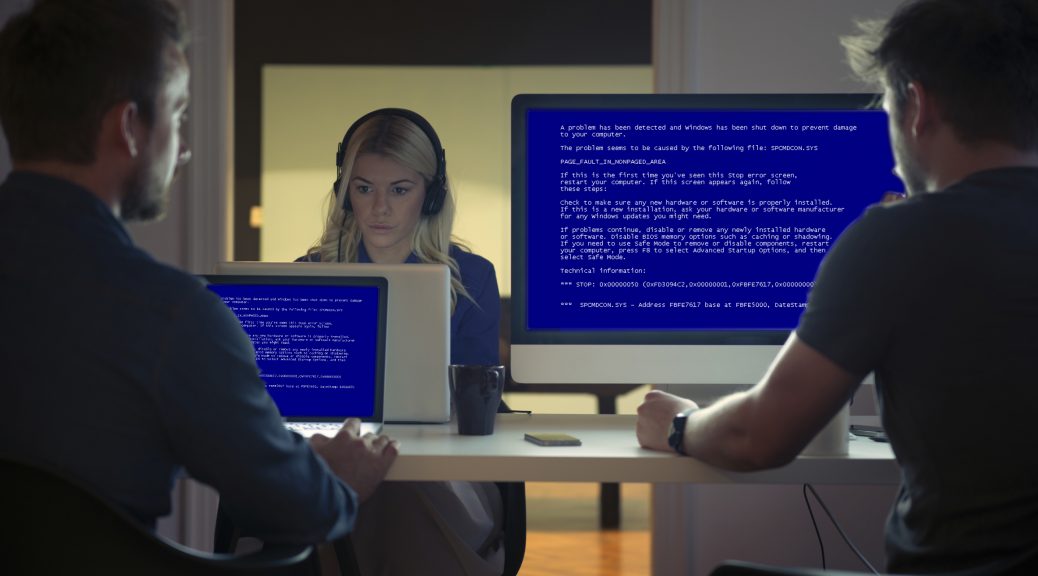
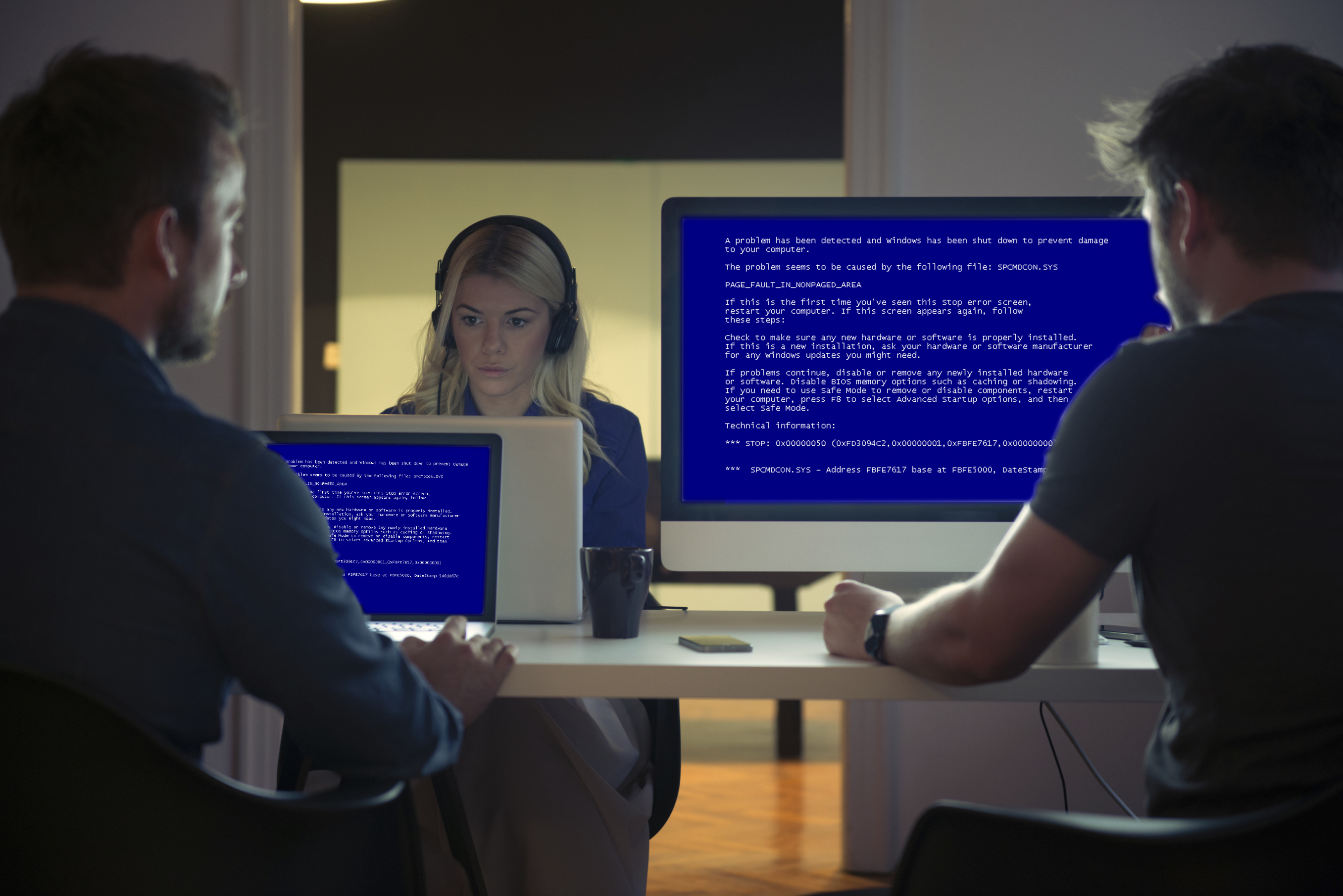
What a terrible feeling we have when the blue screen of death pops up. Dotted with white letters, this uh oh screen can show up unexpectedly on any old Windows-using computer. Seeing this screen will make anyone think, did my computer just DIE?

To fix the problem, the infamous screen of death reads that we should close all programs that could have provoked the issue or restart the computer altogether (using Ctrl+Alt+Supr). If we are lucky, the issue will go away after following these steps, but most of the time it won’t be that easy.

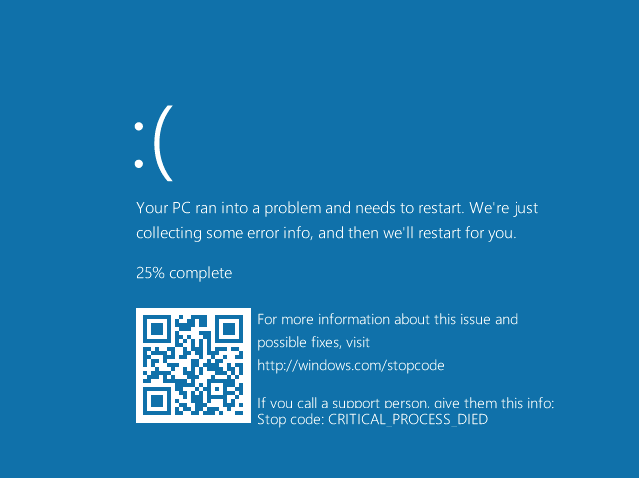
Now, this oh-so-hated blue screen of Windows has had a face-lift, making it just as terrible but a little nicer to look at. The newest version on Windows 10 (out this summer) will display a sad emoticon and a QR code that will send you to a help area once it is scanned.

FOTO 2

The bad news is that these two-dimensional codes, or more precisely the links they contain, can be very powerful tools for cybercriminals.

First, a cybercriminal could simulate that your computer has an error, and send your computer a fake “blue screen of death”. Then the criminal could add a QR code with a link that will take you to an unexpected and malicious website that will install drive-by malware on your computer.

If the cybercriminal wants to be very sly, they could design an entire website that looks like an official Microsoft one and use it to phish for log-in information and personal data. Uneducated computer users are the easiest victims for this type of trap.

The QR code that appears on the Screen of Death can be used for phishing or downloading malware onto your computer

But using QR codes to camouflage links is nothing new. The best way to protect yourself from this type of attack is to keep your guard up. Don’t scan a two-dimensional code without knowing where it will take you and if that website is a safe place.

To defend yourself against these kind of attacks, it is essential to have a good antivirus that will detect any kind of phishing or malware that is attempting to download on your computer.

The post The Blue Screen of Death Gets a New Look appeared first on Panda Security Mediacenter.

Avast and AVG: A Future Together


AVG_logo-912378-edited.png

As many of you know, there are two security companies that often get confused: Avast and AVG. Shortly after I started as CEO almost 8 years ago, I remember giving a presentation to a large audience about Avast. About an hour later, a gentleman walked up to me and complimented me on how good the presentation was and how he enjoyed hearing about AVG. That was my first lesson in how easy the companies are to confuse.

This confusion is because the companies are so very similar. Both company names start with the letters “AV”. Both started in the late 1980s and were amongst the first few companies formed to fight the viruses and malware nearly 30 years ago.  Both are historically Czech: Avast was founded in Prague and is still based there while AVG was historically in Brno, the two largest cities in the Czech Republic. Both pioneered the free distribution of top quality security products (although to be honest, I must admit that AVG was first and we followed). Both make great security products. Both are innovators with world class R&D teams. Both have most of their users outside of their home Czech market. Both have had similar user bases for many years: about 200M each. And most importantly, both treat their users with respect and consequently each has a large and loyal user base. One slight difference though is that while Avast is a private company, AVG is public and listed on the New York Stock Exchange.