Tag Archives: featured1

How to find your phone – 3 alternatives to the rescue

how to find phone

Have you ever wonder if there is a way of locating your phone in case you lose it or it gets stolen? Well, relax, because the answer is yes! There is a way you can find your phone, how? Here we explain to you three ways of doing it! Keep reading. You have 3 ways of doing it.

How to find your phone

With Panda Mobile Security

Thanks to the mobile and tablet location system in our antivirus for Android, you can recover your device if you lose it!

Panda Mobile Security tracks and displays on a map your lost or stolen tablet or phone so you can find it quickly. You will also be able to block the device and erase all your personal information remotely to prevent others from accessing your most valuable information.
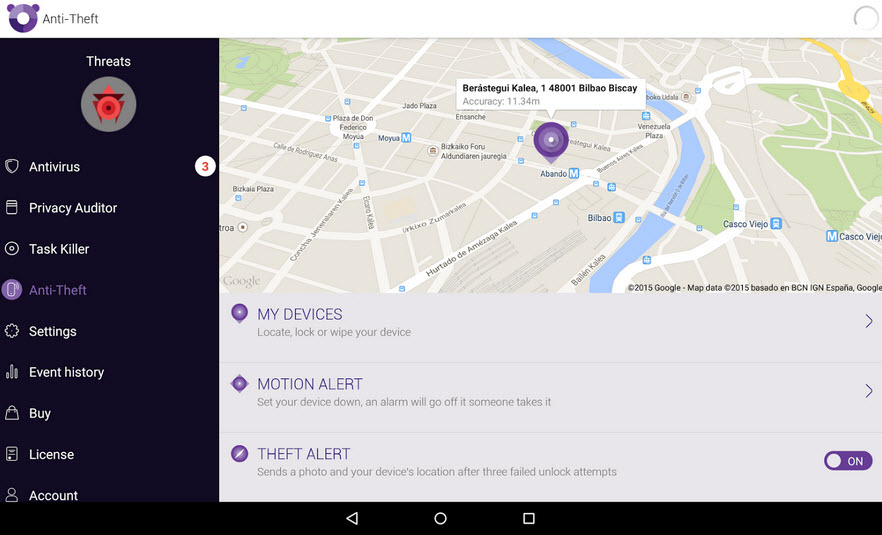
find phone

In addition, our service has an antitheft application that protects the user and ensures the phone’s safety. Panda Mobile Security makes a picture of the user and sends it via email together with the device’s location every time the user fails to enter the password.

If the device runs out of battery, Panda Mobile Security will geo-locate it and save this information, so it can be used later if necessary.

You can also use Google…

To find your Android phone or tablet with Google, you must do it through the site in English, since this feature it is only available in this language.

Once you are in the web site you will only need these three magic words: ‘Find my phone’. This Google search will result in a map, which will display your phone’s location with a precision that may vary a few meters, as the service informs.

In addition, if it is nearby but you still can’t find it, Google can make it ring, even if the device is in silence.

And if you have an Apple device: Find my iPhone

If you are an Apple user and you have lost any of your devices, don’t worry! You can find them with iCloud. Don’t know how, just follow this few steps:

  • Access your iCloud account or use the Find my iPhone app in another device to locate your iPhone, iPad, iPod touch or Mac on a map.
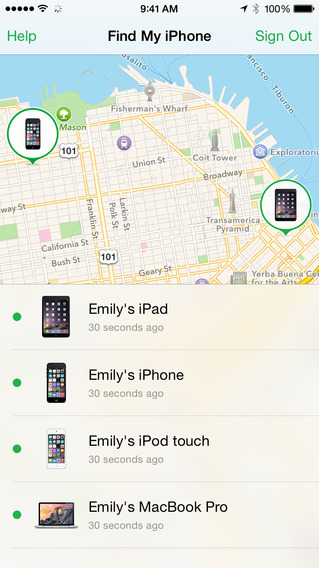
    find my iphone
  • Using Lost Mode you can track your phone, see where it is and where it has been.
  • Once you locate it, you can lock it and send a message with your contact number. So, whoever finds it can call you but can’t access the rest of your information.
  • If you think your device has fallen into the wrong hands, you can remotely erase it and restore your iPhone, iPad, iPod touch or Mac to its original settings.

And last but not least…

Phone locators

When we wrote this article we found lots of webs that offer a series of services which they call ‘phone locators’. But what they actually do is take advantage of those users who have lost their phone or tablet.

So, if we use these web pages, in addition to not finding our cell phone, we will waste our time and money. That is why, we recommend you not to trust any web if it asks you for any kind of financial compensation or personal information!

The best thing you can do to find your cell phone is to use official services like iCloud, Google or the feature included in our antivirus for Android.

The post How to find your phone – 3 alternatives to the rescue appeared first on MediaCenter Panda Security.
Ataque de gás em Buenos Aires: a vida imita a internet

Não se fala em outra coisa no mundo do futebol a não ser o ataque com gás de pimenta feito por um torcedor do Boca Juniors na semana passada aos atletas do River Plate no intervalo da partida entre as duas equipes, válida pelas oitavas de final da Copa Libertadores da América. Como resultado, o segundo tempo foi cancelado e, algumas horas depois, a partida também. Dessa forma, o Boca Juniors foi eliminado da competição em 2015 e ainda recebeu algumas outras punições, como a obrigação de jogar 4 partidas em casa com portões fechados e outras 4 como visitante sem sua torcida.

O caso foi tão sério que um vídeo se espalhou rapidamente nas redes sociais mostrando o torcedor do Boca Juniors atirando o gás dentro do túnel usado como segurança para os atletas.

Em partidas de futebol tensas como este clássico argentino, já se viu muita coisa: invasão de campo, agressão verbal e física a jogadores, arremesso de objetos e urina sobre atletas adversários, rojões e até mortes. Mas nunca se imaginou que alguém seria capaz de abrir um buraco naquele túnel de proteção para realizar um ataque dessa natureza. É a vida real imitando o mundo virtual.


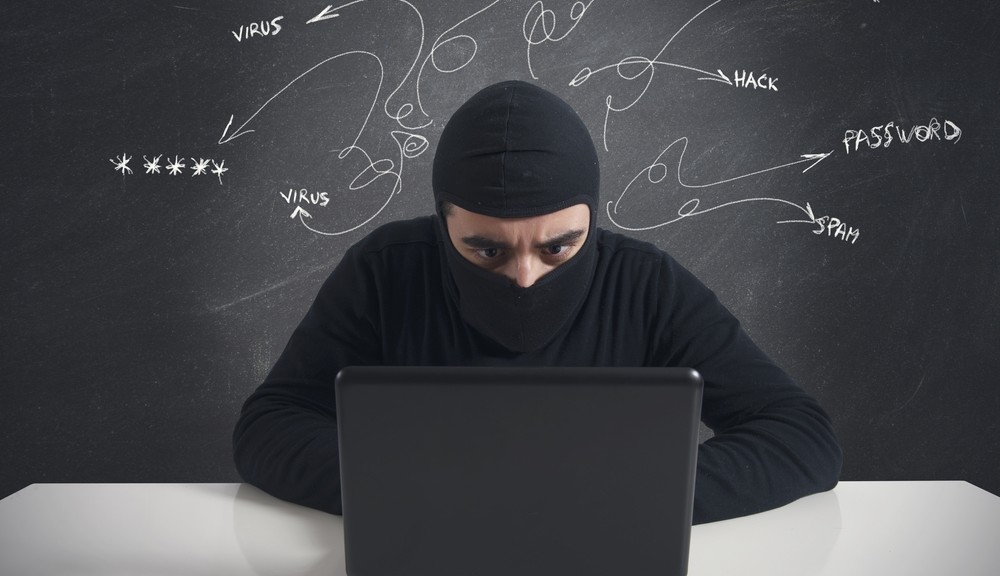
Pois é mais ou menos assim que um ataque ao seu computador ocorre. O agressor pode ser comparado a um hacker. Assim como o cibercriminoso cria uma série de programas e sites ao seu redor para se disfarçar e criar vulnerabilidades em seu PC, o rapaz que realizou o ataque estava no meio de milhares de torcedores e, embora em ambos os casos é possível se suspeitar de algum tipo de perigo, eles são dificilmente identificados antes de um ataque.

Hacker

Há anos o mundo virtual é vítima de ataques inacreditáveis: a vida real agora imita a internet


E é por isso que existe na internet o “firewall”, que serve como uma barreira ou um túnel de proteção para seus arquivos e programas. O problema é que, assim como lá nas arquibancadas existem algumas pessoas que estão sempre tramando uma maneira de burlar as proteções aos atletas, há também milhões de hackers no mundo todo trabalhando 24 horas por dia, 7 dias por semana para descobrir uma nova forma de acessar a sua máquina, roubar seus dados ou simplesmente fazer a sua vida online se tornar um verdadeiro martírio.

Por outro lado, empresas de segurança como a Avast Software tentam criar soluções de segurança para esses ataques. Entretanto, ter um equipamento lá montado e funcionando de maneira correta não significa que pode-se ignorar outros fatores importantes de segurança.

Uma das perguntas que muito se fez nesses últimos dias é: “como este torcedor do Boca Juniors entrou no estádio com gás de pimenta?”. É exatamente o que ocorre com hackers que conseguem invadir computadores após os donos das máquinas autorizarem seus acessos, geralmente ao clicar em links maliciosos ou ao baixar programas suspeitos. Assim como no futebol, onde há regras de segurança pré-estabelecidas pela polícia e pela a organização da competição, mas mesmo assim os responsáveis pelas partidas falham ao permitir agressores de entrarem no estádio, no mundo virtual o antivírus atua como um meio de informação sobre potenciais riscos, mas cabe ao usuário a decisão final de seguir à diante com um download e/ou a instalação de algum arquivo maligno. Neste caso, nem o melhor antivírus de todos os tempos é capaz de impedir a infecção.

Portanto, se você acha que só porque você instalou um antivírus a sua vida na internet está segura e nada mais precisa ser feito, pense duas vezes. Reflita e procure se informar sobre os casos de ataques mais recentes. Não permita que um suspeito tente invadir o seu PC e destruir toda a proteção que você ali criou.

Já estou infectado. E agora?

Se você já está infectado ou se o seu computador está parecendo um vídeo clip da Corrida Maluca com ícones indo de um lado para o outro fora de controle, então você precisa de uma assistência técnica profissional.

O bom da internet é que hoje em dia você pode ter seu computador consertado sem sair de casa através de serviços remotos e/ou por telefone. Aqui está um deles fornecido pela Avast Software.

E lembre-se: nunca instale um antivírus em um computador infectado. Isso não resolverá o problema, pois seria o mesmo que implementar novos sistemas de proteção ao estádio, mas não retirar de dentro deles agressores que voltarão a atacar a qualquer momento.

Venom: the security vulnerability in your floppy drive

venom snake

A new security vulnerability is putting at risk computers all over the world.

It is called “Venom” and the most odd thing is that exploits a vulnerability in something that almost no one uses anymore: the floppy drive.

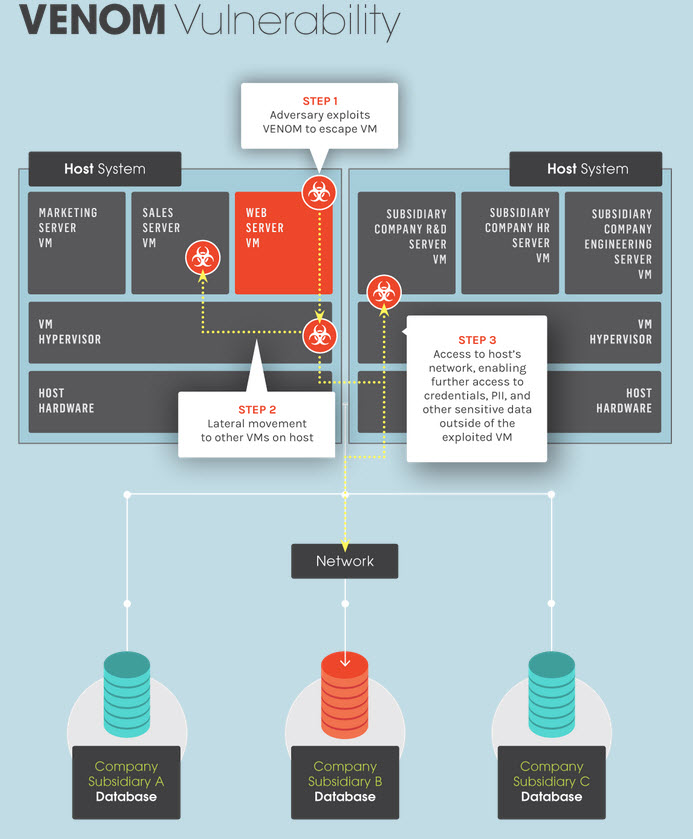
The bug itself is quite dangerous as it allows the owner of a virtual machine to execute code in the host machine and from there move on to the network.

In other words, Venom takes advantage from a vulnerability in the virtual floppy drive controller to enter the system and obtain root privileges, as high as possible, not only of that machine in particular but also for all those connected to the same network.

The chart published in the web page created to gather information about Venom explains it very well.

venom vulnerability

The greater risk is that this vulnerability enables the cybercriminal to access the host system through his virtual machine. Once he is inside the physical machine, he will be able to access any virtual machine running in this system.

If you want to prevent Venom, you can download the already published patches here.

We will keep you updated!

The post Venom: the security vulnerability in your floppy drive appeared first on MediaCenter Panda Security.

Wise up and get smarter with your data

Most of us can agree that we don’t want our personal data falling into other people’s hands. This may seem like an obvious concept, but with the amount of data we regularly share online, it’s not such an uncommon occurrence that our information is wrongfully passed onto others. In this clever video published by Facebook Security, we learn how to nip scams in the bud and prevent others from tricking us into sharing personal information.

// <![CDATA[
(function(d, s, id) { var js, fjs = d.getElementsByTagName(s)[0]; if (d.getElementById(id)) return; js = d.createElement(s); js.id = id; js.src = “//connect.facebook.net/en_US/sdk.js#xfbml=1&version=v2.3”; fjs.parentNode.insertBefore(js, fjs);}(document, ‘script’, ‘facebook-jssdk’));
// ]]>

Ever had someone approach you online saying they are a foreign prince and asking for your personal information? Watch…

Posted by Facebook Security on Monday, May 18, 2015

In order to keep your personal data secure, make sure to practice the following:

  • Shred all personal documents before throwing them away. This is especially important when dealing with bank statements and bills.
  • Be mindful of what you post on social media and other online forums.
  • Choose your passwords carefully. Keep them diverse and don’t use the same password for each of your accounts.
  • Use security software on all of your devices and make sure that it’s up to date.

How to spot a hacker before it’s too late? As the video’s narrator warns, “Beware of anyone requesting your personal data or money, whether over the phone, via email or online. They may pretend to be a romantic interest, a family member in trouble, or even a foreign prince – odds are, they’re not.”


Try our Beta and win 200€ on Amazon!

2016 beta contest

Today we are launching our Panda Security 2016 rage beta!

And we will like to ask you for your help! We will love if you could use it, have a look around and give us some feedback! We will appreciate your ideas, comments, and suggestions on what you liked best and, especially, what could be improved.

For a chance to win a 200€ Amazon Gift Card! Among the most useful comments we will give away not one, but 9 gift cards!

How to enter this giveaway? Through our channels in Facebook, Twitter (using the hashtag #PandaBeta), Google+ or by leaving a comment on this article.

Panda Security 2016 Beta Contest

What do you have to do? Download our beta and give us your opinion.

Dates: from May 19 to June 9.

How? Through our official channels.

banner en

The post Try our Beta and win 200€ on Amazon! appeared first on MediaCenter Panda Security.

Panda Security Uncovers Ongoing Attack Against Oil Tankers

Panda Security has released “Operation Oil Tanker: The Phantom Menace”, a groundbreaking report that details a malicious and largely unknown targeted attack on oil tankers.

First discovered by Panda Security in January 2014, the ongoing attack on oil cargos began in August 2013, and is designed to steal information and credentials for defrauding oil brokers.

Despite having been comprised by this cyber-attack, which Panda has dubbed “The Phantom Menace”, none of the dozens of affected companies have been willing to report the invasion and risk global attention for vulnerabilities in their IT security networks.

“The Phantom Menace” is one of the most unique attacks that PandaLabs has discovered. No antivirus engine was able to detect it when first triggered, primarily because the attackers used legitimate tools in conjunction with a number of self-made scripts to bypass any warnings that traditional AV software would detect. It was only discovered when a secretary opened a nonspecific attachment to an email – a type of file that Panda Security would later identify among ten different companies in the oil and gas maritime transportation sector.

“Initially this looked like an average non-targeted attack. Once we dug deeper, though, it became clear that this was a systematic, targeted attack against a specific sector in the oil industry,” said Luis Corrons, PandaLabs Technical Director of Panda Security, and report author. “We can limit the impact of this potentially catastrophic cyber-attack, but only if the victimized companies are willing to come forward”.

oil tanker, attack, phantom

Identifying the source of a cyber-attack is tremendously challenging

In most cases, identifying the source of a cyber-attack is tremendously challenging. Once discovered, however, “The Phantom Menace” had a telling weak spot: the FTP connection used to send out the stolen credentials. Through the FTP connection, PandaLabs was able to identify both an email address and name.

Panda Security stands ready to identify the individual to authorities, but without any credible reports being volunteered by the alleged victims, the authorities are unable to launch their investigations or make any arrests.

Panda Security hopes the release of its report will shed light on the potential damage of “The Phantom Menace” and encourage companies to take the necessary steps against the perpetrator.

To read “Operation ‘Oil Tanker: The Phantom Menace”, please visit here.

The post Panda Security Uncovers Ongoing Attack Against Oil Tankers appeared first on MediaCenter Panda Security.
The Tar Heel State welcomes Avast Software

Avast announces the opening of our new Charlotte, N.C. office.

Avast announces the opening of our new Charlotte, N.C. office.

During this beautiful spring in “The Queen City” aka Charlotte, North Carolina, new Avast Software offices have opened their doors bringing 60 IT, marketing, business development, and technical support jobs to the area.

The flagship product launching out of the Charlotte office is Avast for Business, the new free, easy-to-use, cloud-managed security offering designed with small and medium sized businesses (SMBs), educational institutions, non-profit organizations, and small government in mind. Luke Walling, a long time Charlotte resident, is the general manager and vice president of Avast for Business.

“We’re thrilled to open doors in Charlotte,” said Walling. “With state-of-the-art facilities in North Carolina coupled with regional offices across the globe, Avast is in prime position to ensure our customers receive top-notch security solutions for their PCs, Macs and servers. As small business owners realize the essential need for data protection in today’s digital world, we’re happy to provide a free product that’s both reliable and secure. Charlotte has been home to me for many years and I’m pleased to report such a strong start.”

Since its launch in February 2015, Avast for Business has been adopted by 75,000 new customers.The freemium software model that Avast brings will change the complexion of security products for small businesses that are often priced out of the security game by expensive resellers, or forced to settle on using consumer-grade security software for business purposes. Avast for Business provides an easily managed and scalable solution for SMBs.

Avast expects to hire about 60 people based in Charlotte within the next few months. Job listings can be found on the Avast careers website and at this writing include positions such as Technical Support Specialist, Marketing Specialist, and several positions for Software engineers and a Senior UX Design/Creative.

The growing team is settling into their new office space, and with perks like an Avast orange pool table, free-flowing coffee and soft drinks, and team-building dinners and fun days out, they are sure to build upon their initial success. Welcome to Avast, Charlotte!

Marketing manager, Cathy F. cuddles with Chester
Sales rep Robert B. takes a pool break
Handsome pool table covered with Avast orange
Vanir I., data analyst has a park view from his desk
Chester reads the writing on the wall
The daily caffeine fix
Roger R. at dinner with the Charlotte team
Elena C. from Prague visits with Mike H.
Mirek S. from Prague enjoys a beer with Luke W., VP of the Charlotte office
Jessica T. enjoys the conversation with her Prague colleagues
Fun day out at Carowinds
Cathy F. and Robert B. are brave before riding the Carolina Cobra
These Avastians have braggin' rights after conquering the Nighthawk!

The Chief Financial Officer as the new guarantor of corporate cybersecurity

cfo

Technology has for a long time been out of the laboratories and has held, in its own right, a position in the companies’ executive committees. The transformation that ‘digital technology’ is injecting into all types of organizations requires that the top-level executives understand the basis of this new era.  According to Gartner’s report “2014 Gartner Financial Executives International Technology CFO Study”, CFOs must be prepared for this trend as they have an increasingly important role in IT decision-making. It also stated that 30 percent of the CFOs interviewed (almost 40 percent if we talk about SMBs) claimed they took these decisions, compared with 24 percent in 2013.  If there is an area where they should pay special attention, this is without doubt that of information security.

No, cybersecurity is no longer the sole responsibility of IT managers. Nor is it that of the security managers, who often report to the former. CFOs also play a key role in defining the organization’s strategy regarding this subject.  Until now their only duty in the ICT area was to control the department’s budget and assess, together with the CIO, in which security solution they should invest and whether they should increase this in one sense or another. And above all, they must know how to act to protect their organization against the ever increasing risks appearing in the market, ranging from an infection caused by one of the multiple existing malwares, now operating in any platform, to an advanced persistent threat, amongst others. For this reason it is essential that the CFO works closely with the CIO on the development of a security plan which integrates perfectly into the company’s business model and its operations, as well as into its relationship with its employees and shareholders, and that it safeguards the brand and the corporate reputation.

From cost controller to evangelist

How should the XXI Century CFO act?  Experts recommend someone capable of analyzing along with the CIO, the value and vulnerabilities which come with the use of IT and who knows how the company should act when attacked, because it is now practically impossible to prevent ever more sophisticated security incidents. What one needs to know is how to minimize their impact.

On the other hand, the Chief Financial Officer must realize that these types of attacks directly impact on the company’s business and its market value.  This is pointed out in the report “The Value Killers Revisited: A risk management study” by Deloitte, which states that the issues that ‘kill’ this value are not only limited to factors such as the recent credit and euro crisis experienced by the market or M&A transactions, but also include others like cyberattacks, which nowadays are unfortunately very common, as has been seen with recent notorious cases (the Sony Pictures case is only one of many).

Therefore the inclusion of cybersecurity with the issues to be addressed in the risk committees and audits in which they participate is an obligation for CFO’s today, and they should bear in mind which of the company’s assets need the greatest protection in order to guarantee the continuity of the business.  Additionally they must participate in the development of a contingency plan for a possible cybersecurity incident and be certain that they know what to do, as should the CIO and the other members of the Executive Committee.  It is advisable that companies organize simulated attacks to ensure that everyone responsible is prepared should a high range cyberattack really occur.

The Chief Financial Officer should also explain to the managers the risks implicit within the new digital scenario pointing out the most dangerous players, and also assess which methods, technology and human resources are the  most appropriate to combat them. According to experts, one area on which they should concentrate is to have monitoring systems which facilitate the rapid identification of attacks in real time in order to respond with greater agility. It is necessary to anticipate these situations as much as possible. Today, for instance, it is unthinkable that customers are the ones who have to report a possible fraud related to the services offered by the company. The company must act as quickly as possible and be proactive rather than reactive if a security breach occurs, and have their communication and performance strategy already prepared for customers and third parties who may be affected.

Obviously all the above does not mean that from now on the CFO has to lead exclusively the cybersecurity initiatives in his organization. But he does have to start participating more actively and evangelizing about the importance of data security and about the policies to protect them within the Executive Committee. In short, companies (and also society) are now so digital that is simply impossible for its top executives, including the CFO, to ignore the risks and threats which the new scenario entails and which steps are the most appropriate to solve the problem.

The post The Chief Financial Officer as the new guarantor of corporate cybersecurity appeared first on MediaCenter Panda Security.

Technology mistakes to stop making today

We love our fans and followers on Twitter because they frequently alert us to great resources. It happened today when we received a tweet from @LoveNerds4Ever letting us know that Avast Antivirus was mentioned on a Sacramento (California) News10 video segment. Thanks, Shawna!

The guest on this video segment is Ryan Eldridge, co-founder of Nerds on Call, a computer repair Business in Sacramento. He spoke to reporter Keba Arnold about technology mistakes that people typically make. These simple, but oh, so important points, are ones that we continually try to make, and Ryan puts it all together in one good video. Watch it now.

The security recommendations that Ryan makes:

  • Run updates on your computer and mobile phone. Program updates and security patches are very important to keep your device up to date and running optimally.
  • Download apps and programs from places you know and trust. On your mobile phone this would be the Google Play Store or Amazon App Store. For your computer, he says it’s a little bit harder, but suggest that you visit download.com, CNET’s well-known download site where you can read user reviews and see the reputation of the app before you download.
  • Ryan reminds computer users that when they get a new device antivirus software may be pre-installed, but it is a trial for a limited time.  After it expires, you need to get protected with a quality antivirus product. Ryan recommends Avast Free Antivirus for your computer, your Mac, and your mobile phone.
  • Ms. Arnold confesses that she has one email address that acts as a catch-all for everything. Ryan says this is a no-no because if a hacker breaks into that email address, then he has access to everything. Ryan suggests that you have separate email addresses for friends and family, work, one for shopping, and one for banking.
  • Passwords, admittedly are a pain in the you-know-what. Ryan suggests using an algorithm, or a kind of personal code, to construct your own passwords. For example, you can use a line from your favorite song, say Somewhere Over the Rainbow. Use the first letter of each word, use letters from the website name, and end with a series of numbers. Each password will be unique and known only to you.

And Ryan, we have a tip for you! Small businesses like yours need security protection too, and consumer antivirus like Avast Free Antivirus, doesn’t do the trick when you need to manage multiple devices, platforms, and people in remote locations. Adding to our collection of free products is the new Avast for Business. Avast for Business is free to use for as long as you want and for an unlimited number of admins and devices.

Panda Security reached 100% protection rate in AV-Comparatives’ tests

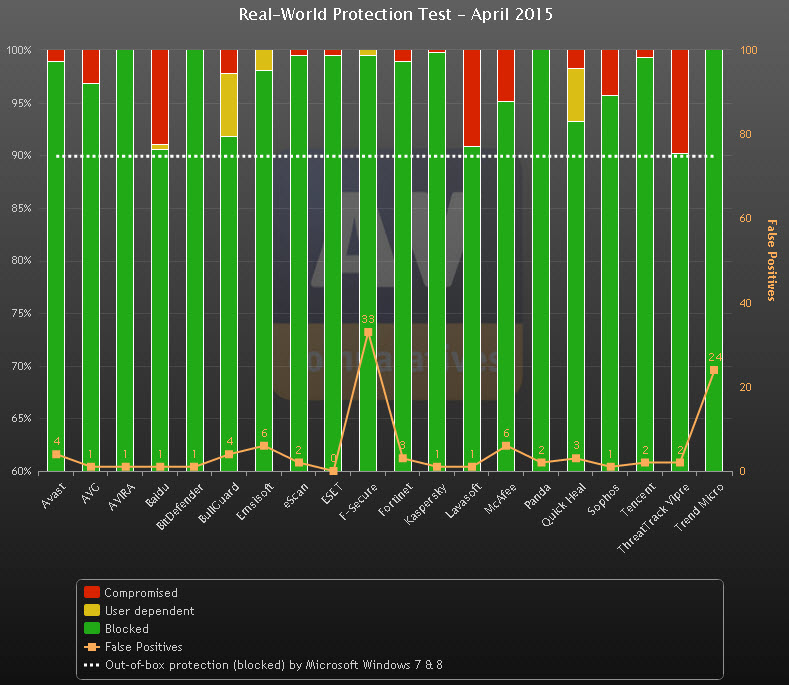
We have great news! Panda Security has obtained excellent results in April’s Real World Protection Test! And we are not the ones that say it! ;)

According to AV-Comparatives, we have achieved 100% detection rate in the tests conducted by this independent institute with a worldwide reputation.

av comparatives april

These results can only confirm the great results provided by the XMT™ scan engine, which is now included in all consume products.

Panda Security develops their products in response to the evolution of malware in recent years. Therefore, the XMT™ engine is the most effective response against threats like Cryptolocker and ransomware, of which we have all heard so much about in the last few months.

XMT antivirus

For example, in Spain, people are receiving an email that supposedly comes from the national post service informing you that a package has arrived and you have to collect it. But once you download it, it kidnaps your computer’s and asks you for a ransom if you want it back.

But we are not satisfied with these great results. Our objective is to keep up with the latest threats, so we can build a safer world. Try our free antivirus and enjoy the maximum protection!

The post Panda Security reached 100% protection rate in AV-Comparatives’ tests appeared first on MediaCenter Panda Security.