Tag Archives: News

It’s Cyberattack Season: Did You Get Your Immunization Shot?

There’s a term in public health known as “herd immunity.” The idea is that when a critical number of people are immunized against a contagious disease, most members of that community become protected against the disease, whether or not they received an inoculation.

Breaking the chain of a disease’s transmission enables us to interrupt the ability of the pathogen to set in at a broader scale in our community. In this way, vaccinations protect people who have and haven’t been vaccinated.

The same principle applies to our digital lives which are just as connected, if not more connected, to digital threats and “pathogens” that steal our data and identities, disrupt our productivity, and mar our public profiles.  We spend a great deal of time and energy investing in firewalls and the technical parts of our infrastructure to protect data and privacy, but what about our behavioral practices?

Do we take the time to inoculate ourselves against habits that could risk the digital wellbeing of our family and friends? Or do we, for example, still ask family members for Social Security numbers via email? Or send credit card information and/or passwords insecurely?

“The important principle here is that there are things I can do to help ensure a safer online world for you, and vice versa.”.

If, for example, you posted a compromising photo on social media, I can opt to not re-post it, protecting you from further harm. And if everyone who comes across the photo does the same, we’ve inoculated you from damage even though you had failed to protect yourself.

This is the mindset that we need to adopt in being good digital citizens and embodying the characteristics of a “smart user.” By doing so, we can create an entire network and community of safety and protection.

Most of us, especially the youth and others around the world who are coming online for the first time, are particularly vulnerable. We were all the same at some time. When I worked at Netscape, for example, and got my first email message from a friend “stranded in Thailand,” asking for money – I almost fell for it! On the exposure curve, I was just like a lot of new users today.

Let’s take a page from the herd immunity playbook and create a safer and more private digital world for all of the new users coming online, in addition to helping these users become more educated in smart online behaviors.

AVG has committed to a smart user digital citizenship initiative to build a better web. Please join us or see how you can support this initiative. Because after all, the more you do to help make the web a safer place, you do so not only for yourself but for the whole herd.

To learn more, please visit smartuser.com.

Getting the care you deserve for your digital life

Being connected and enjoying your digital life these days means dealing with many devices.  Computers, smartphones, tablets, game consoles, printers, and don’t forget they all need a reliable Internet connection too!

And despite all that money you spend on your technology, when things go wrong and you spend hours searching for a solution that doesn’t work, it can be very frustrating and lonely.

Having to solve a technical problem quickly when you don’t know the answer can feel a bit like you are the contestant on a live TV game show!  The only difference is there’s no 50/50 or “ask the audience” option – instead you’re only left with “phone a friend”.

Then what happens when your friend can’t help?  Or if you know that calling your “friend” is going to leave you with more questions than answers, or you’re going to get “that look” they give you; like you’re the dumbest person on the planet.

Instead, let me suggest a new friend, a really smart and non-judgmental friend, who will help you with technical problems on your PC, Mac, tablet, smartphone or game console.

Your new friend is called AVG Go :)

AVG Go offers remote technical support 24 hours a day, 7 days a week. I bet your other friends are never THAT available!

Our dedicated tech experts can help you with:

  • troubleshooting operating system issues
  • installing and configuring software
  • setting-up and configuring your router and Wi-FI to get you online
  • diagnosing and removing viruses, spyware, & malware.

If you sign up for the AVG Go Total Care Plan, you also get our award-winning protection and performance products for unlimited devices with AVG Ultimate. All of these products are included:

  • AVG Internet Security for Windows
  • AVG AntiVirus PRO for Android
  • AVG AntiVirus for Mac
  • AVG PC TuneUp for Windows
  • AVG Cleaner for Mac
  • AVG Cleaner PRO for Android.

For more information visit AVG Go or, if you’re in the US or Canada, call 1-844-234-6038* now for your FREE consultation.

*AVG Go is currently available in the US and Canada and we hope to bring you more locations in the future.

Web Summit 2015 — security was a hot topic

200 startups gave their pitches at the Web Summit this year in Dublin. Over 2,100 startups participated, the vast majority of which had “poster board” displays and one or two eager founders giving their elevator pitch. That makes the Web Summit a welcome change to other conferences that typically rotate around industry giants.

Two messages seemed to pervade the conference this year: location and security. The “location” bit was the move of the Web Summit from Dublin to Lisbon next year. As you can imagine, this was a bit of a blow to the locals, and they could not stop talking about it.  Hopefully Lisbon imports Guinness and Jameson so that a little bit of Dublin carries over.

“Security” discussions seemed more prevalent than ever before. The recent breaches at TalkTalk and Ashley Madison were discussed over and over again…and the recent UK decision to store web histories for everyone for a year was a hot topic, as was the Safe Harbor European Court of Justice ruling. But, more than that, the need for both security and privacy was raised in almost every context: from publishing your web app to talking to IoT devices. The phrase “the Internet of unpatchable crud” was being thrown around often.  Interestingly, many of these conversations were underway before people learned that I was with AVG, and thus involved with security and privacy issues directly.

Further, a lot of the discussions focused around personal security, not just enterprise security. This is a change from a year ago, or even six months ago. This bodes well for AVG’s move into protecting people as well as devices and data.

AVG has been pushing something called “the law of least data” with IoT groups for a while now. The core idea is that data should be routed as directly as possible between entities. This augments the idea of “storing only required and essential data” that has been a mainstay of good data design for a long time. My canonical example is my thermostat talking to my furnace. While setting up the relationship between the two may require the cloud, the day to day control and feedback between the two should not have to leave my house (i.e., my local area network). Even if encrypted, an eavesdropper could probably tell when someone was at home based on the volume of traffic between the two. This is a simple idea, but an important one. When you extend that thinking to many connected devices, including those dealing with health and security, you can imagine the impacts of not respecting the “law of least data.” However, the business/capitalistic forces at work today mean that every vendor wants to backhaul all data to the cloud under the rubric of “data is the new currency.” This is a dangerous architecture and one that we should all be challenging.

Many people, when asked about their personal data leaking, have a fairly resigned attitude. They say, “it is not a big deal, and I get more personalized offers; I know the tradeoffs I am making.” I like to use a simple example to help people understand that seemingly innocuous data is still valuable and can be used in unexpected ways. If you are a serious cycler, you will probably sign up for a bike ride sharing application.  It is fun; you can compete against others as motivation and track your personal progress online. However, thieves also sign up for these services. Using the simple logic that users who ride the most often and the farthest probably have the most expensive bikes, led the thieves to steal bicycles easily using the location tracking data in the services.  Again, you can extend this idea to all types of data to understand that, by default, we should be keeping our data safe and secure.

So, it was refreshing to see these, and other, security topics being actively discussed at the Web Summit. It bodes well for our industry that this is now top of mind.


Web Summit 2015 — security was a hot topic

200 startups gave their pitches at the Web Summit this year in Dublin. Over 2,100 startups participated, the vast majority of which had “poster board” displays and one or two eager founders giving their elevator pitch. That makes the Web Summit a welcome change to other conferences that typically rotate around industry giants.

Two messages seemed to pervade the conference this year: location and security. The “location” bit was the move of the Web Summit from Dublin to Lisbon next year. As you can imagine, this was a bit of a blow to the locals, and they could not stop talking about it.  Hopefully Lisbon imports Guinness and Jameson so that a little bit of Dublin carries over.

“Security” discussions seemed more prevalent than ever before. The recent breaches at TalkTalk and Ashley Madison were discussed over and over again…and the recent UK decision to store web histories for everyone for a year was a hot topic, as was the Safe Harbor European Court of Justice ruling. But, more than that, the need for both security and privacy was raised in almost every context: from publishing your web app to talking to IoT devices. The phrase “the Internet of unpatchable crud” was being thrown around often.  Interestingly, many of these conversations were underway before people learned that I was with AVG, and thus involved with security and privacy issues directly.

Further, a lot of the discussions focused around personal security, not just enterprise security. This is a change from a year ago, or even six months ago. This bodes well for AVG’s move into protecting people as well as devices and data.

AVG has been pushing something called “the law of least data” with IoT groups for a while now. The core idea is that data should be routed as directly as possible between entities. This augments the idea of “storing only required and essential data” that has been a mainstay of good data design for a long time. My canonical example is my thermostat talking to my furnace. While setting up the relationship between the two may require the cloud, the day to day control and feedback between the two should not have to leave my house (i.e., my local area network). Even if encrypted, an eavesdropper could probably tell when someone was at home based on the volume of traffic between the two. This is a simple idea, but an important one. When you extend that thinking to many connected devices, including those dealing with health and security, you can imagine the impacts of not respecting the “law of least data.” However, the business/capitalistic forces at work today mean that every vendor wants to backhaul all data to the cloud under the rubric of “data is the new currency.” This is a dangerous architecture and one that we should all be challenging.

Many people, when asked about their personal data leaking, have a fairly resigned attitude. They say, “it is not a big deal, and I get more personalized offers; I know the tradeoffs I am making.” I like to use a simple example to help people understand that seemingly innocuous data is still valuable and can be used in unexpected ways. If you are a serious cycler, you will probably sign up for a bike ride sharing application.  It is fun; you can compete against others as motivation and track your personal progress online. However, thieves also sign up for these services. Using the simple logic that users who ride the most often and the farthest probably have the most expensive bikes, led the thieves to steal bicycles easily using the location tracking data in the services.  Again, you can extend this idea to all types of data to understand that, by default, we should be keeping our data safe and secure.

So, it was refreshing to see these, and other, security topics being actively discussed at the Web Summit. It bodes well for our industry that this is now top of mind.


Web Summit 2015 — security was a hot topic

200 startups gave their pitches at the Web Summit this year in Dublin. Over 2,100 startups participated, the vast majority of which had “poster board” displays and one or two eager founders giving their elevator pitch. That makes the Web Summit a welcome change to other conferences that typically rotate around industry giants.

Two messages seemed to pervade the conference this year: location and security. The “location” bit was the move of the Web Summit from Dublin to Lisbon next year. As you can imagine, this was a bit of a blow to the locals, and they could not stop talking about it.  Hopefully Lisbon imports Guinness and Jameson so that a little bit of Dublin carries over.

“Security” discussions seemed more prevalent than ever before. The recent breaches at TalkTalk and Ashley Madison were discussed over and over again…and the recent UK decision to store web histories for everyone for a year was a hot topic, as was the Safe Harbor European Court of Justice ruling. But, more than that, the need for both security and privacy was raised in almost every context: from publishing your web app to talking to IoT devices. The phrase “the Internet of unpatchable crud” was being thrown around often.  Interestingly, many of these conversations were underway before people learned that I was with AVG, and thus involved with security and privacy issues directly.

Further, a lot of the discussions focused around personal security, not just enterprise security. This is a change from a year ago, or even six months ago. This bodes well for AVG’s move into protecting people as well as devices and data.

AVG has been pushing something called “the law of least data” with IoT groups for a while now. The core idea is that data should be routed as directly as possible between entities. This augments the idea of “storing only required and essential data” that has been a mainstay of good data design for a long time. My canonical example is my thermostat talking to my furnace. While setting up the relationship between the two may require the cloud, the day to day control and feedback between the two should not have to leave my house (i.e., my local area network). Even if encrypted, an eavesdropper could probably tell when someone was at home based on the volume of traffic between the two. This is a simple idea, but an important one. When you extend that thinking to many connected devices, including those dealing with health and security, you can imagine the impacts of not respecting the “law of least data.” However, the business/capitalistic forces at work today mean that every vendor wants to backhaul all data to the cloud under the rubric of “data is the new currency.” This is a dangerous architecture and one that we should all be challenging.

Many people, when asked about their personal data leaking, have a fairly resigned attitude. They say, “it is not a big deal, and I get more personalized offers; I know the tradeoffs I am making.” I like to use a simple example to help people understand that seemingly innocuous data is still valuable and can be used in unexpected ways. If you are a serious cycler, you will probably sign up for a bike ride sharing application.  It is fun; you can compete against others as motivation and track your personal progress online. However, thieves also sign up for these services. Using the simple logic that users who ride the most often and the farthest probably have the most expensive bikes, led the thieves to steal bicycles easily using the location tracking data in the services.  Again, you can extend this idea to all types of data to understand that, by default, we should be keeping our data safe and secure.

So, it was refreshing to see these, and other, security topics being actively discussed at the Web Summit. It bodes well for our industry that this is now top of mind.


Tor Messenger, the new way of chatting anonymously

tor messenger

WhatsApp, Facebook Messenger, Snapchat, Google Hangouts… the most popular instant messaging services aren’t necessarily the safest, with a low level of protection for personal information and a lack of security for the messages sent within them. Because of this, it’s possible for said information to fall into the hands of others who may have malicious intent.

Without a doubt, these are such widely used services that it is difficult to avoid using them, despite the various problems related to them. What’s more, they are so easy to use and we’re so used to them that it would be more of an effort to start from scratch with an alternative service.

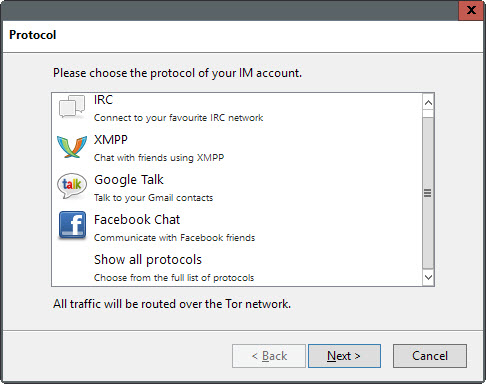
However, now that won’t be necessary as the creators of Tor have unveiled a new chat service that allows you greater security without the need to register with new accounts. The new service will allow you to use, amongst others, Twitter, Yahoo, Facebook Messenger, and Google Hangouts.

tor computer

This new open code software has been designed with privacy as its main goal, but without losing comfort and ease of use which is a characteristic of the popular chat services.

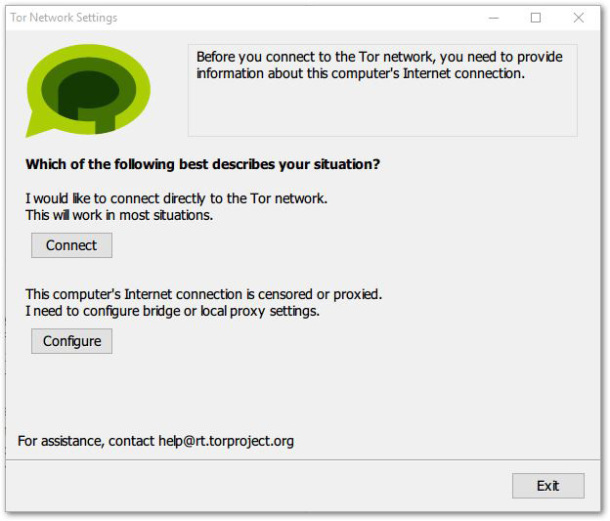
Tor Messenger is already available as a beta version for Windows, Mac, and Linux. Upon entering, the first thing the program does is connect to the Tor network, which can take a few minutes. Once that is completed, all of your messages will be encrypted via Tor’s network.

“It will be impossible to spy on conversations or identify the message partner”, assures one of the program’s creators. To sum it up, you can chat anonymously with your friends on Facebook, Twitter, or Google, and you don’t need to explain to them how the program works. “You can continue communicating once your friends are able and willing to do so”.

tor settings

The tool is still new and needs some tweaking to improve its service, such as the inclusion of certain features in the future like the ability to send and receive messages via Twitter, automatic updates, and the transferring of encrypted files.

The program is based on Instabird, a customer of Mozilla’s chat platform. This allows the user to use various different messaging services at the same time from the same place. The main addition is the anonymity offered by the Tor network, something which despite being offered on other services such as Ricochet and Pond, lacked the convenience of this new service.

Tor chat groups together the best commercial apps and the most secure of solutions, so feel free to chat away knowing that your privacy is protected.

The post Tor Messenger, the new way of chatting anonymously appeared first on MediaCenter Panda Security.

Google drops Chrome support for old operating systems

Are you still running an old PC operating system like Windows XP or Vista?

There are some risks running an unsupported operating system — the biggest is falling behind with security updates and fixes.

As years roll by it’s necessary for companies to “deprecate” (a fancy way of saying “make obsolete”) older versions of their software. This becomes necessary because it’s hard coordinating and supporting many different versions.

Google has announced that from April 2016 they will no longer be supporting their popular Chrome web browser for certain older operating systems.

The operating systems affected are:

  • Windows XP
  • Windows Vista
  • Mac OS X 10.6 (Snow Leopard)
  • Mac OS X 10.7 (Lion)
  • Mac OS X 10.8 (Mountain Lion)

How does this affect me?

Chrome will continue to work on the operating systems mentioned above, but will no longer receive updates and security fixes.

If you continue to use an old operating system, and software that is no longer supported, then you will likely be more vulnerable to new and emerging security threats.

What can I do?

To avoid vulnerabilities and the risk of infection from malware and viruses, we recommend that you always keep your operating system and all your software up-to-date.

Consider upgrading your operating system where possible for the best protection and productivity, and if this means upgrading your old computer, it may well be worth exploring.  Think about it, the cost of data loss from a security breach could be costlier than the price of new hardware.

And while you’re at it, installing an effective antivirus and security suite is worth it for peace of mind — PC users can download AVG AntiVirus Free, and Mac users can download our free AVG AntiVirus for Mac.