Tag Archives: Threats

Don’t Let Your Mac Fall Asleep: It Might Dream Up A Rootkit

Just last month we talked about how the “Unicode of Death” crashes your iPhones and Apple Watches, how easily Apple Safari can be manipulated via URL-Spoofing and the Ex-NSA guy who pointed to Mac security flaws.

Now Pedro Vilaca, a security expert who is deep into Mac OS X and iOS security, found another not so great looking vulnerability. Take a look at what he wrote on his blog: “Well, Apple’s S3 suspend-resume implementation is so f*cked up that they will leave the flash protections unlocked after a suspend-resume cycle. !?#$&#%&!#%&!#.

And you ask, what the hell does this mean? It means that you can overwrite the contents of your BIOS from userland and rootkit EFI without any other trick other than a suspend-resume cycle, a kernel extension, flashrom, and root access.”

Wow. So basically it is possible to install a rootkit on a Mac without much of an effort. Just wait until the machine enters sleep mode for at least 30 seconds or more so the Flash locks are removed. Once gone the device is yours. With the Flash locks gone you can play around with the UEFI code and well … for example install a rootkit. The only way to protect yourself from it is to never let your Apple device go into sleep mode.

Luckily not all devices seem to be affected. Vilaca tested the issue against a MacBook Pro Retina, a MacBook Pro 8,2, and a MacBook Air, all running the latest EFI firmware available. All of them were vulnerable. There is a shimmer of hope though: The latest MacBooks might have been silently fixed by Apple, since the security expert was not able to replicate the vulnerability there.

The post Don’t Let Your Mac Fall Asleep: It Might Dream Up A Rootkit appeared first on Avira Blog.

Popular Free VPN Hola Sells Users Bandwidth for Botnets

Sounds good, right? Especially in times when you just want to access Netflix U.S. for this one show but can’t because of licensing restrictions; or when everyone might be spying on you. Yes, now is the perfect time for a VPN (Virtual Private Network). Normally you have to pay for the service though. And that’s where Hola comes into play. Hola is a free Chome browser plugin and according to the ratings left on its’ Chrome page VERY popular.

So how come a service like this can afford to stay free? It’s pretty simple really: they sell your bandwidth. “When a user installs Hola, he becomes a VPN endpoint, and other users of the Hola network may exit through his internet connection and take on his IP. This is what makes it free: Hola does not pay for the bandwidth that its VPN uses at all, and there is no user opt out for this,” says Fredrick Brennan, the operator of 8chan in a note on his site.  He continues:  “Hola has gotten greedy. They recently (late 2014) realized that they basically have a 9 million IP strong botnet on their hands, and they began selling access to this botnet (right now, for HTTP requests only) at https://luminati.io. […] An attacker used the Luminati network to send thousands of legitimate-looking POST requests to 8chan’s post.php in 30 seconds, representing a 100x spike over peak traffic and crashing PHP-FPM.”

This is definitely not cool, but what does it mean for you? Well, if you are using Hola your connection will be used by other users to access pages in your country that are blocked for their IP but are available with yours. This is perhaps annoying, but not all that bad. But what of you IP might be one of those that get abused by people to perform illegal acts online?

Now is probably the best time to rethink using this specific free service.

The post Popular Free VPN Hola Sells Users Bandwidth for Botnets appeared first on Avira Blog.

100,000 Tax Accounts Breached Through IRS “Get Transcript” App

While nothing is impossible to breach you’d think that it would be really really hard to gain access to information like the one from the IRS. At least that’s what I thought – until I saw their press release today. According to the statement cybercriminals managed to illegally gain access to data from about 100,000 accounts by using the IRS’ very own “Get Transcript” app. Accessed data include things like addresses, birthdates, Social Security information, and the tax filing statuses.

Now don’t misunderstand the situation: The IRS has not been hacked. Well. Not in the usual sense of the word anyway. “These third parties gained sufficient information from an outside source before trying to access the IRS site, which allowed them to clear a multi-step authentication process, including several personal verification questions that typically are only known by the taxpayer”, explains the IRS statement. What does that mean? The criminals collected a lot of data and information on a lot of unlucky people – be it through phishing of by buying data from shady online sources – and used them to actually access taxpayers past tax records.

According to the information supplied the attackers tried to access 200,000 accounts between February and mid-May which leaves them with a success rate of 50%.

Once the IRS identified the questionable attempts to gain access to its data it decided to shut down the “Get Transcript” app temporarily. The whole affair is now also under investigation of the Treasury Inspector General for Tax Administration and the IRS’ Criminal Investigation unit.

The IRS closes the statement with the following: “The IRS will be working aggressively to protect affected taxpayers and strengthen our protocols even further going forward.”

The post 100,000 Tax Accounts Breached Through IRS “Get Transcript” App appeared first on Avira Blog.

Scamware or why you shouldn’t believe in miracles

We normally make fun of this, or just totally ignore it. We know that it probably is a scam. So, if we don’t believe those ads, why do we believe in some apps? Apps that advertise things like:

  1. Get free stuff in our shop through your favorite social network with the ‘Just click and win’!
  2. Fix your computer; increase your RAM and hard disk space all in one click with ‘Ultra Optimizer Plus’!
  3. Install this app on your phone to get ‘Sexy videos on your phone for free 😉😉 ‘!
  4. Buy the NEW SUPER SHINY (not official) Video ‘Not-Fake Player’!

Nowadays Social Networks appear to be the best places to find victims for scams. Who hasn’t seen offers like “Like and share to win an iPhone”, “See the leaked video of the last Pop Star”, “New Facebook features!” and so on Facebook? These are – of course – usually tricks to make you fall for a scam.

facecrooks has a huge list of Facebook related scam. Below are just two of the countless examples:

Free iPhones: Like the Facebook page and share the picture. It is easy to win a phone right? Wrong. There is no iPhone and you will be spammed from this page (pages can be sold as advertising spaces) because you gave them a like.

2 Picture from facecrooks.com

 
Profile viewer: Don’t you want to know if the girl from school or the boy from work is seeing your pictures? So better ask them because these kinds of plugins/features/apps don’t work. Normally behind these links you will find some PUA or Adware ready to be downloaded and installed on your computer.
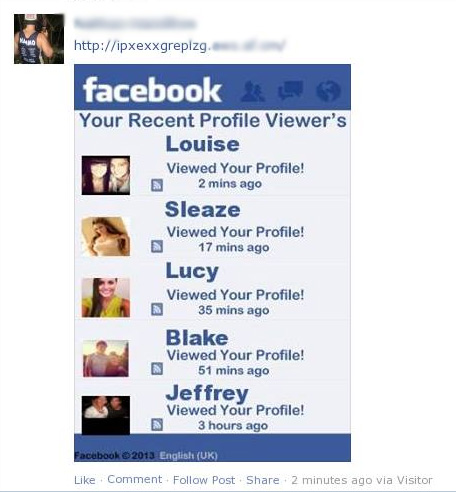
3 Picture from facecrooks.com

Then there are applications that can improve the performance of your computer. We offer you Avira System Speedup. This program can defragment your hard drive or delete useless folders and registry entries. It works perfectly well and WILL speed up your PC – to some degree. But there is just no application that will perform wonders on your PC. If it is 8 years old and slow, it will just never feel like a newer machine with more RAM and a better CPU despite your efforts and you paying €50 to improve it with a random program that promises you just that. Those scam apps, apart from not fixing your computer, also create errors or problems that didn’t exist before, in order to make you pay even more money for fixes you would not have needed in the first place.

Optimizer Pro (another real world example) could be classified as scareware as well; it tells us that the computer needs to fix things that, in fact, are working correctly. It uses our fear to get us to pay for the product.
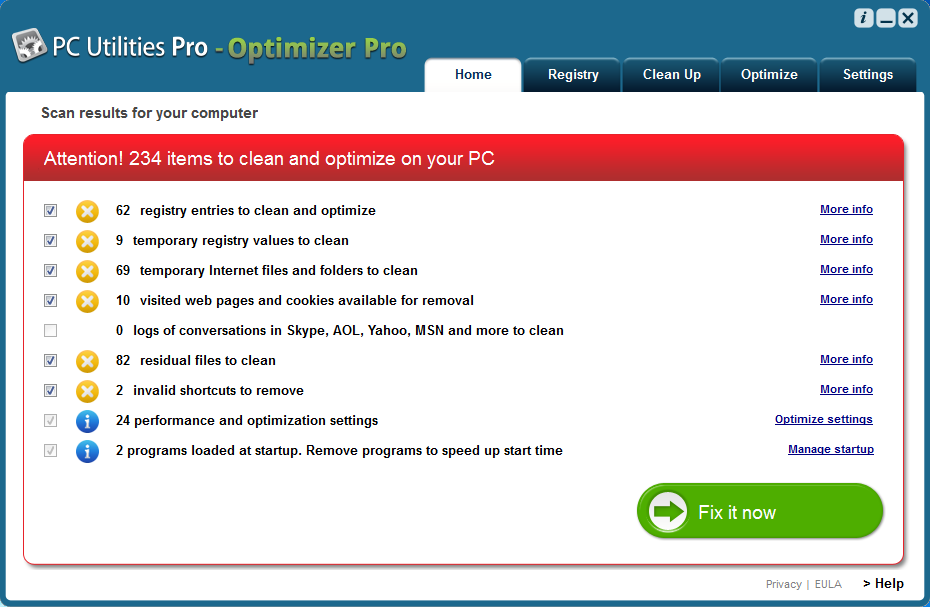
4

Scam is not getting old. It is also very present on our smartphones. Do you want an app that does things for free where others take money? It is possible, but be careful. With these applications you will usually be walking on thin ice.

Porn app for Android for example is an app that allows users to watch porn videos for free. Just accept the conditions, give them permissions and run the app as soon as you can! Ooops! Did you think ransomware was only affecting your PC? Now you also have your phone blocked.
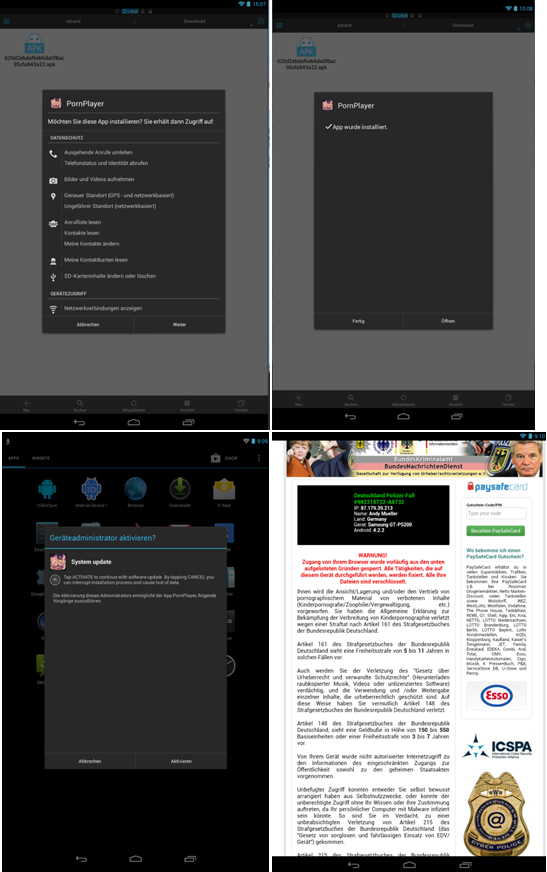
5

When you want to get an application, try to download it from the original source if possible. Also check different sites first, since lots of applications are actually for free.

Even on a well-known and trusted site like Amazon it is easy to find scam regarding original software. VLC is a popular video player which can be downloaded for free – but believe it or not, there are actually people trying to sell it to you to make some quick bucks.
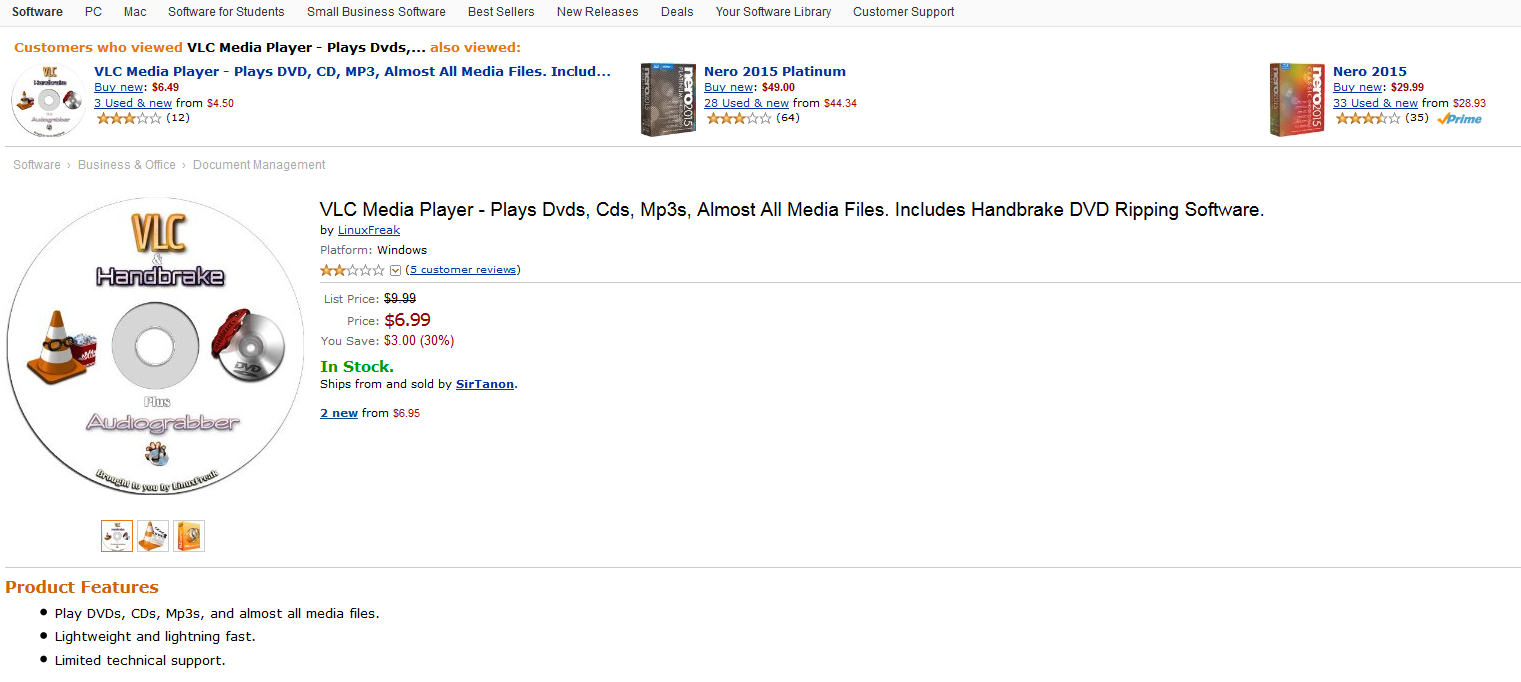
6

If you don’t trust the source, or if it looks just a tiny bit suspicious, turn around and run as fast as you can. Regarding scam applications: If you are looking for something specific, first check for another users opinions and more information, compare it with other products, and if you are still not sure, just leave it be.

In conclusion, Scamware is a waste of time and money and never does the things you were promised it was going to do. So don’t believe in these false promises of “eternal life potion”, “Ferraris for free” or “1 click super computer”.

Links:

The post Scamware or why you shouldn’t believe in miracles appeared first on Avira Blog.