Red Hat Enterprise Linux: An updated Adobe Flash Player package that fixes multiple security issues
is now available for Red Hat Enterprise Linux 6 Supplementary.
Red Hat Product Security has rated this update as having Critical security
impact. Common Vulnerability Scoring System (CVSS) base scores, which give
detailed severity ratings, are available for each vulnerability from the
CVE links in the References section.
CVE-2015-7651, CVE-2015-7652, CVE-2015-7653, CVE-2015-7654, CVE-2015-7655, CVE-2015-7656, CVE-2015-7657, CVE-2015-7658, CVE-2015-7659, CVE-2015-7660, CVE-2015-7661, CVE-2015-7662, CVE-2015-7663, CVE-2015-8042, CVE-2015-8043, CVE-2015-8044, CVE-2015-8046
A hackathon resulting in creative prototypes of apps and hardware.
Avast engineers pull an all-nighter
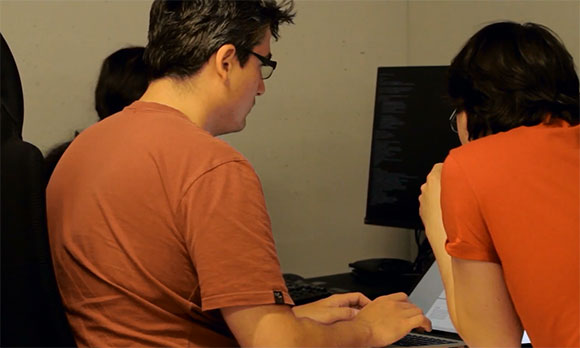
It had all the makings of a classic hackathon: An all-nighter in a weird location fueled by coffee and good ideas. Located in the parking garage of our current Avast headquarters, R&D teams participated in the event with the goal to invent cool things we can implement in our new HQ building, which is nearly completed.
We dubbed the hackathon Párkathon, because our new HQ building has a sausage-like curve to it. In the Czech language sausage is “párek” + hackathon = Párkathon.
Here’s what it looked like:
The Párkathon started on Thursday and continued through the wee hours of the morning all the way through Friday evening. Some people were so psyched about their projects that they continued at home or even stayed at the office during the weekend to finish . On Monday morning, the epic hackathon ended with a demo session and attendees voted for the winning team. The prize was a barbecue party for that team. And they kindly invited all the other Párkathon attendees.
Some of the projects that came out of Párkathon include:
Winning projects
iZasedáček – an interactive version of the office seating plan. This app let’s people quickly find who sits where and localize empty chairs. It includes floor maps of the building.
Stairs vs. Elevators – devices for measuring stairs or elevator usage. Including HW prototype – every time someone crosses two laser beams, his walk through is counted. Other use cases are under development.
Other projects that came out of Párkathon
Waldo – a tool for the real-time search of people within the building using iBeacons and GPS. Users can send messages along with a location request inside or outside the building to quickly organize a meeting.
Hacked Earth – 3D visualization of geo-located data on Earth’s surface. Can be used for real-time display of virus attacks around the world or product information like the visualization of app installations. The plan is to use it at reception, meeting rooms, or for events.
FunMon – the real-time monitoring of table football and billiards usage. Uses HW sensors to detect facility usage and allows short-term booking.
Orchestrované zobrazovátko – a system for streaming content to TVs around the building. This is an easy way to show content on any TV. There is also the option to broadcast the same message on a group of TVs or even all of them.
Zasedačkomat – an app for wall-mounted Android tablets in each meeting room. It shows the room availability and allows you to perform basic tasks like reserving the room or releasing it for use.
3D navigation – printing of custom made direction signs for our new building. This task included learning to work with 3D printer.
Multiple cross-site scripting (XSS) vulnerabilities in HP ArcSight Management Center before 2.1 and ArcSight Logger before 6.1 allow remote attackers to inject arbitrary web script or HTML via unspecified vectors.
Multiple cross-site scripting (XSS) vulnerabilities in the web framework in Cisco FireSIGHT Management Center (MC) 5.4.1.4 and 6.0.1 allow remote authenticated users to inject arbitrary web script or HTML via unspecified parameters, aka Bug ID CSCuw88396.
Symantec Endpoint Protection Manager (SEPM) 12.1 before 12.1-RU6-MP3 allows remote attackers to execute arbitrary Java code by connecting to the console Java port.
Race condition in the administration-panel web service in IBM System Networking Switch Center (SNSC) before 7.3.1.5 and Lenovo Switch Center before 8.1.2.0 allows remote attackers to obtain privileged-account access, and consequently provide FileReader.jsp input containing directory traversal sequences to read arbitrary text files, via a request to port 40080 or 40443.
The administration-panel web service in IBM System Networking Switch Center (SNSC) before 7.3.1.5 and Lenovo Switch Center before 8.1.2.0 allows local users to execute arbitrary JSP code with SYSTEM privileges by using the Apache Axis AdminService deployment method to install a .jsp file.