CRLF injection vulnerability in Dropbear SSH before 2016.72 allows remote authenticated users to bypass intended shell-command restrictions via crafted X11 forwarding data.
Monthly Archives: March 2016
Cyber-crooks can use your wireless mouse and keyboard!

Remember how the problems you had with the nightmare of tangled cables going in and out of your computer went away the day you discovered wireless devices? In fact, you swore never to touch a wired device again after buying a keyboard and mouse capable of communicating with your computer without needing to be physically connected to it. You even went as far as to replace your laptop’s touchpad with a mouse that communicates with your computer via a small USB connector as if by magic.
Well, we have news for you: A group of security experts have discovered that these devices, as convenient as they are, are not very safe. Cyber-criminals can take control of users’ computers remotely by exploiting flaws found in wireless keyboards and mice from seven major manufacturers (Logitech, Dell, Microsoft, HP, Amazon, Gigabyte and Lenovo).
The security hole affects millions of devices that use chips sold by the Norwegian firm Nordic Semiconductor. These chips allow devices to establish a short-wave radio communication with the target computer. Although these chips are capable of encryption, they require that vendors write their own firmware to implement that encryption and secure the connection between computers and peripheral devices. However, many companies don’t take the precaution to encrypt those communications.
And even if they did, it wouldn’t be much use. The companies that do encrypt their communications do not properly authenticate communicating devices, allowing rogue devices to inject unencrypted keystrokes over the same connection. Actually, the security experts that unveiled this vulnerability found several flaws in the firmware of the keyboards and mice that use those chips.
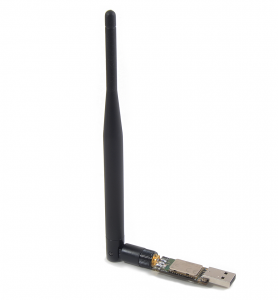
A simple and affordable USB adapter with an antenna and a laptop was all they needed to demonstrate that it is possible to interfere with the radio protocol used by these devices to communicate with their USB dongle and send commands to the target computer. To do that, the target computer must be relatively close to the antenna, although they have been able to control Lenovo wireless devices from 180 meters away.
So, any attacker that used the method discovered by these researchers could take over a computer without laying a finger on its mouse or keyboard. The commands sent by the hacker would be interpreted by the computer as coming from the legitimate device.
Now, what could an attacker that took advantage of this flaw actually do on the affected system? Nothing much, really. Even if they managed to access the targeted computer, they wouldn’t be able to see its screen, so even unlocking the computer would be a difficult task not knowing the relevant password.
According to these experts, if the computer were actually unlocked, the cyber-crook would be able to download malware that could allow them to take full control of the computer.
However, the attacker would only have the same privileges as the legitimate user. If the computer were in an office, for example, they probably wouldn’t have the necessary permissions to install malicious programs on it.
 A Logitech spokesperson has already claimed that the “vulnerability would be complex to replicate” and “is therefore a difficult and unlikely path of attack.” Despite that, the company has decided to develop a firmware update for the affected devices.
Similarly, Lenovo has announced that it will give users the option to replace the affected devices. Microsoft, however, has simply stated that it will only launch an update as soon as possible.
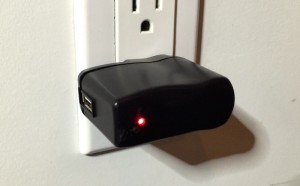
This is not the first time that researchers warn of the dangers of wireless keyboards and mice. Last year, renowned security expert Samy Kamkar developed Key Sweeper, a keylogger hidden in a fake USB charger that logged the keystrokes typed on any Microsoft wireless keyboard. With the help of an Arduino board, anyone could develop this keylogger software and find out what others were typing.
This research is extremely significant as it demonstrates that millions of devices are vulnerable. Taking into account that it may encourage cyber-criminals to start doing some tests, it may be a good idea to start updating your devices’ firmware whenever possible, and even replace vulnerable keyboards and mice with wired peripherals or, better still, wireless devices that communicate with computers via Bluetooth.
Bear this in mind, however: as cyber-crooks need to be close to the target device to carry out this attack, it seems logical that they set their eyes on companies rather than home users. But don’t lower your guard: prevention is better than cure…
The post Cyber-crooks can use your wireless mouse and keyboard! appeared first on MediaCenter Panda Security.
Kaspersky Lab Launches Kaspersky Internet Security for Android Managed via Smartwatches
Kaspersky Lab has announced the availability of a new version of Kaspersky Internet Security for Android with an option for managing user protection via Android Wear devices.
[RT-SA-2016-002] Cross-site Scripting in Securimage 3.6.2
Posted by RedTeam Pentesting GmbH on Mar 22
Advisory: Cross-site Scripting in Securimage 3.6.2
RedTeam Pentesting discovered a cross-site scripting (XSS) vulnerability
in the Securimage CAPTCHA software, which allows attackers to inject
arbitrary JavaScript code via a crafted URL.
Details
=======
Product: Securimage
Affected Versions: >= 3.2RC1
Fixed Versions: 3.6.4
Vulnerability Type: Cross-site Scripting
Security Risk: high
Vendor URL: https://www.phpcaptcha.org/
Vendor Status:…
Who Viewed Your Profile on Instagram? Obviously, Hackers!
Are you curious about who viewed your profile on Instagram?
This is probably the most frequently asked question nowadays, and there are several applications available on Google Play Store and Apple App Store, which claims to offer you the opportunity to see who is looking at your Instagram profile.
But, should we believe them?
<!– adsense –>
Is there really some kind of way out to


Adobe Flash Wild Write Crash
Adobe Flash suffers from a wild write at 0x453b0cf0 in color conversion that causes a crash.
Adobe Flash Content Information Leak
Adobe Flash suffers from an information leak that may render non-deterministic content that apparently contains pointers.
Adobe Flash AAC Audio Handling Out-Of-Bounds Read
Adobe Flash suffers from an out-of-bounds read in AAC audio handling.
Adobe Flash Negative Table Indexing Out-Of-Bounds Crash
Adobe Flash suffers from an out-of-bounds crash due to a negative table indexing error loading an 8-byte wide value.
Adobe Flash Corrupt Stack Crash
Adobe Flash has an issue where a corrupt stack leads to misaligned XMM instruction decoding h.264.