Anyone interested in computer security and how it is circumvented, will certainly enjoy the hacking that takes place on USA Network’s hit television show Mr. Robot. The show has been praised not only for its compelling story line but for its “accurate portrayal of cybersecurity and crime.”
Every Wednesday night after the show airs, our host Ariana asks a security expert to help us examine the hacks and explor their ramifications in the real world. We record the conversation and share it with you in our video series, Avast Hack Chat. In addition to the discussion about hacking, we also take a weekly trip back in the Time Machine to revisit special people in the history of computing or how computers have been portrayed in popular culture.
Avast Hack Chat: Episode 2 “Ones and ZerOs” Program Notes
In episode 2 of Avast Hack Chat, Seth Rosenblatt, an independent security and privacy journalist, takes us through the hacks on Mr. Robot. He explains hacking a major corporation’s email servers, destroying your hard drive and SIM card to get rid of evidence, and if critical infrastructure like a natural gas plant can be hacked.
Alan Turing, who is referred to the grandfather of computer science, was recently portrayed in the movie The Imitation Game. Ariana and Pedram talk about his legacy and how the advances he made are still in use today. Plus, a computer bug.
Pedram brings us up-to-date on the celebrity photo hacking that took place last year. He shares why he thinks the hacker was an idiot.
This week’s Tips and Tricks tells you the safe way to go about sexting. Not that we want you to do it, but if you are there’s a way to make sure your messages stay secure and get to the intended recipient (who probably is not some guy sitting behind a desk at the NSA.)
Newest CryptoWall variant enters systems through a click fraud botnet.
Earlier this year, we told you about the return of CryptoWall, malware that encrypts certain files in your computer and, once activated, demands a fine around $500 as a ransom to provide the decryption key. These kinds of financial fraud schemes target both individuals and businesses, are usually very successful and have a significant impact on victims. The problem begins when the victim clicks on an infected advertisement, email, or attachment, or visits an infected website.
Recently, a click fraud botnet with ties to CryptoWall has been discovered. The malware, nicknamed ‘RuthlessTreeMafia‘, has been being used to distribute CryptoWall ransomware. What first appears as an attempt to redirect user traffic to a search engine quickly mutates into an alarming threat as infected systems begin to download CryptoWall and system files and data become encrypted, rendering them useless by their owners. Click fraud and ransomware are two types of crimeware that are usually quite different from one another and typically don’t have many opportunities to join forces; therefore, the result of this unlikely yet powerful collaboration can be detrimental to its victims.
In a public service announcement issued on June 23, the FBI warns of the continued spread of this variant of CryptoWall that has the potential to affect not only individuals, but also government entities and businesses. The report reads:
“Many victims incur additional costs associated with network mitigation, network countermeasures, loss of productivity, legal fees, IT services, and/or the purchase of credit monitoring services for employees or customers. Between April 2014 and June 2015, the IC3 received 992 CryptoWall-related complaints, with victims reporting losses totaling over $18 million.”
The uncovering of this most recent CryptoWall variant also goes to show just how creative cybercriminals can be when coming up with ways to get their malware onto people’s systems. A simple click fraud botnet compromise can now lead to a potentially serious ransom attack.
How to stay safe against infection
Go with your gut. Don’t click on any emails or attachments that appear as suspicious or unfamiliar to you.
Enable popup blockers. Popups are a popular way for hackers to spread malware. To eliminate the chance of accidentally clicking on a popup, it’s best to prevent them from appearing in the first place.
Educate employees about the dangers of malware. It’s crucial that SMBs teach their employees about the risks that malware pose to their business. Hold regular workshops to educate employees about common malware attacks, such as phishing emails, and how they can stay safe against them.
Always use antivirus software and a firewall. It’s crucial that you download and use antivirus software to best protect yourself against malicious attacks. For the highest level of protection, regularly make sure that your software is updated to the latest version.
Remember when you used to make sure you were home at a certain time so you wouldn’t miss your favorite TV show? That was called “appointment television”, and those of you old enough to remember watching The X-Files or Friends when they originally aired know what I’m talking about. But, with the new USA Network show, Mr. Robot, it feels like those days are back again. Sure, I have my DVR set to record, but I will definitely watch it live. Since all my buddies are watching too, I will be itching to talk about it the next day.
Avast’s new Hack Chat video series brings back that around-the-watercooler discussion. Watch our debut episode here (10:13).
Avast Hack Chat: Episode 1 “Hello Friend” Program Notes
In episode 1 of Avast Hack Chat, host Ariana welcomes special guest, security researcher and software developer, Pedram Amini.
In the first half of the show, they discuss the pilot episode of USA Network’s new show, Mr. Robot. Ariana walks us through the highlights of the cyberthriller, and Pedram explains if these hacks are real-world or just Hollywood magic. You can also read our interview with Pedram on Are the hacks on Mr. Robot real?
One of the earliest hacking movies, War Games, starred Matthew Broderick as a young computer wiz who inadvertently finds a backdoor into the U.S. military’s central computer. The technology he used is intriguing even now, and Ariana and Pedram discuss this old-school method in the Time Machine section.
Back to current day, Pedram answers Ariana’s question about why the NSA would want to reverse engineer Avast software and if the I-have-nothing-to-hide attitude is the wisest one to take. You can also read what Avast’s CEO, Vince Steckler has to say on the subject on Avast CEO speaks out about U.S. and U.K. spy agencies.
One of the largest e-commerce platforms, Magento, has been plagued by hackers who inject malicious code in order to spy and steal credit card data or any other data a customer submits to the system. More than 100,000+ merchants all over the world use Magento platform, including eBay, Nike Running, Lenovo, and the Ford Accessories Online website.
The company that discovered the flaws, Securi Security, says in their blog, “The sad part is that you won’t know it’s affecting you until it’s too late, in the worst cases it won’t become apparent until they appear on your bank statements.”
Minimize your risk for identity theft when shopping online
Data breaches are nothing new. The Identity Theft Research Center said there were 761 breaches in 2014 affecting more than 83 million accounts. You probably recall the reports of Sony, Target, Home Depot, and Chic Fil A.
We have heard lots about what we as individual consumers can do to protect ourselves: Use strong passwords, update your antivirus protection and keep your software patched, learn to recognize phishing software, and be wary of fake websites asking for our personal information.
But this kind of hack occurs on trusted websites and show no outward signs that there has been a compromise. The hackers have thoroughly covered their tracks, and you won’t know anything is wrong until you check your credit card bill.
So how do you minimize the risk of online shopping?
Use a payment service or your credit card– Experts agree that payment services like PayPal are safe because of their security practices and the encryption technology they use. Just don’t link it to your checking account. Link it to a credit card so you get your credit card’s fraud protections in addition to PayPal’s. If you only use a credit card, designate one card for online purchases so if something unusual happens, you don’t have to track down all your other cards.
Keep a paper trail – Once you place your order, print or save records of the transaction. Check your credit card statement to make sure transactions match and there were no unauthorized charges.
Avoid shopping while using public Wi-Fi – Unsecure public Wi-Fi hotspots do not give you any protection from hackers who want to monitor what you are doing online. It’s not difficult for someone to intercept and modify communications between you and another site. If you have to do it, then use a Virtual Private Network (VPN) so your communications will be encrypted.
What to do if you are caught in a data breach
Get a new card – Either get a replacement card from the company or close your account.
Change your passwords – If you have an account or have done business with any company that falls victim to a breach, then change your password ASAP. It’s a good idea to change all your passwords because hackers sell them to other cybercrooks.
Monitor your bank and credit card statements – Don’t wait for your monthly statement to arrive in the mail. By then, a cybercrook could have done major damage. Check your online statement until your new card arrives. If you see any suspicious charges, report it immediately.
Freeze your credit – you can request that your credit report be frozen from the three main credit bureaus; Equifax, Experian and TransUnion. This way, no one can access your credit report without your approval.
Here’s your wrap up of security and privacy related news from the June 17 – 27 posts on the Avast blog:
It’s summertime in the Northern Hemisphere and many people are going on or planning their vacation. Beware of fake vacation packages and beautiful rental properties that are not as they seem. These Vacation scams can ruin your holiday, so read up before you become a victim.
More than 600 million Samsung phones were reported to be at risk because of a vulnerability found in the keyboard app SwiftKey. The best way to protect yourself is to use a virtual private network (VPN) when using an unsecured Wi-Fi hotspot. If you have a Samsung S6, S5, or S4, you need to read Samsung phones vulnerable to hacker attack via keyboard update.
As we learned from the Hola VPN service revelations, any old VPN service will not do. Hola was selling their users’ bandwidth and installing and running code on their devices without their knowledge or permission. Find out the details in Hola, Hola VPN users, you may have been part of a botnet!, and please share with an Hola user.
Mobile developer Martin Banas, attended Apple’s Worldwide Developers Conference in San Francisco. Besides spending lots of time standing in lines, he enjoyed meeting other developers and hearing the latest news about OS X El Capitan and Apple Pay. Weren’t able to attend, bit wish you could have? Martin’s conference report, Looking back at WWDC 2015, describes the event.
Remember the iCloud celebrity photo hack? There have been many theories bandied about since nude photos of female celebrities were posted on the web. We add our own two cents into the conversation. Avast security researcher Philip Chytry explains what he thinks the origin and motivation behind the hack was in iCloud celebrity photo hack: What’s happening?!
Major cybercrooks taken down
While the cybercrooks behind the iCloud hack have not been discovered, authorities had big wins this past week in other areas. The author and distributor of Blackshades malware was sentenced to nearly five years in a New York prison. A major cybercriminal organization responsible for banking Trojans Zeus and SpyEye was taken down. Read Businessman hackers brought down in USA and Europe.
More from the Edward Snowden files. It was revealed this week that U.S. and U.K. spy agencies were attempting to reverse engineer major antivirus companies software, including Avast’s. CEO Vince Steckler spoke to RT News about government spying in the computer age. You can read the article, Avast CEO speaks out about U.S. and U.K. spy agencies, and watch the interview here.
And if the real world of cybercrime is not enough, our favorite new show of the summer Mr. Robot debuted on the USA Network this past week. We excitedly watched the first episode then talked to Avast security expert, Pedram Amini, to find out Are the hacks on Mr. Robot real? or just Hollywood magic.
Follow Avast on Facebook, Twitter and Google+ where we will keep you updated on cybersecurity news every day.
Cybercrooks run their organizations like businesses these days. They have multinational offices, marketing departments, business development, and technical support teams. Maybe they also need some security…
Major cybercrooks taken down
Malware entrepreneur sentenced to 57 months in prison
One such malware entrepreneur, Alex Yucel, sold malware through a website that he operated, to other hackers. The Blackshades malware allowed hackers to remotely control their victims’ computers. They could do such things as log the victim’s keystrokes, spy through webcams, and steal usernames and passwords for email and other services. They could also turn their computers into bots which were used to perform Distributed Denial of Service (DDoS) attacks on other computers, without the knowledge of the victim.
Manhattan U.S. Attorney Preet Bharara said: “Alex Yucel created, marketed, and sold software that was designed to accomplish just one thing – gain control of a computer, and with it, a victim’s identity and other important information. This malware victimized thousands of people across the globe and invaded their lives. But Yucel’s computer hacking days are now over.” See the Department of Justice press release here.
Yucel sold the software for as little as $40 on PayPal and various black market forums. The profits from sales of the malware is estimated to be at $350,000. Yusel plead guilty to computer hacking and was sentenced to almost five years in a New York prison. Last year more than 100 customers of Blackshades were arrested in massive raids in Europe and Australia.
Cybercrooks business dismantled in Ukraine
In Europe, a joint investigation team brought down a major cybercriminal group in Ukraine. These high-level cybercrooks are suspected of developing, exploiting, and distributing well-known banking Trojans Zeus and SpyEye. The malware they developed attacked online banking systems in Europe and elsewhere. The damages are estimated to be over 2 million euros.
Their business was organized into specialty groups. Some ran a network of tens of thousands of computers, others harvested victims banking credentials such as passwords and account numbers, and others laundered their ill-gotten gains through money mule networks. This group of cybercrooks also had a marketing team that advertised on underground forums, sold their hacking services to other cybercrooks, and had a business development department seeking cooperation partners.
It took investigators and judicial authorities from six different European countries, supported by Eurojust and Europol, to stop this major cybercrime organization.
“In one of the most significant operations coordinated by the agency in recent years Europol worked with an international team of investigators to bring down a very destructive cybercriminal group,” said Rob Wainwright, Director of Europol.
For as long as there have been governments, there have been spy agencies, and for as long as there have been spy agencies, they’ve done spying. Spy agencies are always looking for ways to get information. Information is valuable, always has been, always will be. ~Avast CEO Vince Steckler
New documents from the many that were leaked by former US intelligence analyst Edward Snowden were published this week in The Intercept. They reveal that the U.S.’s National Security Agency (NSA) and its British counterpart, Government Communications Headquarters (GCHQ), spied on security companies including Avast, AVG, Kaspersky Lab, and Antiy. The spy agencies seem to be targeting non-American security companies; Avast and AVG are based in Prague, Czech Republic; Kaspersky is based in Moscow, Russia; and Antiy is Chinese. Together, these companies have nearly a billion users. No U.S. or U.K. -based companies were included in the list.
“Geopolitically, it makes sense that the NSA and GCHQ are targeting products that are prevalently used by foreign governments, like Kaspersky in Russia or CheckPoint in Israel,” said Steckler in an interview with RT News. “On the flip side, Russian or Chinese spy agencies may be similarly targeting products that the American government heavily uses, for example Symantec and McAfee. We’re hearing just one side of the story.”
Reportedly, the NSA and GCHQ experts reverse engineered the antivirus software in order to exploit it and prevent detection of their own activities.
“It is difficult to tell if the NSA, the GCHQ, or other government agencies have ever tried to reverse engineer our software,” said Steckler. “Even if they did, they would only be able to do so on the client side, which includes simple pattern detection. However, they could not reverse engineer our backend, which includes our sophisticated machine-learning classification.”
The documents also say that the organizations recommended monitoring customers who reported malware “to see if they’re into more nefarious activity.”
While some companies most likely partner with the governments in their home countries, that’s not something Avast does.
“The fact that the NSA may be targeting us – while some major U.S. and British security companies are left out from their list proves that we don’t work with the NSA and GCHQ,” said Steckler. “Ones not on the list quite likely provide their source code and thus there is no need to reverse engineer. Our commitment to our customers is to provide protection from all forms of spying.”
Mr. Steckler spoke to RT News, a Russian television network, about the new revelations. Watch the interview now,
Last night the pilot episode of MR. ROBOT, a new thriller-drama series aired on USA Network.
The show revolves around Elliot who works as a cyber security engineer by day and is a vigilante hacker by night.
I watched the episode and then sat down with Avast security expert Pedram Amini, host of Avast’s new video podcast debuting next week, to find out if someone like you or me could be affected by the hacks that happened in the show.
In the second minute of the episode we see Elliot explaining to Rajid, owner of Ron’s Coffee, that he intercepted the café’s Wi-Fi network, which lead him to discover that Rajid ran a child pornography website.
Stefanie: How likely is it that someone can hack you while you’re using an open Wi-Fi hotspot?
Pedram: Anyone with a just a little technical knowledge can download free software online and observe people’s activities on open Wi-Fi. We went to San Francisco, New York, and Chicago for a Wi-Fi monitoring experiment and found that one-third of Wi-Fi networks are open, without password-protection. If you surf sites that are unprotected, meaning they use the HTTP protocol, while on open Wi-Fi, then anyone can see, for example, which Wikipedia articles you are reading, what you’re searching for on Bing, and even see what products you are browsing for on Amazon and eBay, if you do not log in to the site.
Stefanie: Wow! That’s a bit frightening… How can I protect myself then?
Pedram: You can stay safe while using any public Wi-Fi network by using a Virtual Private Network (VPN). A VPN creates a virtual shield and tunnels traffic to a proxy server. The proxy server protects your personal data, thus preventing hackers from accessing your files and other sensitive information stored on your device.
We actually found that more than half of Americans connect to free and open Wi-Fi networks and that of the 55% who do, 76% prefer networks that don’t require registration or a password to connect, yet only 6% use a VPN or proxy while connected to open Wi-Fi.
Fast forward to minute 10:55. We see Elliot with his therapist Krista, whom he hacked (hacking people is clearly his hobby ).
Stefanie: Elliot says that hacking Krista was simple, because her password was her favorite artist and her birth year backwards. We know that you should always use a complex password, more than eight characters and that your password should include letters, numbers, and symbols, but do most people really have complex passwords? Could having simple passwords really put you at risk?
Pedram: Most people, unfortunately, do not have complex passwords. For example, we found that one-third of American’s router passwords contain their address, name, phone number, a significant date, and their child’s or pet’s name. Not only that, but last year we found that most hackers’ passwords were only 6 characters long and that the most frequently used word in their passwords was the word “hack”.
Having a simple password that is either a dictionary word or that is comprised of personal information can put you at risk
If you think about it, bits and pieces of our private lives are scattered on the Internet. Someone can easily do a quick Google search, check out some of your social media sites and with a little time and patience, they can figure out your simple password. Even worse, if you use the same password for multiple sites, you really make it easy for hackers to hack all of your accounts.
Moving forward to minute 25, Angela, Elliot’s friend and colleague, calls him for help because their client, E Corp, a multinational conglomerate, has been hit with a DDoS attack.
Stefanie: What is a DDoS attack? Can this affect the average computer user?
Pedram: DDoS stands for distributed denial of service attack and is used to make a service unavailable. In the end we discover that the attack on E Corp was actually based on rootkits that had subverted a variety of servers, but I’ll continue to describe a DDoS attack.
DDoS attacks are sent by two or more people, but more often by an army of bots AKA a botnet. These bots send so many requests to a server that the server becomes overloaded and cannot provide its service anymore. DDoS attacks target large businesses, so the average computer user does not become affected, unless the service they want to use is not available because it has been hit by a DDoS attack.
However, the average user can help facilitate a DDoS attack unknowingly. We researched home routers and found that millions are vulnerable. Routers are connected to the Internet 24/7 and can be easily exploited and used as a bot, which, as I explained, can be used in a DDoS attack. A famous example is the hack of the Sony Playstation Network and Xbox Live last Christmas – the hacker group claimed they used a router botnet for the attack.
To prevent this from happening, people should make sure their router firmware is always up-to-date and perform a router scan to check if their router is vulnerable or not.
In minute 55, Elliot tries to hack Krista’s new boyfriend, Michael. He calls Michael pretending to be a from his bank’s fraud department, confirming his address and asking him security questions to verify his account: what his favorite baseball team is, his pet’s name. Using the information he gathered combined with a dictionary brute force attack he attempts to get Michael’s password.
Stefanie: What is a brute force attack? Can this happen to the average user?
Pedram: A brute force attack is password guessing which systematically checks all possible passwords until the correct one is found. Think of it like a machine going through a huge dictionary of passwords that types each one into an account to unlock it.
Brute force was likely one of the techniques used in hacking the iCloud accounts which eventually lead to the nude celebrity pics from stars like Jennifer Lawrence and Kirsten Dunst being distributed over the Internet. This type of attack is not exclusively used against celebrities. Hackers can use brute force attacks to hack any user accounts, given they have account email addresses. Typically, they would target accounts that hold credit card or other financial information they can abuse for financial gain. This is why, again, it is vital you use strong passwords for all of your accounts.
Stefanie: Thank you for the chat Pedram. I look forward to discussing Mr. Robot’s next episode, Ones and zer0es with you next week!
You can watch MR. ROBOT on USA Network Wednesday nights 10/9 central.
Follow Avast on Facebook, Twitter and Google+ where we will keep you updated on the new Avast video podcast hosted by Pedram Amini.
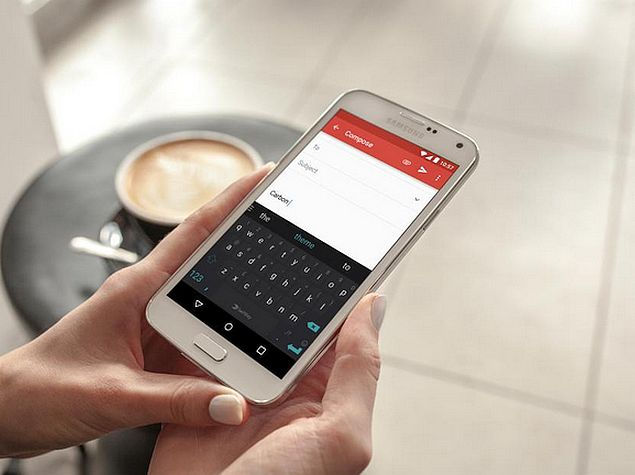
600 million Samsung mobile devices are at risk. Image source: gadgets.ndtv.com
We rely on our apps. Everyday we use our favorite ones to check news, the weather for our next trip, and communicate with our loved ones. Some apps, especially the system ones, are continuously in use, even if they are not the foremost app on your screen. The keyboard is one of them.
Recently, a dangerous vulnerability was discovered in the most popular keyboard, SwiftKey. If you have a Samsung S6, S5, and even a S4 running the stock operating system, you’re at risk. The app always checks for language updates, but this process is not performed in a secure way. If you’re connected with an open or public Wi-Fi, your phone is at risk of a very common and dangerous Man-in-the-middle attack. Your connection will be compromised and all the Internet traffic could be eavesdropped upon. That includes the passwords you’re typing in the very same keyboard, your financial information, everything.
To insure your security, you need to use a VPN when on Wi-Fi, since that’s when most updates are scheduled to occur. You probably already know what a VPN is and how it works. If not, you can find a lot of information in our blog. Our product, Avast SecureLine VPN, creates an encrypted tunnel for the inbound and outbound data of your Internet connection, blocking any possibility of a Man-in-the-middle attack.
But the story does not end here. If you use SwiftKey on an unsecured Wi-Fi, the attacker could also download malware into your phone or tablet. That’s a job for Avast Mobile Security & Antivirus (AMS). Some users think that we don’t need a security product for our phones. They also think that security companies exaggerate the need for a security app just to sell their products. AMS not only scans the installation process of apps but also checks the Internet sites you’re visiting and malicious behavior of any file in your device. You can install Avast Mobile Security & Antivirus on your Android device for free from the Google Play store.
NOTE: At the writing of this post, a patch for the vulnerability was provided to mobile network operators by Samsung. SwiftKey wrote on their blog, “This vulnerability is unrelated to and does not affect our SwiftKey consumer apps on Google Play and the Apple App Store.”
Do you dream of lounging with an umbrella drink on a sunny beach, hiking by a pristine lake in the cool mountains, or leisurely strolling through a world class museum? As you begin to make summer vacation plans, much of it planned and reserved via the Internet, here are a few scams to be aware of:
Fake vacation rentals
Private vacation rentals are growing in popularity and it’s easy to find one these days through portals like Airbnb, HomeAway, and Craigslist. A typical scam starts with attractive pictures of a property in a desired location. The phony landlord, who is really a scam artist, requires an up-front deposit on the rental that is typically sent by wire transfer. When the happy family arrives at the destination, it either doesn’t exist, it’s not at all like it was described, or it is not available for rental. It may even belong to someone else, who lives there and has no knowledge of the transaction.
How to protect yourself from vacation rental scams
Don’t be fooled by pretty pictures. Photoshop is amazing and an artist can do all kinds of tricks with it. Ask the property owner to send you additional photos. You can even look it up on Google’s Street View to make sure the property and address actually exists.
Use your credit card instead of cash to make any deposits. Cybercrooks prefer cash, so protect yourself by using your credit card. If you get in a jam, Visa, MasterCard, and American Express can help you recover money lost to fraud.
Fake vacation packages
“You’ve won a dream cruise to Bingo-Bongo Island!” A message like this may come to you via email or you may get a phone call from a hard-selling travel operator. Similar to the fake vacation rental, you are required to pay a deposit for your luxurious resort or cruise. When you arrive, you find out that the package was misrepresented and there are additional fees to be paid to get the “great deal.”
How to protect yourself from vacation package scams
Legitimate offers give you their cancellation and refund policy, along with details of the location of the vacation, the name of the cruise line or resort, the length of time you will be there, and contact information.
Get a confirmation or booking number from the cruise line, hotel, or airlines rather than the travel agency confirmation number. If the cruise line is not on your credit card statement, that is a warning flag.
Free airfare scams
Airfare is a big chunk of your vacation costs, so receiving a discount is welcome. But victims of airfare scams often find that after they pay they do not receive a confirmation or that their credit card has been declined. The only way to get the discount is to pay by wire transfer, which leaves the victim without a ticket and no way to claim a refund.
Social media scams, like this Southwest Airlines scam that has been going around Facebook for a few years, lure prospective travelers to malicious websites with sweepstakes offering free airline tickets. Victims are asked to complete online surveys which reveal personal information, and agree to hidden offers in the fine print of the contest. They are encouraged to share the scam which then gets sent to all their Facebook friends. This type of scam has been known to spread “lifejacking” malware as well. That gives a hacker control of your profile so viral messages are spread to your friend’s accounts.
How to protect yourself from free airfare scams
If it’s too good to be true, it probably is. Don’t open unsolicited emails, take phone calls, or share social posts that offer a once-in-a-lifetime deal without first confirming it’s real.









 More than 600 million Samsung phones were reported to be at risk because of a vulnerability found in the keyboard app SwiftKey. The best way to protect yourself is to use a virtual private network (VPN) when using an unsecured Wi-Fi hotspot. If you have a Samsung S6, S5, or S4, you need to read
  As we learned from the Hola VPN service revelations, any old VPN service will not do. Hola was selling their users’ bandwidth and installing and running code on their devices without their knowledge or permission. Find out the details in
  Mobile developer Martin Banas, attended Apple’s Worldwide Developers Conference in San Francisco. Besides spending lots of time standing in lines, he enjoyed meeting other developers and hearing the latest news about OS X El Capitan and Apple Pay. Weren’t able to attend, bit wish you could have? Martin’s conference report,

 More from the Edward Snowden files. It was revealed this week that U.S. and U.K. spy agencies were attempting to reverse engineer major antivirus companies software, including Avast’s. CEO Vince Steckler spoke to RT News about government spying in the computer age. You can read the article,
  And if the real world of cybercrime is not enough, our favorite new show of the summer Mr. Robot debuted on the USA Network this past week. We excitedly watched the first episode then talked to Avast security expert, Pedram Amini, to find out