Category Archives: Antivirus Vendors

Antivirus Vendors

What does the future hold for women in Tech

Enormous untapped investment opportunity exists for venture capitalists smart enough to look at the numbers and fund women entrepreneurs

Prof. Candida Brush


As you may have gleaned from my columns and history as a woman entrepreneur in tech, I’m a huge supporter of getting more women into the field.  Indeed, I feel that women bring a unique perspective to tech, business, investing and leadership.

For many of us in the tech field, it was disappointing to hear the comments of Microsoft’s new CEO Satya Nadella’s when asked last week at pre-imminent women’s tech conference about his advice to women interested in advancing their careers – i.e. specifically on getting a pay raise. In an interview at “Grace Hopper Celebration of Women in Computing” event, which you can read an account of here, he appears to suggest women should be quiet and wait until the system works… The comments, which produced immediate backlash, drew Nadella to respond on Twitter trying to clarify his position – that he had been inarticulate… And wrong.

Unfortunately, pay parity remains an enormous hurdle for women. As I addressed in my column on Labor Day, it’s the 77% rule (women earn 77 cents for every dollar earned by a man in the U.S.).  And while Silicon Valley has been kinder in pay parity (when job parity exists), as other recent Silicon Valley research has pointed out, there also seems to be a 30% rule when it comes to women getting tech jobs.

Certainly, more work lies ahead to change these numbers and the mindset that encourages them.

But I also was struck recently by some encouraging findings in a comprehensive new survey on venture capital funding for women entrepreneurs by Babson College in the U.S. – which points to why there should be more women entrepreneurs.

The report found a narrowing but continuing significant gender gap in venture capital–funded businesses: Early-stage investment in companies with a woman on the executive team has tripled to 15% from 5% in the last 15 years. Despite this positive trend, 85 percent of all venture capital–funded businesses have no women on the executive team – and only 2.7% of VC-funded companies had a woman CEO.

But the report also contained this jewel: Companies with women on the executive team perform better! The study found that companies with a woman on the executive team are more likely to have higher valuations at both first and last funding (64 percent higher and 49 percent higher, respectively).

Called the Women Entrepreneurs 2014: Bridging the Gender Gap in Venture Capital, the study was conducted by Brush and fellow professors leading the Diana Project, a forward-thinking program founded in 1996 to research women-led businesses globally. The report provides the first comprehensive analysis of U.S. venture capital investments in women entrepreneurs in 15 years.

The study analyzed 6,793 unique companies in the United States that received venture capital funding between 2011 and 2013. You can read the executive summary here. The report findings and recommendations were shared on September 30 at an event presented by Babson’s Center for Women’s Entrepreneurial Leadership in partnership with the EY Entrepreneurial Winning Women Program.

Babson professor Brush noted in the report, “Only a small portion of early-stage investment is going to women entrepreneurs, yet our data suggest that venture capital–funded businesses with women on the executive team perform better on multiple dimensions. The venture capital community, therefore, may be missing good investment opportunities by not investing in women entrepreneurs.”

However, another key finding of the report, and one less encouraging, was that the number of women decision-makers in the VC community has dropped since 1999 – from 10% to 6%.

Among the Babson report’s recommendations to change the paradigm: Showcase the success of growth-oriented, venture-funded women entrepreneurs. I agree. There certainly have been a number of successful women VCs and angel investors in the past 15 years. Long-time angel investor Esther Dyson and VC partners Heidi Roizen of Draper Fisher, Jurvetson and Ann Winblad of Hummer Winblad, and more recently Margit Wennemachers of Andreessen Horowitz, are a few that come to mind.

I think the opportunities are there for women, but that there can certainly be more, a fact borne out by this study. Perhaps the silver lining is that companies and VCs not motivated by a sense of equal play will be inclined to inclusion by a mercenary motive – from a closer scrutiny at the women leaders’ financial performance.

There is a huge opportunity here for people who can think outside the common dichotomy of man/CEO; man/VC; woman/somewhere else. I just look at this and think what we are missing by not navigating outside of an outdated business paradigm!


On another note: I’m extremely proud to be a judge for The Pitch 2014, the small business competition in the UK. AVG is a lead sponsor and mentor for the event that concludes next week in Bristol on Oct. 23.

What is the POODLE Vulnerability?

The vulnerability relates to version 3 of an encryption technology known as SSL (Secure Socket Layer) that dates back to 1996. SSLv3 is still supported by most of the browsers and webservers on the Internet but has been replaced as the default encryption selection by newer encryption technology known as TLS (Transport Layer Security). Encryption is used to secure our connection on the Internet when we do, for example, online banking or purchase online.

When a browser connects to a webserver that supports this older technology there is a risk that if SSLv3 is the primary encryption or the connection security falls back from the newer TLS technology to SSLv3 then an attacker could potentially exploit this vulnerability. While it is unusual for websites to still be using SSLv3 as the default encryption technology, it is possible for an attacker to cause connection failures that force the server to default back to the older, insecure, technology.  By exploiting this vulnerability, an attacker could gain access to things like passwords and cookies, enabling him to access a user’s private account data on a website.

Companies have kept this old technology on their servers to ensure backward compatibility if needed. The two main options for companies to fix this vulnerability are to disable SSLv3 entirely, or change the security downgrade feature so that only the newer TLS encryption is used so that users remain safe.

As we have seen with these previous vulnerabilities it takes companies time to upgrade or in this case disable the software that is causing the issue (SSLv3 support) on the server and browser sides.  72 hours after the disclosure of the vulnerability, AVG researchers reveal that 37% of the top 100,000 domains are still vulnerable.

Staying safe:

Although web users can’t take any direct action to stay safe from POODLE, it is always good practice to keep all their systems and software updated.

For Windows users, run Windows Update to ensure you have installed all of the latest security patches. For Apple Mac users, ensure you run the Mac App Store and update to the latest security patches for your system.

By keeping your browser, operating system and security software up-to-date, you will ensure you have the best chance of avoiding malware and web based vulnerabilities.

Protect your mobile against tracking and hacking

AVG is proud to announce a great step forward in its Wi-Fi security offerings. Today we are introducing the brand new version of AVG Wi-Fi Assistant, an Android app that protects you from Wi-Fi tracking and Wi-Fi hacking.

The app, from the AVG Innovation team in Amsterdam, is currently in BETA, and we’d love your feedback. Get AVG Wi-Fi Assistant for FREE today from the Google Play store (some features require in-app purchasing).

Fueled by news of NSA leaks, security flaws like Heartbleed and browser extensions that make it simple to hack someone on public Wi-Fi, security and tracking are becoming key concerns for smartphone users worldwide.

Read on to learn more about Wi-Fi threats and how the new AVG Wi-Fi Assistant can help protect you.


Wi-Fi Security Threats

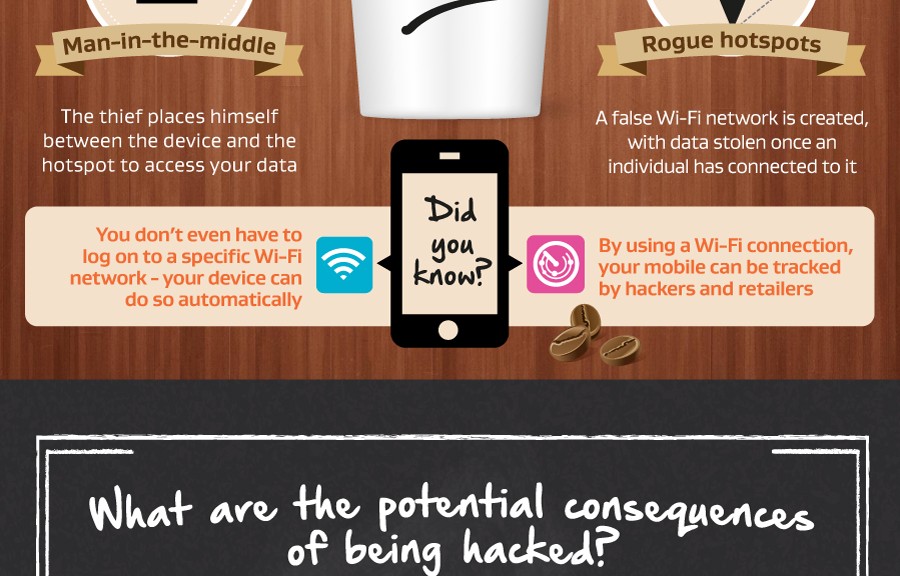
Wi-Fi hacking is the most common threat when it comes to public Wi-Fi. When you connect to an public Wi-Fi network (i.e. coffee shop, airport, or hotel), others maybe able to intercept your Internet traffic, collecting your passwords, private photos, emails, browser cookies and a lot more personal info. CNN has a hands-on example of this.  AVG Wi-Fi Assistant encrypts your communications to conceal them from hackers.

Wi-Fi tracking is the second big issue.  Currently specialized software solutions allow virtually anybody to use your phone’s Wi-Fi signal, to track your location and in some instances identify you. MIT Technology Review took a look at this Wi-Fi tracking technology and the inherent threats in this article . Wi-Fi tracking is even more worrying as most smartphone users have their Wi-Fi on all the time. This is increasingly an issue as retailers can use your Wi-Fi signal to track how you move around stores or around the city and even identify who you are. And that’s not all, if you keep your Wi-Fi open all the time hackers can trick your phone to connect to a fake Wi-Fi hotspot, and then snoop in at your private information.

AVG Wi-Fi Assistant can prevent tracking by turning off your Wi-Fi connection when you are not connected to a hotspot that you trust and automatically turns it back on when approaching the trusted hotspot again.


Wi-Fi Security Solutions

AVG Wi-Fi Assistant protects you against Wi-Fi Tracking and Wi-Fi Hacking by combining smart Wi-Fi Automation with VPN encryption in one simple to use app, for free. Here’s how it works:

Wi-Fi Security

Turn on VPN (Virtual Private Network) when you connect to a Wi-Fi Hotspot to conceal your data from unfriendly eyes. VPN secures your Internet connection and encrypts all the data you’re sending and receiving. This allows you to  use mobile data with lesser risk of your data or passwords being stolen.

Every month you get 500Mb of free VPN encryption; if you need more, you can upgrade to our premium VPN plan. We think this is a must have feature for online banking, emailing, or logging into your social networking accounts.

Wi-Fi Automation

AVG Wi-Fi Assistant runs in the background and learns the locations of Wi-Fi hotspots you connect to – without using GPS. It then uses your location to automatically turn your phone’s Wi-Fi adaptor on and off, exactly when you need it, hiding you from trackers. As a bonus, turning the Wi-Fi connection on and off can even extend your battery life.

Just to recap here are the Key Benefits of AVG Wi-Fi Assistant

  • Prevent password hacking
  • Prevent Wi-Fi tracking
  • Save battery power

Download the AVG Wi-Fi Assistant today and do let us know what you think.

iPhone 6. The fingerprint reader security

Being the leading technology brand can have its downsides. And if you don’t believe it, ask Apple. Every time the firm from Cupertino introduces a new product, the same thing happens: there is great anticipation, with seemingly half the world awaiting, long queues of tech disciples… and an army of people looking for bugs in the new devices.

In the end, vulnerabilities emerge and obviously their impact is far greater than with other brands (especially if it is a new device). Apple has already suffered a few embarrassing errors discovered by users. You don’t have to go too far back to see: the aluminum case of the iPhone 6 Plus was said to be too flexible, meaning that the phone can even bend under certain conditions.

A secure iPhone?

While the tech world looked on in amazement at this problem in the new Apple device, a second rather more difficult issue emerged: Apple’s ‘Touch ID’ fingerprint identification system is not entirely secure.

Apple-security

This technology has already been used in iPhone 5s and as with iPhone 6, a few days after the launch an error was discovered: there was a relatively simple way to get past Apple’s fingerprint ID system.

“A fingerprint of the phone user, photographed from a glass surface, was enough to create a fake finger that could unlock an iPhone 5s secured with TouchID,” claimed the European hacker group, Chaos Computer Club, a year ago. This was something that could be performed by anyone with a bit of skill and patience.

So despite the company’s claims that with the new biometric system your fingerprint is one of the strongest passwords in the world, once again such claims might be premature.

History has repeated itself, and this time surprisingly, it has done so quite literally. Even though the Touch ID flaw was discovered a year ago, Apple has launched two new iPhones with the same problem.

This is confirmed by security expert Marc Rogers. “Sadly there has been little in the way of measurable improvement in the sensor between these two devices,” he claims. Although he underlines that the same fake prints that could deceive the Touch ID in iPhone 5s are no longer viable in the latest Apple device.

iPhone-fingerprint

According to Rogers, the difference is that the company has improved the scan resolution to improve the reliability of the system. However, this doesn’t mean that the same technique used to unlock the iPhone 5s couldn’t be used for iPhone 6. The difference is that the fake print would need to be a better quality.

This new flaw in Apple’s security system is serious, and even more so given the launch of Apple Pay, the company’s new mobile device payment system.

Thanks to NFC technology, users of this service can pay for things simply by waving their iPhone at the point of sale (POS) terminal. Indeed, the tool used by Apple to secure the payment service is none other than the Touch ID technology which, as Rogers explains, is easily hacked.

Nevertheless, Rogers does point out that using fingerprints is an effective form of user authentication, though Apple should include two-factor verification to give users complete peace of mind.

What do you think? Would you activate this type of payment?

The post iPhone 6. The fingerprint reader security appeared first on MediaCenter Panda Security.

“Poodle” security hole has a nasty bite

poodles

“Poodle” bites on open WiFi networks with multiple users.

A security hole called Poodle could allow hackers to take over your banking and social media accounts.

Yesterday, Google researchers announced the discovery of a security bug in version 3 of the Secure Sockets Layer protocol (SSLv3). This web technology is used to encrypt traffic between a browser and a web site, and can give hackers access to email, banking, social accounts and other services.

Poodle bites multiple users in unsecure open WiFi networks, like the ones you use at coffee shops, cafes, hotels, and airports.

“To exploit the vulnerability, you must be running javascript, and the attacker has to be on the same network as you—for example, on the same Starbucks Wi-Fi network you’re using,” explained Kim Zetter in a WIRED article.

Avast experts strongly recommend that our users protect themselves when using free WiFi with avast! SecureLine VPN.

Poodle is not considered as serious a threat as this past spring’s Heartbleed bug which took advantage of a vulnerability in OpenSSL, and or last month’s Shellshock bug in Unix Bash software.

SSLv3 is an outdated standard (it’s a decade and a half old), but some browsers, like Internet Explorer 6, and older operating systems, like Windows XP, only use the SSLv3 encryption method. Google’s security team recommends that systems administrators turn off support for SSLv3 to avoid the problem, but warns that this change will break some sites.

Thank you for using avast! Antivirus and recommending us to your friends and family. For all the latest news, fun and contest information, please follow us on Facebook, Twitter and Google+. Business owners – check out our business products.