Tag Archives: featured1

WhatsApp: read or unread?

blue double check

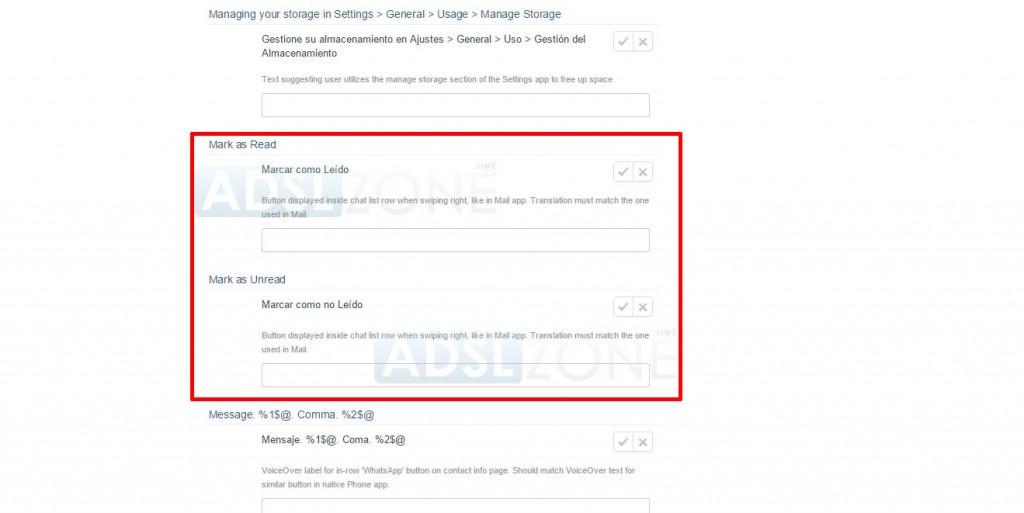
Did you know that WhatsApp may be developing a mark as unread feature? When most of us already got used to the double blue check and few others decided to remove it completely from their lives, everything points to the most popular messaging application has decided to implement this ‘unread’ function.

According to ADSL Zone, it will be the receiver who will be able to modify the status of the message. As has happened other times, they found this new feature in WhatsApp’s official translation center. Here is where the new features are translated before they are released to the public, and not long ago we could find: “mark as read” and “mark as unread”.

read whatsapp

For the moment, it seems to be only available for iPhone users. Now, the question is: how will this affect our privacy? Will the sender be able to see before if the message has been read?

We will keep an eye on it…

More | How to disable the WhatsApp blue double check on Android

The post WhatsApp: read or unread? appeared first on MediaCenter Panda Security.

Avast Browser Cleanup removes unwanted browser add-ons

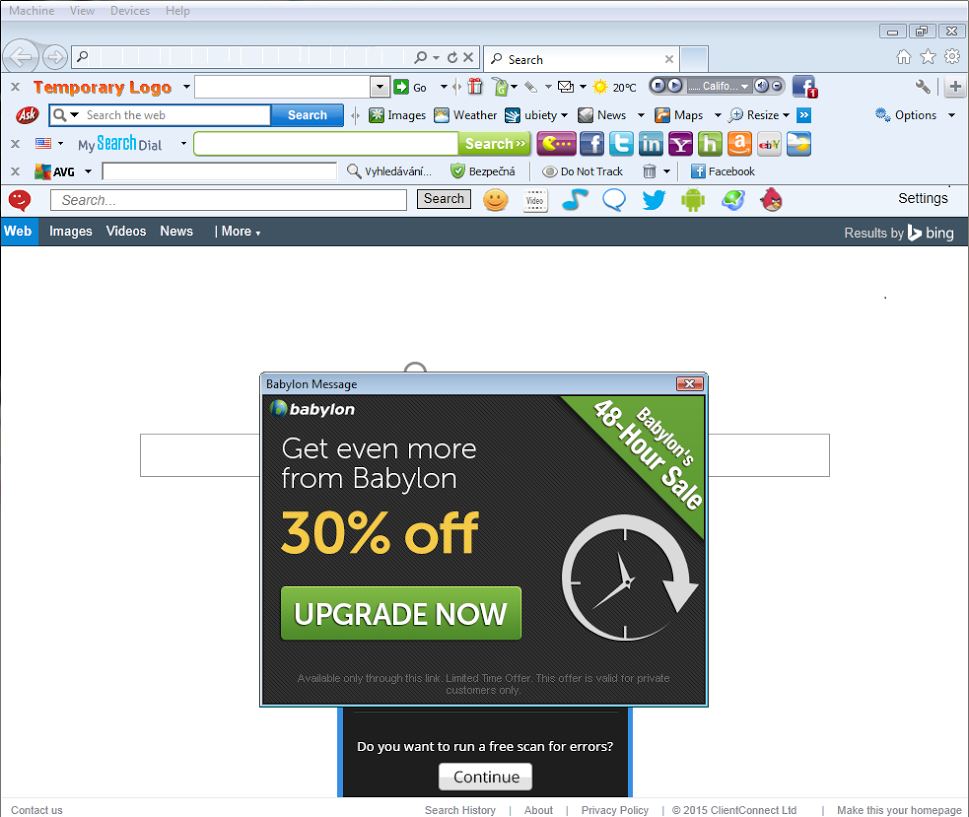
Most Internet users are familiar with this problem all too well: After downloading a video player, Java, Flash updates or other software, the browser has suddenly changed. New buttons and icons in all colors and sizes along with an URL entry bar take up valuable real estate on your browser. The browser runs noticeably slower – and the results look different. Most annoying is that the advertising becomes more prominent.

Our free utility gets rid of annoying toolbars and restores hijacked searches.

Over the past two years, Avast Browser Cleanup has identified more than 60 million different browser add-ons which are often bundled with other free software, such as video players, Java and Flash updates. These toolbars typically occupy the horizontal space below a user’s browser and can include buttons, icons, and menus. Despite removing and re-installing a browser, toolbars will often remain, which is a behavior similar to malware.

 “We’ve entered the decade of unwanted add-ons — Google is now cracking down and removing ad-injecting toolbars from its Chrome store. Avast detects these toolbars and many more and is focusing on helping users battle browser toolbars that are one of the biggest consumer security outbreaks since spyware,” said Vince Steckler, Chief Executive Officer of Avast.

While not malicious per se, browser add-ons that come as toolbars can hijack and switch a user’s search preferences and can be extremely difficult to remove once installed. Avast Browser Cleanup removes these unwanted toolbars from Google Chrome, Mozilla Firefox, and Internet Explorer and lets users restore their search engine preference. Previously available as a feature in Avast Free Antivirus, Avast Browser Cleanup has now been made available as a new, free stand-alone product.

The new version of Avast Browser Cleanup includes improved browser compatibility, support of the latest browsers, more homepages to choose from when resetting the browser, and more aggressive detection of toolbar protectors that make removal difficult. Additionally, Avast Browser Cleanup now runs in the background, notifying the user when it detects a potentially unwanted or malicious toolbar.

Are you an Avast user? You already have Avast Browser Cleanup.

Avast Browser Cleanup is integrated in all Avast antivirus security products, including the free version.

Use another antivirus product? You can use stand-alone Avast Browser Cleanup.

If you don’t use Avast as your antivirus protection, Avast Browser Cleanup can be downloaded as a free stand-alone software.

3D printers: recognize the most popular frauds and their risks

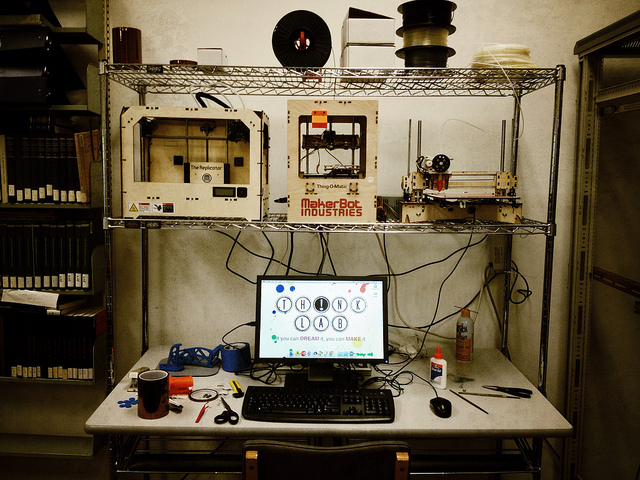
3D printing has a great future, but also begins to be part of our present. For years, there were who anticipated the arrival of a third industrial revolution starring this technology. A new era in which companies from different sectors will need to reinvent their processes and look for new ways to add value, since customers will have in their hands the tools to manufacture (at home) tons of products that now have to buy from companies.

pc garaje

Uncomplicated access to manufacturing tools opens endless possibilities, but the popularization of 3D printers has made them desirable among cyber crooks. The attackers are looking for a way of taking advantage of this technology to achieve their malicious purposes.

The most alarming episode so far was the one starred by Cody Wilson, who shared the instructions to manufacture the first printed gun in 3D on the Internet. Just a few days after hanging his designs on the net, the US Department of State ordered him to remove those files and threatened him they would begin a judicial process that would include prison terms and multimillion-dollar penalties. Nevertheless, Wilson filed a lawsuit against this American authority alleging that such restriction violates his freedom of speech.

Beyond plans and weapons designs that even today we can find on the Internet, there are, unfortunately, many other alternatives for criminals. Without going any further, at the end of 2014, in a joint operation by Spanish police, the Bulgarian and the European Center of Europol cybercrime authorities, more than 30 people in Malaga (Spain) and in different city of Bulgaria were arrested accused of stealing data to make fake credit cards and mobile phone cards.

In the searches they found more than 1,000 devices. From camcorders for bars, credit card readers and magnetic strips as well as plastic cards ready to be encoded. Members of the criminal organization used a 3D printer to manufacture cloned cards from the stolen data.

police guns

One of the main advantages that comes with 3D printing is that it allows the user to make his own designs. However, this is one of the major drawbacks when talking about the wide range of possibilities opened for criminals. Now they have the ability to produce their own tools, without having to resort to the black market and without fearing the police detecting a suspicious package.

According to the experts, with these tools an attacker could cause chaos on an assembly line. They could, for example, design defective replicas of a piece, leaving the product assembled useless, and causing huge losses to the manufacturer. That, or infect such a part of the device with some malware in order to get information from the future user who will buy it and use it. The consequences would be disastrous.

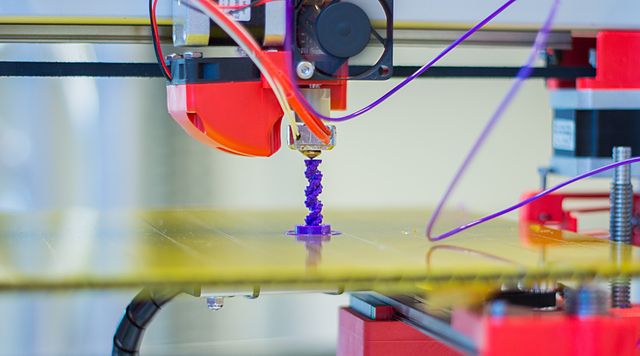
3Dprint

3D printing offers so many possibilities that even to access the factory in which the thieves want to deposit these false or intoxicated parts, they could manufacture their own keys. Knowing the lock model and its weaknesses, they would just have to design a tool, which is able to activate the mechanism and open the door. Without forcing it and without attracting attention or leaving any trace.

3D printing, in a not-too-distant future, will play a decisive role in our lives and will eventually transform many industrial processes. And at the same time, will give criminals a new repertoire of tools to achieve their evil goals.

The post 3D printers: recognize the most popular frauds and their risks appeared first on MediaCenter Panda Security.

Mr. Robot Review: Ones and Zer0s

Another week, another Mr. Robot episode! Last Wednesday the second episode of Mr. Robot aired (Ones and Zer0s). This episode did not disappoint! It was dark, gloomy, but also included lots of technical things that made us once again question: How can this affect me?
via: USA Network

via: USA Network

This week I sat down with freelance security and privacy journalist, Seth Rosenblatt, to discuss the episode.

At the beginning of the show, Elliot has a bit of an involuntary meeting with E-Corp now interim CTO, Tyrell Wellick. After this meeting, Elliot goes home and hacks Tyrell. What he notices is that E-Corp mail servers haven’t been patched since “Shellshock” and that Tyrell does not use two-factor authentication nor does he have a complex password. Elliot realizes that this was all too easy and that Tyrell must have wanted Elliot to hack him. He then goes nuts and burns his chips and SIM cards in the microwave, tears apart his hard drive, destroys his mother board.

Stefanie: Lots of interesting stuff happened in this scene! Can someone hack me like Elliot hacked Tyrell? What is the Shellshock vulnerability and can it still affect me as a personal user?

Seth: If Tyrell wanted Elliot to hack him, he made it pretty easy for an experienced hacker like Elliot. I bet many people, who do not put a lot of thought and effort into their online security, can be easily hacked. The fact that E-Corp hadn’t patched their servers since Shellshock seemed a bit odd, but again this was maybe intentional to make it easy for Elliot to hack, in the hopes of blackmailing him later on. In terms of the average user, Shellshock is a vulnerability that affects systems using BASH (a Unix based command processor used by Unix- based systems such as Linux and Mac). Patches for Shellshock have long been issued, so if you update your operating system regularly you have nothing to worry about.

Stefanie: Elliot used the same “brute-force” method we talked about last week to figure out Tyrell’s password. If it’s that easy, should I use two-factor authentication in addition to having a complex password for my accounts?

Seth: In terms of using two-factor authentication, this is something that is not used enough in my opinion! It may be more work to log into accounts, but it makes your accounts more secure. Popular sites like Facebook, Twitter, and Google all offer two-factor authentication and if you don’t already use it, do it now! Of course, you should use a complex password for every account you have, because as we learned in the first episode, Elliot is able to hack a lot people due to their weak passwords.

Stefanie: Did Elliot really have to physically destroy everything?

Seth: Elliot physically destroyed his entire computer because he was afraid Tyrell would be able to use his hack as evidence and blackmail. This was a bit extreme, but in this case he could have just destroyed his hard drive and theoretically some of the memories on the motherboard. Again, unless you are afraid someone may physically come after you, it is not necessary to physically destroy things.

Later on in the episode Elliot’s boss, Gideon, asks Elliot if he knew about the DAT file found during the E-Corp hack. Elliot tells Gideon he thought it was a junk file.Mr. Robot’s fsociety releases an anonymous-style video threatening E-Corp with “data dumps” to the media from the terrabytes worth of company employee emails and files they’ve stolen, if their laundry-list of demands is not met. 

Stefanie: What is a DAT file and why would Elliot think it is a junk file?

Seth: A DAT file is just a data file. Unlike .PDF or .DOC files, DAT files do not specify which program should open it, so you would need to know which program the DAT file was created for. DAT files are mostly sent as email attachments.

Stefanie: The Sony Pictures hack last November included data dumps. How serious a threat is that to a company?

Seth: It can be devastating. With the Sony hack, we saw a continuous flow of sensitive corporate data, personnel records including salary details, as well embarrassing correspondence between senior executives leaked to the press. Who knows what nefarious things a company like “Evil” Corp has in their files. Mr. Robot would hit ‘em where it hurts.

Around the 22:41 point, Mr. Robot asks Elliot to use his Allsafe company security clearance to hack the Comet P.L.C. to increase the pressure of the gas-lines nearby in order to blow-up “Steel Mountain” a natural gas refinery near a data-storage facility used by major corporations.

Stefanie: Can even an above average “hacker” like Elliott access municipal utilities and gain access to dangerous and highly controlled industrial processes like ones regulating the valves for gas lines?

Seth: Unfortunately, the answer is yes. On the whole, it has been proven that industrial infrastructure remains woefully vulnerable to computer attacks that could have devastating consequences. Our nations’ energy grid is continually under attack – in fact, in 2014, there were 79 incidents investigated by Homeland Security. Russian hackers have already infiltrated software that controls electrical turbines in the U.S., and in the case of one major U.S. energy provider, spyware sat on their computers for a year. It got there by one employee clicking on a bad link in an email.

When explaining how the gas plant will go kablooey, Mr. Robot says that when they blow up the pipeline, then Darlene’s worm will kick into gear at the data center and the “Dark Army” will take care of redundant back-ups at the Chinese facility.

Stefanie:We’ve heard of worms like Stuxnet, is that the kind of thing you think fsociety is planning to use? And who could the Dark Army be?

Seth: Stuxnet was developed to infiltrate software and remotely shut down Iran’s uranium enrichment facilities, so it is reasonable to assume that fsociety will deploy a similar worm. It was the first known malware with the ability to cause physical damage to electrical or mechanical devices, and data centers with gaps between IT and facilities systems could be vulnerable.

 As for the Dark Army, we don’t know whom Mr. Robot is talking about, but there does exist mercenary hackers for hire. They sell their skills to nation-states or militant groups and do a good job of covering their tracks before going on to the next customer.

In minute 27:59 Elliot hacks into the account of his drug dealer, Fernando Vera. His password is eatdick6969. Elliot discovers that Fernando does all his drug transactions through email, chat messages, and Twitter. Digging deeper, Elliot also learns that Vera uses code-words in his tweets, that are timed with recent news articles. Words such as “Biscuit” and “Clickety” are clearly references to guns and gun sales. “Food”, “Seashells” and “gas” are codes he uses for bullets. 

Stefanie: Drug-dealers have used code-words for drugs since phone calls were invented. Why is this significant? Is this news headline code-wording a pattern used in underground organizations? Have there been recent examples? 

SethAs criminal investigations today can include checking a suspect’s emails, instant messages, and Twitter history, drug dealers need to find a way of getting around these investigations and blur messages so investigations get harder and their communications history cannot be used as proof against them. The news headline code-wording pattern helps to constantly have new code words, which makes it harder for the police to understand the message behind the code. Just last fall, in the U.S. a drug trafficking ring was disrupted that spoke about “Hurricane Sandy” when speaking about one of their drugs.

What’s surprising though is that Fernando uses his personal accounts and public Twitter messages in order to do his drug dealing business. Drug dealers often use pre-paid phones for their “business” that don’t have an account and therefore the owner cannot be identified. Also, they frequently dispose of the phones and get new ones to obfuscate their activities and whereabouts.

In minute 32:14, Elliot picks the bathroom lock. He explains that “the lock-pick is every hacker’s favorite sport. Unlike virtual systems, when you break it you can feel it.”

Stefanie: When I saw this scene, this sounded familiar to me – last year I had the pleasure to meet Kevin Mitnick, once the most-wanted hacker of the United States, hunted by the FBI. Today, he is a reputable security consultant – the hacks he does today have the purpose of finding security issues in order to fix them. When I met him, he handed me his business card – and it was in the form of lock picks.

Seth: Absolutely, this is not just a cliché, hackers like to hack – not just in the digital sense, but also in the real world!


 

WhatsApp for Android: Always download it from Google Play!

By becoming popular, they turn into a real danger. The more famous an application is, the more likely it will be used by cybercriminals to carry out frauds, which may turn out very expensive for those distracted users.

The perfect example is WhatsApp. Each novelty announced by the instant messaging service is exploited immediately by the thugs on the network to deploy all kinds of social engineering techniques.

Without going any further, WhatsApp voice calls lead on to fraud via email: the victim is notified by email of a pending voice message and in order to for hear it he just needs to click on it. By doing so, it will not play any message, but actually it will download a malicious software on the user’s computer.

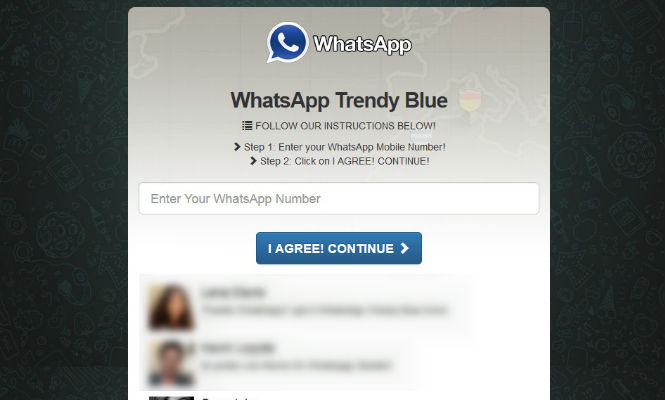
To generate this avalanche of fraudulent services, cybercriminals not only take advantage of WhatsApp’s latest features. Sometimes they create totally fake versions with presumed advantages as the possibility of customizing the app’s appearance. The most recent case is the one of the so-called Blue WhatsApp, it promised changing the famous app’s green to blue, although this version hides a poisoned apple: a subscription to a premium service which will increase, quite a bit, the victims’ phone bill.

whatsapp azul

In general, the desire of enjoying new features on an application as common as WhatsApp makes some users to accept these updates even if they do not come from an official supplier.

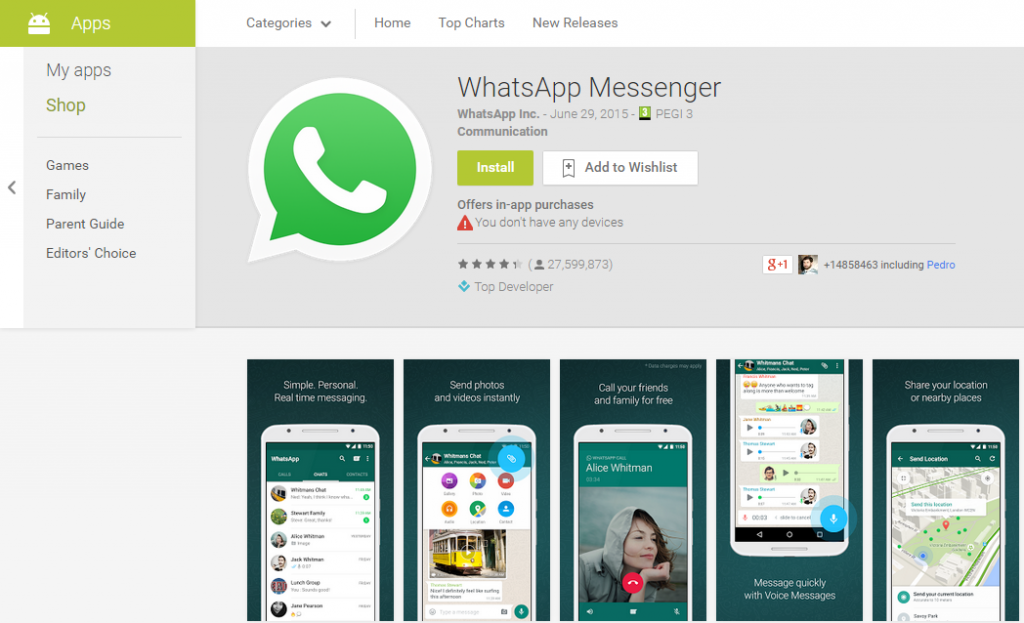
That is why, the best way of avoiding any kind of fraud from making a hole in our pocket or someone stealing our information stored in our Android is using Google Play (or the App Store in case of having an Apple device) at the time of downloading and update or any other application.

whatsapp google play

In this way, users can sort the Web woven by the crooks on the Internet. Furthermore, not only should be wary of those web pages that provide the so-called WhatsApp download with little credible characteristics: on other occasions, a platform which doesn’t belong to the official app nor to the corresponding applications market, will simply offer users to download WhatsApp as a way of attracting potential new victims.

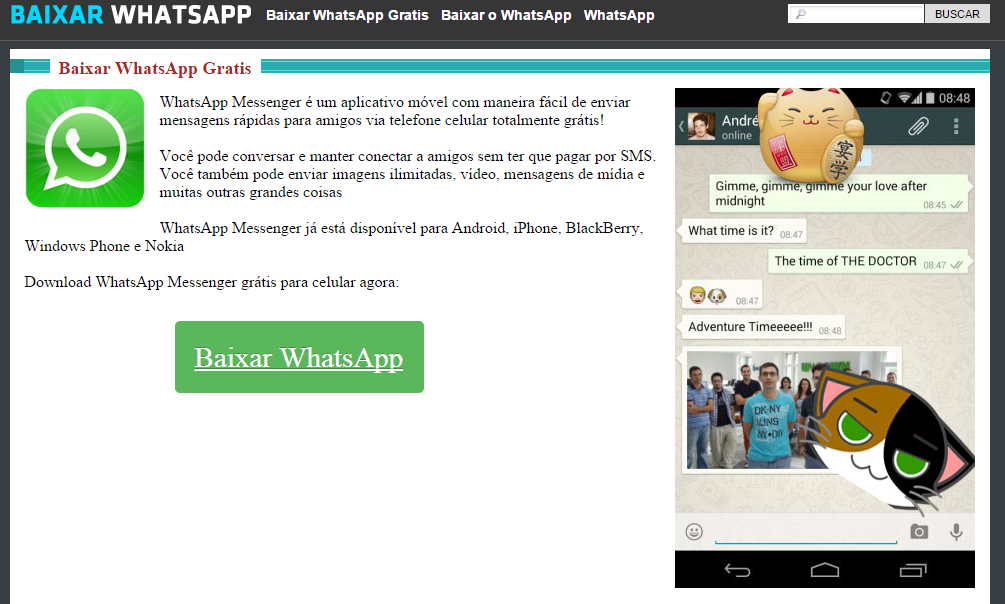
Without false advantages but just as fraudulent, these downloads will fill your device with malware or subscribe you to an SMS premium service at a great cost. It is the case of a website that distributes a malware designed to steal data and it does it under the official WhatsApp appearance.

whatsapp

The web site does not promise any new features in the instant messaging service. It simply enables the download. When the user installs it and accepts all permissions requested, this false WhatsApp access the information stored on the users’ Android device.

That way, both downloading and updating an application, the safest way to do it is going to the corresponding official site. Even so, users can also find in places like Google Play some fraudulent applications hiding under the appearance of a popular service or that simply requires more permissions than the strictly necessary.

For this reason, before downloading an application for the first time you should read carefully its rating and some comments from other users: if it is a trap that has evaded Google’s Play security, the previous experience of others can serve you as warning.

The post WhatsApp for Android: Always download it from Google Play! appeared first on MediaCenter Panda Security.

Arizona school simplifies and saves with Avast’s free business software

Avast for Business just made life easier and saved money for administrator Dale Kvittem-Barr at Peace Lutheran Church and School.

Avast for Business protects a private school for free

Avast for Business simplified a private school’s security management – for Free!


Schools house a large quantity of sensitive data and Kvittem-Barr knows that security software is a must. But, managing 50 devices is a challenge.

“When I started here, we had Norton and each computer had its own individual license. It was a nightmare. I switched all of the school’s computers to the free Avast consumer product. When I heard there was a free business solution and that it had a centralized management dashboard I knew we had to have it.”

With Avast for Business, Kvittem-Barr no longer has multiple licenses to manage and he can see his entire network anytime, anywhere.

“The cloud-based system makes sense because the entire network can be updated constantly from the dashboard so I don’t have to run around to every computer anymore.”

For his mixed platform networks, Kvittem-Barr says Avast for Business just works for him.

“We have Macs and PCs so to be able to protect them both with the same console is great!”

And the software keeps him continuously informed about threats to the school.

“The notifications have been really helpful because I can see which computers are being hit harder than others and make sure I focus on those.”

Budget is an issue for all schools and Kvittem-Barr said that his school’s savings with Avast for Business were substantial. As for plans to spend the savings he says,

“Yeah, we were actually able to purchase a lot more computers and a device charging cart.”

Find out how your school can save money with Avast for Business.

Avast Hack Chat looks at the hacks on Mr. Robot

Anyone interested in computer security and how it is circumvented, will certainly enjoy the hacking that takes place on USA Network’s hit television show Mr. Robot. The show has been praised not only for its compelling story line but for its “accurate portrayal of cybersecurity and crime.

Every Wednesday night after the show airs, our host Ariana asks a security expert to help us examine the hacks and explor their ramifications in the real world. We record the conversation and share it with you in our video series, Avast Hack Chat. In addition to the discussion about hacking, we also take a weekly trip back in the Time Machine to revisit special people in the history of computing or how computers have been portrayed in popular culture.

Avast Hack Chat: Episode 2 “Ones and ZerOs” Program Notes

In episode 2 of Avast Hack Chat, Seth Rosenblatt, an independent security and privacy journalist, takes us through the hacks on Mr. Robot. He explains hacking a major corporation’s email servers, destroying your hard drive and SIM card to get rid of evidence, and if critical infrastructure like a natural gas plant can be hacked.

Alan Turing, who is referred to the grandfather of computer science, was recently portrayed in the movie The Imitation Game. Ariana and Pedram talk about his legacy and how the advances he made are still in use today. Plus, a computer bug.

Pedram brings us up-to-date on the celebrity photo hacking that took place last year. He shares why he thinks the hacker was an idiot.

This week’s Tips and Tricks tells you the safe way to go about sexting. Not that we want you to do it, but if you are there’s a way to make sure your messages stay secure and get to the intended recipient (who probably is not some guy sitting behind a desk at the NSA.)

Subscribe to the Avast Hack Chat YouTube channel and don’t miss a single weekly episode.

CryptoWall joins forces with click fraud botnet to infect individuals and businesses alike

Newest CryptoWall variant enters systems through a click fraud botnet.

Newest CryptoWall variant enters systems through a click fraud botnet.

Earlier this year, we told you about the return of CryptoWall, malware that encrypts certain files in your computer and, once activated, demands a fine around $500 as a ransom to provide the decryption key. These kinds of financial fraud schemes target both individuals and businesses, are usually very successful and have a significant impact on victims. The problem begins when the victim clicks on an infected advertisement, email, or attachment, or visits an infected website.

Recently, a click fraud botnet with ties to CryptoWall has been discovered. The malware, nicknamed ‘RuthlessTreeMafia‘, has been being used to distribute CryptoWall ransomware. What first appears as an attempt to redirect user traffic to a search engine quickly mutates into an alarming threat as infected systems begin to download CryptoWall and system files and data become encrypted, rendering them useless by their owners. Click fraud and ransomware are two types of crimeware that are usually quite different from one another and typically don’t have many opportunities to join forces; therefore, the result of this unlikely yet powerful collaboration can be detrimental to its victims.

In a public service announcement issued on June 23, the FBI warns of the continued spread of this variant of CryptoWall that has the potential to affect not only individuals, but also government entities and businesses. The report reads:

“Many victims incur additional costs associated with network mitigation, network countermeasures, loss of productivity, legal fees, IT services, and/or the purchase of credit monitoring services for employees or customers. Between April 2014 and June 2015, the IC3 received 992 CryptoWall-related complaints, with victims reporting losses totaling over $18 million.”

The uncovering of this most recent CryptoWall variant also goes to show just how creative cybercriminals can be when coming up with ways to get their malware onto people’s systems. A simple click fraud botnet compromise can now lead to a potentially serious ransom attack.

How to stay safe against infection

  • Go with your gut. Don’t click on any emails or attachments that appear as suspicious or unfamiliar to you.
  • Enable popup blockers. Popups are a popular way for hackers to spread malware. To eliminate the chance of accidentally clicking on a popup, it’s best to prevent them from appearing in the first place.
  • Educate employees about the dangers of malware. It’s crucial that SMBs teach their employees about the risks that malware pose to their business. Hold regular workshops to educate employees about common malware attacks, such as phishing emails, and how they can stay safe against them.
  • Always use antivirus software and a firewall. It’s crucial that you download and use antivirus software to best protect yourself against malicious attacks. For the highest level of protection, regularly make sure that your software is updated to the latest version.


Developers are neglecting the login security for both Android and iOS

mobile security

You open an application to read the news, check your e-mail or social networks and, on many occasions, it asks you for a username (which may be your email address) and a password. You must sign in to access the headlines which have been customized depending on your preferences, your Inbox where you receive your emails (and not those addressed to anyone else) or, to your personal, and supposedly non-transferable, account.

Technically, yes. A team of researchers from the University of Darmstadt (Germany) and the Fraunhofer Institute for Secure Information Technology scanned 750,000 applications for Android and iOS and discovered that the apps developers didn’t take as seriously as they should the security of this important step (login or authentication).

These experts claim that the analyzed apps, including very popular ones – although they didn’t give any names- and they detected vulnerabilities in all kinds of applications, from games to Instant Messaging, through social networks, financial services or even health-related software.

According to the findings of this research team, many programmers are managing the information needed for logging in, in a negligent or improper way, leaving user names, email addresses or passwords available to third parties with dubious intentions. During their analysis, they found 56 million ‘sets’ of unprotected data.

“App developers use cloud databases to store user data but apparently ignore the security recommendation given by the Cloud providers” says Prof. Eric Bodden, study’s lead author, regarding to the cloud databases offered by Facebook (Parse) and Amazon (AWS).

Storing the users data in third-party cloud it is easier for developers (for example, when it comes to synchronizing web services and applications for different operating systems), but it is a decision that should not be taken lightly. Our data’s security is at stake.

Why is there so much unprotected data?

Cloud vendors offer different security mechanisms to determine if a user is who he claims to be when he checks the database: the more sensitive the information, the higher the barriers. Bodden explains that “the weakest form of authentication, meant to identify rather than to protect the data, uses a simple API-token, a number embedded into the App’s code”.

Using the appropriate tools, an attacker could easily remove those tokens and access the data, read it or even manipulate it. There are endless ways of harming or cashing in for someone unscrupulous: from selling emails and passwords on the black market, to blackmailing the data owners, spreading malware or turning the cell phones of hundreds of users into soldiers of a bot army.

To prevent this, app developers should implement more sophisticated security measures, precisely, just what Facebook, Amazon and other cloud vendors recommend. As the research carried out by Darmstadt and Fraunhofer recommended, developers should implement an access-control scheme, which according to the test most of the 750,000 analyzed applications didn’t.

“Our findings and the nature of the problem indicate that an enormous amount of app-related information is open to identity theft or even manipulation” says Prof. Eric Bodden. “With Amazon’s and Facebook’s help we also informed the developers of the respective apps and they really are the ones who need to take action because they underestimated the danger”.

The post Developers are neglecting the login security for both Android and iOS appeared first on MediaCenter Panda Security.

Panda Mobile Security alerts you if someone picks up your device

Panda Security announced today the launch of a new version of Panda Mobile Security, the company’s solution to combat cyber threats on mobile devices.

The new Panda Mobile Security allows users to enjoy their devices with complete peace of mind, locate lost or stolen smartphones and tablets, and protect their private information thanks to the solution’s privacy auditor and anti-theft features. Additionally, the new version provides improved usability with a  streamlined user interface.

control, protection, android


Anti-theft alerts

Panda Mobile Security 2.3.2 includes a new feature designed to prevent loss and theft of mobile devices. The solution’s Motion Alert system sounds an alarm if someone picks up the user’s smartphone or tablet without authorization. Once enabled, the feature displays a countdown if someone moves the device. When the countdown finishes, a loud alarm is triggered even if the device is muted. To stop the alarm it is necessary to enter the device’s PIN or unlock pattern. Users can configure the Motion Alert feature by setting the countdown duration or adjusting the sensor’s sensitivity.

Geolocation and Privacy Auditor

Another key feature included in the new release is the use of geolocation to protect users and ensure the security of their devices. Panda Security’s Anti-Theft protection takes a picture of anybody trying to unlock the user’s device with the wrong code and emails it together with the device’s location. Additionally, it allows the user to lock or wipe the device in the event of loss or theft.

This is complemented with a Privacy Auditor, a new feature that indicates which apps can access personal data, contact lists and files, and allows users to uninstall them.

“Today, mobile devices have become the repositories of our digital lives, and Panda Security is fully committed to improving our customers’ security and user experience. The new version of Panda Mobile Security includes new features to protect users against external threats so that they can enjoy their devices with complete peace of mind,” explained Herve Lambert, Retail Product Marketing Manager at Panda Security.

The new solution is available in 16 languages and sports a new look and feel to mark the company’s 25th Anniversary and new corporate identity.

The post Panda Mobile Security alerts you if someone picks up your device appeared first on MediaCenter Panda Security.