Tag Archives: featured1

Mass emails without BCC and other unsafe (and illegal) habits

computer on the table

Either by mistake or ignorance, your company may be facing a hefty fine. You may ask yourself why? The answer, the daily emails your employees send to multiple clients massively. Do they send them using blind carbon copy (bcc)?

Inside the Spanish Organic Law on Personal Data Protection (LOPD) lies the exact explanation to why one of those emails sent to multiple clients without concealing their addresses may cost your company dear.

When managing a company’s client data base the responsibility is to protect them. This consists on not sharing or selling their information to others, people or companies. Here lays the problem with emails sent without bcc, every recipient can see who has received that same email which according to the LOPD is a serious offense.

It can turn out to be a very expensive mistake, if any of the recipients decided to report your company. The law provides fines between 40.000 and 300.000 euros, although normally sanctions end up being lower, depending on the number of affected clients or on how many times the mistake had been committed.

How to avoid it?

If you want to avoid making this mistakes is as simple as paying a bit of attention when sending mass emailing. Just add the recipients’ addresses through the Bcc button which is on the email top bar. This way the recipients’ addresses will be hidden and won’t be visible to those who had received that same email.
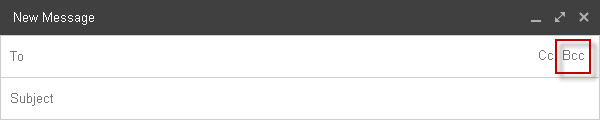
BCC

However, mass mailing without adding the recipients to the Bcc list is not the only problem a company might have while communicating, their presence in social networks can play an important role if used without caution.

We find Twitter is the most problematic one. If a company decided to follow unilaterally other users it may be breaking the Spanish Organic Law on Personal Data Protection and the Law of Services of the Information Society. You may wonder why? The reason is that a simple “follow” on Twitter is considered a commercial communication. And if the communication hadn’t been previously approved by the other user we will be looking at a case of spam.

twitter

In this case the solution is also simple, though it may be a bit painful for companies that will no longer be able to follow thousands of Twitter users. To do so and not be considered spam, companies must previously obtain the other users’ consent. In this case, the user following the company’s Twitter account may be understood as the necessary consent.

The whole company must be aware of the information its employees handle daily, everyone else’s information must be also protected, especially online. Something as simple as sending emails using bcc or choosing who our company follows on Twitter, may be enough to protect the information of others, and to avoid penalty.

The post Mass emails without BCC and other unsafe (and illegal) habits appeared first on MediaCenter Panda Security.


Avast highlights Battery Saver users for their positive impact on the environment

Today is Earth Day. It’s a day that people, organizations, corporations, and governments around the world demonstrate their commitment to protect the Earth and help advance a sustainable future. Every action, no matter how small, counts –  from eating less meat to recycling or composting to reducing your energy footprint; it all contributes to a cleaner, greener world now and in the future.

Avast users do their part to save the Earth

Since our minds are on all things green this Earth Day, we want to highlight a particular bunch of Avast customers. These Android users simply came to Avast to find a way to save some of their smartphone’s battery power. Little did they realize when they installed Avast Battery Saver on their Android device that together they were making a difference that even we were surprised about.

In the first month that Avast Battery Saver was available, 200,000 customers downloaded and actively used it on their Android phone or tablet. This infographic shows how that cumulative use added up to real energy savings.

Do your part for Earth Day, and save up to 20% battery power everyday! Install Avast Battery Saver for free from Google Play.

battery-saver-infographics-ENsm

Install Avast Battery Saver for free from Google Play.

Avast for Business adds 75,000 new customers in just two months

Avast for Business

Luke Walling, GM of Avast for Business, had confidence in the Avast for Business product all along. But the explosion of new customers has surprised and delighted even him.

Avast for Business is the industry’s first free, easy to use, cloud-managed security offering that protects small-to-medium-sized business (SMB) from cyber attacks and data breaches.

The new product has been available for two months, and already more than 75,000  SMB owners have enthusiastically selected Avast for Business to protect their companies.

The new, cloud-managed solution has specifically been adopted by IT consulting, education, and non-profit sectors. Early results also show a strong uptake in managed service providers, who make up 12 percent of Avast for Business’ total installed device count and 2.5 percent of its new users.

A reason for it’s booming success is because most start-ups, small businesses, schools, and nonprofit organizations lack the IT infrastructure to install costly and complex on-premise security solutions. Avast for Business provides the ideal solution. It’s easily scalable and managed from anywhere. Additionally, Avast for Business starts at a price everyone can afford: free, making it a natural fit for small-to-medium-sized businesses and organizations worldwide.

Avast for Business is free for as long as you want it and for an unlimited number of admins and devices. Protect your company with Avast for Business.

Avast for Business

Avast for Business replaces expensive, complicated security solutions for SMBs.

What is Sextortion, and how can it affect your business?

sextortion

Sexting can affect your company. Although it seems like there is little relevance between two people sharing intimate pictures and the workplace, in fact it can trigger a real business crisis.

Everything due to the so-called sextortion. Someone with whom we have shared intimate pictures blackmails you to obtain more pictures, money, sex or even, confidential information. All in exchange for not making the pictures public and ruining the victim’s reputation.

There are many ways sextortion can affect a company. The personal impact on the worker who is being blackmailed can impact on the company’s brand, but not only that, the extortionist can ask the victim for confidential information on the company he works for in exchange for not publishing the images, so the company may also be at risk.

Sextortion in four stages

As the expert in online reputation, Selva Orejon explains, Sextortion comes in four stages in which anyone can fall into the blackmailer’s trap, so stay vigilant.

  1. The cybercriminal looks for his target, analyzing who will be able to cope financially with the extortion or, just looking for the right profile. According to Orejón, they target people with low self-esteem that search the internet looking for a relationship and have a false sense of security and intimacy.
  2. The cybercriminal adjust himself to what his victim wants. Orejón says that the blackmailer’s main objective is becoming the perfect chameleon and ending up being the kind of person that their target is interested in.
  3. The blackmailer gains his victim trust to such extent that the victim sends him intimate pictures or videos with sexual content.
  4. Finally the cybercriminal carries out the extortion, asking the victim to give him something in return if he doesn’t want the pictures to go public. Something that obviously will ruin the victim’s reputation at home or at work.

Where does Sextortion happen?

You can fall victim of sextortion in any social network or chat. However, there are some networks were victims are more accessible and others in which the threat to the business world is more real.

Cybercriminals find sites like Badoo and other online dating platforms their perfect fishing ground. After all, these users are looking for someone to start a relationship with, so they are more open to make contact with strangers.

LinkedIn is where a case of sextortion can ruin our professional reputation. In order to get a quicker reaction from their victims, cybercriminals change from personal to professional blackmail. The criminal chooses his victim form the professional social network and then threatens to expose him to his contacts if he doesn’t give him what he wants.

Any kind of sextortion can jeopardize a company’s image, since the security and reputation of one of its employees is on the line. And, if the cybercriminal asks for business information as ransom, the company can face serious problems.

That’s way it’s important to advise your employees of the risks associated with sexting and the importance of taking all the necessary precautions when sharing pictures, especially if they are delicate.

The post What is Sextortion, and how can it affect your business? appeared first on MediaCenter Panda Security.

How to ensure your company’s email with Email Protection

Did you know that…

  • … 95% of the email received in the companies is either infected or spam?
  • … insufficient email security means loss of productivity, server failure, saturated networks and decrease of the business activity?
  •  … EP minimizes the resources consumed and requires no infrastructure?
  • … offers an immediate protection against virus and spam?
  • … is very easy to deploy and to use?

Try Email Protection, our Email Security Software, and forget the problems!

The post How to ensure your company’s email with Email Protection appeared first on MediaCenter Panda Security.

New version of Endpoint Protection, our leading antivirus for corporate environments

antivirus for business

Panda Security presents its light, simple and cross-platform security solution for endpoints.

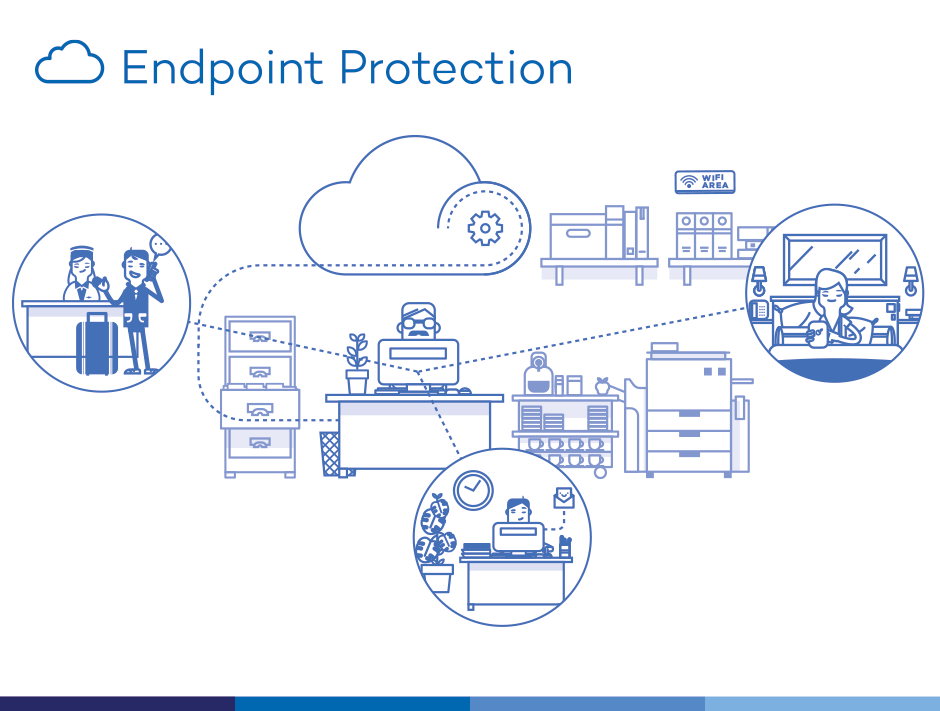
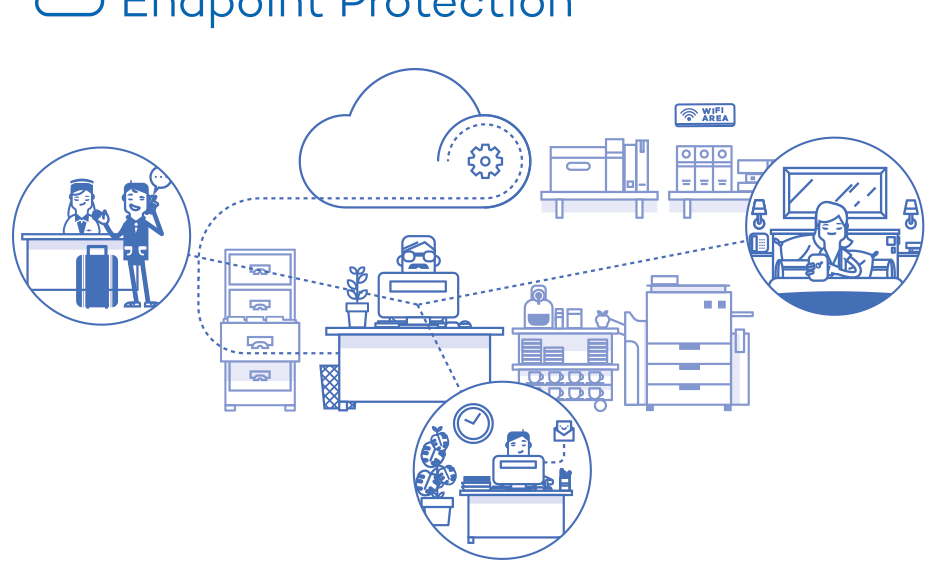
Endpoint Protection, our corporate antivirus, offers continuous and centralized protection for your Windows, Mac and Linux systems, including laptops, servers, leading virtualization systems and Android devices.

“With Panda Enpoint Protection 7.20 we continue to strengthen our cross-platform security solutions by securing one of companies’ weakest and most vulnerable points: mobile devices,” explained Eduardo Fernández, Product Marketing Manager at Panda.

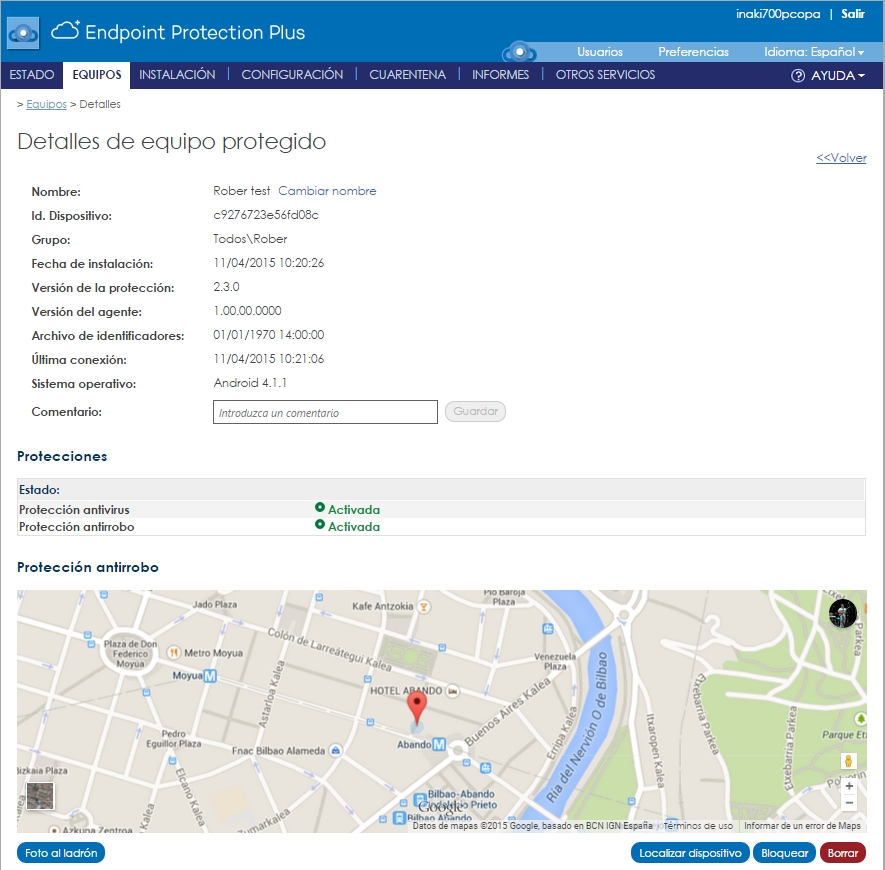
And if you need an additional layer of  protection, try Endpoint Protection Plus, which includes protection for Exchange servers, anti-spam, Web monitoring and filtering, and anti-theft features for mobile devices.

anti-theft protection

Cross-platform protection

As forecast by our colleagues at PandaLabs at the beginning of the year, in 2015 attacks on smartphones, and especially those running Android, are set to reach new levels. Not only will they increase, they will also become more complex, and they will all have a common target: to steal users’ personal data.

This is particularly serious in the case of company smartphones and tablets, and cyber-criminals will do anything to get hold of this information.

If 2014 saw more Android malware  in circulation that ever before, all indications are that in 2015 these threats will grow exponentially, as will the number of victims.

In this context, it will be essential for users to have antivirus protection on mobile devices. “Our ultimate goal is to help customers seal off this major malware entry point,” added Fernández.

Endpoint Protection: Benefits

  • Easy-to-use protection for all devices
  • Remediation actions
  • Real-time monitoring and reports
  • Profile-based configuration
  • Centralized device control
  • Quick, simple installation
  • Malware Freezer to “freeze” detected malware for seven days, and restore files in the event of a false positive.

Additionally, Endpoint Protection Plus includes:

  • Anti-spam and Web filtering
  • Anti-theft protection for mobile devices

If you are interested in trying our solutions, request a free demo of:

ENDPOINT PROTECTION
ENDPOINT PROTECTION PLUS


The post New version of Endpoint Protection, our leading antivirus for corporate environments appeared first on MediaCenter Panda Security.

Panda Security launches Endpoint Protection including protection for Android

Panda Security is launching Endpoint Protection 7.20, the cross-platform solution that offers businesses the best protection delivered from the cloud rapidly, simply and efficiently. This product represents the new version of Panda Cloud Office Protection (PCOP) and Panda Cloud Office Protection Advanced (PCOPA), now called Endpoint Protection and Endpoint Protection Plus respectively. Both versions include security for Android with antivirus protection.

New protection for Android systems

The new version of Endpoint Protection now includes an important new feature: protection for Android systems. “Attacks on smartphones, and especially those running Android, are set to reach new levels. Not only will they increase, they will also become more complex, and they will all have a common target: to steal users’ personal data”, warns Roberto Fernández, Product Manager at Panda Security.

“We are increasingly storing more and more data on smartphones, and cyber-criminals will do anything to get hold of this information. All indications are that in 2015 these threats will grow exponentially, as will the number of victims, and as such it will be essential for users to have antivirus protection”, adds Fernández.

protection, security, mobile, endpoint protection


Automatic organization by IP address

Panda Security has also included in this solution a system for automatically organizing computers by IP address. This way, users with Endpoint Protection installed will be able to set rules to automatically distribute computers into groups and assign a configuration profile to them based on their IP addresses.

Improved security for users’ login credentials

The new versions of this solution now include an Identity Provider system to enhance customers’ security. Instead of passwords, customers will now receive a link through which to create their own user. This will offer them greater autonomy by allowing them to make any changes whenever they need.

‘Plus’ version offers added value

Though both Endpoint and Endpoint Plus include antivirus for Android, the ‘Plus’ version also provides anti-theft protection for businesses that want even greater control over devices.

This anti-theft feature in Endpoint Protection Plus enables the locking and remote wiping of devices to prevent thieves from accessing confidential data. It also includes a geo-locating feature and even the possibility to take a photo of the person who has stolen the device.

The post Panda Security launches Endpoint Protection including protection for Android appeared first on MediaCenter Panda Security.

Panda Security presents a new generation of high-performance UTM devices

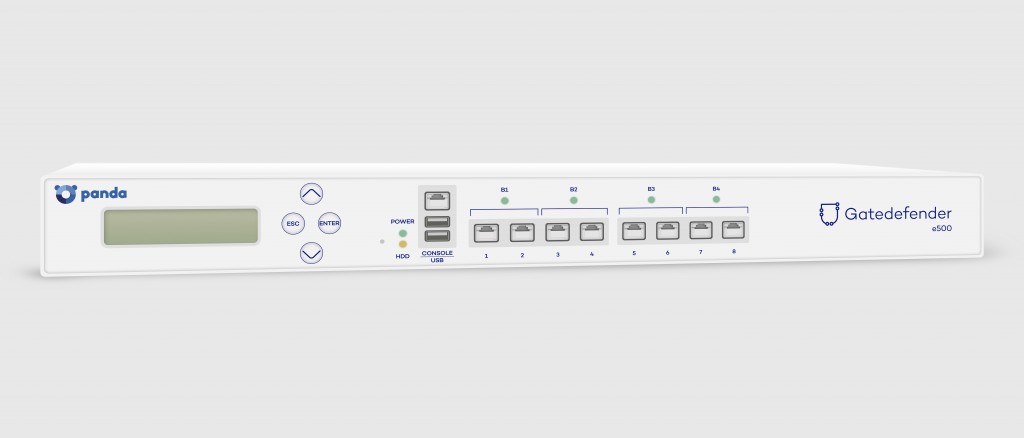
Panda Security presents the latest generation of Gatedefender e250 and e500 UTM devices to tackle the security crisis affecting companies. These new models replace the previous e9100lite and e9100 versions.

The Gatedefender e250 and e500 devices provide an effective way of ensuring continuous high-level protection. In short, they deliver an advanced security service from a single solution: deep packet inspection firewall, application firewall, VPN, anti-spam, Web traffic and email filter in the Internet gateway as well as a powerful hotspot module.


gatedefender, device, e250 y e500

High performance protection

The major advance in Gatedefender e250 and e500 is undoubtedly high performance, with both models offering speeds rated in terms of Gbit/s instead of Mbit/s. The firewall throughput in Gatedefender e250 has leapt from 800 Mbit/s to 5.1 Gbit/s, a notable increase. The same is true for Gatedefender e500, which has gone from 1474 Mbit/s to 10 Gbit/s.

The IPS throughput has also undergone a substantial improvement, from 95 Mbit/s to 590 Mbit/s in Gatedefender e250, while in Gatedefender e500 the previous rate of 121 Mbit/s now reaches 600 Mbit/s.

“With the Gatedefender e250 and e500 models we are introducing a new generation of UTM devices that represents a major qualitative advance for our product portfolio. At Panda Security we have managed to exponentially increase the performance of our products without affecting the price. All this boosts our competitiveness in the market”, explains Miriam Serna, Gatedefender Product Manager at Panda Security.

The post Panda Security presents a new generation of high-performance UTM devices appeared first on MediaCenter Panda Security.
Why some people would rather be right than believe a malware warning

usb_hub_robot

This innocent looking USB drive could lead to infection – but only if you second-guess Avast warnings!

Would you rather trust the virus experts or your instincts?

Every day 140,000 people connect their USB flash drive or mobile phone to a computer, and get a warning from Avast about an infection called LNK:Jenxcus.

Which kind of person are you?

Many of them act on that information from their trusted Avast Antivirus security software and as a result, they scan their USB device for malware and they wipe it away. Crisis over.

But there is another group of people who keep this infection alive and active, because they refuse to believe it is a real or dangerous threat. In other words, because something has always been one way, they assume it can’t change, therefore Avast must be wrong.

As a result, they decide to turn off their antivirus shield and by doing so, they create an obstacle-free way for malware to enslave their computer and steal data or valuable computing time.

A perfectly good reason. Or is it?

One of the most frequent reasons people use for disabling shields and allowing malware to spread in their computer is

“I use this file all the time and it is safe.”

Another variation is,

“I created this file, it’s only a picture.”

Do you find this situation familiar? Are you guilty of over-riding the security software you installed to protect yourself?

If your answer is yes, then test your virus detection knowledge with the image below. There are two screenshots of a directory from a USB stick; one is infected and the other is clean. Can you tell the difference?

usb_folder_compare

It’s difficult to tell, isn’t it?

The one on the left is infected. The most visible differences are on the icons, but there is another clue in the file types. Some files and directories on the left side changed their type into a shortcut. This happened because a malicious script installed itself onto a USB drive and replaced legitimate files with links. If the owner of the USB opens the directory Firm Accounting, for example,  he executes malware that in the end opens the real Firm Accounting directory, so it looks like everything is normal. But it is not, because in the background all the computer’s drives are getting infected over and over again.

Avast detects LNK:Jenxcus and warns you.

The trick is; you have to heed the warning.

Source of infection

Except from other infected drives, this malware is downloaded onto your computer from hacked websites. The screenshot below shows an example of a hacked website waiting for random users with a vulnerable internet browser. Can you tell the difference this time?

www_page_compare

If you answered no, you are absolutely right, because for the normal user there is no visible change. That is probably the reason for another frequent excuse before disabling the shields,

“I visit this page every day. It doesn’t have malware.”

That’s just not good enough, because the fact that the page is clean most of the time, does not mean it is not vulnerable to attacks. In fact most small and medium-sized business (SMB) pages have some exploitable vulnerability and when they get targeted by exploit kit authors, your best chance to stay safe are updated applications and active antivirus. With the shields ON!

Extermination

If you are comfortable with computers, then you may want to clean this infection manually. Start with your computer and look for links (.lnk) and visual basic script (.vbs .vba .vbe) or batch files (.bat). Links usually point to this hidden script files so it is not hard to find them. If you wonder where the original files are, you can find this information in links too. They were not moved in most cases, just marked as hidden so they are not visible on computers with standard configuration. When you are sure all hard drives are clean, it is time to go through all your removable ones and go through the same procedure.

An easier way to clean an infection is by using a good cleaning tool. If you need help searching for such tool, visit our Avast forum and read what others do in your situation, or ask nicely for help from Evangelists, who dedicate their free time to helping users and researching security problems.

Suspect a false positive?

If you think it’s a false positive, do a little checking first. The Avast forum is a good place to start. You can read about LNK:Jenxcus, or you can start a new thread with your own question.  If you are still convinced that you have a false positive, then please report it so the Avast Virus Lab can determine how/why it’s detected,. This video tells you how,


Amazon-Gift: the latest virus in WhatsApp

whatsapp virus

We are always saying that WhatsApp is the favorite platform for cybercriminals to play around. And if we add the name of a giant like Amazon, the scam is bound to be a success.

The Trojan known as Amazon-Gift tell users through a WhatsApp message that both companies have joined and they are offering a gift-card. And if the user wants to obtain the check he must click on a link.

According to Tecnoexplora, this hoax is expanding through Asia and it won’t be long until it reaches the rest of the world.

But cybercriminals have gone a little further, urging users to click quickly if they want to be one of the lucky customers to win the prize as there are only 18.000 gift cards available.

The prize is none other than a Trojan that will infect your mobile phone and add it to a network from which other cyber-attacks will be launched.

So, now you know if someone sends you an Amazon-Gift forget it and don’t click on the link!

The post Amazon-Gift: the latest virus in WhatsApp appeared first on MediaCenter Panda Security.