Tag Archives: Internet of Things

Self-Driving Trucks Ahead  

The Freightliner Inspiration Truck is the first licensed autonomous commercial truck to operate on an open public highway in the United States and made its debut by driving across the Hoover Dam earlier this month.

Video

Freightliner Inspiration


Of course, the mix of radars, sensors, lasers and technology that enable autonomous driving is applicable to many other forms of transportation. But the self-driving truck is a very natural and promising extension of the category.

With its truck, Daimler promises to unlock autonomous vehicle advancements that reduce accidents, improve fuel consumption, cut highway congestion, and safeguard the environment.

The Freightliner Inspiration is only a prototype of what is could be reality in ten years’ time and, for now, Daimler has made it clear that it is still relying on drivers.

“The driver is a key part of a collaborative vehicle system,”  Richard Howard, Senior Vice President at Daimler said at the Freightliner Inspiration’s unveiling. “With the Freightliner Inspiration Truck, drivers can optimize their time on the road while also handling other important logistical tasks, from scheduling to routing. The autonomous vehicle technology not only contributes to improved safety and efficiency, but allows for improved communication through connectivity and integration.”

Autonomous trucks are already used by mining conglomerate Rio Tinto in Western Australia to haul millions of tons of material.

Automation for trucking and haulage is so significant as logistics are so important when it comes to shipments. Often, drivers are pushed to the limit to make deadlines. Combine human fatigue with mechanical failures, and the results can be deadly.  A 9,000 gallon unleaded gasoline tanker fire in Detroit and a school bus tragedy in California, are just two of the most recent and tragic examples where automated driving could have made a difference.

The latest statistics from the US Department of Transportation (DoT) showed that 342,000 large trucks were involved in traffic incidents during 2013 with 3,964 people killed and 95,000 people injured. Those are some scary stats and ones that make automation, or semi-automation, an imperative.

Don’t get me wrong. I’m not knocking the drivers. These are hard-working men and women who are up against crazy schedules and are often away from their families for weeks at a time.  Imagine driving full-time? It would be both physically and mentally exhausting.

The Walmart driver involved in the crash last June that seriously injured actor Tracy Morgan and killed his fellow passenger, the comedian James McNair, was reportedly nearing his drive-time limit when he rear-ended their car.  (Just this week, Walmart announced it had reached an undisclosed settlement with Morgan, after earlier settling with McNair’s family.)

On another cautionary note: just as car hacks have become a problem with autonomous cars, security is even more paramount with trucks and their automation systems.

As we previously reported, the remote car hack scenarios and vulnerabilities being experienced caught some of the top car manufacturers by surprise. I hope that when it comes to autonomous trucking, that manufacturers have taken note and are thinking further down the road.

The Internet of Things (to be hacked)?

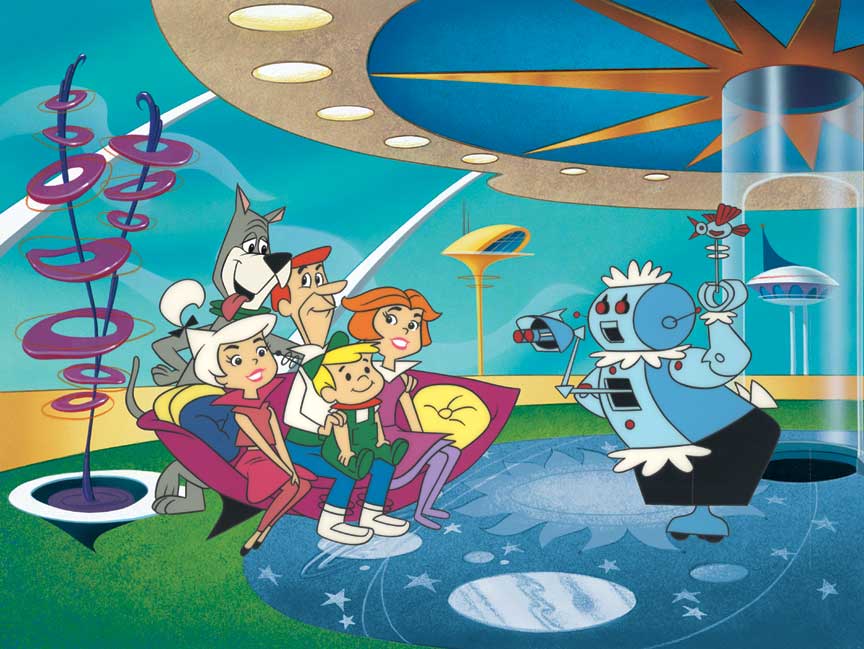
The Jetsons (via philosophymatters.org)

Soon, we’ll be living like The Jetsons (image via philosophymatters.org)

By the end of the decade, everyone on Earth will be connected.
–Eric Schmidt, Google chairman

As a rule of thumb, it’s good to keep in mind that anything and everything that can be connected to the Internet can be hacked. Poorly designed or implemented systems could expose serious vulnerabilities that attackers can exploit. Now, most of us are fairly familiar with certain gadgets that can be connected to the Internet, such as mobiles devices and/or laptops, smart watches, and cars, but what about the things that are still emerging within the Internet-connected world? Some of these new items include routers, sensors, and everyday gadgets such as alarm clocks, wearables, microwaves, and grills.

When dealing with the devices that we’ve come to know and love, such as our Android phones or iPads, we already encounter a multitude of shortcomings within privacy policies, unintentional data leakages, and the transmission of tracking and personal data in clear text. Taking this a step further, it’s both intriguing and frightening to think about the challenges we will face as the Internet of Things (IoT) becomes more and more of a reality. In a recent article published by the Guardian, author Marc Goodman paints an evocative picture of a world powered by the IoT:

Because your alarm clock is connected to the internet, it will be able to access and read your calendar. It will know where and when your first appointment of the day is and be able to cross-reference that information against the latest traffic conditions. Light traffic, you get to sleep an extra 10 minutes; heavy traffic, and you might find yourself waking up earlier than you had hoped.

When your alarm does go off, it will gently raise the lights in the house, perhaps turn up the heat or run your bath. The electronic pet door will open to let Fido into the backyard for his morning visit, and the coffeemaker will begin brewing your coffee. You won’t have to ask your kids if they’ve brushed their teeth; the chip in their toothbrush will send a message to your smartphone letting you know the task is done. As you walk out the door, you won’t have to worry about finding your keys; the beacon sensor on the key chain makes them locatable to within two inches. It will be as if the Jetsons era has finally arrived.

So how can we use these space-age technologies to our advantage? Although most software is still in the process of being optimized for wearables and other emerging smart gadgets, there are three main things to be on the lookout for as we move into the IoT’s heyday:

  • Issues on devices that could result in device loss, poorly programmed apps, or attacks driven by social engineering
  • Transmission issues caused by low-level encryption on Wi-Fi or Bluetooth that could result in traffic sniffing, man-in-the-middle and redirection attacks
  • Storage issues in the cloud that could directly result in data breaches

The sure-fire way to defend yourself against these vulnerabilities is to use a VPN when connecting to open, unsecured Wi-Fi networks. Avast SecureLine VPN is available for Windows, Android and iOS.

Three reasons to be excited about: Augmented Reality

Whether for personal entertainment or in the workplace, augmented reality has some exciting applications for all of us.

Entertainment

One of the most exciting applications for augmented reality is in the entertainment industry. As highlighted by the incredibly popular game Ingress, the ability to capture the world around us and add fantastical features will take entertainment to the next level.

Video

Ingress

Videogames and movies that emerge the world around you will give each of us an incredibly personal and interactive entertainment experience.

In fact, the allure of augmented reality in the gaming industry is so big that, by 2020, it is predicted to be worth around $120 billion. That total is three times that of virtual reality, underlining its wide range of applications.


Business and industry

It’s not all fun and games though. Augmented reality has a lot to offer businesses and industry too. Any industry where skilled workers such as engineers or manufacturers need to access information in real time can benefit greatly from augmented reality.

Among it’s wide number of applications, augmented reality could be used to help train staff, improve effectiveness of industrial maintenance checks and make your products easier to find and purchase.


Education

Augmented reality is already in use as an educational tool around the world and is a great way to make information exciting and engaging for students.

Whether studying the human body with digital 3D figures that leap out of screens to bringing old fashioned text books to life,  augmented reality could possibly be the next big step in teaching tools.

Aurasma, an augmented reality app available on tablets has been working with schools for a few years already.

Video

Aurasma in school


What are the uses of augmented reality that most excite you? Let us know on our Facebook page or via Twitter.


Image courtesy of solidworks

Highlights from CeBIT Australia 2015

This week Sydney put on its finest weather for the CeBIT Australia 2015 trade show held at the famous city’s Olympic Park.  Featuring a diverse mix of technologies and innovation from the APAC region there was something for everyone, from 3D printing, robotics, low-power LED lighting, to enterprise and business computing.

The Australian-based AVG Business team was also there for the 8th consecutive year to capture the action and showcase AVG’s Secure-Sign-On, identity as a service, cloud, backup and IT management platforms.

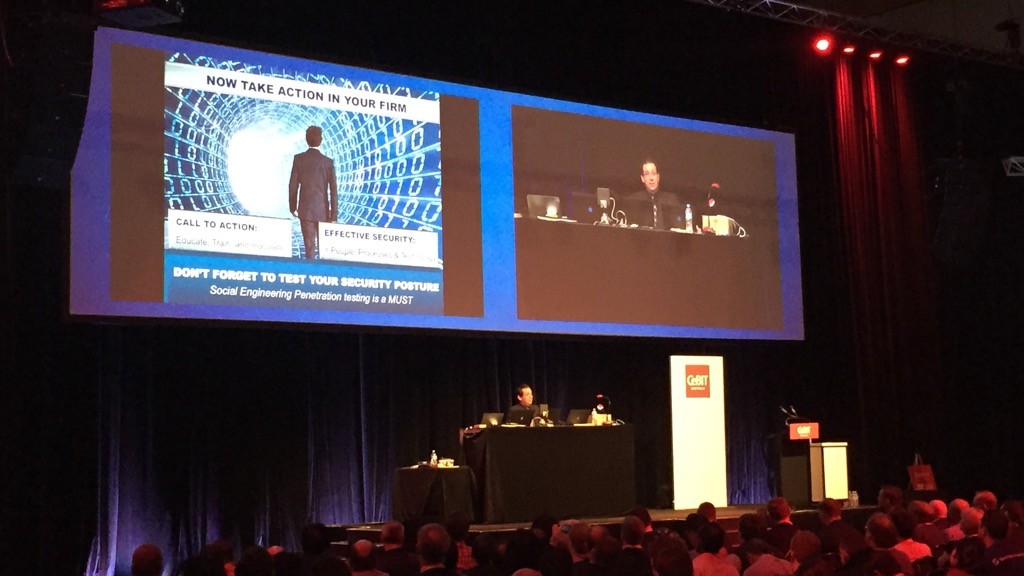
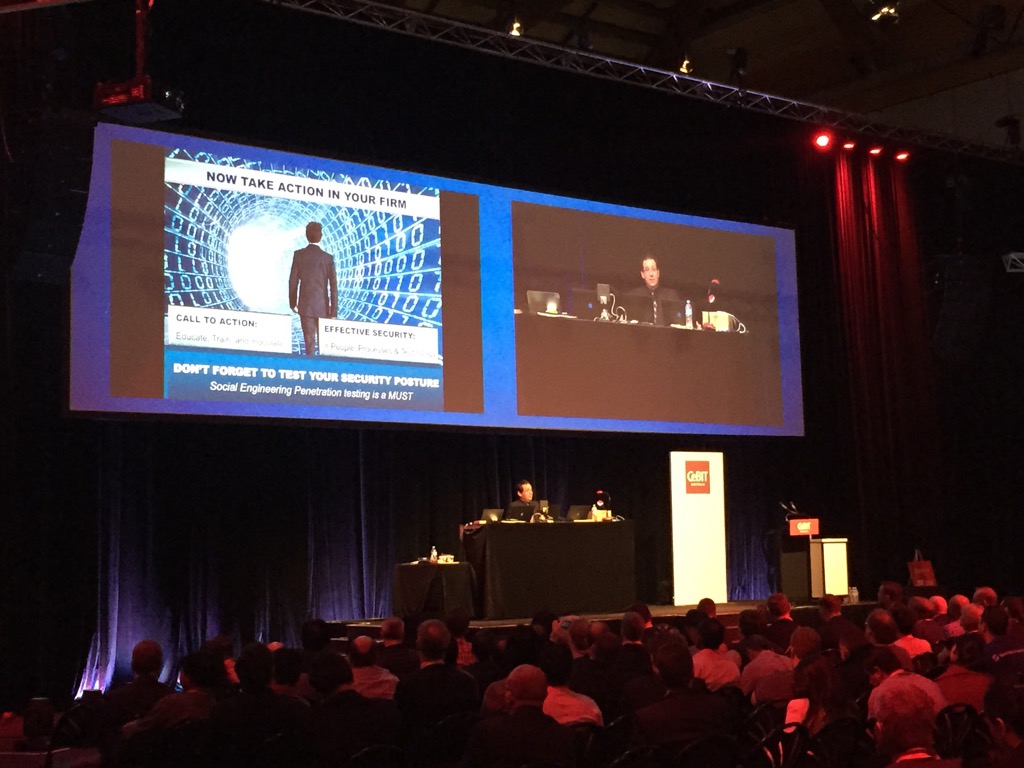
On the security side, a particular highlight was the keynote talk from infamous black-hat turned white-hat hacker, Kevin Mitnick.  Mitnick captivated the audience with shocking revelations of devastatingly simple social engineering antics.

Mitnick


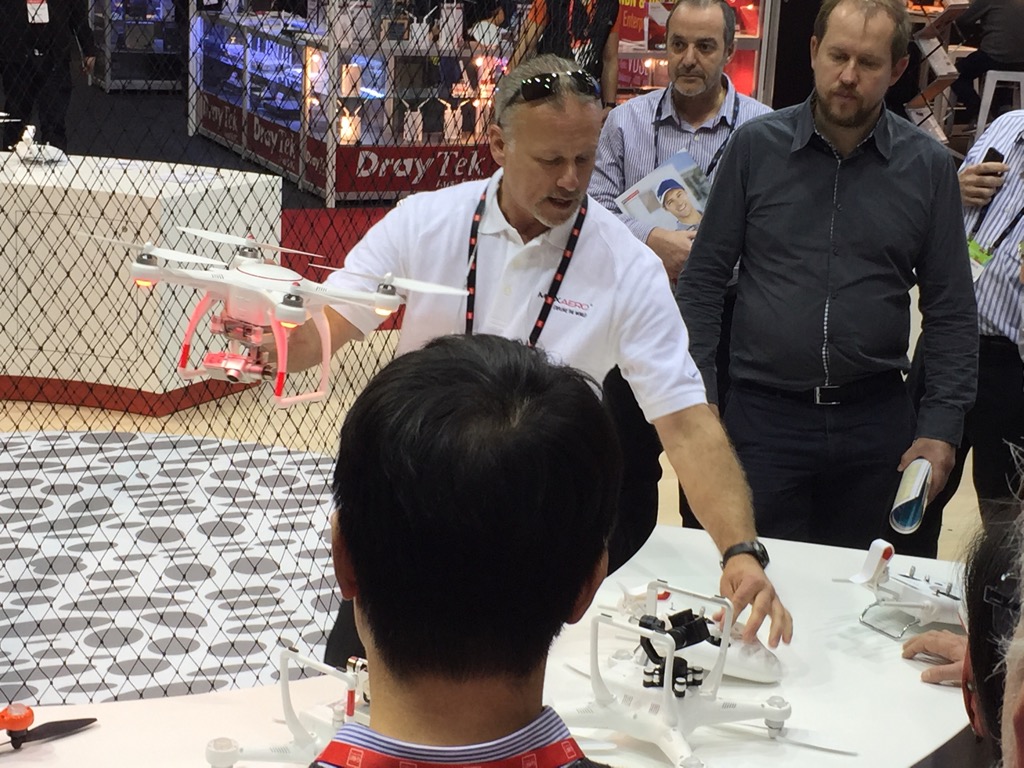
As is common-place at technology conventions these days, there were plenty of drones, and they’re getting smarter too.  One demonstrator walked in a circle around his drone while it faithfully hovered mid-air – and as he circled it, the drone rotated itself automatically, sensing where he was.

Drone CeBIT


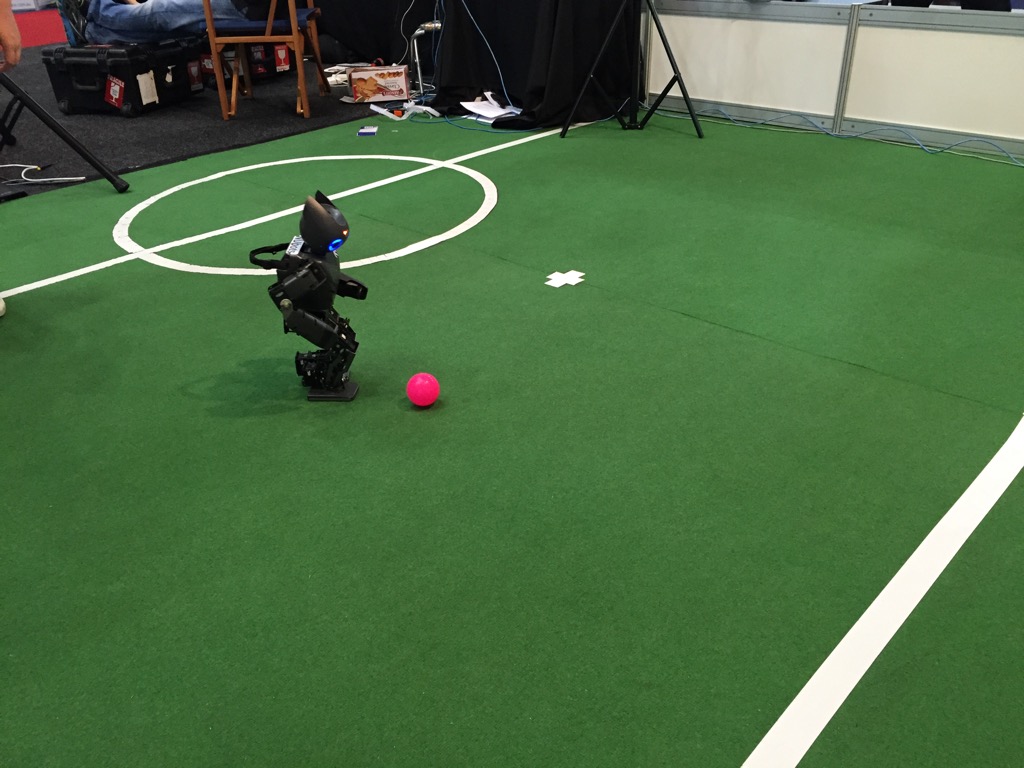
And while we’re talking about smart gadgets, a return visitor to CeBIT was the kid-size humanoid robot soccer league – or more specifically the NUbot team from Newcastle University who are previous RoboCup world champions.

Nubot


What is RoboCup I hear you ask?  Well, imagine foot-high robots running (okay, shuffling) around a ridiculously undersized soccer pitch kicking a ball trying to score goals.  Hilariously, some of them kept falling over, as if to feign an injury (or so I imagined), and I found myself wondering if there had been any Italian inspired coding involved.

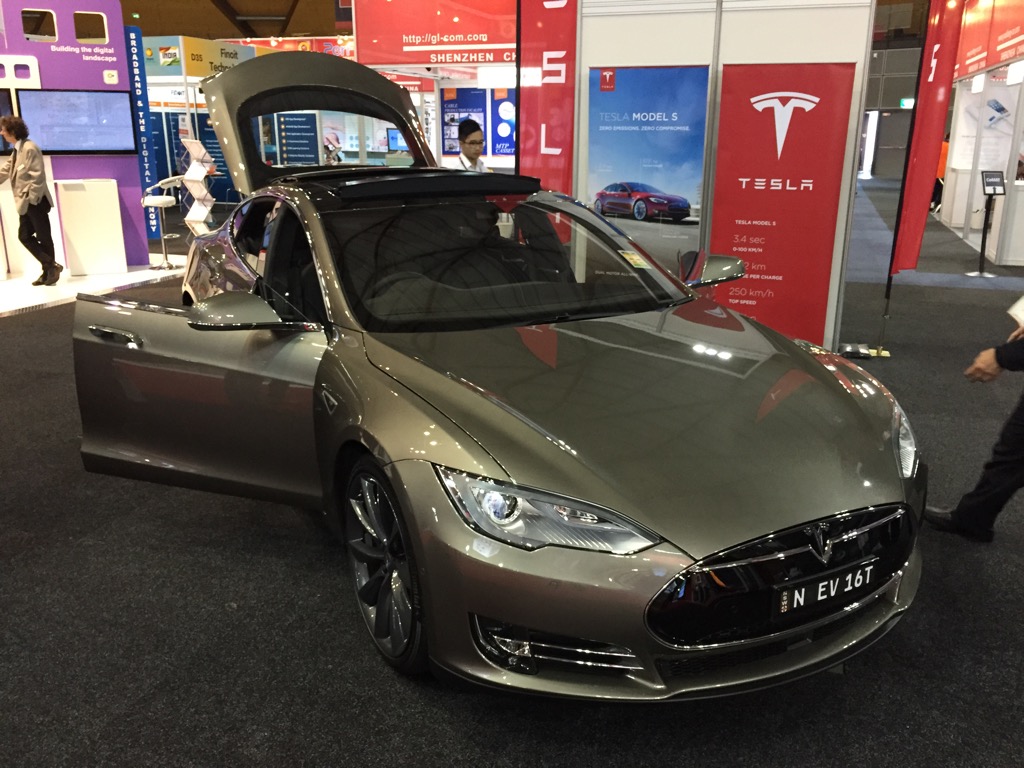
Green tech was once again a major feature at CeBIT with San Francisco based electric car manufacturer Tesla displaying one of their cars, a Model 85 – accompanied by a constant queue of people wanting to sit in the driver’s seat for a selfie!

Tesla


Were you at CeBIT Australia 2015? What were your highlights from the show? Let me know on Facebook or Twitter!

An Insider’s Look at the History of Cybersecurity

Vinton Cerf, often known as one of the “Fathers of the Internet”, was featured in a talk presented by The City Arts and Lectures, held in San Francisco on April 29.

For those who don’t know, Cerf was the co-designer, with Robert Kahn, of the TCP/IP protocols that founded the essential architecture of the Internet. He worked on building what would become Internet protocols as a graduate student. He now has the role of Chief Internet Evangelist for Google.

Cerf was brilliant and charming.  The audience listened intently to his anecdotes and stories about what grew to become the Internet – and so much a part of our daily lives. His talk was supposed to be focused on the Internet of Things, but ended up being wide-ranging and provided a lot of food for thought.

As we celebrate nearly 26 years of the Internet, Cerf’s shared that early Internet security considerations were hampered because work on public key cryptography systems remained top secret.

As Cerf noted in a video interview here:

“I worked with the National Security Agency on the design of a secured version of the Internet but we used classified security technology at the time and I couldn’t share that with my colleagues… If I could start over again I would have introduced a lot more strong authentication and cryptography into the system.”

Specifically in terms of the Internet of Things, Cerf said, it has a great capacity to reduce waste and costs in our everyday lives, but he also noted it definitely has security issues.

Cerf also detailed the fine line between the accessibility of digital data and the right to privacy. This is something he has obviously considered for a long time.

He chose healthcare as one example, where a patient’s heartbeat and temperature can be digitized, and that it is a great tool for medical professionals, but as Cerf said it “wields both ways,” as a hacker or crook would love to know the state of your health or when you’re going to be in the hospital.

Hearing the talk made me wonder what better security and encryption would have meant from the get-go for the Internet. Theoretically, it could have saved us many of the cybersecurity issues we face today.

Interestingly, as a backdrop, Cerf’s talk came on the heels of news of the White House being hacked. The White House had a data breach where Russian hackers apparently gained access to its unclassified computer system. This was reported back in October, but lightly, and now new details are emerging.

The good news is this hack didn’t include classified emails and information. The bad news: The hackers reportedly first breached the State Department system –via a phishing scam –and from there gained access to the White House network. You can read more in The New York Times article.

As they say, hindsight is 20/20, and the Internet is all about moving forward.

We all know cybersecurity issues will only become more important with IoT. If we are to change the course of cybercrime, it will require great minds like Vint Cerf along with champions for cybersecurity in both the private and public sector, more vigilance by businesses and better educated consumers who proactively take responsibility for their own cyber security. We’re certainly committed to doing our part.

You can hear Vint Cerf’s Internet of Things interview broadcast on City Arts & Lectures on Public Radio in the U.S. on May 24.

Title image courtesy of The Guardian

Three Exciting Things In: Connected Cars

The motor industry is one of the most innovative spaces in business right now. From driverless technology to remote access and electronic cars, there is an abundance of exciting technology that promise to make a real difference to the way to move around our lives.


Augmented Reality Driving Goggles

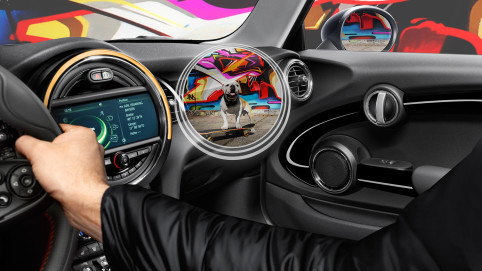
Covered in this fascinating Wired article, these driving goggles (seen above) are being developed by the automaker Mini and have the potential to change the way we drive for good.

Mini Goggles

Headsup display: Make sure the most important information is available to you wherever you’re looking with speed and directions fed directly into the goggles.

Zero latency: Using special technology to predict how your head will move, the goggles approach to close to “zero latency” meaning that the augmented images displayed in the goggles are happening in real time.

Look through walls: By using cameras and microphones outside of the vehicle, you can look straight through the frame of the car to see potential hazards.


Remote Control Parking:

BMW recently revealed that they have developed remote control parking for the 2016 BMW 7 Series.

Video

2016 BMW 7 Series


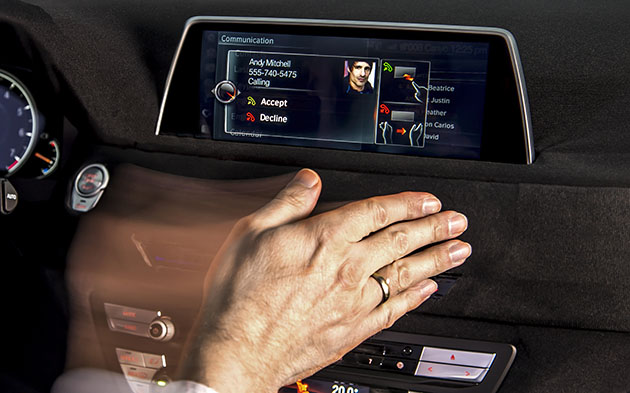
But that’s not all, BMW are looking to change “interaction between the driver and the car” by introducing in-car gesture control to the 7 series and improved voice commands. This means no more fiddling with that radio or satnav.

BMW Gesture Control


Wireless Car Charging

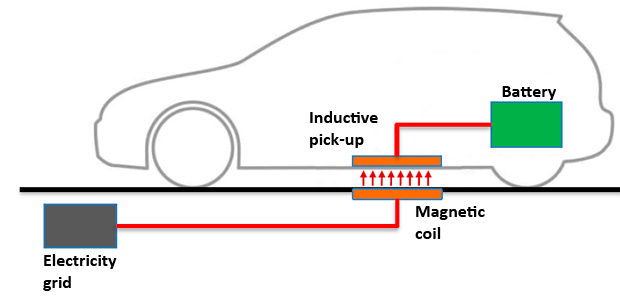
Electronic cars are slowly but surely making their way into the mainstream. One of the largest obstacles to their adoption is the lack of charging stations. A research team at Qualcomm  has developed a wireless form of charging for electronic cars that could potentially make it much easier to charge vehicles.

Using inductive charging, the electronic car will charge wirelessly when parked over a magnetic plate.

Inductive charging


Inductive technology has only recently taken off in the consumer space with wireless smartphone charging stations so don’t expect to see these on the road any time soon.


The importance of privacy

As these three exciting technologies demonstrate, the Internet of Things is growing and advancing at an incredible rate. It’s important though to ensure that we are building and developing advanced functionality with privacy and security in mind.

The benefits of smart, connected vehicles are obvious for all to see but as AVG has highlighted several times already, vulnerabilities in system security can pose real risks to human safety and property damage.

Will humans soon be banned from driving?

A driverless car recently made the journey from the Golden Gate Bridge in California and drove cross-country to New York City. The voyage was the longest autonomous drive attempt in the U.S., and has put driverless vehicles in the news again.

The successful journey brought to mind a recent prediction from Elon Musk, the founder of electric car manufacturer Tesla:

“[Legislators] may outlaw driving cars because it’s too dangerous… You can’t have a person driving a two-ton death machine”.

While at first this might seem radical, I feel it’s a potentially realistic image of the future.

With Tesla, Google, Apple, and most major automakers working on self-driving cars, it’s a safe bet they will be commonplace in the next decade.

For his part, Musk drew a relationship with elevators: When elevators first came about, each had an elevator operator.  But as people became more used to the technology, and elevators became more safe and efficient, the operators went away.

Certainly, there is a lot to consider with the day of the self-driving cars coming. At the Nvidia conference, which debuted the firm’s computer platform for driverless cars, security issues with autonomous cars were also highlighted.

As Musk noted, there are some basic security concerns to deal with to make sure that people won’t be able to hack into vehicles.

“We’ve put a lot of effort into that, and we’ve had third parties try to hack it,” Musk said. He also said the threat of hackers taking over cars becomes more significant if the steering wheel and brake pedal disappear. Until then, he says drivers can override any potential problems.

As we’ve reported previously, car hacking is already happening today with automated, smart devices including car locks. Imagine when the entire car is vulnerable?

According to a recent congressional inquiry by Senator Ed Markey, there is a widespread absence of security and privacy protection being taken into consideration as automakers race to embrace the technology without considering the implications.

Clearly, the automotive and cybersecurity industries need to monitor autonomous technology very carefully, and adapt where needed.

Put simply, cars are another piece…a big piece… of the entire landscape of the Internet of Things, and if we are going to leave the driving to technology, we must make sure that it’s safe and secure.

Wearables will evolve beyond screens

A healthy human has multiple biological senses he or she was born with. Sight, hearing, taste, smell and touch are the five traditionally recognized. The ability to detect other stimuli beyond those governed by the traditional senses exists, including temperature, kinesthetic sense, pain and balance.

If I had to explain a human sense, in our digital world, I would describe it as a biological sensor that responds to a specific physical stimuli and transmits the data to brain cells that later interpret them for us and may lead to a response.

Our biological senses respond to physical stimuli, but could we develop a sensor that responds to stimuli created in the digital world?

I believe the answer is simple; yes.  For example, I could get a notification delivered directly to my brain when something important is happening, such as my child has not returned from school on time or when my glucose level is high.

The idea isn’t unprecedented. Many animals have unusual biological sensors that to support their surroundings and lifestyle. This however, took millions of years; we could create something in just a few.

Over the last few years, we’ve developed new technologies to help people with different disabilities to gain back their lost senses. Advances include a tiny eye implant that restores sight to the blind and electronic hearing devices that help people with severe hearing loss.

While these technologies are very important for our society and for the people who need them, their main goal is to restore (or provide an alternative to) the damaged/missing sense that respond to a physical stimuli.

How do we create a digital sense?

Digital senses aren’t as far away as you may think. Smartwatches have started to emerge. Although they are still in their first release version people struggle to understand the benefit of them. Is it yet another screen to look at? Does it just save me from having to take my phone out of my pocket? Will it replace some tasks I do on my smartphone? Or is it just another input peripheral to my smartphone? Where is the value to me?

While most of the available applications of a smartwatch are to bring the smartphone notifications to my eyes via a screen on my wrist, there is another – hidden- value in such devices and that is to develop a new sense. I call it the Digital Sense.

A digital sense can respond to digital events, convert them into physical ones and transmit that information to our brain cells in non-invasive methods – for example, with a combination of one or more micro vibrations. The human brain will then interpret them and respond.

In the digital mobile world, smartphones receive data from many sources: the web, email, embedded sensors and cloud services. However, the main method smartphones use to convey all this data to the human brain is via a screen. As a result, we find ourselves spending many hours in front of multiple screens in order to consume data.

Google Glass introduced new possibilities in the way we interact with and respond to our digital world. Some would say that Google Glass failed as it was too intrusive and harmful to real world social experiences.

A sensor would never do this. A sensor should be part of the body and transmit information for the brain cells to process – not to form another obstacle as we saw with Google Glass.

I believe that by taking advantage of wearable technologies and using them to transform digital data into a physical stimulus that our biological sensors can interpret, in a non-invasive way, will be the most valuable application of wearables. I believe it will dramatically increase the adoption of wearable tech as the value proposition can be immediately understood.

Imagine a smartband on your wrist or a smart device on your shirt that will vibrate or move when your glucose level is high or when your family or colleagues urgently need you.

This is not the notification sound, as we know it from our smartphone today.  They are intrusive, not necessarily private and not properly secured. It is more advanced than that. It’s a new sense that we wear and transforms our digital data into something our biological sense can transmit to our brain cells in a non-intrusive, secure and private way. This is where wearable technologies will find their home, not as an additional tiny screen.

Recently I experimented and implementation of such new sense on my wrist, and I do not feel like I will let it go any time soon.

Why IoT should stand for “Illusion of Trust”

Our always on, always connected world has fundamentally changed how businesses operate. Communicating with customers and employees will never be the same again.

Cloud solutions bring many benefits by making things easier for businesses, and it’s happening whether we like it or not.

But many businesses trust the cloud blindly without proper consideration for the challenges and deeper issues at hand.

The added convenience of cloud applications also comes with a potential downside, such as potential security threats and surrender of control.

Many people are familiar with the acronym “IoT”, and we understand it to mean the Internet of Things. This is a catch-all term for our world of cloud based information and smart connected devices.

I believe there’s another meaning for these three letters – “Illusion of Trust”.

I call it the Illusion of Trust because business owners don’t realise that cloud security is an issue.

The reality is that, through their T’s and C’s, cloud providers are limiting their responsibility for the data they create and manage. This means that interruptions to service or changes of policy can leave businesses in trouble. As we hand the control, we need to consider the trust – just as we do we with employees.

No so long ago, Facebook experienced a software flaw due to a seemingly simple error that cascaded into a much larger problem causing an major outage that lasted five hours.

I personally know a number of businesses impacted by this outage.  It was unplanned, unscheduled and hugely inconvenient for the many thousands that rely on Facebook as a business tool.

Businesses around the globe trust Facebook to deliver – all the time. The same goes for other cloud-based services that millions of businesses rely on.

The following line is from the terms and conditions of a well-known cloud storage provider:

“We may add or remove functionalities or features, and we may suspend or stop a Service altogether”.

These T’s and C’s are not unusual. There are thousands of providers out there and many do not take any responsibility for losing data, for changing or suspending service, or for any outages that may occur.

Traditionally, if your employees suddenly decided to take five unscheduled hours off you’d be able to take action, wouldn’t you?  This is within your control.

But when you adopt cloud solutions, you forgo that control in return for added convenience and cost efficiencies.

Businesses are still too eager to hand over their vital services and data to cloud providers. They are placing blind trust in a system that is not entirely reliable. Instead, I believe that cloud providers should have to win the trust of businesses before they take control over important business elements.

After all, who we trust with our data and our livelihood is now one of the most important business decisions we can make as businesspeople.

I hope, over the next few years, that we witness an evolution in cloud services that focuses on transparency, flexibility and reliability.

Trust is something that should be earned and not granted unconditionally at the onset.