Tag Archives: Internet of Things

From Beacons to Dash – a glimpse at the future of retail and IoT

According to a new research by Juniper Research, retailers will invest $2.5 billion on IoT within the next five years — four times the investment being made in 2015.

Some of the biggest retail IoT investments are being made in location-based beacon technology. Bluetooth-based beacon technology, like Estimote, transmits location information from beacons to smartphones and allows retailers, once you’ve opted in, to track your whereabouts and communicate real-time via their own app. The retailers can provide customers with personalizedm relevant ads and other useful information.

Forgot your shopping list? No worries, you’ll be reminded of products when you enter the store based on your previous purchases, or access shared shopping lists, and receive relevant special in-store coupons and deals.

Target is among the growing list of retailers testing the technology. It launched a test of beacons in 50 stores. One of the features integrated in Target’s app allows it to push timely recommendations and deals in proximity to a shopper’s location.

For a glimpse of how beacons are taking root at retail, Mobile Commerce Daily recently profiled a pilot program at Illinois-based Niemann Foods’ County Markets. The 44-store chain’s launch of in-store beacons provide shoppers with personalized digital offers, location-specific coupons and in-store maps to streamline the purchasing experience.

The results have been positive, including coupon redemption rates as high as 50 percent, compared to a printed ad coupon industry average of below 2 percent, reports Nathaniel Jones, the electronic marketing manager at Niemann’s.

According to the 2015 Store Operations Survey by Retail Touchpoints, nearly 46% of retailers either now have or plan to use beacons in their stores. For now, most of the beacon programs are being deployed in pilots on a small scale as retailers try to understand how the technology can foster customer engagement. So far, analysts report that the biggest barrier to adoption is getting consumers to turn on the Bluetooth capability on their phones.

Now, in new developments at the other end of the IoT retail spectrum away from the store and more conveniently located in your own home comes the new Amazon Dash Button. The eCommerce giant has begun offering the Wi-Fi-enabled Dash buttons for its Prime customers to install in their homes to make it possible to re-order online without even needing to login to Amazon. The inexpensive (US$4.99) small plastic Dash buttons are designed to be placed throughout the home to make it easy to re-order anything from coffee to soap — from where you use it most — with just a press of the button. No need to hassle with a shopping list, Dash is on the case!

On the downside, the Dash service is still in early stages and currently has limited product availability. However, it is earning the support of major brands from Maxwell House to Clorox. And, for the near-term, Dash does not provide immediate gratification; you still have to await a typical Amazon Prime shipment and delivery timeframe of overnight or later, depending on the product availability. (But that may change with Amazon’s planned deliveries by Drones sometime in the future!)

Also on the downside, think of the results if a button-pushing happy child or a teenager plays with Dash? What to do with twenty bags of dog food delivered at your door?

Looking even further ahead to where retail IoT is headed, Time Magazine asks in its review of Dash: “What happens when consumption becomes even less of a conscious process — when, say, our smart cupboards and refrigerators, empowered to monitor what we’re using, start making buying decisions autonomously?”

Indeed. There are definitely a few things to be worked out about the future of IoT and retail in our lives. Chief among them, we believe, are privacy and security safeguards. All the new retail and other IoT technologies and services hinge on data — your data. They are feeding customer data and behavior back to retailers and their vendors to be tracked, analyzed and recorded.

Both the beacon apps and Dash are opt-in services, and consumers must give their permission and have a choice to use them or not. But increasingly with IoT, consumers will face the question: Are you more concerned with privacy or convenience?

And the same question is of supreme importance to businesses in their adoption of IoT. Business owners, small or large, have to gauge these new IoT opportunities for the potential and risks involved…not to mention the potential for annoying customers.

The IoT may prove to be the biggest game-changer since the Internet itself, with wide-ranging implications to society. And like the Internet before it, all of those implications and protocols that will be needed, aren’t yet known. It’s a brave new world and we all need to get ready for it.

At AVG, our prime concern is with privacy and data security, and that’s why we are involved at the industry level to protect them.  For example, we support the OTA IoT Trust Guidelines Framework, which was issued this past month. To read the full Framework Goals you can visit the OTA site.

Creating Smart Homes for Today – and Tomorrow

Need some help imagining what a smart connected home could look like? American retail giant Target recently installed and opened it’s own version in downtown San Francisco’s Metreon center. Its 3,500 square-foot model home is a transparent acrylic house with rooms decorated with acrylic furniture and outfitted with the latest smart connected home products. Target’s “Open House”, as it is called, and store offers both consumers and the curious a way to view and experience smart living.

Interestingly enough, you can’t really call the installation a “home of the future”, because all of the products on display, with the exception of one, are available today!

Walking through the rooms, guests experience vignettes that demonstrate the ways these multiple smart connected devices can work together to create helpful real-life solutions today. Here are a few sample scenarios:

  • The baby wakes up early crying in the nursery: The Mimo baby monitor ($199.99) alerts your phone and soothing music automatically begins piping in from Sonos speakers until you can get there. Soft Hue lights ($199.99 three-pack) gently go on. The Nest Cam ($199) gives you a good view of Junior in distress. The Nest thermostat adjusts for the morning temp. Meanwhile Wemo turns off the humidifier and turns on your coffee pot in the kitchen.
  • In the kitchen: Coffee Smart Optimal Brew ($149.99) is ready and you prepare for a long day by putting on a CrockPot Smart Slow Cooker ($129.99) meal that you can monitor from the office. Your Drop app and kitchen scale ($99.95) gives you the recipe and measures the exact ingredients needed. Meanwhile, your Petnet ($149.99) pet feeder is set to automatically feed the dog just the right amount of food for lunch.
  • In the master bedroom that evening: After weighing in and taking your blood pressure with Withings devices, you’re ready for sleep. Your Jawbone Up3 ($149.99) wearable, after monitoring your activity all day, is now ready to track your ZZZs. Once the Hue lights go off, August Smart Lock ($249.99) automatically locks up. All is well… until a midnight storm rolls through and Quirky alerts you to a leak in the garage…

Most of us are familiar with Nest, which is one of 50 vendors on display. But it is truly pretty amazing to see just how many other smart products are out there – and capable of working together to provide useful solutions in the home today.

Still, the smart home of today is pretty much in the domain of early adopters. While this is changing, for most of us (even in Silicon Valley) it is happening one device at a time. This was reinforced at a recent panel discussion on “The Connected & Smart Home: What It Can Be and How Will We Get There” hosted by the Churchill Club in San Jose, California.

Target Smart Home


So, Target’s idea is really a smart one (no pun intended), because the model helps to demystify connected home products and inspire guests just like me to explore the world of connected home living. Target says it also plans to learn from Open House. Both Target and its partners are getting real-time feedback from the real consumers interacting with their products.

To be sure, there is still a lot that needs to be figured out about the future of the smart connected home by the industry and consumers alike. The industry vision is that all our smart connected devices (that make sense) can be controlled remotely, easily talk to each other (in industry speak “are interoperable”), and provide data that can be analyzed and acted upon and protected, for the betterment our lives.

That there is a lot of work to be done, particularly on interoperability and the data analysis and security front, was also reinforced by the Churchill Club panel that featured some of the top experts in the field from Nest, Intel, Qualcomm, Forrester Research and Accenture.

Today, security is a chief concern to people adopting smart home technology. That’s security as in “home security.” But as we all see more smart connected devices coming into our homes and realize the data is flowing—not only in our homes, but outside of them, data security is only going to become increasingly important to all of us.

Target’s Open House underscores just how fast the future is coming and the need to be ready for it. Hopefully, this will not only be a great starting point to get more consumers interested in the concept of the smart home, but will also get them engaged and thinking ahead about the need to secure all that data being generated in our smart connected homes now and in the future.

Heads-Up Displays: A Driving Solution or Another Distraction?

You may have seen recent reports about the “heads-up displays” (HUDs) technology for cars, where information is projected onto the windshield of the car as you drive. The transparent display provides navigational assistance, speed and other dashboard components, lane change alerts, etc.

The HUD technology was originally developed by the military for fighter pilots, who could see target data and other important information without looking down. But now the technology has entered into the automobile sector and is something we’re going to be hearing a lot more about…

Recently, a startup called Navdy unveiled a link to the auto display and your smartphone information. Other formidable players in this space are Continental and Garmin, among others. Most players have focused to-date on the display of navigational, safety, and instrument information. But it’s clear that with companies such as Navdy, HUD is headed into a more interactive territory.

According to a new market research report published by MarketsandMarkets, the heads-up display space is expected to reach $8.3 billion dollars in five years. (It should be noted this projection isn’t limited to automobiles but also to such other segments as aviation as well. See here.)

Proponents of HUDs believe they will make our roads safer by keeping drivers from fumbling with their smartphones while driving, or even having to look down at their instrument panel. With the projected image on your windshield, the theory goes, you’re able to keep your eyes on the road.

Indeed, on any given day, Distracted.gov estimates over 660,000 vehicles are being driven by someone using a hand-held cell phone. This all too frequently, and often tragically, results in accidents.

A second part of the HUD business proposition may be a pragmatic one: people are going to be using their phones anyway, so this is a better alternative.

But the question is: is it?

Hands-free technology and voice-activation software have equally been touted as benefits for the same reason: users can keep their eyes on the road. Yet, both voice-activation software and hands-free are not panaceas.

In the case of VA technology, it still affects the cognitive part of your brain.  Many of the simple tasks that come with VA technology increase a driver’s cognitive workload. And, depending on the situation, that can be dangerous. Vehicle voice-activated “infotainment” systems that are more complicated or just take longer to navigate created the highest levels of driver distraction and safety risks, according to a recent AAA study.

Hands-free phone technologies also don’t solve the problem of having a conversation, especially an important or emotional one, while driving can be only a little less distracting than juggling a phone. It’s for the same reason: Cognitive distraction.  Many studies back this up, including a groundbreaking one from the National Safety Council.

It would appear that the same question of cognitive distractions applies to new HUD techs.

While we can all appreciate any tools that will make our roads safer— the question is whether turning your windshield into a computer screen is the way to go? For that, we’ll have to wait and see.


Image courtesy of PC Mag

Unicorns: Perhaps Not As Rare As We Thought

So what’s a Unicorn? Here’s the study’s definition: “Many entrepreneurs, and the venture investors who back them, seek to build big, impactful companies valued at a billion dollars or more. We called these companies ‘unicorns’ because what they had achieved seemed very difficult, rare, and relatively unstudied.”

The latest study, the second by the venerable tech startup news site, has some surprises, as well as corroborates what has become conventional wisdom in Silicon Valley.

There’s a lot of data to chew on in the study and you can read the full post here. But parsing through it, there is a lot to learn, whether you’re a start-up, an investor, or just curious about markets.

Here are some of the interesting takeaways that I gleaned.

First, the surprising:


Unicorns are not as rare as we thought

The latest study revels that there are more Unicorns than one might think. There were 84 companies profiled in this year’s study—more than a 100% increase from last year. Granted, a lot of the companies were “paper” Unicorns (companies valued on paper that have not had liquidity events.) But the total value of the companies was $327 Billion and 2.4x the last analysis (“excluding Facebook, which was almost half the value of our last list.”)


Old is the “New” New

As the study maintains, for every wunderkind out there, a seasoned leader or founder (and, perhaps more importantly, a co-founder) may be your best shot at becoming, or finding, a Unicorn.

The study found that companies with educated, tech-experienced, older co-founding teams with a history together have built the most successes in this rarified club. And the co-founding aspect was interesting as well. As the study noted, 86% of the companies had co-founders, or a “super-majority” according to its lingo.

While some of this may be counter-intuitive to the traditional Silicon Valley narrative, it makes sense to me on several levels. An experienced leader can gauge a market, and having a co-founder gives you a chance to bounce ideas off one another, whether it’s reigning in your partner or just having “green-light” time. (I’ve had co-founders in all three of my entrepreneurial ventures.)


In the not so surprising camp:


IoT is gaining impact

This year, the Unicorn study recognized the Consumer Electronics/Internet of Things as its own category. According to the study, five companies, which make up 6% of the list, have raised a combined $266 million on average and are valued at 18x the private capital raised. While it is the smallest of the categories (after E-Commerce, SaaS, Enterprise and “Audience” or ad-driven businesses– ranked by order of value from first to last), to me, this is just another sign that the Internet of Things is ripe for takeoff.


Diversity: Still too Little

This last survey statistic from the study that I’ll share is in diversity, where the numbers fall into the not-so-surprising camp.

While the study determined that 50% of founders or co-founders of Unicorns came from outside the U.S. (from India to Canada) it shows diversity among Unicorns diversity is trending up, but is still low. TechCrunch reports this year the list welcomed two companies with female leaders, compared to no female CEOs on its last list. As well 10% of the co-founders on this year’s list were female, double last year’s survey. Like its average startups counterparts in the valley, 70% of the companies surveyed had no gender diversity at the board level… Please note: the study was unable to track racial or ethnic diversity.

So in terms of diversity, this “rarest of the rare” breed of venture backed tech companies are doing about the same as run of the mill startups and tech companies in Silicon Valley.

Ultimately, when I look at this study, however, I am an encouraged to see that attributes like experience, collaboration, and inclusion, as well as innovation, are being called out as measures of success. These are all values worthy of attention, whether you aspire to be a Unicorn or not.


Title image courtesy of TechCrunch

Computer-aided sniper rifles the latest things controlled by hackers

via Wired

via Wired

For those of you keeping track, you can add high-tech sniper rifles to the growing list of Things That Can be Hacked. The vulnerability that allowed two security researchers to break into the computer guidance system of a sniper rifle is the same that allows hackers to access baby monitors and home routers. Simply put, the default Wi-Fi password, which was locked by the manufacturer, allowed anyone within range to connect. The typical range is up to 150 feet (46 m) indoors and 300 feet (92 m) outdoors.

In advance of the Black Hat conference this month, security researchers Runa Sandvik and Michael Auger, have demonstrated that they can hack TrackingPoint precision-guided firearms.

The TrackingPoint rifles can make a sharpshooter out of a novice. This is thanks to the computer-aided sensors including gyroscopes and accelerometers which take into account all the factors that a sniper scout would look for; wind, speed of the target, distance, snipers orientation, ammunition caliber, even curvature of the earth.

I asked Steve Ashe, a veteran of Desert Storm and Desert Shield, who collaborated closely with the sniper team what he thought about such technology. “Trained scouts and snipers must master a set of physical and mental skills that is beyond the reach of most people. This type of rifle can never replace that. Besides being crack shooters, they are in excellent physical condition, able to do complicated calculations in their heads and have mastered field craft such as land navigation, stalking and range estimation.”

One of the features of the TrackingPoint rifle is the ability to video stream your shot and share the view from the scope to another device connected via Wi-Fi. It’s this connection to Wi-Fi that turned out to be the weak point. The gun’s network has a default password that cannot be changed.

Steve Ashe

Desert Storm veteran Steve Ashe with sniper rifle that can’t be hacked.

Sandvik and Auger told Wired magazine that they developed a set of techniques that could allow an attacker to compromise the rifle via its Wi-Fi connection and exploit its software. They demonstrated that making a change in one of the variables listed above could cause the rifle to miss its intended target, disable the scope’s computer making it a useless piece of weight, or prevent the gun from firing. The TrackingPoint rifle has a range of up to a mile.

“A trained sniper is constantly making adjustments for these things. Of course, one thing they are always looking for is to shot further with more knockdown power,” said Ashe.

The good news is that hackers cannot make the gun fire by itself – that still requires a real finger pulling the trigger.

I asked Steve if the possibility of analog hacks existed. “Snipers always have their guns, and they hold onto their ammunition. But they have to sleep.” He said that snipers press their own bullets so they would be sure of the weight, but it’s possible, albeit improbable, that someone could tamper with it. Another hack would be to shave the firing pin, but again, highly improbable.

Speculation about the implications of Sandvik’s and Auger’s hack are pretty obvious. With military and law enforcement applications, having a third party control the trajectory of your bullet or brick your gun could cause a mission to go awry. Graduates of the US Army Sniper School are expected to achieve 90% of their first round hits at 600 meters, so with those kind of statistics, the question becomes why do they even need it?

“The computer assisted sniper rifle, has not yet made its way into the military or law enforcement units, even though they are testing it. But you gotta understand, things move slowly in the military. The Marines haven’t updated their sniper rifles in 14 years. Doesn’t look like something like this will become a threat,” said Ashe.

Thankfully, only about 1,000 of the TrackingPoint firearms have been sold and the company is reportedly not shipping any rifles currently.


Follow Avast on FacebookTwitterYouTube, and Google+ where we keep you updated on cybersecurity news every day.


Routers are set to become the digital battleground of the future

By now, most of us are familiar with the term the “Internet of Things”. It has come to describe the always on, always connected world where day to day objects are online. It ranges from smart-watches to smart fridges and is closer to reality than you may think.

Much has been written about the need to secure the devices that make up the Internet of Things, but I believe there is another battle to be won.

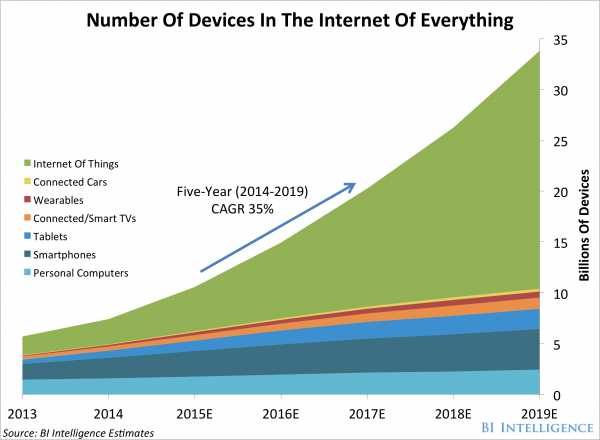
According to most reliable research, the number of Internet connected devices is growing rapidly and will continue to do so for the foreseeable future.

IoT Devices


Building security into each and every one of these devices is no mean feat. In fact, it will be very difficult indeed. That’s what I believe that it is of vital importance that we focus our attention on securing routers and Wi-Fi hotspots.

As the number of Internet enabled devices in our homes continues to increase, more and more members of the public are getting ready to adopt smart home appliances, energy meters and wearables.

Connected Devices


All of these newly connected devices entering the home should be rigorously secured as they will be handling data specific to your household. Securing them individually could be tough though, until you realise that they share something in common – they communicate via the Internet access point, a home router.

As you can see, the number of home routers in the market is continuing to grow rapidly, but is only a fraction of the number of total devices.

Private Hotspots


Robustly securing each home router or a public hotspot has the knock-on effect of securing the data transmission of dozens of devices and, for my money, is a much more realistic approach to securing the Internet of Things.

Sadly, security on most popular routers is still pretty basic and has a user experience to match. Clunky menus that aren’t immediately intuitive can leave users at a loss when it comes to making changes to their Internet settings.

Here are three simple things that you can do right now to help improve the security of your home Wi-Fi network.


Three steps to securing your home router:

Change the login details

Most routers will come with default login details. Many people never get round to changing them but you really should. “User name: admin Password: Password” is not a secure login and could potentially grant router level access to attackers if they know the manufacturer defaults of your device.

Set up an access list:

Most routers will allow you to set up a “permitted devices” list that limits access to your network. Setting this list up and including all your family’s devices is a good way to make sure that no unauthorized devices access your network.

Double check your Firewall

A Firewall is an important router feature that helps filter out bad traffic requests coming into your home. All traffic that is sent and received in your home goes through a Firewall and more specifically through “ports”. These are akin to doors, with each one dedicated to certain traffic types. It is always worth checking your Firewall settings in your router to make sure that you do not have any unnecessarily opened ports.


For tips on how to improve your home Wi-Fi Signal, check out the video below.

Securing a Heterogeneous Internet of Things

Analyst firm IDC predicts that the number of Internet of Things (IoT) devices—from home appliances to commercial applications such as door locks and sensors—will grow into a $7.1 trillion market by 2020, compared to $1.9 trillion in 2013.

This rapidly growing market is giving rise to a land grab of sorts: companies are vying to build the one IoT platform that will link all devices, and by linking them make them “smarter” as they communicate with one another.

So it may come as no surprise that at its developer conference last week, Google announced Brillo, a new Android-based operating system (OS) for the Internet of Things. The connected OS promises to use as little as 32 or 64 MB of RAM to run, making it power-efficient and light enough for “things” such as light bulbs, keys or door locks.

By offering a familiar, widely used (Android) OS as the basis for its IoT platform, Google is offering a solution that is already familiar to developers worldwide. However, by offering yet another OS for Things, it also compounds the fragmentation of the space. There are a wide array of vendors and consortiums now offering operating systems, connectivity platforms and discovery protocols.

With each vendor and approach come security threats and attack vectors. These threat surfaces are multiplied by the connectivity and discovery protocols and by the routing of data. There is a trend to route data from each device to the cloud, even when, intuitively, this should not be necessary. This enables device manufacturers to utilize hardware, services and data business models. It is not a trend that is likely to slow down by itself.

Securing this spider web of technology and data is a challenge and a necessity. When a smart lock knows when people are home, or when your security camera sees where you put your valuables, they contain very valuable information for criminals. Less obviously, but just as worrisome, is the aggregate data about you that travels the airwaves in your home and beyond.

Brillo, being built on the mature Android platform, has the advantage of being hardened for security over time, and the disadvantage that nefarious players already know its ins and outs. Other, less widely deployed platforms will go through their own maturity evolution as developers and hackers dig through them.

Because of the vast number of suppliers of Things, and the wide variance of the platforms and protocols, a full security solution is unlikely to come from one of these players. The answer to the IoT security dilemma will more likely come via third-party security companies who’ll play a major role in providing secure, safe digital environments for users across connected devices.

To keep the Internet of Things from devolving into the Internet of Threats or the “Illusion of Trust,” the industry needs to shore up standards on privacy and security. Today, the IoT is still evolving rapidly, and its standards and regulations are just being developed. We’re at a moment in time that’s similar to the birth of the World Wide Web 25 years ago. This time, however, we can build a hyper-connected world based on safety and trust and the principles of protection and privacy—literally, we can build security into the foundation of the IoT infrastructure.

One of the fathers of the modern Web, Vince Cert, once said he regrets not building more security into the architecture of the Internet. It was difficult at the time to anticipate the level of cybercrime, cyberwarfare and cyberespionage that would emerge. The promise of the IoT is exciting, with many business and consumer applications, including the connected car and the connected home. But for our vision to come to fruition, let’s learn the lesson of our predecessors and design the IoT and its devices by prioritizing privacy and security as central features.

An area we are passionate about is what we call the “law of least data.” This encapsulates the desire for data to be routed as directly between agents as possible. Two devices in your home should not have to send data to the cloud – even if they are from two different vendors – when they are talking to each other. Your next generation smartwatch should not have to talk to the cloud in order to read data out of your pacemaker. Of course some setup, or discovery metadata, may be required upon installation, but thereafter data should be kept personal whenever possible.

By agreeing on some defining principles, such as the law of least data, we can build a better Internet of Things.

Could hackers use your GoPro to spy on you?

It turns out that baby monitors are not the only weak point in our digitally connected homes. Earlier this week, security researchers Pen Test Partners warned that Internet enabled GoPro Cameras were vulnerable to hijacking.

As reported on the BBC, the researchers gained access to a GoPro Hero4 camera, even though it appeared off, and could see and hear through the device, as well as delete videos stored on it.

According to the report, the attacker could “wake” the device, turn off its recording lights, and then video-stream what the device could see to his own mobile phone.”

According to a GoPro statement, the issue is not an issue of security but rather of poor password choices by their users. “We follow the industry-standard security protocol called WPA2-PSK (pre-shared key) mode…. We require our customers to create a password 8-16 characters in length; it’s their choice to decide how complex they want it to be.”

Clearly, this is a potentially harmful risk to privacy and security, so the first and most important thing that you should do if concerned by this attack is create strong passwords.

The following infographic has three simple steps that you can take to help create a strong password that will help keep your devices and personal data safe.