Comcast resets customer account details after it found out that information was being sold on the dark web.
The post Comcast resets 200,000 cleartext passwords that were up for sale online appeared first on We Live Security.

Comcast resets customer account details after it found out that information was being sold on the dark web.
The post Comcast resets 200,000 cleartext passwords that were up for sale online appeared first on We Live Security.
CyberInvest is the latest government initiative designed to boost the country’s leadership in cybersecurity.
The post £6.5 million CyberInvest initiative to boost UK’s cyberdefences appeared first on We Live Security.

This week’s roundup of the past seven days includes a interesting piece on Industrie 4.0, Schrödinger’s antivirus, proposals to weaken encryption and much more.
The post The security review: Industrie 4.0, Schrödinger’s Cat and weakening encryption appeared first on We Live Security.

Futurecom is Brazil’s major conference and exhibition for the mobile industry to come together and look at the specific requirements that this unique country and culture need.
I was fortunate enough to be asked to be on a panel of industry experts, which included companies such as Tefonica, TIM, Telebras, Deloitte IBM, KPMG and of course AVG. The discussion was promised to be about cybersecurity with the following questions asked by the moderator through the 1.5 hours to get the discussion going.
Each participant gave a view point, and what interested me was how the entire conversation, regardless of the question, seemed to revolve around two topics: data breaches and consumer privacy. This dominated the answers, yet if the same questions had been asked 3 years ago this would have been about malware and protecting devices, but now the conversation is about us, the consumer.
Brazil has some unique challenges in this area as there is no legislation requiring companies to disclose any data breach, and therefore the consumer never knows if their data has been compromised. The consensus of the panel was that governments need to legislate. While I agree with the need for ‘some’ legislation there is also an opportunity for industry to self-regulate and show a responsible path. Self-regulation in any industry allows companies involved to find innovative ways to provide solutions and allows new business practices that may not have been permitted by the strictness of specific legislation.
The fact that data breaches and consumer privacy topped the agenda is not surprising. If we look at the trend of security stories in the US and Europe you’ll notice that the news coverage is all around these topics and the many data breaches that have taken place.
We, whether knowingly or not, disclose and share more information with companies than any generation has ever done before us: our preferences for food, where we shop, our location — the list of data is endless. It is only when this data falls into the wrong hands do we take time to think about the consequences of having shared it, and then maybe regretting it a little. As consumers we need greater choice and control on what is being collected about us and ultimately how it may be used.
It’s not surprising that in one of the world’s major populations, in which a large number of people moved straight to mobile skipping the PC generation, that mobile applications are used in slightly different ways to the rest of the world. I recommend watching to see how Brazil handles the challenges of data breaches and consumer privacy, whether legislated or self-regulated.


Last week AVG took part in Latin America’s largest and most important telecoms, IT and Internet event – Futurecom. It is the first time AVG has exhibited and presented at the event and we wanted to enter the show with some significant news and noise, which we achieved.
Brazil has been a strong market for AVG – a large base of users taking advantage of the AVG Free products on both Windows and Android. There has also been a strong presence in the AVG Business products for over a decade through our partner Winco, who became the first AVG Latin America office after we acquired them in July 2014. As with most technology companies, we see Brazil as a key market for our continued expansion strategy. Futurecom has allowed us to share some of this strategy and announce local partnerships and products developed specifically for the local market.
The first announcement of the week was the launch of AVG Family Graph – a new product from our Location Labs business unit. Knowing where our kids and loved ones are is becoming part of everyday life. In fact, when a parent communicates with their child 72% of them start with “where are you?” I can even hear myself saying it, as it’s usually the first question out of my mouth. This becomes a serious conversation in countries with crime issues that involve kidnap and ransom scenarios.
AVG Family Graph provides the ability to locate family members’ phones regardless of their mobile operator through a simple and easy to use app. If a family member is in trouble, there is a panic button that alerts all the other family members of your location. Of course, we hope that no one needs to use the panic button, and for most parents just knowing where their kids are at any given moment will give them peace of mind. AVG is looking to partner with carriers in Brazil to provide the app to families while giving carriers the advantage of knowing your family a little better. This way, carriers can customize services to meet the demands of a connected family.
The second of this week’s announcements was the news that our security and performance products, AVG AntiVirus PRO for Android and AVG Cleaner for Android, are now featured in the Samsung Galaxy’s Latin American app store, and are also featured in the gift section of the store. Both apps will be available with a 90-day trial, after which time customers in Brazil, Mexico, Chile, Argentina, Colombia and Peru will be given the choice of upgrading to keep the enhanced features or migrate to the free protection or performance features.
Our last announcement of the week was our partnership with Conecta, one of Brazil’s leading mobile insurance companies. When you purchase a new phone, the sales people often ask if you want to insure it. In order to help protect your new device, AVG is providing Conecta customers with anti-theft and anti-virus protection. Customers who purchase a Conecta mobile insurance policy will receive a complimentary one-year subscription to AVG Internet Security and AVG AntiVirus PRO for Android.
With more than 60 smartphones stolen every hour in Brazil’s four largest cities, the anti-theft functionality within AVG AntiVirus PRO for Android might come in handy!


The UK government is to put forward proposals that will require organizations to limit the effectiveness of data encryption, arguing it weakens security.
The post UK government: Data encryption needs to be limited appeared first on We Live Security.

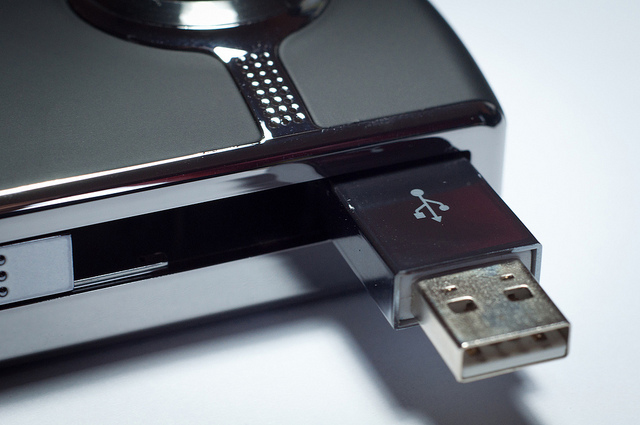
Despite the increase in the storage of files and documents on cloud-based systems, the humble USB is still playing an integral part in our lives. From offices to homes, this convenient tool is used for quickly and easily transferring files from one device to another.
However, just because they may seem harmless doesn’t mean they can’t give your cause for concern. If you have ever connected your USB to an infected computer it is likely that it has become infected with malware. What’s more, if you thought that a virus was the worst thing that could happen to your USB then you’re mistaken – a USB could, literally, fry your computer.
Russian security expert Dark Purple has recently proven this and has developed an updated version of his so-called USB Killer; a USB capable of destroying a laptop but by connecting the two devices.
His first device managed to discharge 110 volts of electricity on the USB port when it was connected, but the new USB Killer 2.0 has managed to increase further the voltage that it can transmit, making it capable of relative destruction. If we consider that a USB port can handle around 5 volts, his invention goes far beyond what it is capable of tolerating, and in just a few seconds the USB Killer can destroy the motherboard.
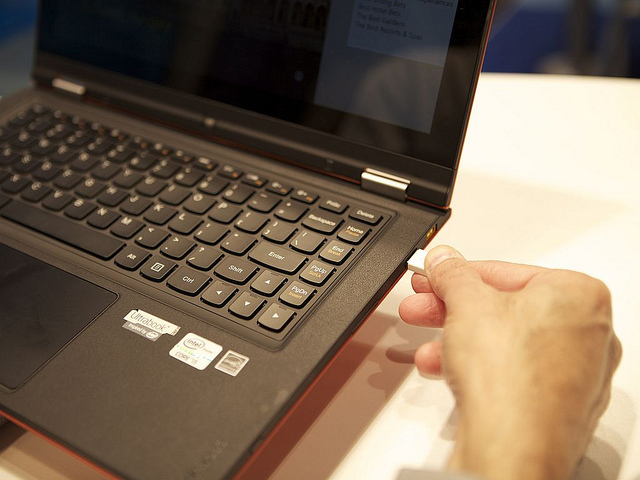
In order to achieve this, the USB that he uses has been modified to use a DC-to-DC converter and various condensers. When it is connected, it begin to transmit an electrical current to the condensers, which turn into tension points as a consequence of this powerful charge.
The Dark Purple system not only manages to destroy computers with this method, but also any technological device that has a USB port. It doesn’t matter if it is a laptop, a desktop computer, or a tablet – this USB is designed to destroy the motherboard of any device, regardless of its size.
Although the investigator hasn’t carried out tests on all devices, his demonstration of the USBs power in destroying a Lenovo ThinkPad X60 leaves us with little doubt as to the potential of the USB Killer 2.0. The effects of his demonstration were immediate, with the computer automatically shutting down and it was impossible to restart it.
You never know what they may have stored in them and it’s best not to take the risk, as they could contain dire malware. If you want to protect your computer or tablet you need to look beyond the programs that you have installed; you also need to be aware of the dangers that come from external sources.
The post USB Killer: the storage tool that destroys your computer appeared first on MediaCenter Panda Security.
Edward Snowden has been described as a “international human rights defender” by the European Parliament, which has called on all EU member states to back the whistleblower.
The post European Parliament offers support to Edward Snowden appeared first on We Live Security.

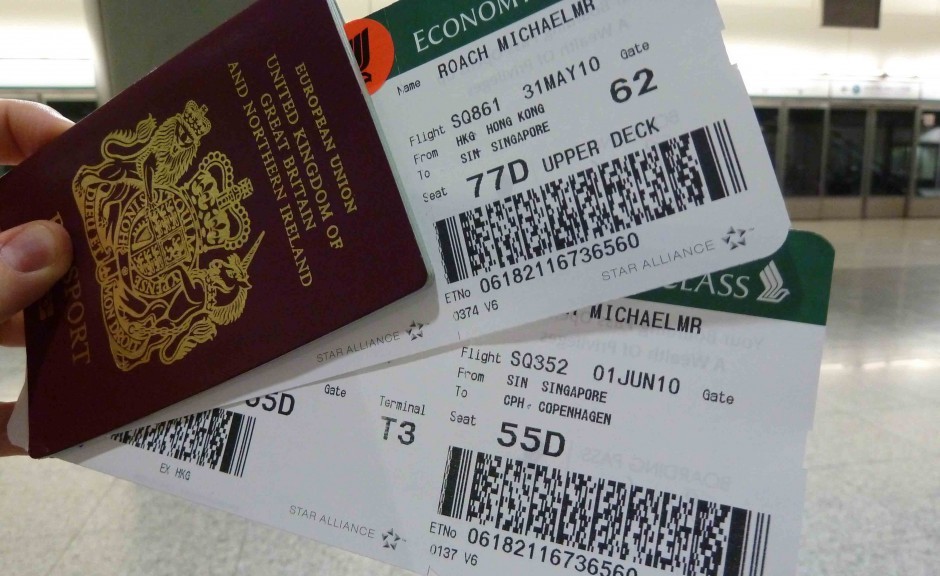
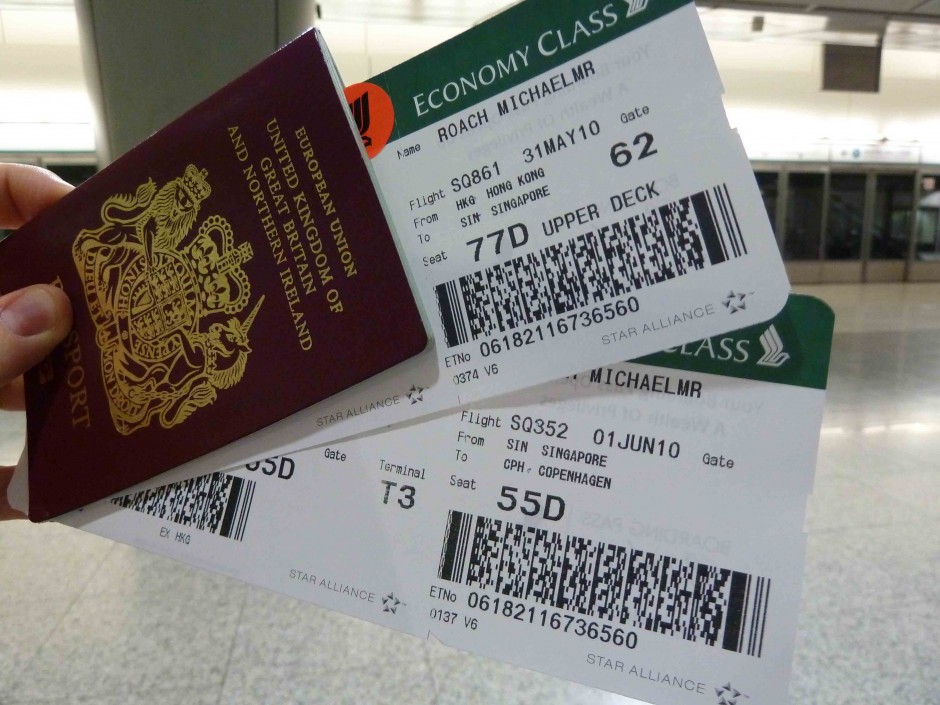 Despite the need to print off documents having a less important role in our lives in the era of smartphones, there are still some things that we need to print off as there aren’t many other options. This is true of boarding cards, which hold a surprisingly important amount of private information which needs to be kept out of the hands of others if you don’t want to run any risks.
The usual protocol after returning from vacation is to throw out the airline tickets without giving them another thought, assuming that nobody is going to trawl through the garbage looking for an out-of-date ticket. Unfortunately, this is exactly what suspicious characters will do, knowing that these pieces of paper are the key to a whole host of private details and information.
What is even worse, however, is taking a photo of your boarding card and publishing it on Facebook or Twitter, especially if your privacy settings aren’t properly configured. By uploading this seemingly innocent image to make your friends jealous, you are inadvertently sharing your details with any user of the Internet who could use the information captured in the image for their potential benefit.
“The barcodes on boarding cards could let anyone discover information about you, your holiday plans, and your frequent flyer account”, according to IT security expert Brian Krebs.
It isn’t always like this, and sometimes the barcode only reveals information such as your name, date of the flight, the related airports, etc. However, in some cases the barcode can turn into a potential goldmine of personal information which can be used to attack your user account in the airline’s website.
The information stored on the barcodes can be extracted by using free access tools and can be interpreted by using step-by-step guides which explain each element.
The real danger that’s stored on these boarding cards is the frequent flyer number, which can be used to access your user account on the airline’s website. Knowing the name and surname of a passenger along with their frequent flyer number is “the first step to getting the password”, states Krebs.
Once inside, among other things, you can check out sensitive personal information (telephone numbers or the accompanying passengers) and even change or cancel upcoming flights. The intruder can even change the access requirements by guessing the answer to a security question – something which we have pointed out before as being rather easy to do.
This vulnerability, according to Krebs, “has created a black market for hacked frequent flyer accounts”. If you don’t want to end up being the next victim, the best thing to do is destroy your boarding cards before throwing them in the garbage or, better yet, use the official airline apps and by-pass the paper option altogether.
The post Don’t be careless when throwing away your used boarding cards! appeared first on MediaCenter Panda Security.
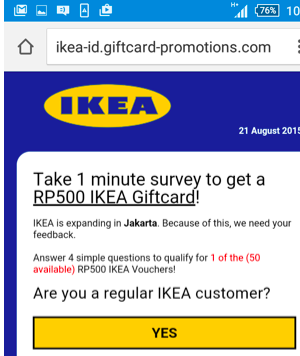
If you end up getting a WhatsApp that’s offering you a coupon for a discount at the likes of Ikea or McDonald’s then you’re right to be suspicious – none of these companies are giving away coupons and it’s like that you’re being a victim of a fraud.
In reality, the name of these, and many other companies, are being used for what seems to be a global social engineering campaign which aims to steal information from unsuspecting victims.
It all begins with a link send to one of your contacts which they will pass on to you – relax, your friends aren’t out to scam you, it’s just how it works.
By opening the link, potential victims are taken to what appears to be a questionnaire on behalf of a well-known supermarket or brand. Via this method, the scammers hope to make use of these famous names to trick you – the likes of Zara, Lidl, Starbucks, or H&M.
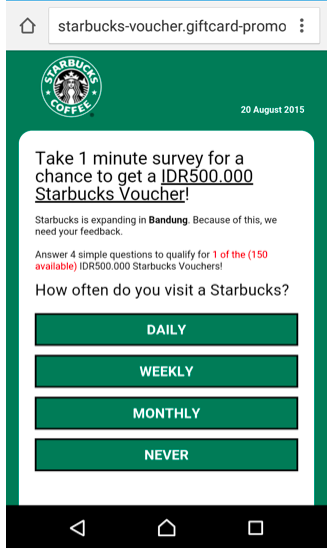
According to the information found after opening the link, the corresponding store is looking to expand and is looking for its users to fill out a survey. They ask you to give your name, address, email, and telephone number, which goes directly to the cybercriminals.
All of this information is collected and later used to carry out spam campaigns, but not before signing the victims up to different premium SMS scams. So, the scam doesn’t just involve identity theft, but could also affect your telephone bill and, in the end, your wallet.
Even though these types of phishing scams have been going on for years, the possibility of getting an easy discount and spreading it to friends, thus making it viral, have turned this new way of tricking people into a global phenomenon.
The best way to avoid falling victim to these scams is to be cautious when it comes to sharing your personal information and to always be wary of promotions that you see online, especially if the brands don’t usually do it and even more so if it comes via WhatsApp.
What’s more, there have been times when these coupons and offers have been sent to victims in different languages or in different currencies – so if you get an offer in Spanish but you live in Australia, or they offer you a coupon in dollars but you live in Ireland, common sense should tell you that something isn’t right.
The post The coupon scam that’s flooding WhatsApp appeared first on MediaCenter Panda Security.