Category Archives: AVG

AVG

7 tips for picking the right back to school device

When I was young, I remember watching episodes of Dr. Who and Star Trek and marveling at the flat screen monitors, tablets and wireless connectivity they portrayed.

I recently watched one of the original Star Trek movies and noticed how dated the technology looked. It seems that not only has technology delivered what was the vision of film makers but surpassed it. Our kids are growing up in a world that I never dreamed would be a reality.

The interesting part of this is that this hyper-connected is entirely normal for them. We as adults view it as connected, digital, devices and make it sound like a special part of life but to our kids it’s just life.

I often see questions such as ‘what age do I give my child a smartphone?’ Realistically, there can be no wrong answer as every child matures differently and every parent has differing views and boundaries. There are indicators though that should allow us to make a reasonable decision on the right age for children to have smartphones. Generally, they look at responsibility, respect and maturity. Giving a phone to a child is a big responsibility for both the parent and child, after all the actions of the child are the responsibility of the parent.

There are obviously lots of reasons for a child to have a smartphone, but also lots of reasons for them not to. It’s important that we encourage our kids to spend more time outside, play with their friends, learn social skills and interact directly with other people will stand them in good stead for adult life. A consideration on how the device fits in to school life and will it hinder and or enable learning needs to be a part of the decision, again something that differs for every child.

My son had access to a flip phone from the age of 10. This was a family device and then at 13 he was then allowed a full smartphone on the grounds that it was a privilege and not a right. At 15, he is now a young man and the dynamic and guidance become very different. Just yesterday, we had a chat about disabling ‘auto retrieve’ to mitigate the risk of the StageFright vulnerability.

Another frequent question at this time of year is what laptop or tablet should I be buying to enable learning at school, here are some key questions that might help aid the decision process on this.


Key considerations for back to school tech purchases

What is the purpose of the device?

Is it for productivity or for consumption? If you think about how we use the devices in our lives tablets are typically used to browse, watch and consume content where a laptop is used to create and produce, while there is some crossover this is a reasonable question to start the process of which is better.

School equipment

Does the school provide any equipment as learning aids? Knowing which devices kids have access to at school might help you decide to buy a device that the school does not already use.

Device specifics

Different devices have different uses. Tablets can be great for apps while laptops are of course great for browsing the web and certain types of gaming.

There is then the question of device choice, size of laptop or tablet, this one is personal and engaging your child on this is a good idea. After all, they will be the user of the device.

Insurance

One top tip our own AVG IT department gave me when I purchased a laptop for my device was that I should buy the accidental damage insurance offered as kids drop or damage stuff in ways we don’t. This advice proved extremely useful and has saved me money!

Responsible Use

Okay, so you’ve decided on the right device and appropriate age, but the job isn’t done yet. Just like crossing the road, it’s up to us as parents to show our kids how to use the web responsibly and respect others when they communicate Remember that kids are not fully developed from a maturity perspective and they need our guidance (despite the fact that as teenagers think they know everything.)

School policy

Read the schools policy on Internet use and communication and enforce the same principles out of school, with the right education and guidance your kids might amaze you on their ability to behave in a mature way.

If in doubt, discuss

If necessary, then monitoring what they do may help you understand and guide them better, I personally find just talking to them about what they are up to works well and is much less intrusive. I know my parents never knew everything I got up to when I was a child so having a little freedom, unless its abused, is a positive growing up experience.


Make sure your kids understand one core principal – ‘if you wouldn’t say it offline then don’t say it online’


AVG Announces Second Quarter 2015 Financial Results

AMSTERDAM, August 5, 2015 /PRNewswire/ – AVG Technologies N.V. (NYSE: AVG), the provider of Internet and mobile security, privacy and optimization to more than 200 million active users, today reported results for the second quarter ended June 30, 2015.


Second quarter 2015 highlights

  • Revenue grew 23 percent over the same period last year to $107.8 million
  • Subscription-based revenue continued to accelerate, growing 29 percent over the same period last year and comprising 81 percent of total revenue
  • Mobile revenue increased 10x when compared to same period last year
  • Security and privacy portfolio expanded through the acquisition of Privax, a leading provider of desktop and mobile services for consumers


“The record revenue we are reporting today marks the 4th quarter of consistent sequential growth since we launched a major repositioning of the company at the end of 2013,” said Gary Kovacs, chief executive officer of AVG.   “Further, it demonstrates that our strategy is working – as we optimize our core businesses and invest in consumer, mobile and SMB to satisfy the growing and broadening demand for simple, integrated solutions to deliver online security.   We continue to execute well and I am particularly pleased to see that mobile revenue has grown 10 times compared to the same period last year. Increases in subscription-based revenue across all our solutions- including mobile – drove topline growth, setting us up nicely for the future.”


Second quarter 2015 financial results

Revenue for the second quarter of 2015 was $107.8 million, compared with $88.0 million in the second quarter of 2014, an increase of 23% compared to the prior year.  Non-GAAP net income for the second quarter was $24.6 million, or $0.47 per diluted ordinary share.  This compares with non-GAAP adjusted net income of $24.7 million, or $0.47 per diluted ordinary share for the same period of the prior year.1 GAAP net income for the second quarter was $8.5 million, or $0.15 per diluted ordinary share.  This compares with net income of $13.7 million, or $0.26 per diluted ordinary share in the prior year’s second quarter.


Operating income was $13.8 million, compared with $20.4 million for the second quarter of 2014.  Operating cash flow was $15.5 million for the quarter, compared with $22.3 million for the second quarter last year.  Non-GAAP free cash flow was $11.8 million for the quarter, compared with $19.1 million for the same period in the prior year. The decline in free cash flow was primarily driven by additional $6 million in interest paid associated with strategic acquisitions and a $2 million increase in taxes paid.

(1) Non-GAAP results for the second quarter of 2015 exclude $3.7 million in share based compensation expense, $7.2 million in acquisition amortization and $0.1 million in charges associated with litigation settlements, $2.3 million in acquisition-related charges, $0.5 million in charges related to the unwinding of discounts and changes in fair value and $0.6 million in charges associated with the rationalization of the Company’s global operations, and $2.9 million in charges associated with the Company’s reassessment of the useful life of internally developed software, as described in the Reconciliation of GAAP measures to non-GAAP measures.


Financial Outlook

Based on information available as of August 5, 2015, AVG is maintaining the following outlook for fiscal year 2015 as follows:

  • Revenue is expected to be in the range of $420 million to $440 million.
  • Non-GAAP adjusted net income is expected to be in the range of $94.2 million to $99.2 million; non-GAAP adjusted net income per diluted ordinary share is expected to be in the range of $1.80 to $1.90.
  • GAAP net income is expected to be in the range of $48.9 million to $53.9 million; GAAP net income per diluted ordinary share is expected to be in the range of $0.93 to $1.03.


AVG’s expectation of non-GAAP adjusted net income for fiscal year 2015 excludes share-based compensation expense, acquisition amortization and certain other adjustments, and assumes a normalized tax rate of 12.5%.  For the purpose of calculating GAAP net income per diluted ordinary share and non-GAAP net income per diluted ordinary share, the Company assumes approximately 53 million weighted-average diluted ordinary shares outstanding for the full year.


The financial information presented in this press release is neither audited nor reviewed.


Conference Call Information

AVG will hold its quarterly conference call today at 5:00 p.m. ET/2:00 p.m. PT/11 PM CET to discuss its second quarter 2015 financial results, business highlights and outlook.  The conference call may be accessed via webcast at http://investors.avg.com or using the following phone numbers and conference ID: +1 913 312 6668 (USA and Canada); +44 20 8150 0795 (UK); Conference ID: 7703757.


Live and replay versions of the webcast can be accessed via http://investors.avg.com.


Use of Non-GAAP Financial Information

This press release contains supplemental non-GAAP financial measures that are not calculated in accordance with U.S. GAAP.  These non-GAAP measures provide additional information on the performance or liquidity of our business that we believe are useful for investors.


Adjusted net income, free cash flow and their related ratios are non-GAAP measures and should not be considered alternatives to the applicable U.S. GAAP measures.  In particular, adjusted net income and free cash flow, and their related ratios, should not be considered as measurements of our financial performance or liquidity under U.S. GAAP, as alternatives to income, operating income or any other performance measures derived in accordance with U.S. GAAP or as alternatives to cash flow from operating activities as a measure of our liquidity.


Adjusted net income and free cash flow are measures of financial performance and liquidity, respectively, and have limitations as analytical tools, and should not be considered in isolation from, or as substitutes for, analysis of our results of operations, including our operating income and cash flows, as reported under U.S. GAAP. We provide these non-GAAP financial measures because we believe that such measures provide important supplemental information to management and investors about the Company’s core operating results and liquidity, primarily because the non-GAAP financial measures exclude certain expenses and other amounts that management does not consider to be indicative of the Company’s core operating results or business outlook or liquidity. Management uses these non-GAAP financial measures, in addition to the corresponding U.S. GAAP financial measures, in evaluating the Company’s operating performance, in planning and forecasting future periods, in making decisions regarding business operations and allocation of resources, and in comparing the Company’s performance against its historical performance. Some of the limitations of adjusted net income and free cash flow and their related ratios as measures are:


  • they do not reflect our cash expenditure or future requirements for capital expenditure or contractual commitments, nor do they reflect the actual cash contributions received from customers;
  • they do not reflect changes in, or cash requirements for, our working capital needs;
  • although amortization and share-based compensation are non-cash charges, the assets being amortized will often have to be replaced in the future and such measures do not reflect any cash requirements for such replacements; and
  • other companies in our industry may calculate these measures differently than we do, limiting their usefulness as comparative measures.


Because of these limitations, investors should rely on AVG’s consolidated financial statements prepared in accordance with U.S. GAAP and treat the Company’s non-GAAP financial measures as supplemental information only.


For a reconciliation of these non-GAAP financial measures to the most directly comparable financial measures prepared in accordance with U.S. GAAP, please see “Reconciliation of GAAP to non-GAAP financial measures.”  All non-GAAP financial measures should be read in conjunction with the comparable information presented in accordance with U.S. GAAP.


Forward-Looking Statements

This press release contains forward-looking statements within the meaning of the Private Securities Litigation Reform Act of 1995, including those relating to an expected range of revenue, net income, EPS, non-GAAP adjusted net income and non-GAAP EPS for the fiscal year ending December 31, 2015 and/or future periods, as well as those relating to the future prospects of AVG.  Words such as “expects,” “expectation,” “intends,” “assumes,” “believes” and “estimates,” variations of such words and similar expressions are also intended to identify forward-looking statements. These forward-looking statements involve risks and uncertainties that could cause actual results to differ materially from those contemplated herein. Factors that could cause or contribute to such differences include but are not limited to:  changes in our growth strategies; changes in our future prospects, business development, results of operations and financial condition; the anticipated costs and benefits of our other acquisitions; our ability to remediate the material weaknesses and other deficiencies identified in our internal controls or IT systems; our ability to comply with our credit agreements; changes to the online and computer threat environment and the endpoint security industry; competition from local and international companies, new entrants in the market and changes to the competitive landscape; the adoption of new, or changes to existing, laws and regulations; changes in international or national tax regulations and related proposals; the assumptions underlying the calculation of our key metrics, including the number of our active users, mobile users, revenue per average active user, subscription revenue per subscriber and platform-derived revenue per thousand searches; potential effects of changes in the applicable search guidelines of our search partners; the status of, or changes to, our relationships with our partners, including Yahoo!, Google and other third parties; changes in our and our partners’ responses to privacy concerns; our ability to successfully exit the third party search distribution business; our plans to launch new products and online services and monetize our full user base; the performance of our products, including AVG Zen; our ability to attract and retain active and subscription users; our ability to retain key personnel and attract new talent; our ability to adequately protect our intellectual property; our geographic expansion plans; the outcome of ongoing or any future litigation or arbitration, including litigation or arbitration relating to intellectual property rights; our legal and regulatory compliance efforts, including with respect to PCI compliance; and worldwide economic conditions and their impact on demand for our products and services.  Given these risks and uncertainties, you should not place undue reliance on these forward-looking statements.


Further information on these factors and other risks that may affect the Company’s business is included in filings AVG makes with the U.S. Securities and Exchange Commission (SEC) from time to time, including its Annual Report on Form 20-F, particularly under the heading “Risk Factors”.


The financial information contained in this press release should be read in conjunction with the consolidated financial statements and notes thereto to be included in the Company’s reports on Form 6-K and Form 20-F.  The Company’s results of operations for the second quarter, ended June 30, 2015 are not necessarily indicative of the Company’s operating results for any future periods.


These documents are available online from the SEC or in the Investor Relations section of the Company’s website at http://investors.avg.com.  Information on the AVG website is not part of this release.  All forward-looking statements in this press release are based on information currently available to the Company, and AVG assumes no obligation to update these forward-looking statements in light of new information or future events.


About AVG

AVG is the online security company providing leading software and services to secure devices, data and people. AVG’s award-winning technology is delivered to over 200 million monthly active users worldwide. AVG’s Consumer portfolio includes internet security, performance optimization, and personal privacy and identity protection for mobile devices and desktops. The AVG Business portfolio – delivered by managed service providers, VARs and resellers – offers IT administration, control and reporting, integrated security, and mobile device management that simplify and protect businesses.

All trademarks are the property of their respective owners.

UK Government is addressing SMB cyber security needs, but are you doing enough?

The scheme will offer micro, small and medium sized businesses up to £5,000 for specialist advice to boost their cyber security and protect new business ideas and intellectual property.

The initiative will also enable firms to access services from the UK cyber security industry, and help them to adopt Cyber Essentials, a government-backed, industry supported scheme to help organisations protect themselves against common cyber-attacks.

With small businesses still guilty of underestimating how valuable their data is to the global, cybercriminal network, I fully support the initiative and would advise any small business to take advantage of the offer. In the UK, many small businesses are still not investing significantly in cyber security measures – recent government figures suggest SMEs with 100 or more employees spend about £10,000 per year, while the smallest firms spend as little as £200.

It’s clear that more guidance is needed, and with so many resources now available there is no reason not to be better informed. I wonder if this news has prompted you to consider your own cyber security needs and if so, how many of you plan to sign up?

It would be great to see similar schemes rolled out beyond the UK, and I fully expect this will happen as security continues to rise further up the news agenda. For those not eligible for schemes such as this, I would advise you to adhere to the following best practices:

  • Educate your staff via in-person training sessions and by providing regularly updated resources on the threats landscape
  • Always make sure your customer data is stored in an encrypted database
  • Require multiple levels of passwords to access any database storing customer information; and change these passwords frequently
  • Regularly run background checks on employees handling customer data
  • Make sure to have malware detection software running on both your servers (hosted or not) and workstations and that it, and your operating systems, are regularly patched and updated
  • Review and implement the standard network security health check controls
  • Make sure your Crisis Management or Disaster Plan (which you should also have) includes a data breach plan

With the volume and scope of small business security threats on the rise, SMEs simply cannot afford to wait and risk becoming the next breach we read about in the morning papers. It’s great to see that government is taking further steps to address the cyber security issues SMBs face, but it’s an issue we all need to address – both as businesses and employees.

For more information on keeping your business safe, visit the AVG Business website.

Hello, Alexa. Amazon Makes Bold Move Into IoT

Amazon is among the technology companies trying to seize the IoT space, and voice activation technology is a key part of the puzzle – as is artificial intelligence.

With its newly enhanced product, Amazon Echo (with Alexa), the company may do the trick, based on rave reviews amidst its recent (July 14) roll-out, which included going beyond beta phase and adding services. The device is now available to anyone, not just Amazon Prime members, who were the first to give it a try.

Basically, Echo is designed around the user’s voice, and is a hands-free speaker system that connects you to the outside world. It gradually adapts to the user’s voice and inflection.

It has seven microphones and the device connects to Alexa, a cloud-based voice service, to provide information, answer questions, play music, read the news, check sports scores or the weather, and more. So think of it as a smartphone service without the smartphone and you begin to get the picture…

Echo plays music from Amazon Music, Prime Music, Pandora, iHeartRadio, TuneIn, and other systems. If you want to wake up in the morning to Eye of the Tiger, just say “Alexa” and ask.

But there is more. For example, it’s compatible with Philips Hue connected-devices so that you can control lights and switches with your voice. As industry analyst Tim Bajarin wrote in his review on PC Magazine: “You can expect Amazon to get light switches, door locks, appliances, and more connected to the Echo so it becomes the central control point for an eventual home information and automation system.

Amazon is throwing serious money behind its voice recognition plans in hopes to become a key player. It has put $100 million dollars into The Alexa Fund to “fuel voice technology innovation.” So, the race is on.

It’s fascinating to me how IoT, voice commands, technology, convenience, and modern ideas are all converging. It’s an exciting time to be in tech, to be sure.

Finally, on a side note: I find intriguing that Alexa is again molded in a woman’s voice, soothing like Siri. Is this because all the programmers (or marketers) are trying to reach the key decision makers in the smart home – or were so frightened by HAL in Stanley Kubrick’s Space Odyssey and his representation of an AI-based future? But I’ll save that as a topic for another day…

Six quick tips for safer and happier gaming

Gaming is not immune to malware, phishing, scams, viruses, trolling, or abuse. Whether you’re new to playing games, a casual gamer or a hard-core veteran, there are always new threats emerging from the murky depths of the digital world that can lay waste to your gaming fun.

These 6 easy tips can give you a head-start to having a safer and more secure gaming experience.

  1. Buy from reputable and trusted stores to avoid malware
    If you’re looking at purchasing anything online, you should try and purchase from reputable, trusted and well established stores. This will greatly reduce the risk of malware, virus and ransomware infections.If you’re using Android devices you should stick to Google play and avoid sideloading. For iOS devices, use the App store. PC and Mac users can use these trusted online stores or platforms: Steam, Uplay, MacGameStore, com, GreenmanGaming, Origin just to name a few. Console gamers can of course buy new or used games from bricks and mortar stores, and digital copies can be bought via their respective online store – Xbox has the Xbox marketplace and the Playstation offers games via the Playstation Network.When in doubt about the credibility of online stores, do some research. Look for online reviews or ask around in forums before making a decision to buy.


  1. Secure your all your accounts
    If you’re using online stores, gaming networks or app stores that contain your personal and financial details, you’ll want to do the following:

    • Keep your login details private and secured with a strong password.
    • Always require a password to login to an account, and remember to logout when you’re finished.
    • Disable in-game or in-app purchases, or require a password to enable purchases.
    • For an added layer of security, you can use prepaid cards or vouchers instead of providing your credit or debit card details.
    • If in doubt about the security of your data being stored by an online service provider, then remove it.


  1. Be careful using emulators
    A game emulator is a software program that emulates a video game or game system. Some of the software used to load games can contain malicious code. Try to avoid using emulators if possible unless you know what you’re doing and are aware of the risks.
    If you desperately want to play a retro game, then you can always visit the Internet Archive which offers a free web based library of video games that were made in the 70’s through to the 90’s – https://archive.org/details/internetarcade.


  1. Don’t feed the trolls
    If you encounter abuse or harassment while playing network games or Massively Multiplayer Online Games (MMO/MMOG), don’t react or engage with the abuser. Instead, ignore and support anyone who is being abused and use the game or gaming network’s report function to report abuse to the developer, support team or moderator. If possible document any incidents so you can provide credible proof.


  1. Keep your personal details private
    Beware of revealing too much. When playing games online with others, try and keep your personal details as private as possible – other players don’t need to know your address, telephone number, email, age, gender etc. – this will help avoid abuse or harassment in the real world and also reduce the risk of identity theft.


  1. Install an antivirus solution and keep software up-to-date
    You should always try and keep all your devices up-to-date. Not just the operating system but all your software too, including games. Developers or manufacturers regularly find vulnerabilities which they patch with software updates.If you’re playing on a PC, Mac or mobile you should consider installing an effective antivirus solution just in case. PC users you can install AVG AntiVirus Free to help protect against any nasties that might want to infect your system, it also has a handy game mode that won’t slow down your PC while you’re playing games. Mac users can download AVG AntiVirus for Mac for free, and if you’re an Android user you can download AVG AntiVirus for Android via the Google Play Store.

If you have any other tips you’d like to share, please let us know via Facebook or Twitter Enjoy your gaming and stay safe out there.

Routers are set to become the digital battleground of the future

By now, most of us are familiar with the term the “Internet of Things”. It has come to describe the always on, always connected world where day to day objects are online. It ranges from smart-watches to smart fridges and is closer to reality than you may think.

Much has been written about the need to secure the devices that make up the Internet of Things, but I believe there is another battle to be won.

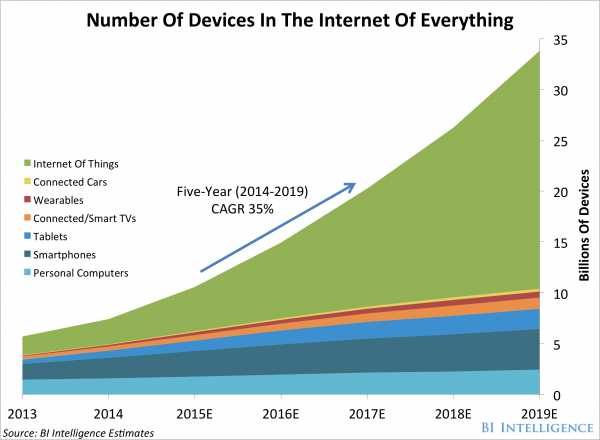
According to most reliable research, the number of Internet connected devices is growing rapidly and will continue to do so for the foreseeable future.

IoT Devices


Building security into each and every one of these devices is no mean feat. In fact, it will be very difficult indeed. That’s what I believe that it is of vital importance that we focus our attention on securing routers and Wi-Fi hotspots.

As the number of Internet enabled devices in our homes continues to increase, more and more members of the public are getting ready to adopt smart home appliances, energy meters and wearables.

Connected Devices


All of these newly connected devices entering the home should be rigorously secured as they will be handling data specific to your household. Securing them individually could be tough though, until you realise that they share something in common – they communicate via the Internet access point, a home router.

As you can see, the number of home routers in the market is continuing to grow rapidly, but is only a fraction of the number of total devices.

Private Hotspots


Robustly securing each home router or a public hotspot has the knock-on effect of securing the data transmission of dozens of devices and, for my money, is a much more realistic approach to securing the Internet of Things.

Sadly, security on most popular routers is still pretty basic and has a user experience to match. Clunky menus that aren’t immediately intuitive can leave users at a loss when it comes to making changes to their Internet settings.

Here are three simple things that you can do right now to help improve the security of your home Wi-Fi network.


Three steps to securing your home router:

Change the login details

Most routers will come with default login details. Many people never get round to changing them but you really should. “User name: admin Password: Password” is not a secure login and could potentially grant router level access to attackers if they know the manufacturer defaults of your device.

Set up an access list:

Most routers will allow you to set up a “permitted devices” list that limits access to your network. Setting this list up and including all your family’s devices is a good way to make sure that no unauthorized devices access your network.

Double check your Firewall

A Firewall is an important router feature that helps filter out bad traffic requests coming into your home. All traffic that is sent and received in your home goes through a Firewall and more specifically through “ports”. These are akin to doors, with each one dedicated to certain traffic types. It is always worth checking your Firewall settings in your router to make sure that you do not have any unnecessarily opened ports.


For tips on how to improve your home Wi-Fi Signal, check out the video below.

The Value of an Unplugged Vacation

In keeping with tradition, each year my husband Bob and I gather some of our 14 nieces and nephews and do an annual diving trip. Generally we provide diving lessons to each of the children as they come of age. This year, we did an “alumni” trip for all of the kids who have participated before.

It was truly awesome – and all about diving, eating and sleeping and, then… repeat.

We also had a no-devices-allowed policy. So each evening we had dinner at the big pagoda on the beach. Afterwards, all of us in hammocks. And every night we had amazing conversations!

I was most struck by my young nieces and nephews’ views on how nice it was to be unplugged… Thoughts on how intrusive the internet and smart devices have become in their young lives…I.e. If you don’t text back in real-time, you could lose a friend who thinks you are being unresponsive… (Sound familiar?)

But they really reveled in the opportunity to get away from it all. It wasn’t just me, but kids!

It started me thinking in general about the value of vacations, but especially unplugged ones.

The benefits of taking a vacation are well documented, and practical. Pluses include higher productivity, improved morale, better employee retention, and a better overall workplace culture. That’s just in the workplace. The health benefits for the individual are evident too and should concern all of us.

Numerous studies have shown that vacations lower blood pressure and ease depression…and that even looking forward to a vacation brings major dividends. In just one example, the widely regarded Framingham Heart Study, a long-term ongoing cardiovascular study that began in 1948 to analyze adult subjects who were at risk of heart disease, found a positive correlation between more frequent vacations and longer healthier lives.

But did you know that more than 40% of American workers who received paid time off did not take all of their allotted time in 2013—even despite the obvious personal benefits? This is according to the most recent study entitled “An Assessment of Paid Time Off in the U.S.” commissioned by the U.S. Travel Association, a trade group, and completed by Oxford Economics. The study found, among other things, that we as workers left an average of 3.2 paid time off days unused in 2013, which adds up to 429 million unused days off.

The fact is many people who don’t take vacations are not only hurting themselves and their own productivity. They’re also hurting our country’s economy. And in terms of the overall economy, the Oxford/USTA study found that if employees would take just one additional day of earned leave each year, the result would mean $73 billion in output for the U.S. economy and positive impacts for both employees and businesses.

It has lead to some innovative workplace policies. One of the most intriguing is a Denver-base tech company’s Paid Paid Vacation policy. Bart Lorang, co-founder and CEO of the Denver-based tech company FullContact introduced “Paid Paid Vacation” in 2012. In addition to the standard 15 days paid vacation plus federal holidays (allotted by many US companies), the company gives employees $7,500 to finance a trip. That’s cash on top of their full salaries. The concept is both generous and innovative by US standards!

There is a caveat, however. The employees have to agree to three rules:

  • No checking works emails, texts, or calls.
  • No working, period.
  • You have to actually go on vacation or you don’t get the money.


According to FullContact, the program has translated into real-life benefits.

For example, FullContact’s communications director Brad McCarty told the Washington Post, “The really big names in tech all focus on the same idea, that employee happiness has to come before everything else. While it’s really difficult to measure that return on investment from a dollar standpoint, it’s not difficult to measure what happens when someone returns from a Paid Paid Vacation: you see, without fail, people shining brighter, working harder and more excited to get back into the swing of things.” There also are other ancillary benefits, as Lorang told the Business Insider.

Of note: because the employee who is going on vacation is literally cut-off from work, it’s essential that other employees are cross-trained or up-to-speed on the vacationee’s projects. This means sharing information and avoiding the ‘hero’ trap – the “I’m the only one that can do this” mentality…

Perhaps best of all, and an inspiration for other small business owners, is that Lorang takes his own advice and has an unplugged vacation at least once a year.

I know that we are all very busy and engaged with our work and our daily lives. And our schedules are always overbooked. But please do take the time to have some fun, unplug, or have an adventure by yourself and/or with your loved ones. You’ll find yourself coming back to work with a smile on your face!

Here’s a shout out and “miss you” to all my nieces and nephews, who seem to be learning this at an early age! Inspiring.J

Technovation 2015: Security by the Numbers

Being a finalist at Technovation 2015 means competing against over 400 apps from 64 different countries. The challenge? To build an app in just a few months that would help solve real-world problems such as sports concussions or childhood obesity.

I had the pleasure of leading the “Security By the Numbers” workshop at Technovation 2015 #wpitch2015. This workshop is designed to help the young finalists visualize themselves as entrepreneurs and transition their prototypes into market-ready apps.

So what defines a market-ready app? Increasingly, the answer is security. From the continuous stream of high-profile data breaches to the rising prevalence of malicious apps on Android, the lack of app security has proven to be a gold mine for cybercrime. In fact, a recent study by IBM found that the cost of data breach could be as high as $300 per single lost record and $154 per record on average.

As with all good design, app security is not a simple afterthought. That’s because security to the app is like a shell to a turtle, it’s a skeletal structure that needs to be designed for.

Turtle


This workshop used an AVG app with over a million users to illustrate three key principles of app security:

  1. Prevention – What are some common mistakes and vulnerabilities?
  2. Detection – What are the tools and resources for detecting malicious activity?
  3. Continuous Monitoring – How do you implement a robust monitoring infrastructure?

This was particularly beneficial for the students because it provided them a glimpse into the technical infrastructure and monitoring that can support a large scale mobile application.

My favorite feedback from the workshop was “Technovation was an enlightening experience and helped me see this as a career, this workshop helped me understand what it would take to take my ideas to market.”

It was an inspiration to be surrounded by so many bright, driven and accomplished young women. I’m excited to see a future with a more diverse and inclusive tech industry!

AVG Technologies @AVGFree is a gold sponsor of Technovation thanks to the efforts of Anar Simpson @AnarSimpson, Todd Simpson @ToddSimpson and Judith Bitterli @JudithBitterli.


Mariya Snow @mariyasnow is a Senior Engineer at AVG Technologies.

Raise Your Game Roadshow in Pictures

Last week we held the final roadshow on the Raise Your Game UK tour. Raise Your Game is an initiative aimed at helping Managed Service Providers to become more profitable.

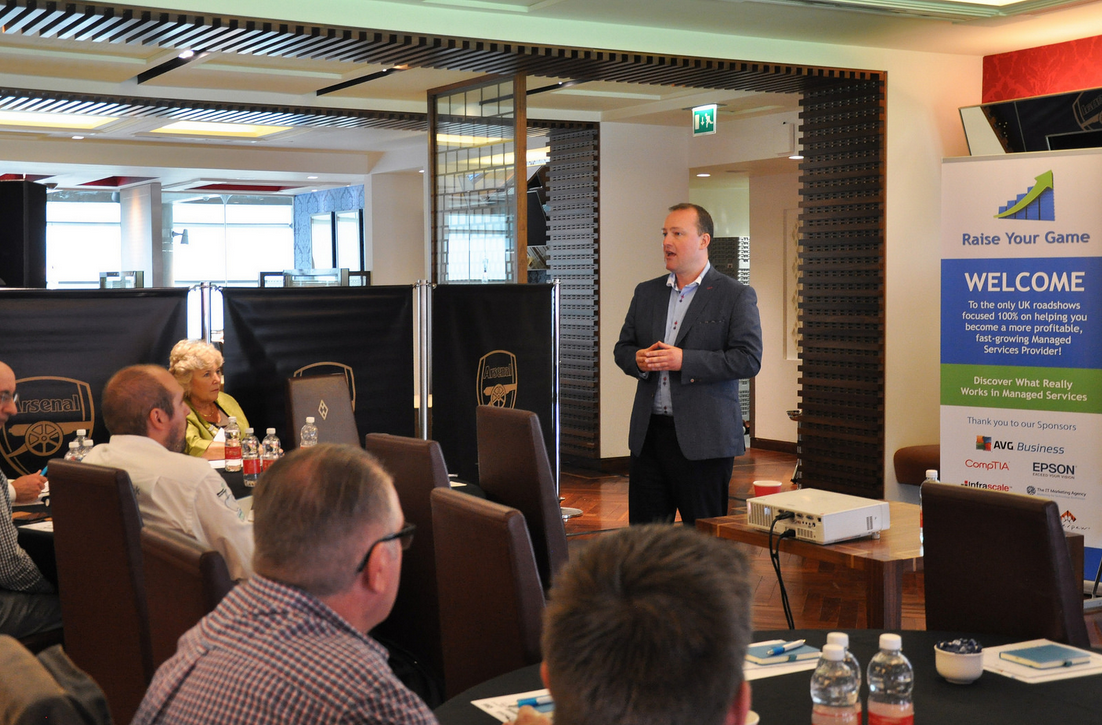
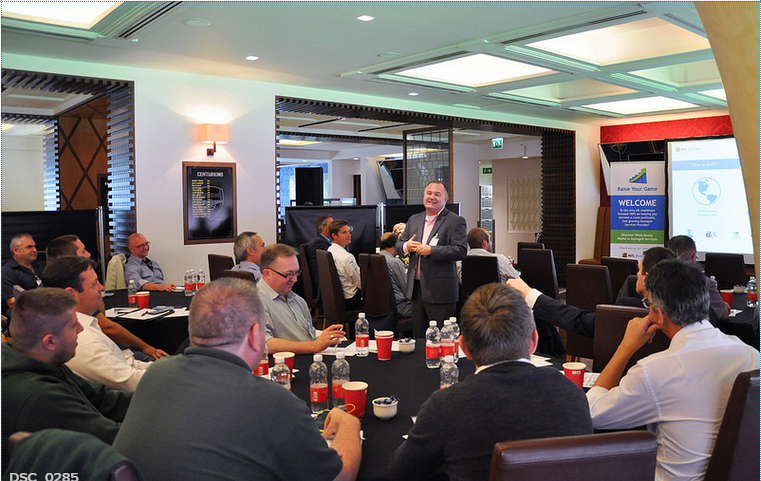
The event was held at the Emirates Stadium, home to Arsenal Football Club and was a fitting venue to discuss taking MSP business practices to the next level.

Raise Your Game


There were experts from a hosting of leading companies including Epsom, CompTIA, Infrascale and Tigerpaw, each giving unique insight into what makes a profitable MSP.

Raise Your Game


The interactive sessions covered every aspect of operating an MSP from sales and marketing to security and strategic partnerships.

Raise Your Game


As headline sponsor, AVG was present to help guide the conversation and Francois Daumard, AVG’s VP of Global Channel Sales, spoke about the critical importance of forging partnerships in the MSP industry.

Raise Your Game


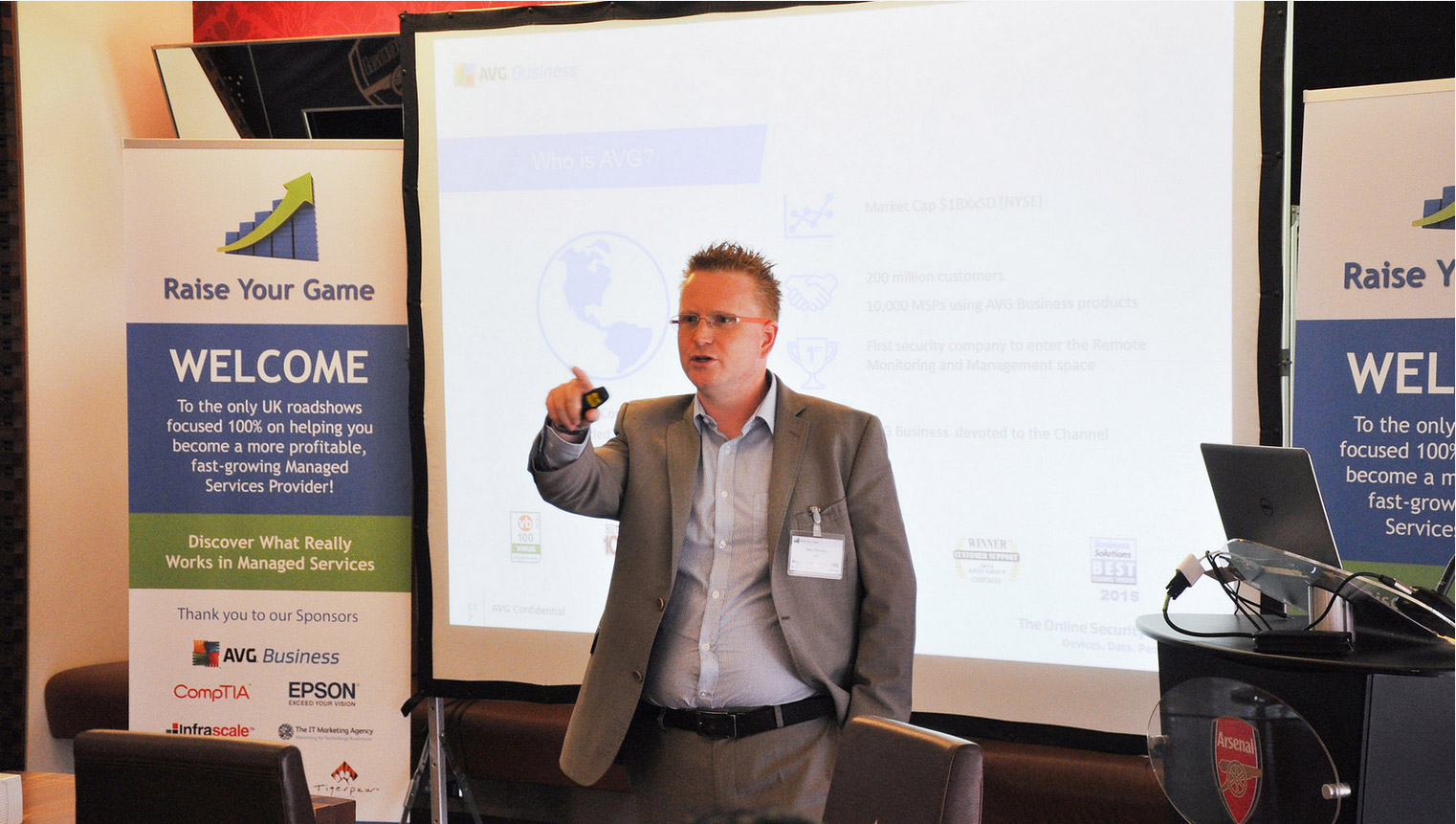
Afterwards, Sales Engineer Manager Matt Chinnery showed the MPS the new Managed Workplace platform that enables MSPs to easily onboard, easily gain access to key reports and effectively manage their clients to help maximize profits and improve security.

Raise Your Game


After the sessions concluded, the guests were treated to a stadium tour of the Emirates.

Raise Your Game


Visit the full gallery on Flickr


This is one of many roadshows that AVG Business are holding throughout the country, watch out for the next dates coming shortly or contact for more information.