Category Archives: AVG

AVG

AVG Puts People First for Mobile Security

AMSTERDAM and SAN FRANCISCO – March, 2, 2015 – AVG® Technologies N.V. (NYSE: AVG), the online security company™ for 197 million active users, today previewed the next version of the AVG Zen™ platform to mobile operators and original equipment manufacturers (OEM). With the consumer launch currently planned for later this year, AVG Zen delivers a new family-first approach to security, including support for industry partner apps and wearables on customers’ devices, all in one place.

With digital lives becoming more complex in an Internet of Things world, security is now about protecting people as well as their devices and personal data. The next version of AVG Zen delivers three core pillars:

  • A subscription security service for families that includes AVG AntiVirus and AVG Cleaner across their devices to give them confidence in their digital lifestyle. AVG AntiVirus for Android™ was the first mobile security product to enter the 100-500 million downloads category on the Google® Play™ store.
  • A dedicated set of family products from Location Labs by AVG including phone controls and location services. Already offered by the top four US mobile operators, extending the availability of these products through AVG Zen makes it even easier for families to communicate and share location. Phone controls gives parents peace of mind when giving their children their first mobile device, allowing them to monitor and set limits.
  • A platform for mobile operators to deliver context-aware solutions for core services. This could be, for example, notifying a user if they are running low on storage or approaching their data limit. AVG Zen is open to partners looking to expand their offerings directly to AVG’s 197 million end users.


With global smartphone subscribers reaching 3.5 billion by 2019, industry figures calculate suppliers of Internet of Things product and service providers will generate incremental revenue exceeding $300 billion by 2020. Research into data management and security services estimates these alone will drive revenues in excess of $1.8 billion in the same timeframe.

AVG Zen enables mobile operators to provide context-aware alerts, updates and information direct to the customer to give them control and transparency of their security across their family, data, and devices.

“People not only want their online rights to be recognized, they want more control and responsibility over their online actions and those of family members. But today, their online experience is still disconnected. In the 2015 consumer trust survey we carried out with MEF, 72 percent were not happy sharing personal data with apps, 40 percent named privacy and security as important when choosing a mobile device, and another 34 percent relied on dedicated security apps to protect them,” said Yuval Ben-Itzhak, Chief Technology Officer, AVG Technologies. “Mobile operators and online security companies hold a trusted position in consumers’ lives and we have the opportunity to transform their connected experience by bringing everything together all in one central place.”


About AVG Technologies

AVG is the online security company providing leading software and services to secure devices, data and people. Over 197 million active users, as of December 31, 2014, use AVG´s products and services. AVG’s Consumer portfolio includes internet security, performance optimization, and personal privacy and identity protection for mobile devices and desktops. The AVG Business portfolio – delivered by managed service providers, VARs and resellers – offers IT administration, control and reporting, integrated security, and mobile device management that simplify and protect businesses.

All trademarks are the property of their respective owners.

www.avg.com


Contacts:

US

Katie Han

Waggener Edstrom for AVG

[email protected]

+ 1 (212) 551 4807

UK

Samantha Woodman

Waggener Edstrom for AVG

[email protected]

+ 44 (0)20 7632 3840



AVG Reveals Invisibility Glasses at Pepcom Barcelona

AVG is always looking for ways to help people protect and secure their online identities and this year at Pepcom in Barcelona, we’re excited to reveal a pair of invisibility glasses.


What are invisibility glasses?

Developed by AVG Innovation Labs, the glasses help protect your visual identity in the digital age.

Through a mixture of technology and specialist materials, privacy wearables such as invisibility glasses can make it difficult for cameras or other facial recognition technologies to get a clear view of your identity.


Why would they be useful?

There are a number of reasons why invisibility glasses could be a valuable privacy tool in the future:

  • The increasing use of smartphone cameras in public places means it’s more likely unsolicited images taken of us may end up online.
  • Big Data projects such as Google’s StreetView highlight the possibility for our faces and identities to appear in the public domain.
  • Advancements in facial-recognition technologies, such as Facebook’s DeepFace, could soon give a private corporations power to not only recognize us, but also cross-reference our faces to other data found online.


How do they work?

While the technology behind invisibility glasses is still in the prototype phase, there are generally two different methods of combatting unwanted facial recognition:

Infrared Light

The use of infrared light to break facial detection software was first introduced Isao Echizen of Tokyo Nation Institute of Informatics.

The idea is to place infrared LEDs inserted around the eyes and the nose areas. Since the infrared lights are completely invisible to human eyes, they are only detectable by cameras which are sensitive to the wavelengths of these LEDs. They claim to break face detection when the lights are on.

In this example we show how infrared can be used to avoid Facebook’s facial recognition technology.

Facebook face recognition

One drawback of this approach is that many cellphone camera sensors have an infrared filter strong enough to cut off any wavelengths beyond the visible spectrum.


Retro-reflective Materials
These specialist materials help maintain your privacy at the moment that the image is actually taken.

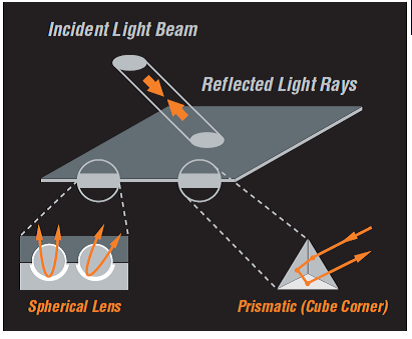
Retro-reflective

Image courtesy of 3m


While most surfaces reflect light by diffusing or scattering it in all directions, retro-reflective materials are specially designed to reflect light back at the same angle as it arrived.

If caught in flash photography, retro-reflective materials will send most of the light back to the sensor. This will result in an image that will put the Dynamic Range of the camera sensor to test.

AVG Invisibility Glasses flash test


A noticeable drawback of this approach is that it only works with flash photography as otherwise, not enough light will be sent back to distort the camera sensor. Secondly, a camera with higher dynamic range can be used to minimize the darkening of the subject.


When can I get my own invisibility glasses?

At this stage, invisibility glasses, including those we will be displaying at Pepcom are just a proof of concept .

Rather than designing a product for market release, tech experts are investigating how technology can adapt to combat the daily erosion of our privacy in the digital age. Don’t expect to see them for sale any time soon!


Come and see us

If you are visiting Pepcom in Barcelona next week, please come and talk to the AVG team, we’d love to meet you and give you a demonstration of our invisibility glasses!


Inalienable Human Rights in the Digital World and the Trust Revolution

Next week, the world’s largest exhibition for the mobile industry will open its gates once again for visitors from all over the world. More than 85,000 people are expected to attend Mobile World Congress in Barcelona, arguably the most important mobile event on the planet.

A few dozen members of Team AVG, including me, will attend MWC to speak at various conferences, sessions, and forums to share our experience and ideas with other attendees. For the second time in the last few years, I will have the honor to deliver a keynote address at the Congress.

As the mobile ecosystem continues to evolve and as leaders gather to discuss what’s ahead, what’s the most pressing issue that faces us all at MWC 2015? My answer is simple: digital security—and the lack thereof.

In the past several years, we have seen our world go completely and irreversibly mobile. Smartphones have become the most important and the most personal devices in our everyday lives, changing them for the better and opening new, previously unimaginable opportunities. However, we’ve also seen how this gold coin has its flipside: our activities are monitored, collected, and stored by numerous companies and organizations, both with and without our knowledge and consent.

“What we do online leaves a trace”.

The modern Internet has given rise to an economy based on collecting and monetizing user information. Finding value in data is not inherently bad, but the traditional notice and consent model that guides today’s environment was not designed for the complexities of data in our digital world. In addition, the privacy policies are often hard to understand, a difficulty which is compounded by the fact that people are consuming more and more of them in mobile form factors.

As a result, the lives of consumers are more exposed now than ever before in history. Their actions online are being watched, even scrutinized, and not necessarily towards benevolent ends. Moreover, the information that is legitimately collected and stored by legally-operating companies makes it easier for criminals, hacktivists, and even terrorists to hit tens of millions of unaware users with a single attack.

“Privacy is a major concern”.

But this climate can’t last. Fact is, consumers are catching on. Privacy is a rapidly-growing concern of theirs, and they’re increasingly sensitive to companies that fail to protect and respect it. A recent study clearly shows that by violating people’s privacy in more and more ways, companies undermine their trust and antagonize them. For example, almost half of respondents (49 per cent) said that trust prevented them from downloading apps or using them once they are installed. Over a third (34 per cent) said it stopped them buying any mobile apps and services.

It’s no surprise then that the penetration and adoption of new technologies is slowing down across all sectors – from hardware to software to services. We are witnessing the most amazing technological revolution in the history of mankind. Our collective and striking ability to innovate has revolutionized not only the marketplace, but also everyday life. And if we want to facilitate further development of technology and digital economy, we need to challenge our thinking again. It’s time for another revolution, a Trust Revolution Trust.

There are three essential avenues to make this Revolution happen:

  • Provide people with more powerful, simple and integrated security tools.
  • Commit to transparency and responsibility in the way we work with users’ data.
  • Educate users on how to keep themselves and their families safe in the Digital World, and ultimately make them smart users of smart devices.

This is the message that I am bringing to MWC 2015. Together, we must pledge to provide a basic level of security and privacy to everyone in the world. Re-establishing privacy and security as inalienable human rights in the cyberspace is a big challenge and no easy task, but it will ultimately be beneficial for consumers and vendors alike. A lasting and profitable business relationship should be built on trust.

“Users are demanding trust”.

Moreover, consumer data shows that more and more people are demanding trust, actively considering it when they choose whether or not to adopt a technology. To this end, a healthy and informed consumer base is more apt to contribute to a productive and profitable Internet.

I believe that Mobile World Congress 2015 is the right platform for initiating this discussion and starting to take meaningful, responsible steps towards making the digital world a safer, better place for everyone.

The unique gathering of mobile industry vendors, service providers, policy makers, and media in Barcelona next week has all the means necessary to shift today’s unhealthy privacy paradigm and usher in a better digital future for all of us.

Stay tuned for more news from the Mobile World Congress!

The choices women face in tech

Whether it is for equal career opportunities or equal compensation, the technology industry is in the spotlight for all the wrong reasons (as highlighted by this Newsweek cover a few weeks back)

With several years’ experience at the senior level in the technology industry, I’ll be sharing my thoughts and advice on how women can forge a successful career in tech.

I’ll aslo discuss the boardroom vs baby debate and underline the crucial importance of a career roadmap for women. Many of us carefully plan for our wedding day – a one day event in our lives – but don’t plan for the critical decisions we must make about our careers and our families

Video

Boardroom or Baby At SXSW Interactive 2015


If you are going to be in Austin, please do come by and join in the debate.

Boardroom or Baby?

SXSW Interactive 2015

Room 407, JW Marriott

3:30pm, March 14th

How To Spot a Fake Twitter Account

Social media is a great way of communicating with friends and family, but’s also a fantastic tool to meet new people with similar interests. You should be careful though, as popular social networks can have fake accounts which can pose a risk to your privacy or security.

One way to help stay safe is to learn how to spot these fake accounts and how to report them to the social network.

Beware of bio links

Spammers, scammers and hackers often use links in their Twitter bios (as as their feed) to get users to visit malicious sites.

Compare their followers

Fake or spam Twitter accounts follow thousands of users of users but have very few followers themselves

Watch out for strange mentions from strangers

You may get a random tweet from or mention thats makes no sense, This is often a sure sign that it’s a fake or malicious account

Beware of links tweeted with popular hashtags

Scammers often use trending or popular hashtags to tweet malicious links or get you to view their bio link


Until next time, stay safe out there!

Making your Android battery life go further

In this post, we’ll walk through not only how to limit your app resource use but also how to get the most out of your battery life, device performance, storage and data plan on Android devices.

This guide is for Android devices running Android 3.x or Android 4.x, including:

  • Smartphones (such as the Samsung Galaxy S5)
  • Tablets (Samsung Galaxy Note Pro, Nexus 7)

Please note that though many phone and tablet makers use Android, they tend to change the way things look and work. We’ll show you how it works on different systems, but if you can’t find an option for your exact device, don’t worry as many of the steps are the same for most devices.


Limit Notifications

Notifications are one of the most useful features of a smartphone. They give users the information they need to know at a glance. However, not all notifications are necessary and some cause the phone to be constantly active, increasing the drain on the battery and mobile data.

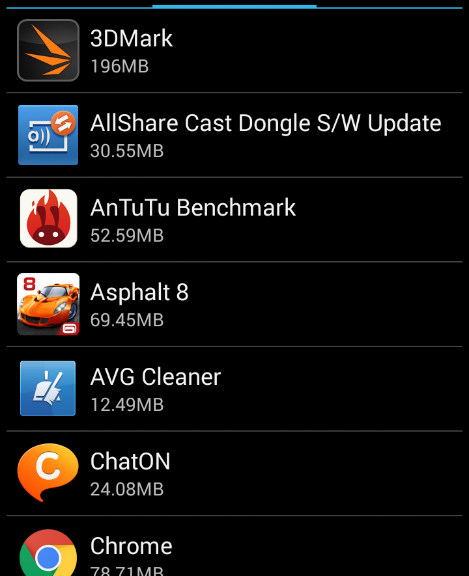
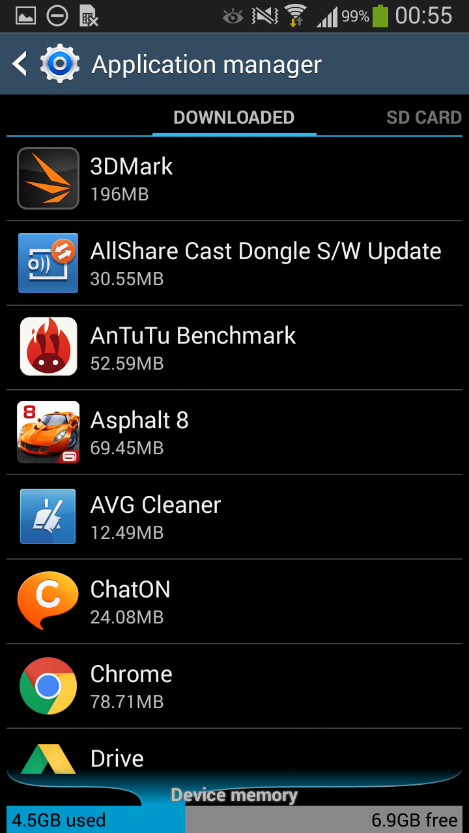
To turn off unnecessary notifications, you need to go into the Apps or Application Manager in your device settings. This will show you a list of all the apps you have running.

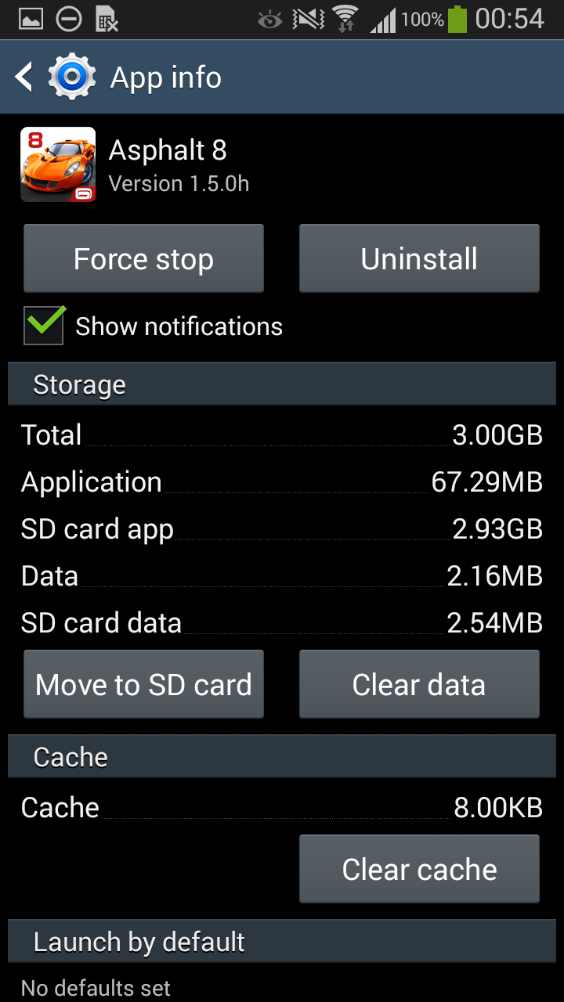
To turn off notifications for an app, such as Asphalt 8, tap on it and uncheck the Show Notifications entry.


Control Your App

Limiting notifications is just one way to reduce the impact an app has on your device. In each app’s settings you will find additional options and features you may want to turn off. We’re going to use Facebook as an example to show you how it’s done.

Ranked among the most resource-heavy apps, there are several things users can do to limit Facebook’s resources consumption. As with before, the first step is to go to the app’s settings page (via the settings page and App Settings):

From there you will see a number of features that will tax your device, such as:

  • Facebook chat: If you do not use the chat feature, you can turn it off and use the standalone Messenger app instead.
  • Refresh interval: Every hour, Facebook automatically downloads content in the background, even if you’re not using the app. This impacts battery life and data consumption. You can limit this to every four hours or turn it off completely.
  • Location: Facebook can use the built-in GPS of your device to determine where you are and include that data in posts you make. Disabling this feature can help save battery life.
  • Notifications: This is an alternative way to turn off the app’s notifications.

While this is specific to Facebook, many apps on your smartphone or tablet have similar settings. In general, however, you should watch out for any that look to involve background activity, such as “Refresh Interval” or “Background Refresh” and limit the use of built-in features such as GPS/Location and Bluetooth.


Free Up Space & Limit Mobile Traffic

Our top storage offenders often start off as small apps or games but collect temporary clutter over time, and swell in size. When this happens, the impact is not just on your device’s storage, which obviously declines, but also on your mobile data.

Many apps tend to download data in the background in order to be instantly available once you open them. The NYTimes app for example automatically downloads news stories to your devices every 24 hours – even though you may not read all of them.

Almost every app stores temporary files, cookies and other date in order to work. In our internal tests, we found that simply browsing through a typical Facebook timeline for roughly 60 seconds produced over 5 MB of temporary files. The NYTimes app created a cache of 10 MB when we watched a 20 sec video and opened one news post.

This cache can be deleted on either a per-app basis or automatically. In this next tip, we’ll show you two ways to limit the growing storage impact of apps.

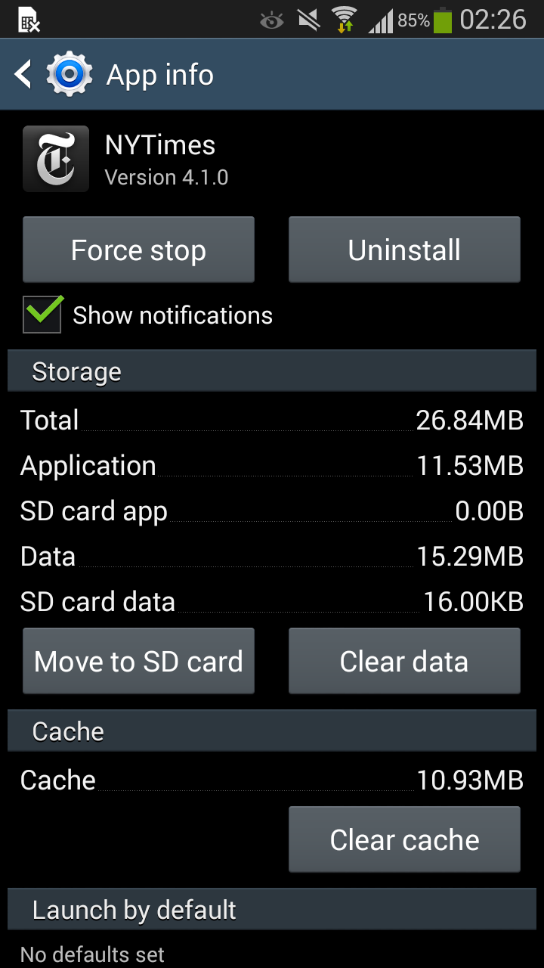
Open up the Application Manager or App menu from within your Settings menu. Tap on an app, such as NYTimes or Facebook and hit the Clean Cache Button (screenshot to the left):


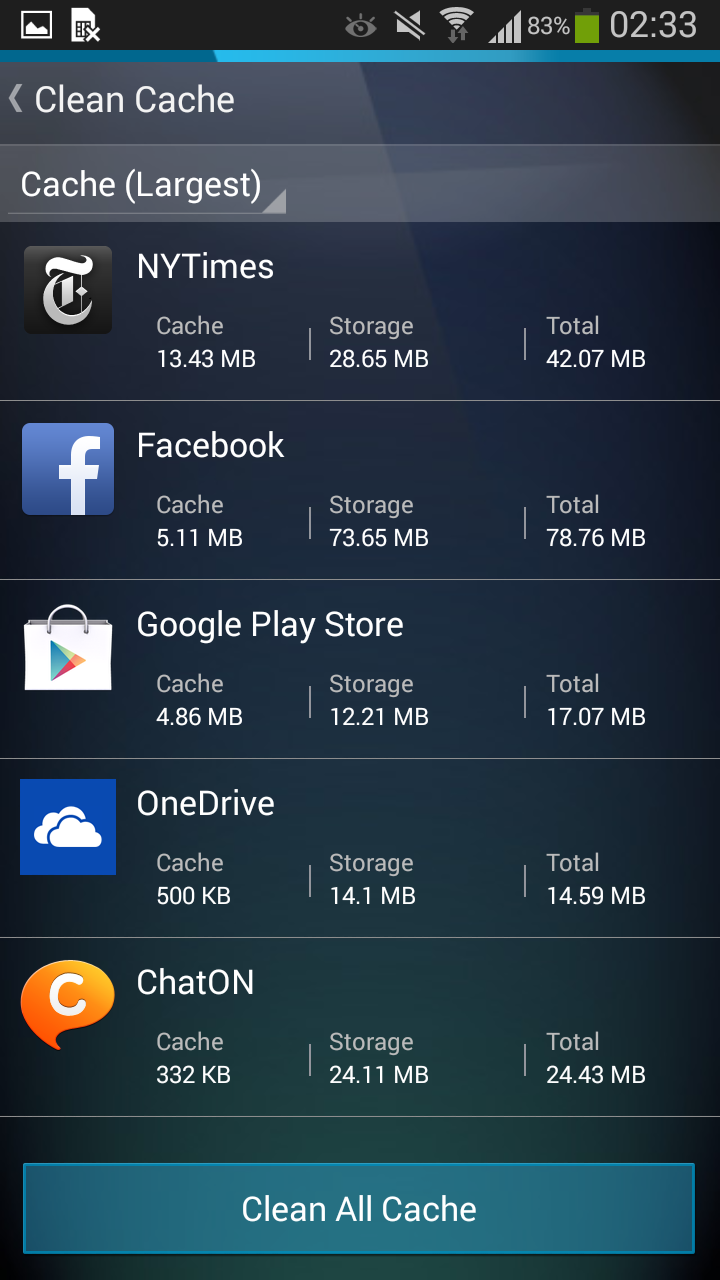
Doing this for each app on a regular basis can be quite time consuming, which is why AVG built the AVG Cleaner for Android app (screenshot on the right). It scans all apps for these caches regularly and allows for the cleaning of all cache files automatically or in bulk.

The only downside of cleaning a cache may be that information, for example a Facebook image, which has been loaded and cached, may need a few extra moments to load when you open it the next time.


Reduce Data Traffic

In some cases, an app will include settings which allow the user to limit the amount of data it downloads over Wi-Fi or mobile data and stores locally. Below we outline how to do that, again using the NYTimes app as an example:

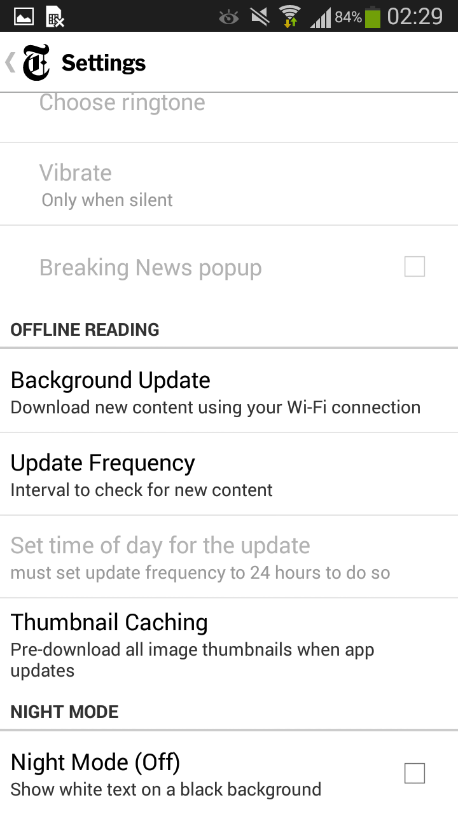
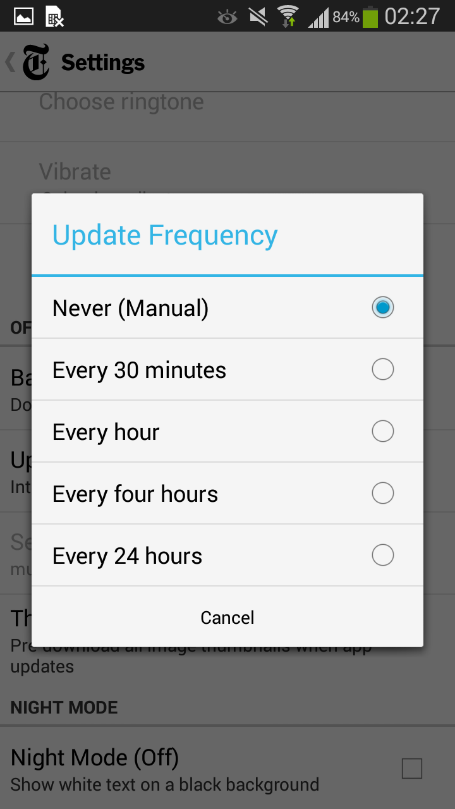
Open up the app in question and tap on the three little dots in the upper right corner. Go to Settings. From here, you can turn off “Offline Reading” by tapping on Update Frequency and selecting Never (Manual). You can also turn off the Thumbnail Caching which downloads images of news stories so that they display faster if you open them.


There will be some people who do not want to limit their apps to work in a certain way and in some cases – like with games or video streaming – there’s no technical way to reduce the amount of battery consumption or mobile data usage. Which is fine – this is all about user choice. If you do choose to take action however, these general recommendations should help Android device users reduce the overall resource consumption so they can enjoy using their apps without limitation.
 

Turn down the brightness

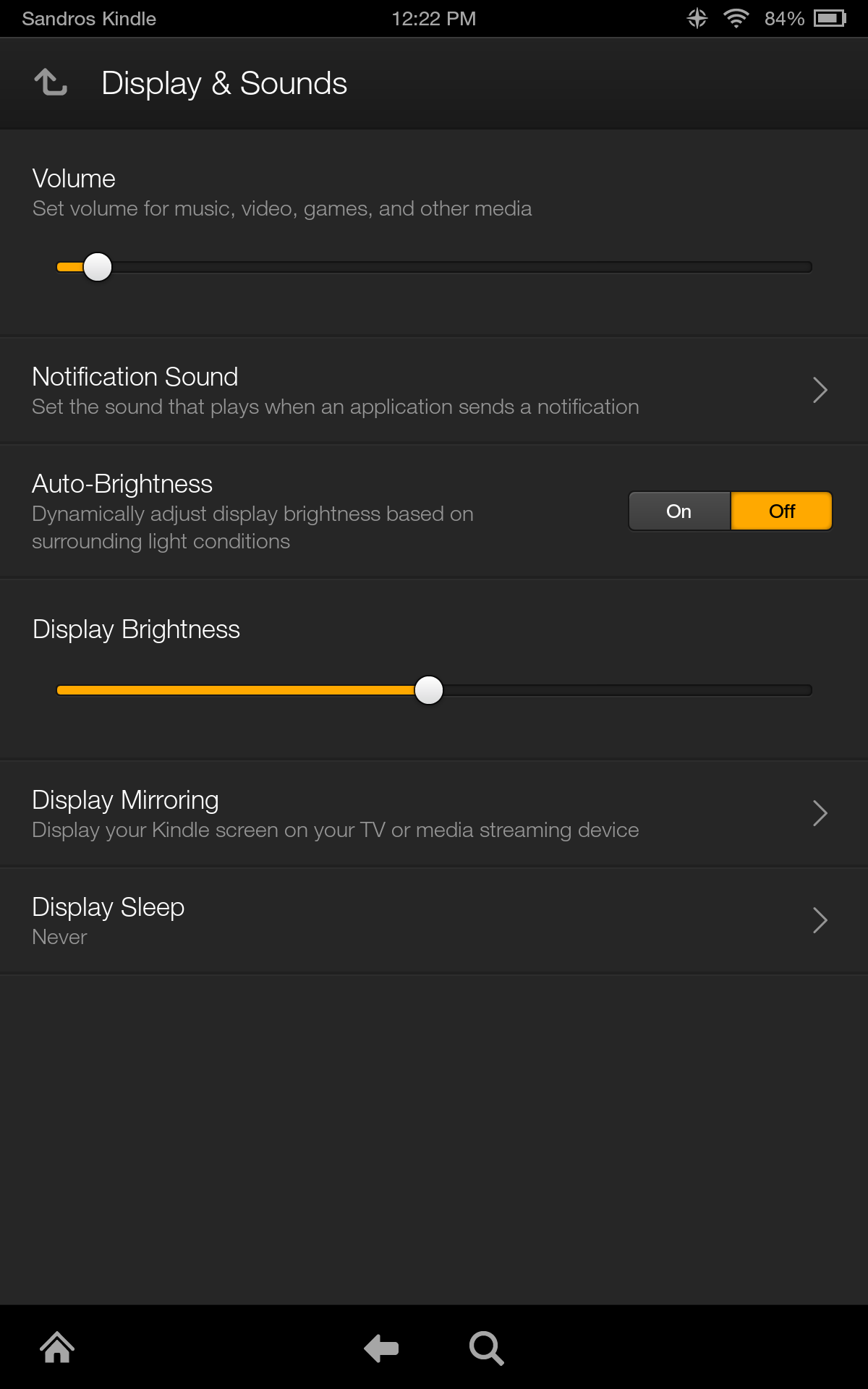
These days, virtually all Android smartphones or tablets come with super high-resolution displays that are also extremely bright. While that may be great for browsing the web, sharing photos or playing games, these displays harm your battery life. Did you know for example that on some smaller tablets with high-resolution displays, a display set to full brightness is responsible for 80 percent of the entire power consumption!

If you’re not in bright sunlight, we would therefore recommend turning the brightness levels down to 50-70 percent.


Disable Connectivity

Your Android device is full of features that impact battery life. It is important to make sure they’re off when they’re not being used:

  • Wi-Fi: Nowhere near a wireless connection? Then turn off your Wi-Fi. Otherwise the built-in Wi-Fi receiver will constantly try to scan for networks – which can increase battery usage by more than 20 percent.
  • Bluetooth: Not using a Bluetooth headset or connecting your Android device to your car? Then this setting should also be turned off, otherwise it will continually scan for compatible Bluetooth devices, using up battery as it does so.
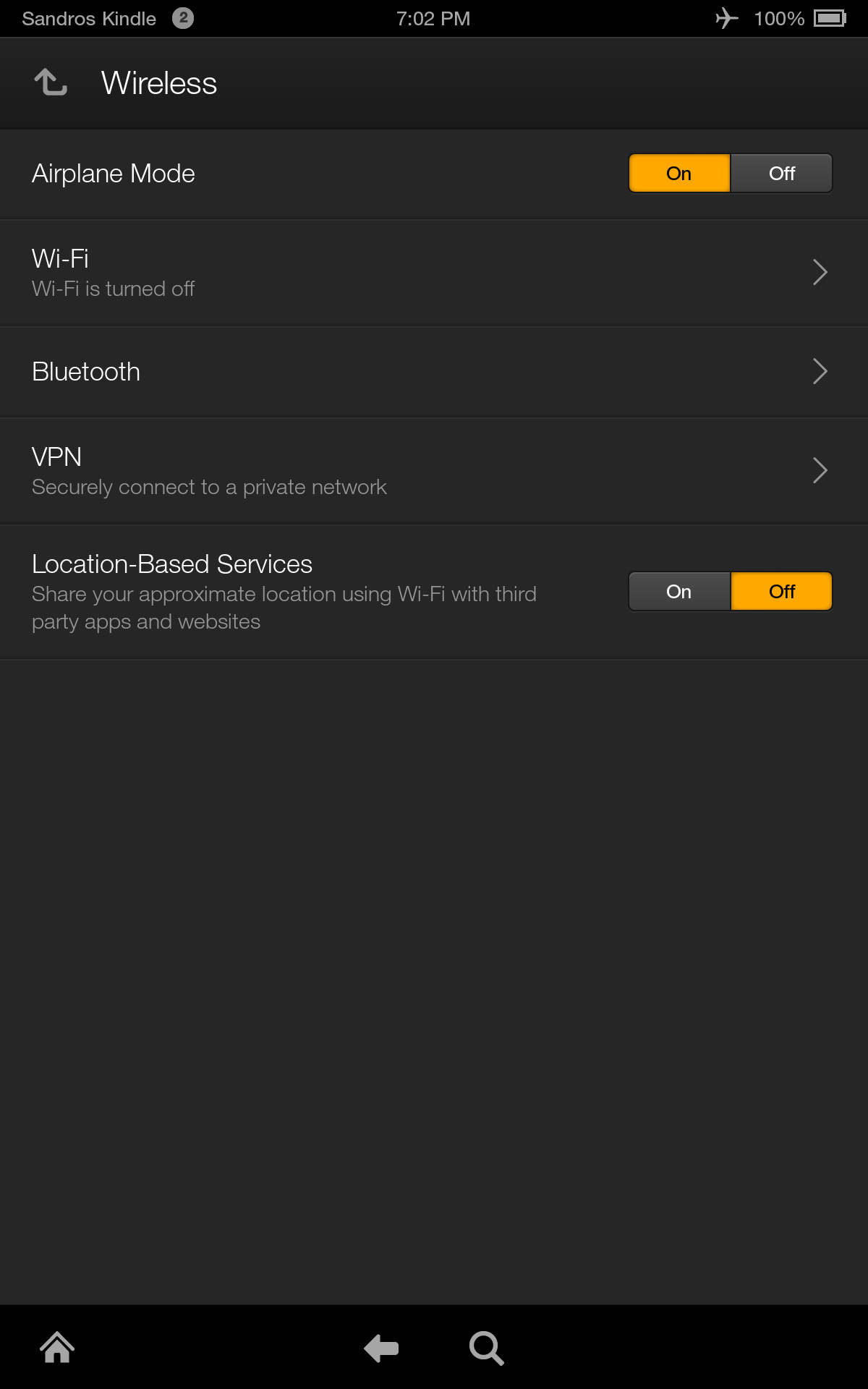
  • GPS: Your mobile GPS is probably one of the biggest power suckers there is. The built-in GPS antennas are really power-hungry, and if your GPS is turned on they continue to draw power even if you’re not actively using them – mainly thanks to the alarming number of apps that regularly use the GPS feature such as [Google Maps, Facebook or Twitter]…So if you’re at home or just don’t need to use any GPS, turn it off.

You’ll find the settings for all three features in your swipe down menu or under Settings. Go to “Wireless” (or “Wireless and networks”) and switch off the relevant feature when not in use. Note: GPS can sometimes be referred to as “Location-based services”.


Remove performance-sapping apps

Your Android device is much like your PC: the more apps you install on it, the slower it will get and the sooner it’ll run out of juice. It won’t happen with one app nor probably with five, but once you’ve installed a dozen – or hundreds – of apps, you’ll notice a significant slowdown. That’s because many apps run features even when you’re not using them. So how can you be selective about which apps you do and don’t want on your phone? There are tools that help you identify the worst offenders for performance and battery life.

Ours is the free AVG Cleaner 2.0 app. Here’s how it works as an example:

  1. Firstly, install the free app from the Google Play Store or the Amazon Kindle store and launch it.
    Next, go to the “App Uninstaller” page. This will list all your currently running apps.
  2. If you tap on the little blue arrow in the top right, you can then sort the list by:
    • App Usage: Shows the apps you haven’t used in a long time.
    • Battery Usage: This helps you identify the most power-consuming apps on your device.
      Data Usage: If you’re on a monthly data plan, every Megabyte counts. If you sort the apps by “Data Usage”, you’ll quickly find the top apps that are sucking up your plan.
    • Storage Usage: Running out of disk space? Then it’s time to look at the largest apps on your phone.


To uninstall an app, tap on it and hit “Uninstall”. You can even tap and select multiple apps so you can get rid of a batch at a time.

I hope these tips have been helpful to you and that they help you bring new life to your Android device!

AVG Technologies CMO Judith Bitterli Tackles Issues for Women in Tech at SXSW

AMSTERDAM and SAN FRANCISCO – February 26, 2015 – AVG® Technologies N.V. (NYSE: AVG), the online security company™ for 197 million active users, announced

CMO Judith Bitterli will present a Core Conversation session at SXSW Interactive in Austin, TX Feb. 13-16. Her session, “Boardroom or Baby? The Choices Women Have in Tech” takes place 3:30 p.m.-4:30 p.m. on Saturday, March 14 at the JW Marriott Hotel Room 407. It’s designed to explore gender issues confronting women in tech jobs and to encourage women to make plans to actively manage their careers and life goals.

“We are at an inflection point. The recent Newsweek cover on ‘What Silicon Valley Thinks of Women,’ along with recent research from Harvard to Stanford to Babson College and diversity reporting, brings gender issues out of hibernation and into the forefront once again,” said Bitterli. “These studies underscore the indisputable gap between the career opportunities afforded to women in technology compared to men.

“Advancing careers for women in tech is a topic I’m passionate about. But it’s not enough to just talk about it, we must take action,” Bitterli added. Among key advice she will share: “Don’t work for companies that do not support women – in their policies, practices and programs.”

Bitterli’s session is designed to leave the audience inspired for careers in tech, as well as arm them with tools that will help them navigate career paths and choices – including critical questions they need to ask themselves, and tools to create a career roadmap and work/life plan.

“Many of us carefully plan for our wedding day – a one day event in our lives – but don’t plan for the critical decisions we must make about our careers and our families,” added Bitterli.

Bitterli, who leads marketing and customer services for AVG Technologies, the online security company with more than 197 million active users, has more than 25 years of executive level experience at tech companies, including RealNetworks, Micron, SoftBank and CompuAdd. She is also an entrepreneur and the former owner of three businesses.  Before her career in technology, Judith was in the U.S. Army for 7 years as a parachute rigger and then testing parachutes and large-scale weapons and missiles. She became the first certified female jumpmaster in the military. Read her blog at now.avg.com, where she regularly blogs on the topic of women in tech, technology for Boomers and small business strategies.

For a preview of her session and talk, go to: the SXSW schedule, now.avg.com and the AVG YouTube channel. Join her in conversation at judy@avg #techwomen #SXSW.


About AVG Technologies

AVG is the online security company providing leading software and services to secure devices, data and people. Over 197 million active users, as of December 31, 2014, use AVG´s products and services. AVG’s Consumer portfolio includes internet security, performance optimization, and personal privacy and identity protection for mobile devices and desktops. The AVG Business portfolio – delivered by managed service providers, VARs and resellers – offers IT administration, control and reporting, integrated security, and mobile device management that simplify and protect businesses.

All trademarks are the property of their respective owners.

www.avg.com

Contacts:

US

Katie Han

Waggener Edstrom for AVG

[email protected]

+ 1 (212) 551 4807

UK

Samantha Woodman

Waggener Edstrom for AVG

[email protected]

+ 44 (0)20 7632 384

How BYOD is building business without walls

I’ve just googled “Bring Your Own Device” and “BYOD” and got more than 150 million results. It’s fair to say that this is a hot topic. The industry has long agreed – the BBC included Bring Your Own Device (BYOD) in its 2012 technology predictions (or at least one of its commentators did) and did so again for 2013.

In a relatively short period of time (Wikipedia claims the term was coined in 2009) BYOD has become a well-used business term – both at enterprise level and in the small- and medium-sized business (SMB) space where AVG Business operates. Many of us want to use our own device for work purposes, so businesses of all sizes need to allow their employees to do so. Consequently, it’s up to us and our partners to enable this by making the BYOD ecosystem secure.

I am old enough to remember when I had to crawl under a desk to plug an ethernet cable into the back of a PC tower. Security in those days meant four walls and a locked door.

Today users want the flexibility and speed that cloud apps bring, often on their own smartphone or tablet. As I said in my last blog, Dropbox, Gmail and Skype are very popular tools which help businesspeople do what businesspeople do best – run their businesses.  But how secure are they?

Our job at AVG Business, through our partners is to give our customers the right tools to do just that, to make technology simple and secure, and to enable them to have control over their business.

I am hugely looking forward to presenting at AVG Business’s Mobile Security Forum at Mobile World Congress next week – I will be talking about BYOD in the context of the SMB community and discussing how we’ll introduce control and flexibility so that businesspeople can concentrate on their core business.

Is momentum gathering for women in tech?

Many of you who didn’t see the Oscars will have no doubt heard about Best Actress winner Patricia Arquette’s acceptance speech. In a rousing call to arms she demanded equal pay for women.

She said, in part, “To every woman who gave birth, to every taxpayer and citizen of this nation, we have fought for everybody else’s equal rights, it’s our time to have wage equality once and for all, and equal rights for women in the United States of America.” (For those who missed it, you can see a clip here.)

Her brief acceptance speech galvanized the Hollywood audience. Although I believe she had the right intentions, her after-Oscar remarks also earned criticism in some camps, specifically African Americans and members of the LBGT communities, who faulted her choice of words for being insensitive, and for not calling out “all” women specifically.

But the essence of the remarks resonated this week at the first-ever, sold-out “Lead On Conference for Women,” held in Silicon Valley.  It certainly resonated with keynote speaker Hillary Clinton, former Secretary of State and presumptive candidate for the U.S. presidency.

Said Clinton in her keynote, “She’s right — it is time to have wage equality once and for all.”

The one-day Lead On Conference had more than 100 speakers, including tech industry luminaries such as Kara Swisher of Re/Code, who interviewed Hillary, and others who have made their mark elsewhere, such as Jill Abramson, best known as the first female executive editor of the New York Times. The agenda was full of many more extraordinary women – and a few men sprinkled in as well :).

Hillary Clinton Lead On

Image courtesy of recode


But the killer keynote came from Clinton, giving her first public speech this year.

Clinton is no stranger when it comes to Silicon Valley and is a strong supporter of Girls Who Code, a national nonprofit dedicated to closing the gender gap in tech.

In her keynote, among other points, she voiced concern about the dearth of women in tech and the lack of a pipeline. She focused on the numbers, which do not lie: including the fact that currently, women receive only 18 percent of computer science degrees — which is, amazingly, less than half of those awarded in the 1980s, when women earned 38 percent of those degrees. “We’re going backwards in a field that is supposed to be all about moving forward,” Clinton said.

As for pay parity, both inside and outside of tech, it’s a big issue.  According to the most recent surveys by the BLS, women made 82 percent of the median weekly earnings of male full-time wage and salary workers.

For the tech industry, we see pay gaps and opportunity all around us. In fact, in a recent study last November, Glassdoor found that of 25 tech companies surveyed, “At most of these companies, men report earning a higher base salary than women for the same role.” (You can see a chart breaking compensation down by company and job title.)

It’s encouraging to be seeing momentum building for pay parity and a major political player who gets the importance of tech, and, moreover, the importance of women in tech. Bravo to both Clinton, and to Arquette.

Although we have a long way to go…there are baby steps happening!

As for myself, I am looking forward to continuing this conversation as a speaker at the 2015 SXSW Interactive program with a Core Conversation on “Boardroom or Baby” on March 14th.

For a preview take a look at the accompanying blog post. And, if you are going to be in Austin – join me there!

Title image courtesy of Chicago Tribune

AVG Business Releases VMware® ESXi Service Module

AMSTERDAM and SAN FRANCISCO – February 25, 2015AVG Technologies N.V. (NYSE: AVG), the online security company™ for 197 million active users, today announced the immediate availability of its VMware® ESXi service module for the AVG Business Managed Workplace remote monitoring and management (RMM) platform.  The new service module is an easy and cost-effective way for partners to extend their ability to manage customers’ virtual networks remotely via the AVG Business Managed Workplace multi-service management console.

Integrating the VMware ESXi service module into AVG Business Managed Workplace gives AVG partners the capability to perform additional, valuable services for their customers, including:

  • Real-time health checks – at-a-glance views of the health status of host hardware components as well as failure notifications help to greatly simplify monitoring of VMware environments
  • Early alerting – automatic notification when VMware snapshots exceed pre-set thresholds allows service providers to take pre-emptive action on issues long before the end customer is aware of them
  • Storage status reports – ready access to the past 7 days’ data store space in granular detail makes it easier to troubleshoot storage issues of what is consuming excessive space on the data store
  • Routine management functions – such as support for a series of standard activities including remote power on, off, pause of virtual machines; create and manage snapshots; remote access to the host console; as well as the automatic discovery of any existing VMware host and guest devices and flagging them as opportunities to manage more devices in the end customer environment


AVG Business Managed Workplace already delivers virtualization capability through the Microsoft® Hyper-V service module. Today’s addition of the VMware service module gives services providers a wider ranging capability in the virtualization space.  For example, as they roll out virtualization services to customers, Managed Service Providers (MSPs) can use AVG Business Managed Workplace to quickly and easily manage those virtualized architectures. MSPs new to AVG Business Managed Workplace can have the added functionality of the VMware and/or Hyper-V service modules included within their overall subscription.

“We have made it our resolution this year to focus on enhancing our RMM platform for partners managing customer devices, business data and users. With our known security heritage, we are committed to bringing some of those best practices into RMM, including introducing advanced proactive alerting and real-time health checks for virtualized environments,” said Mike Foreman, General Manager, AVG Business at AVG Technologies. “This new early warning system gives partners unprecedented insight into their customers’ VMware installations. Early reporting is an important step in making partners’ lives easier, helping them to take remedial action in timely fashion and with minimal impact on the end customer.”

The AVG Business Managed Workplace VMware service module is available immediately.


###


About AVG Technologies (NYSE: AVG)

AVG is the online security company providing leading software and services to secure devices, data and people. Over 197 million active users, as of December 31, 2014, use AVG´s products and services. AVG’s Consumer portfolio includes internet security, performance optimization, and personal privacy and identity protection for mobile devices and desktops. The AVG Business portfolio – delivered by managed service providers, VARs and resellers – offers IT administration, control and reporting, integrated security, and mobile device management that simplify and protect businesses.

All trademarks are the property of their respective owners.

www.avg.com

All trademarks are the property of their respective owners.

www.avg.com


Contacts:

US

Holly Luka

Waggener Edstrom for AVG

[email protected]

+ 1 (415) 547 7054


UK

Paul Shlackman

PR Manager, SMB & Channel

[email protected]

+44 (0)7792 121510


Note to Editors:

AVG Business sells and markets a comprehensive, integrated set of cloud security and remote monitoring and management (RMM) software applications that are  designed from the ground up to simplify the lives of IT providers, Managed Service Providers (MSPs) and their small-to-medium sized business customers.

The portfolio comprises AVG Business CloudCare, a cloud-based administration platform offering resellers a simple way to implement and manage services such as antivirus, content filtering, online backup and email security services for their customers and AVG Business Managed Workplace, an open eco-system RMM tool.

Supported by a worldwide network of more than 10,000 partners, AVG’s strong IT security heritage complements its proven strength as an RMM provider and partner to help smaller IT companies and MSPs transition and flourish as fully-fledged managed services businesses.