Category Archives: Antivirus Vendors

Antivirus Vendors

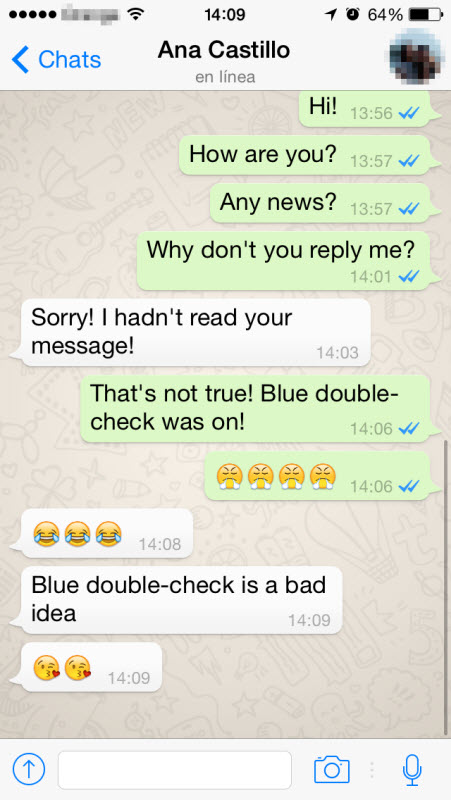
Blue double-check in WhatsApp. Your message has been read.

blue-double-check

Remember we said a few days ago that WhatsApp would be able to tell you whether your message had been read? Well, the blue double-check is now here. And what does it mean? The dream of some and nightmare of others: it’s the confirmation that your message has been read.

blue-double-check-whatsapp


But that’s not all. The blue double-check has also been included for groups and appears once all members of the group have read the message.

What do you think? Too much information? A loss of privacy? What’s clear is that you will no longer be able to say: “Sorry, I didn’t see your message…”

The post Blue double-check in WhatsApp. Your message has been read. appeared first on MediaCenter Panda Security.

The secret life of apps revealed

Have you ever noticed that your smartphone has surprisingly little storage space left for things like photos or even the latest updates? Or that battery life and reliability have begun to deteriorate over time? Or perhaps that your monthly data usage is growing inexplicably? Over time, the apps we love and use day in and day out affect our tablets or phones and impact their performance – sometimes while you’re using them, and sometimes completely invisible in the background.


The study

We decided to investigate to see if we could better understand how apps influence devices over time in our first Android App Performance Report.

When it comes to the performance of our phones, we noticed that users care about three things above all else:

  • Storage consumption – how much space do you have left for the files you love?
  • Battery consumption – is your phone making it to the end of the day or not?
  • Data plan consumption – are you constantly hitting your mobile data limit?


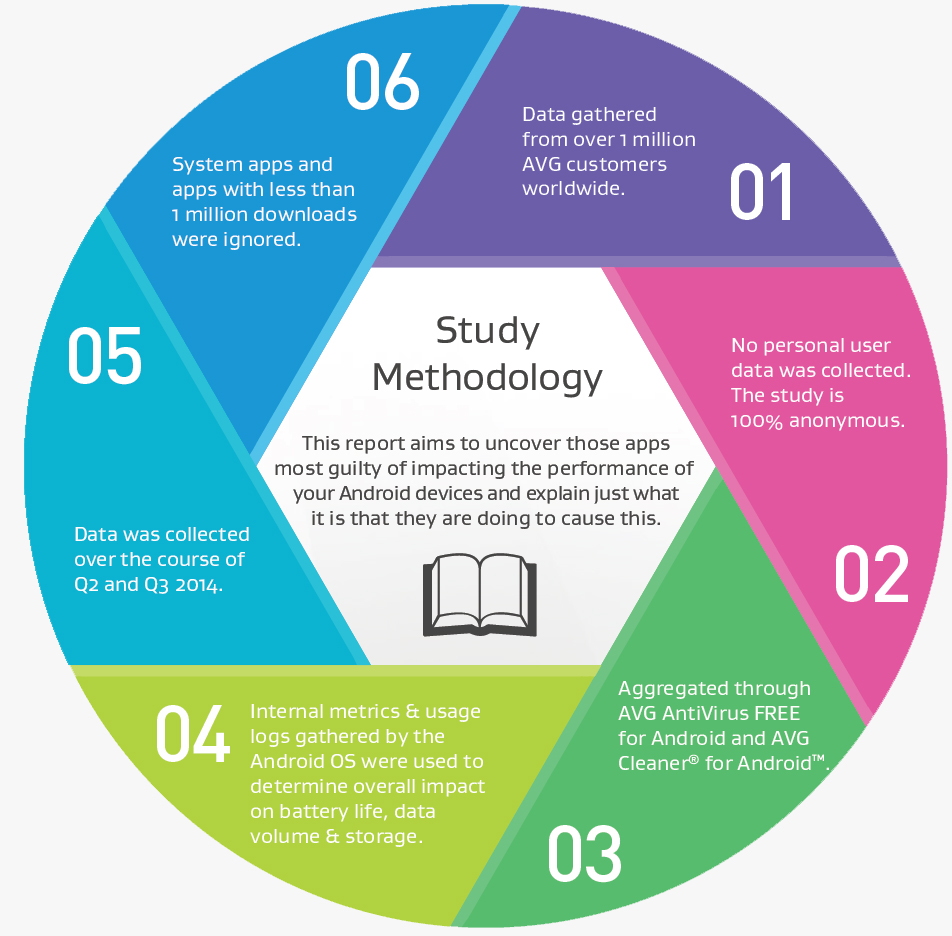
We felt that in order for the report to reflect what is happening to people’s phones out there in the real world, we needed to use data from real devices. Unlike other tests that might conduct benchmarking in a lab environment it was important to us that these results applied to everyday smartphone users.


Methodology


So with that in mind, we analyzed anonymized data from over one million AVG Android app users, so that we could better understand which apps they are using and how those apps affect their devices.

Some of the results were quite surprising.


Key Findings


Pre-installed apps

One of the most interesting learnings we made in the first report is that many devices are still carrying around a lot of apps that were installed by the manufacturer. These can take up a lot of storage space but more importantly can drain battery life – something that is already under strain with the constant use of most smartphones.


Apps with background activity

Another thing that became clear was that as we add more apps to our devices, we seldom remove the ones we no longer want or need. Over time this means that the limited resources of our devices are divided over an ever growing number of apps, affecting performance.

The reason for this is simple: the “always on” nature of apps means that they often-times continue to run in the background to check for notifications, updates or download data which uses valuable battery and data.


Social and News apps

It will come as little surprise that with its constant background notification checks, which run even when the app is not open, the social networking app from Facebook emerged as having the biggest impact on your mobile device when it comes to overall performance. The constant demand and transmission of data makes the app a real drain on both battery life and data use.


App growth

As we ran the report over several months, we observed some interesting behavior amongst apps that are automatically updated. Over time, their storage footprint and battery drain both increased. This is mostly due to downloaded content (songs for Spotify, items in games etc.), but is also in part thanks to automatic updates. With automatic updates enabled, developers can push out new versions and features that take up more space and are more resource heavy without having to ask the users permission. Combine this with the steadily growing number of apps we have on our devices (including those that we’ve downloaded and no longer use) and very soon you begin to observe a noticeable dip in performance.


What can you do to improve your device performance?

One of the most fundamental issues that the report has raised is that keeping your smartphone running in top condition is quite a labor intensive task. Keeping check of which apps are running in the background and removing apps that you don’t use is more than enough for most of us to commit to.

There are products that are designed to make your life easier though like AVG Cleaner for Android which can show you how much data, storage and battery life each of your apps is consuming to help you take the right actions to tackle any issues.


Our full report doesn’t just detail what apps are the most consuming of them all, it also details best practices and helps you get rid of performance hogs on your Android smartphone or tablet.


Full Report

Androidâ„¢ is a trademark of Google Inc. in the US and other countries.

Your home network is at risk of cybersecurity attacks

Router vulnerabilities and weak passwords allow cybercrooks easy access to your home network

That little router box provided by your ISP or that you bought at Radio Shack and forgot about, is a weak link in your Internet-connected household. Many homes in the United States use a wireless router to connect multiple devices, but unsecured routers can create an easy access point for hackers.

Think for a second – do you know what your wifi router password is? Did you know that your wireless router even has a password? If you are not sure, you are not alone.

What do you have to lose?

Only everything on your computer! That includes banking or financial information, personal information, browsing history, and photos.

Why is this an issue now?

”Today’s router security situation is very reminiscent of PCs in the 1990s, with lax attitudes towards security combined with new vulnerabilities being discovered every day creating an easily exploitable environment, ” said Vince Steckler, chief executive officer of Avast. “The main difference is people have much more personal information stored on their devices today than they did back then.”

We did a study of this issue and found that 4 out of 5 Internet-connected households in the U.S. are at risk of getting attacked through their wireless router. And 16 out of 100 surveyed said they have already been victimized by hackers. T

The problem – PASSWORDS.

Avast found that more than half of all routers are poorly protected by default or easily-hacked password combinations. When you check yours, this could be what you find:

  • admin/admin
  • admin/password
  • admin/<no-password>

The 25% of consumers we surveyed that are using a “unique” password use their address, name, phone number, street name, or other easily-guessed terms as their passwords. Not too much better…

What is the risk?

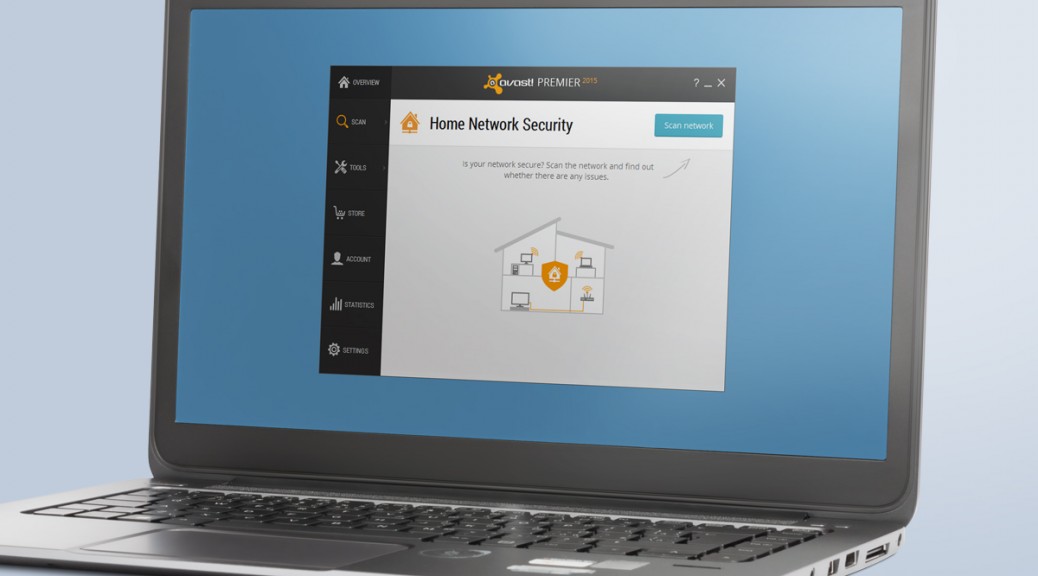
Avast Home Network Security

Avast Home Network Security scans your network for vulnerabilities.

One of the biggest risks on any wifi network is DNS hijacking. This happens when malware gets in your unprotected router and sneakily redirects you from a known site, such as your bank’s website, to a fake site that looks just like the real thing. When you log in, cyberthieves capture your login credentials and then use them to access the real site. Scary stuff.

Avast 2015 reacts to home network vulnerabilities

To address these issues, Avast recently introduced Avast 2015, which includes the world’s first Home Network Security Solution that protects users from home network threats including DNS hijacking and weak passwords.

The Home Network Security Solution is available in free and paid versions of Avast. Get it at www.avast.com.

Avast Software’s security applications for PC, Mac, and Android are trusted by more than 200-million people and businesses. Please follow us on Facebook, Twitter and Google+.


Facebook Events Scams

pull-bear-facebook-scam

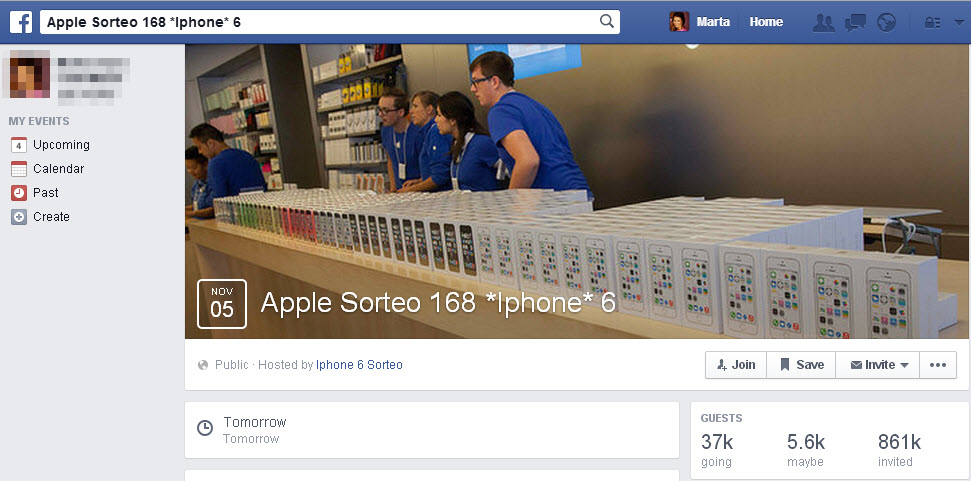
Facebook events have become one of the easiest and quickest ways of scamming people on social networks.

In the last few days many such events have been organized by malicious users. There are several aims that range from subscribing people to premium-rate SMS services to creating pages with thousands of followers for advertising purposes.

apple-facebook-scam

But how do these events work? The scam is similar to the one we reported a few months ago that claimed to offer a €500 gift voucher for Zara. They use the names of popular brands such as Zara, H&M, Apple or Primark to interest as many people as possible.

zara-facebook-scam

Facebook Events Scams

It works as follows:

  • You attend an event at the invitation of a friend or contact on Facebook.
  • You invite your contacts.
  • You post a comment on the event wall saying how much you like the brand or answer a question from the event organizers about the product.
  • In some cases, participation in the event is subject to entering personal details such as your phone number, which can end up with you being subscribed to a premium-rate SMS service.

The best thing to do with these types of events is to keep your guard up, and before taking part, check that it is really organized by the company in question.

In any case, you should never enter personal data on pages that you do not trust completely. That way you can prevent your data from falling into the wrong hands.

The post Facebook Events Scams appeared first on MediaCenter Panda Security.

Reasons you can be kicked out of WhatsApp

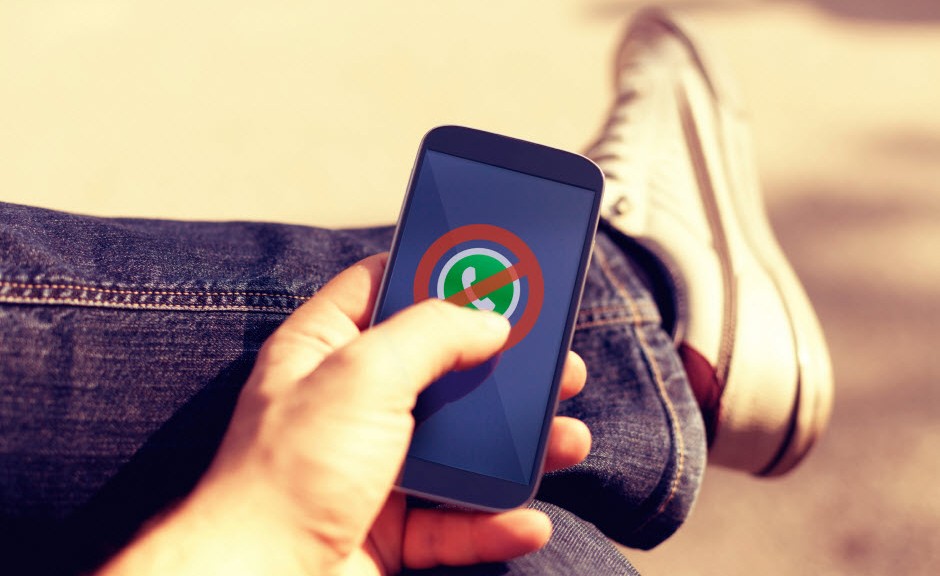
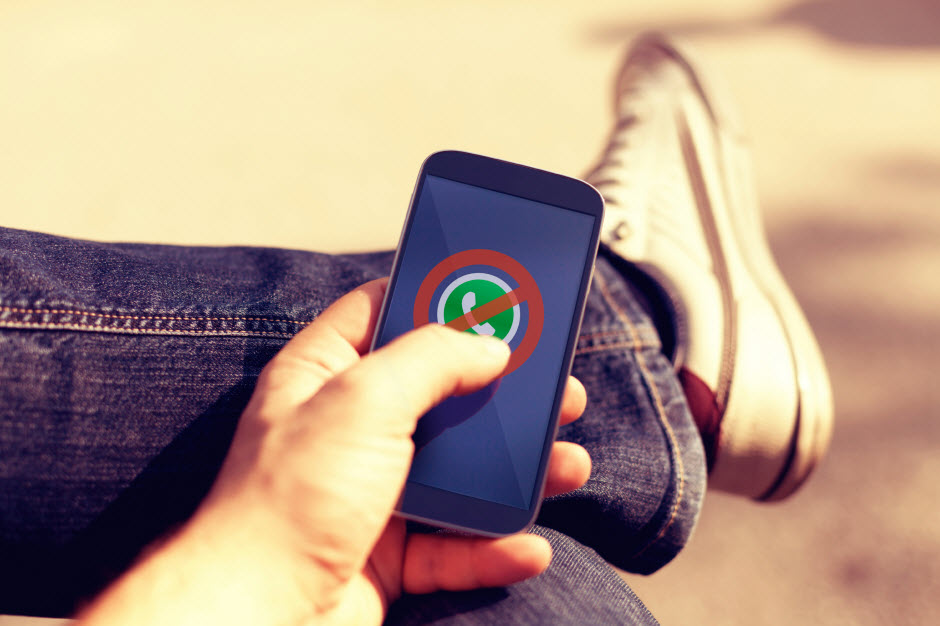
no-whatsapp

“Your number is no longer allowed to use our service”. Do you know what service it is? WhatsApp. That’s right, WhatsApp. Did you know that the app reserves the right to ban users that don’t abide by the terms and conditions of use?

Reasonable enough. The only problem is that they don’t warn you. So, given that forewarned is forearmed, here are some of the things that WhatsApp might ban you for.

Reasons you can be banned from WhatsApp

  • Being blocked by a certain number of users
  • Sending chain messages
  • Using the platform for advertising purposes
  • Sharing obscene or illicit material
  • Spreading files with viruses
  • Pretending to be another person

The company also reserves the right to delete messages that are too long or of limited interest.

The question you have to ask though is… To what extent are our WhatsApp conversations private?

The post Reasons you can be kicked out of WhatsApp appeared first on MediaCenter Panda Security.

Protection for your family, plain and simple

Sadly, the hassle of managing the family technology is only going to get greater. The number of connected devices in our homes is growing rapidly. In 2013, the average home already had more than five connected devices. Homes like mine, with more than 20 devices, are driving this average up with every passing day.

As we start to realize that our families are spending so much time online, it is our responsibility as parents to ensure that they are doing so safely. Then the long to-do list of Internet safety comes into focus.

Our tablet has run out of space? Has my son set his privacy setting correctly on social media accounts? Is the security software on my own phone updated? What can I do to speed up my wife’s laptop?

As our list of devices continues to grow, so too does the to-do list of the family tech wiz.

There must be a simpler way to manage my family’s devices without having to actually track down each device every time I want to do something.

That’s why for 2015, AVG is launching AVG Protection: the one-stop solution to help me keep my family protected across all our devices—no matter how many—wherever we are.

Video

Welcome To AVG Protection

AVG Protection brings together our best security products for all platforms: AVG Internet Security for Windows desktop, laptops and tablets; AVG AntiVirus for Android smartphones and tablets; and AVG AntiVirus for Mac under a single subscription. Add to this AVG PrivacyFix and AVG Cleaner for Mac and Android, which are free, to complete my protection, performance and privacy needs — the solution is a compelling one.

But most importantly, AVG Protection has AVG Zen to tie them all together. AVG Zen allows me to manage all of our devices from one screen, fix issues, scan machines, and enable protection remotely from my PC or my Android device when mobile. And the alerting system lets me know when something needs my attention so I can rest assured my family is safe online. The days of checking up on each of my direct family or my extended family devices one by one are over.

It couldn’t be easier to start protecting your family using AVG Protection, click here to get started.