Category Archives: Antivirus Vendors

Antivirus Vendors

The origins of the new Panda Free Antivirus

The launch of Panda Security’s 2015 product lineup comes with a surprise.

Panda Cloud Antivirus has become Panda Free Antivirus. But what are the differences between the products? What can you expect from the best FREE antivirus? What does the future hold in terms of IT security?
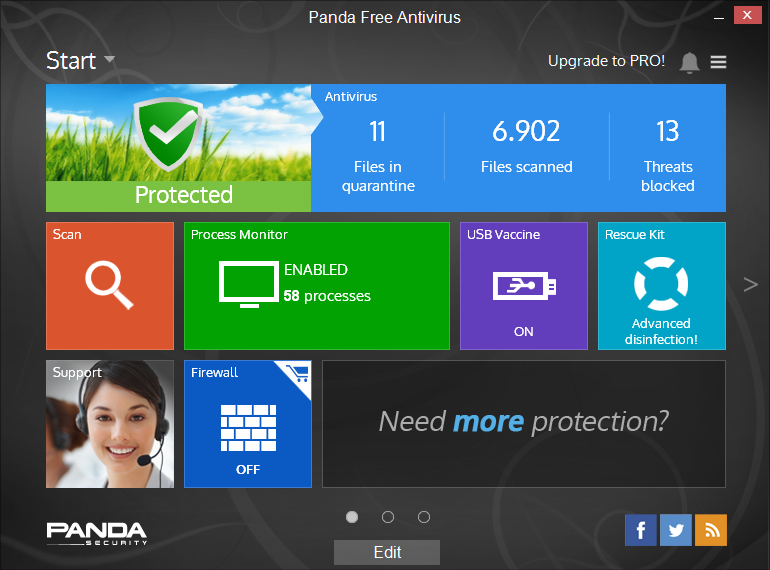
Panda Free Antivirus

Our colleague Herve Lambert, Consumer Product Marketing Manager at Panda, has been answering our questions…

  • Where has Panda Free Antivirus sprung from?

Panda Free Antivirus is an evolution of our first cloud-based antivirus: Panda Cloud Antivirus. Free AV was really created five years ago when we launched our first cloud-based antivirus. That decision illustrated our commitment to innovation and broke with the traditional protection model based on local signature files.

  • And what about downloads?

Over the last five years we’ve had around 45-50 million downloads and in 2014 we’re heading towards eight million. What’s more, our indicators suggest that there is a loyal product user base that is satisfied with the product, and that’s the best thing of all.

  • What was the impact of Panda Cloud Antivirus five years ago?

The first thing we saw was the enormous potential of cloud architecture as this new model of communication, detection and disinfection significantly improved all our ratios.

On the other hand, it also reduced the time needed to discover, detect and disinfect any malware, collectively and automatically. The impact was incredible and it had an immediate effect on our position in the market. This was a great step forwards for us.

However, these five years have flown by, and our colleagues in the lab and the technicians responsible for developing this new model never cease to include new and more efficient protection systems and technologies, which at the same time are less intrusive.

The result of these efforts is called ‘XMT’, a new detection engine included in all Panda’s consumer antivirus solutions.

  • What is XMT and what does the new engine offer?

XMT stands for “Extreme Malware Terminator”. This is how we refer to the whole set of new technologies that drive the new engine in Panda’s products. It’s lighter, more efficient and easier to use.

There’s no doubt that this is a reference point for the industry. XMT is many things in one. We’re talking about:

  1. New technological architecture
  2. New interception technologies
  3. New heuristic technologies
  4. New contextual technologies
  5. New means of detection, disinfection, informing and protecting Panda Security users

So what does this mean for our users? It means more security and more protection against known and unknown threats.

XMT allows us to take an aggressive stance against malware. We have built it from scratch, thinking of the most important things: our customers and what they need:

  1. Protection
  2. Resource friendly
  3. Ease of use

XMT antivirus

  • Why does this engine represent a change in terms of security?

Everything would suggest we are going in the right direction. The latest comparative reviews and studies from independent laboratories such as AV- Comparatives, AV- Test and Virus Bulletin have highlighted the excellent results of the Panda technologies.

Moreover, we offer excellent security and protection without affecting device performance (PCs, laptops, tablets), one of the great advantages of cloud-based protection.

  • We’ve spoken about the past and the present. What about the future?

The future is full of promise and we certainly won’t be bored J.The bad guys are getting badder and their goal is to get very, very rich.

The era of the ‘Internet of Things’ has opened new opportunities for them to achieve this goal and we will have to adapt IT security approaches to face new eras and change protection systems to tackle new problems.

One such example is multi-device protection. Nowadays this is a basic need, yet many users don’t think about it until something goes wrong, and the truth is that this happens everyday.

All our users -whether children, parents, lawyers or teachers- have to be aware of the new threats. They have to think about the level of security they want for their digital lives and put a value on their digital identity and the protection they need.

At Panda we still have much to do. Every day represents a new challenge. The bad guys won’t let up… and neither will we.

The post The origins of the new Panda Free Antivirus appeared first on MediaCenter Panda Security.
Look-alike Avast Online Security extension deceives users

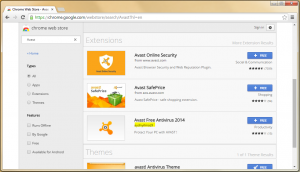
We have been recently notified about a suspicious browser extension for Google Chrome. Suspicious because it was called “Avast Free Antivirus 2014″, while our browser extension is actually called Avast Online Security. You can see the fake extension along with our official ones in the printscreens from the Chrome Web Store.

chrome_web_store_hl

The extension looks professional featuring printscreens of the PC version of Avast 2014 and a good rating of 4 stars. It is so well-done that it may trick users to install it – and indeed almost 2,000 users fell for this.

fake_extension

After installing, the only thing that is added is the little icon between the search bar and options button, as can be seen on the printscreen above, where the extension is already installed.

Viewing the extension code reveals that it is surprisingly lightweight. It merely opens a new tab with a predefined URL when the Avast icon is clicked.

code

The website, fortunately, is not malicious at all, so there is nothing harmful to the user, other than deceiving them with a false sense of security. The author of the extension created many more extensions, each leading to a different landing page on the same domain. The only comfort we received from this malicious extension, was that our extension was the most downloaded one! That confirms to us that our service is valued (and needed!).

developers_apps

To get the authentic Avast Online Security app for your browser, please visit us on the Chrome Web Store.

Avast Software’s security applications for PC, Mac, and Android are trusted by more than 200-million people and businesses. Please follow us on Facebook, Twitter and Google+.

Fidelity National Financial warns of data leak after phishing attack

Fidelity National Financial has been contacting an “undisclosed number of individuals”, notifying them that a selection of personal data may have been exposed after some of the Fortune 500 company’s employees had their email accounts targeted by a phishing campaign, SC Magazine reports.

The post Fidelity National Financial warns of data leak after phishing attack appeared first on We Live Security.

Digital Dating @ 50+

I noticed that this past weekend marked a lesser holiday known as ‘Sweetest Day’ (also known as a Hallmark holiday), which is celebrated in some parts of the U.S. – largely in the Midwest and Northeast.  Very similar to Valentine’s Day, it offers an opportunity to bestow candy and cards to those you are “sweet on.”

Sweetest Day

It’s a holiday my generation grew up with, though I’m not sure how the holiday is faring in terms of current popularity. But it brought to mind the latest stats on Internet dating: more than a whopping 41,000,000 Americans have gone online to find a match or a date.

Increasingly, it’s the most popular way for people over 50 to meet and marry. Research suggests that Boomers who date online is now growing two times as fast as the number of younger users. According to recent research by eHarmony, the biggest growth segment in online dating for the next decade is going to be the 55-64 age group.

Match.com, one of the largest online dating sites, claims that 25 percent of its membership is between the ages of 50 and 65 and Boomer members have grown 90 percent in the last 5 years. With at 21 million plus members, that’s approximately 5 million Boomers on Match.com alone!   (You can find all sorts of online dating stats, if you are interested, on Statisticbrain.)

There also has been a notable rise in dating sites specifically catering to Boomers and Seniors, such as Ourtime.com, SilverSingles.com and SeniorPassions.com.

Why this growth? A study conducted for OurTime.com reveals unmarried people over 50 consider companionship more important now than they did during their 20s. There also are numerous studies that support a correlation between one’s interpersonal relationships and their health and longevity. Plus, let’s face it, dating can fun!

But for many people (Boomers and not), especially those who are newly single because of divorce or death, the thought of dating and finding a partner also can be daunting and scary. And though society’s comfort level has grown with the emergence of respected online dating communities over the last decade, a healthy amount of cautiousness persists – and rightly so.

So, where to start?

If you’re trying online dating for the first time, or even if you’ve tried it before and it didn’t work out, and you may want to try it again, you should look at one of our own resources, the AVG Guide to Dating Safely Online (free download here).

In the meantime, here are a few tips:

  • Figure out what you want. You may want to date only people your age and in your local geography. Or you may have certain religious affiliations, or hobbies, or interests that you are looking for in a potential partner. With literally thousands of dating sites out there, you have options to tailor your search to your desire.
  • Once you’ve narrowed down the sites and apps you would consider signing up to, look for any articles, blog posts or social commentary that illustrate other users’ experiences. Are there any problems, such as privacy concerns, associated with the site?
  • Use technology that you are comfortable with. There are of course many dating sites that are pretty much like digital classifieds. But increasingly there are other options, such as mobile apps that let you find singles in the area.  (More than half of eHarmony users now use mobile devices to interact with the dating service.)
  •  Don’t provide intimate details about yourself until you feel comfortable with the person you are dealing with. By the same token, realize that any content you share – from your interests to your photos – becomes the property of that site, and you lose the rights to control how it’s used. That means your picture could pop up as a “Date Of The Week” promotion – or your dating profiles can turn up on Internet searches. So look in the privacy settings to make sure yours is only available to other users logged into the site.

Readers of my column know that I’m a big fan of second acts (and third acts, and beyond!). And that doesn’t only apply to careers – but to relationships as well. J So whether you decide to try online dating – or to go the old fashioned route – I say do some homework and then just go for it!


On a separate note, but on the topic of choices: I’m delighted to report that I have just learned that I have been selected to speak at SXSW 2015 Interactive on “Boardroom or Baby? The Choices Women Have in Tech.” A big thank you to everyone who supported me and voted for my submission. I hope to see many of you in Austin next March 13-17!

MEF Appoints Judith Bitterli to Global Board

Established in 2000, MEF is the global trade association for companies wishing to monetize their products & services via mobile. It is a global presence offering impartial and powerful voice for pioneering companies from across the mobile content and commerce value chain.

AVG has been a member of MEF for two years, and has already participated in the AppPrivacy working group to develop a quick and easy privacy policy generator for app developers. AVG also sponsored the MEF Global Consumer Trust Report which examines trends in mobile business and examines barriers to growth for the mobile economy.

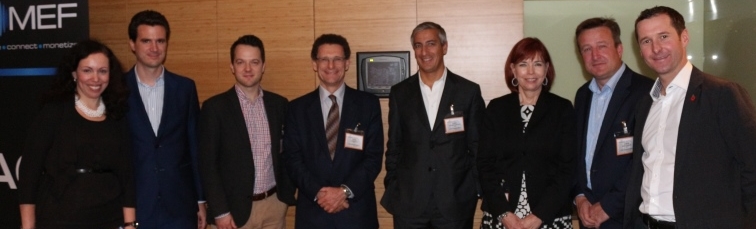
The MEF Board

In her new role, Judith will be providing insight and expertise to the MEF as the world becomes more focused on the Internet of Things.

Judith won’t have long to wait to get involved in MEF activities as she will be participating in a panel on trust, privacy and consumer engagement in mobile at the MEF Global Forum in San Francisco in November.

Images courtesy of MEF