Tag Archives: News

Will your kids ever have privacy?

A study carried out by the Global Privacy Enforcement Network (GPEN), involved over 29 privacy enforcement authorities in 21 countries. It found that only a third of websites had effective control of the information collected on our kids.

Understanding what happens to the personal information of your children needs to be high on the agenda of all parents. I’m not sure it’s understood due to the covert way that the data is being collected. Have you ever tried reading the privacy policy that accompanies websites and apps? if you haven’t then I am fairly certain your kids haven’t.

Imagine someone knocking on your door and asking for your child’s email address and access to their friends contact details. You would be shocked at the audacity of the request and send them away with nothing. When our kids go online or use apps, this very information is being given up without thought about what happens to it.

When something is free, such as an app or web service, it’s not because the company developing it is just being nice. Companies need to make money so that they can fund innovation that will keep us functional and entertained. One of the ways they can do that is by using our data. As consumers, especially when it’s our kids, we need to understand the trade off between free and acceptable data collection and use.

In a recent BBC article about the GPEN findings, Mr Adam Stevens, head of the UK’s Information Commissioner’s Office, said: “The most common concern domestically was a lack of information being provided about how their information would be used.”

The study identified concerns with 41% of the websites examined and that a minority of sites had an accessible way to allow families to delete data.

It’s important that we engage with our kids and teach them the value of their data. They need to understand how apps and services they’re accessing are using their personal data, and we need to guide them on what is acceptable usage.

Data breaches are now common place, and with vast amounts of personal data being collected and stored the consequences for our kids could be significant.

While I would not encourage kids to tell untruths, I might encourage them to have a modified set of data for use online, for example: their place of birth could be anywhere and the day of their birth does not need to be the real one, however their year and month of birth should not differ from reality as the reputable websites and apps deliver content that is age appropriate.

I personally have multiple email addresses: one for my serious stuff like banking and family communication, and an account that I can burn if it becomes compromised or I start getting too much spam. While this maybe a complicated thing for our kids to do, the principal behind this is something worth educating kids about.

Follow me on Twitter @TonyatAVG

A London NHS clinic leaks 780 patients’ details.

The 56 Dean Street clinic in London accidentally released the names and email addresses of 780 patients who have attended HIV clinics.

In a statement released on their website, a spokesperson for Chelsea and Westminster Hospital NHS Foundation Trust stated:

“We can confirm that due to an administrative error, a newsletter about services at 56 Dean Street was sent to an email group rather than individual recipients.

“We have immediately contacted all the email recipients to inform them of the error and apologise. Any concerned patients can call  020 3315 9555 and 020 3315 9594.”

In an interview with BBC Dr. Alan McOwan has said that, “Not everybody on the list is HIV positive.”

This data breach comes on the heels of a similar incident that occurred earlier last month to UK based holiday company Thomson. The 56 Dean Street clinic data breach, while unfortunate, again underscores the importance of having appropriate data security policies and procedures in place, as well as the need for employee training on the handling and protection of sensitive data.

The cost of a data breach can affect more than your bottom line, it can affect lives too. So if you’re in doubt about the security of your own IT infrastructure, download AVG’s Small Business IT Security Guide or take the AVG Small Business IT Security Health Check now to find out what you can do to help prevent security and data breaches.

If you need comprehensive protection against online threats for your business PCs, network and email, take a look at AVG Internet Security Business Edition.

AVG Helps Secure Obi Worldphone Smartphones

SAN FRANCISCO– August 31, 2015 – AVG® Technologies N.V. (NYSE: AVG), the online security company™ for more than 200 million monthly active users, announced today a new global partnership with smartphone manufacturer Obi Worldphone to provide mobile security across its new range of SF1 and SJ1.5 smartphones. Launched in numerous countries worldwide and unveiled at a special event in San Francisco, the devices will come pre-installed with AVG’s flagship AVG AntiVirus PRO for Android™ app, giving Obi Worldphone customers the peace of mind that they can use their devices safely and securely straight out of the box.

“With mobile the primary source of Internet connectivity for many smartphone users in emerging markets, security is becoming an increasing concern for device manufacturers looking to deliver the best experience to their customers,” said David Ferguson, Senior Vice President, Revenue & Business Operations, AVG Technologies. “This partnership enables AVG to further our expansion into some of the markets where we are seeing an increase in mobile phone use, ensuring that we continue to secure and protect people, devices and data across the globe.”

Under the terms of the partnership, Obi Worldphone customers will receive a free, 30-day trial of the AVG AntiVirus PRO for Android™ app. After the trial, customers can either choose to keep the enhanced features by purchasing the annual subscription or use AVG AntiVirus FREE for Android™, which equips their smartphone or tablet with core protection.

“We have partnered with the best in the industry in bringing this new range of devices to market, and AVG is a prime example,” said Neeraj Chauhan, CEO, Obi Mobile, maker of the Obi Worldphone. “With smartphone users increasingly relying on their devices for a whole range of online activities such as gaming, shopping and even more sensitive transactions such as online banking, we are committed to providing safe, secure mobile connectivity for our customers from the outset.”

About AVG Technologies (NYSE: AVG)

AVG is the online security company providing leading software and services to secure devices, data and people. AVG’s award-winning technology is delivered to over 200 million monthly active users worldwide. AVG’s Consumer portfolio includes internet security, performance optimization, and personal privacy and identity protection for mobile devices and desktops. The AVG Business portfolio – delivered by managed service providers, VARs and resellers – offers IT administration, control and reporting, integrated security, and mobile device management that simplify and protect businesses.

All trademarks are the property of their respective owners.

www.avg.com


Media Relations:

US: Deanna Contreras
Tel: +1 415 371 2001
Email: [email protected]

Rest of World: Zena Martin
Tel: +44 7496 638 342
Email: [email protected]
Press information: http://now.avg.com

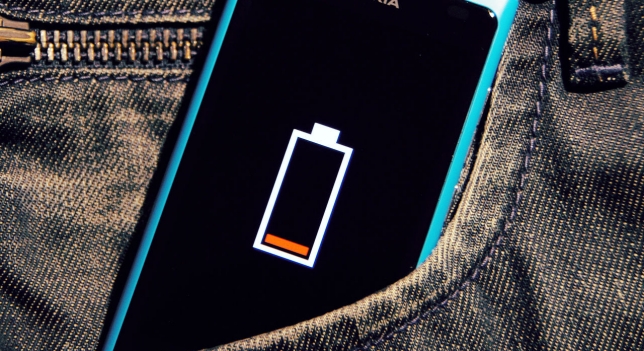
The invisible trail left by your device’s battery which leads right to you

battery, track

While smartphones and tablets continue to have more features which help make our lives easier, their battery life isn’t usually something which users are happy with.

Now, whilst the manufacturers are working on extending its shelf-life, the batteries are in the spotlight for another reason. This time, the engine of these mobiles is putting user privacy at risk by leaving a trail of all your movements online.

The fact what businesses and cybercriminals are able to find out this information is down to a characteristic of HTML5, the latest version of the language used to create webpages. This function allows webpages to know the status of the battery and adapt what it shows.

So, in the event that our battery hasn’t got a lot of energy left, websites written in HTML5 can be loaded (if the developer allows) with all unnecessary items removed in order to save resources and power.

battery, cybercriminals

This isn’t a new characteristic as it was introduced in 2012 and works with Chrome, Opera, and Firefox. Recently, however, a group of French and Belgian investigators have published a study which shows that the information received this way is specific and puts our security at risk.

It is possible to tell the percentage of battery remaining and the estimated life before it completely runs out, but what is really worrying is that this data is collected every 30 seconds (almost in real time).

In addition, researchers have also found that, after several visits, you can find the maximum capacity of the battery and eventually identify the user each time you visit a particular website, creating a kind of digital trail.

It also doesn’t make much difference if you surf incognito. In fact, neither the firewall of a computer or using a VPN are enough to escape this monitoring by HTML5. As if that were not enough, everything happens without the user being aware, since the website does not have to ask permission to gather all this information.

Beyond technical features like this that endanger our privacy – and that will probably be changed soon, following the controversial study – users should remember how to protect their privacy in the digital environment and also protect themselves with the best security tools available – it’s your security that’s at risk.

The post The invisible trail left by your device’s battery which leads right to you appeared first on MediaCenter Panda Security.