Category Archives: AVG

AVG

Do your kids spend too much time online?

Each country has its own initiatives for protecting kids online. In the UK, for example, we have “Active Choice” which makes adult content opt-in rather than opt out. But I believe, that around the world, parents should be the first line of defense and guidance for our kids.

When we talk about children spending time online, it’s important to remember that our children do not have what we term ‘digital lives’. Technology is normal to them and part of growing up in today’s world.

I often hear parents raise concerns about how much time their children spend online and on devices. Generally I observe that they are equally guilty of this digital overindulgence. As ever, children mimic their parents’ behavior.

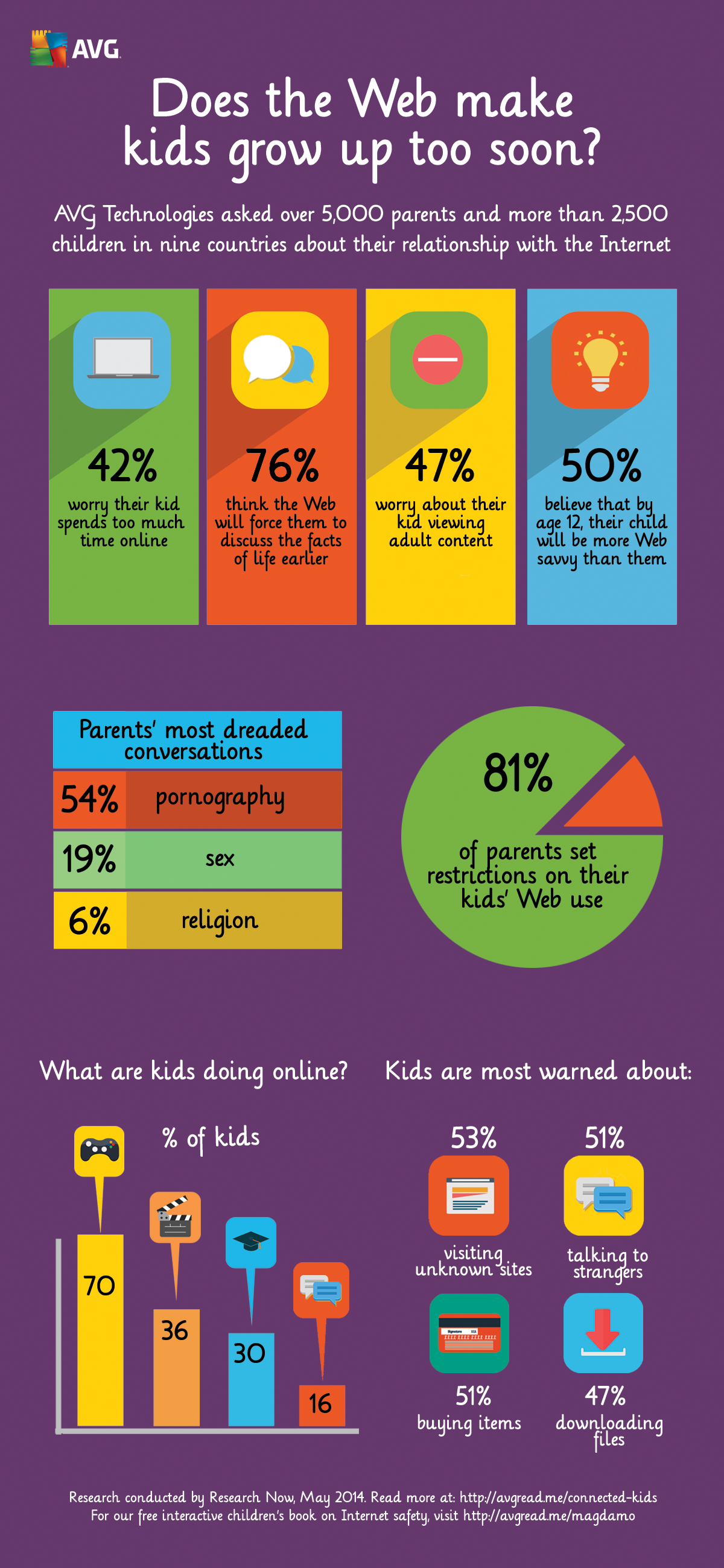
AVG Digital Diaries research last year examined how the Internet is having an impact on how quickly kids grow up. Our findings showed that children are increasingly interacting with digital devices,and 42% of the parents polled by AVG said that they are concerned that their child spends too much time on devices, and a similar number (43%) said they were worried their child didn’t spend enough time outside.

So who is responsible for the time our kids spend online? I believe that parents are, yet 42% of them say they are concerned about it.

As Safer Internet Day has just passed, I challenge the 42% in our survey last year to take charge of the technology in their homes and to correct the balance.

You might not be popular today but introducing other life skills is a good thing to do. Remember, technology is not a babysitter!

We’ve put together more statistics from the AVG Digital Diaries research in this infographic below.
Is the web forcing kids to grow up too soon?

Tony Anscombe and Maddie Moate discuss Internet Safety

It’s also united me with Maddie Moate, a presenter and YouTube Educator who I had the pleasure of working with last year during the NSPCC / Child Helpline International Youth Shadow Conference.

To mark Safer Internet Internet Day, Maddie and I thought it would be great to discuss and raise awareness of some of the key issues – and potential solutions – to ensure everyone can enjoy a safer Internet experience at home, or when out and about.

In this short video below you’ll hear us discuss how parents can make sure the family is protected online, safer practices when using social media, ways to broach the subject of online safety with your children and much more.

You can find us both on Twitter too – @tonyatavg & @maddiemoate

Video

Internet Safety for Children with Maddie Moate


Grandparents share great advice for a Safer Internet

Technology has made it easier than ever before for extended families to connect with loved ones.

According to our most recent AVG Digital Diaries study among Boomers and Seniors, half of those surveyed who have grandchildren feel technology makes it easier to communicate with them.

They are utilizing email (50%), texting (40%), and video conferencing tools like Skype (35%) –to communicate over all distances.

As we celebrate Safer Internet Day around the globe, it is also encouraging to see that the grandparents we surveyed are also taking an active role creating a safer Internet for their grandchildren.

In our survey, we clearly noted grandparents are weighing in and contributing to safer Internet habits for young family members.

The research shows that one in two grandparents are vocal in encouraging their grandchildren to:

  • Not share too much information online
  • Avoid visiting dangerous sites
  • Talk to an adult if anything upsetting happens online.

Grandparent have recognized that today’s children and grandchildren face a vastly more connected world than the one they knew growing up and this is reflected in the advice that they told us they were sharing.

Among the prominent advice being administered by grandparents:

  • Remember that everything you post online has the capacity remain there forever (44%).
  • Be kind when posting comments or talking to people online (31%) – because what is said online has consequences.
  • But also, never mind what people say online (19%). Or as Taylor Swift might say: Shake it off. :)


Importantly, grandparents also advised for their grandchildren not to spend too much time online (44%). As easy as technology makes staying in touch — there is no substitute for real life.

All the more reason for families, and all of us really, to consider factoring in some regular—and positive—digital time-out. What better place to start than tonight at the dinner table?

Here’s to a better and safer Internet for our children, grandchildren, and all of us –today and everyday.

Internet of Things still not taking privacy seriously

It seems that companies developing the connected devices that make up the Internet of Things are in a constant race to release new technologies while potentially compromising on privacy.

It emerged this week that certain models of Samsung’s smart TVs are able to record conversations while voice recognition is active.

Samsung’s Terms and Conditions read:

“Samsung may collect and your device may capture voice commands and associated texts so that we can provide you with Voice Recognition features and evaluate and improve the features.”

“Please be aware that if your spoken words include personal or other sensitive information, that information will be among the data captured and transmitted to a third party.”

So while voice recordings will only be made while the feature is active, the Terms and Conditions do state that:

“If you do not enable Voice Recognition… while Samsung will not collect your spoken word, Samsung may still collect associated texts and other usage data so that we can evaluate the performance of the feature and improve it.”

I have blogged and spoken on privacy and the Internet of Things several times and it is disappointing to find that privacy and security are still not part of the design process for most consumer IoT devices.

First, in 2013 I highlighted the amount of data that is being generated by each and every user of connected devices, often without their knowledge or understanding.

Then, in 2014 I revealed how voice activated technology could be used to manipulate devices into executing unauthorized commands such as sending emails, or controlling a smart TV.

Video

How Voice Activated devices can be hacked


Here we have the two issues combined into one

  • End users are likely unaware that their data is being collected while using the voice command feature. Likewise they don’t understand that this data is used and shared.
  • The dangers of voice activated technology and how they can be used in potentially harmful ways. If you entered sensitive data such as a password via voice recognition, it may seem safe. Voice command records can be stored and stolen just like written files.


Users may not understand that while Samsung’s privacy policy contemplates the use of active voice commands, voice activation features can be used both actively and passively, meaning that devices can be constantly recording sound and identifying activation commands.

There is, as such, a potential for privacy issues here.

It’s about time that manufacturers of smart devices started taking the privacy and security of its users seriously. Only a few weeks ago a wireless baby monitor was hijacked and the attacker communicated directly with the nanny through the device.

After CES 2015, I commented that privacy should be at the very heart of the Internet of Things, a sentiment echoed by the FTC and its Chairwoman Edith Ramirez in their report on the Internet of Things.

Hopefully, it will not be too long before the public and electronics producers realize that going online should not mean surrendering your privacy.

Making the web a more positive place this Safer Internet Day

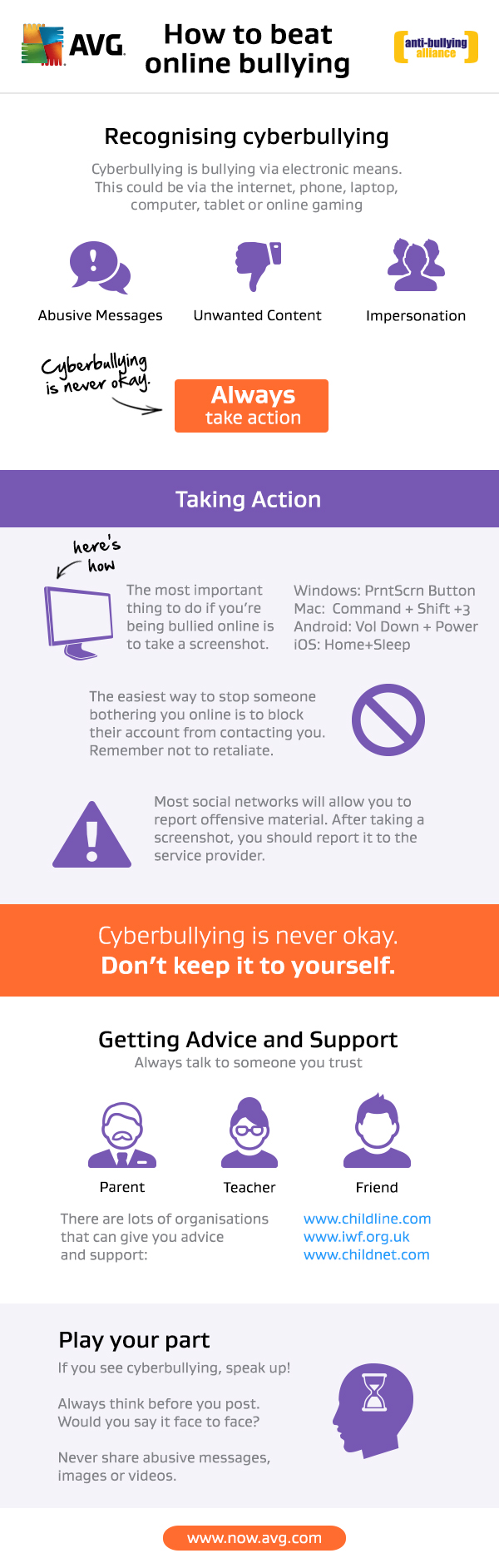
This blog has been written by the Anti-Bullying Alliance, a part of The Children’s Bureau charity in the UK. To celebrate Safer Internet Day 2015, AVG has teamed up with the Anti-Bullying Alliance to create a graphic designed to help anyone who may be experiencing cyberbullying.


It seems like a lifetime ago but many of us at the Anti-Bullying Alliance can still remember a pre-Internet world. There were few computers and certainly no smartphones.

Once you left the house you had to print a map of where you were going and hope that the person you arranged to meet would actually turn up.

Fortunately, now we have the Internet and it’s infinite different uses. Looking around, it is hard to find a part of our day to day lives that hasn’t been touched by the world wide web.

However, as is so often the case, with great power comes great responsibility. The Internet gives us an incredible window into the world but it’s up to each of us that we use the net responsibly.

The Anti-Bullying Alliance is all about working to make the Internet a safe and positive place to be. But with recent stories in the press about antisocial behaviour on social media sites it’s no wonder parents and schools are concerned about keeping young people safe from cyberbullying.

Cyberbullying is a significant issue facing young people today, and according to Safer Internet Day research in 2013, as many as 41% of 7–11 year olds knew someone who had been cyberbullied

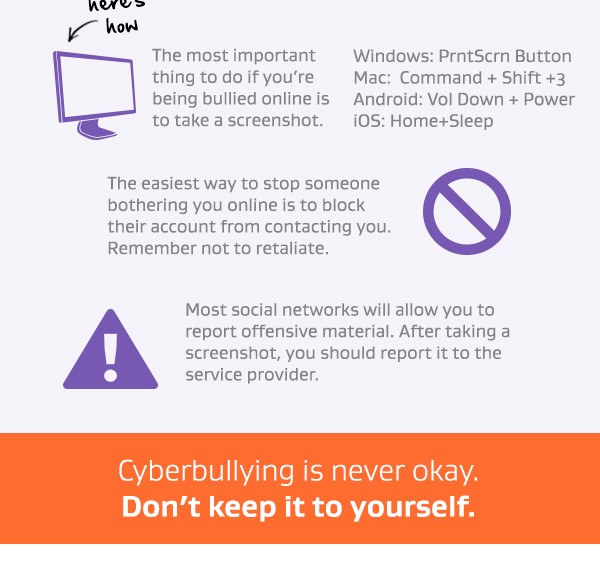
That’s why we’ve created some tips in the infographic below with AVG to support Safer Internet Day 2015.

Don’t forget that the biggest impact we can have to reduce cyberbullying is to model kindness and respect both online and off – stay safe, fun and connected.

You can follow the Anti-Bullying Alliance on Twitter @ABAonline


Safer Internet Day Cyberbullying Graphic


How to detect and avoid phishing scams

As I predicted last week, the recent data breach at US insurance firm Anthem Blue Cross Blue Shield has led to a sharp increase in the number of phishing attacks pretending to be from the company.

Video

What is Phishing?

There are some simple rules you can follow to ensure that you do not fall victim to any of these phishing attacks.

In this short video you will learn how to:

  • Recognise phishing emails in your inbox
  • Check you are on a legitimate webpage
  • View security certificates to ensure sites are safe


For more details on phishing and how to stay safe, visit this blog post from my colleague Michael McKinnon.

Follow me on twitter @tonyatavg

Trust remains a key obstacle for mobile

2014 was the biggest year to date for security and privacy online. With high profile companies announcing security breaches and data hacks throughout the year, 2014 became a year of lost innocence for the web.

People around the globe have begun to realize that their data, once shared with the World Wide Web, takes on a life of its own.

Because of this, trust and privacy have become more important than ever to our digital lives. Trusting people with our data and keeping hold of our privacy have become real every day concerns.

Nowhere is this more relevant than in mobile. And mobile devices are increasingly the gateway for most of us in the connected world.

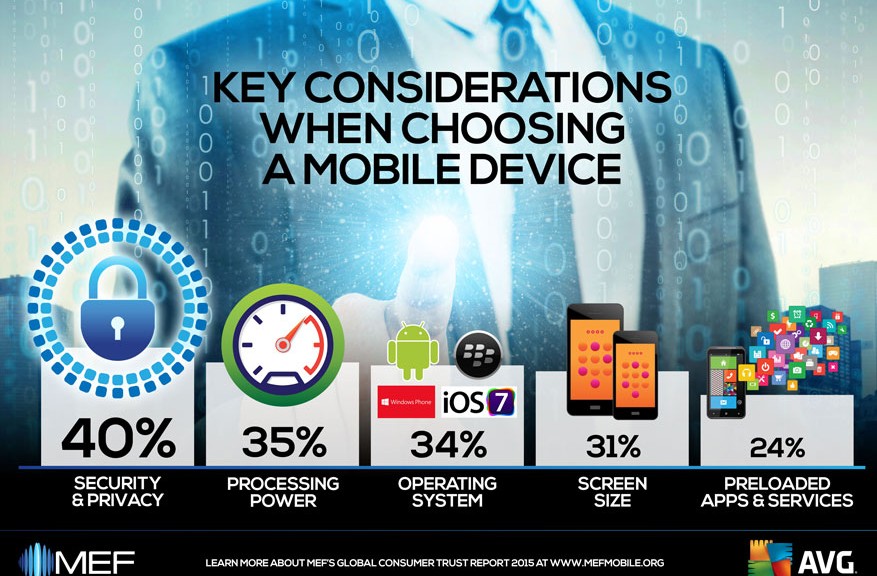
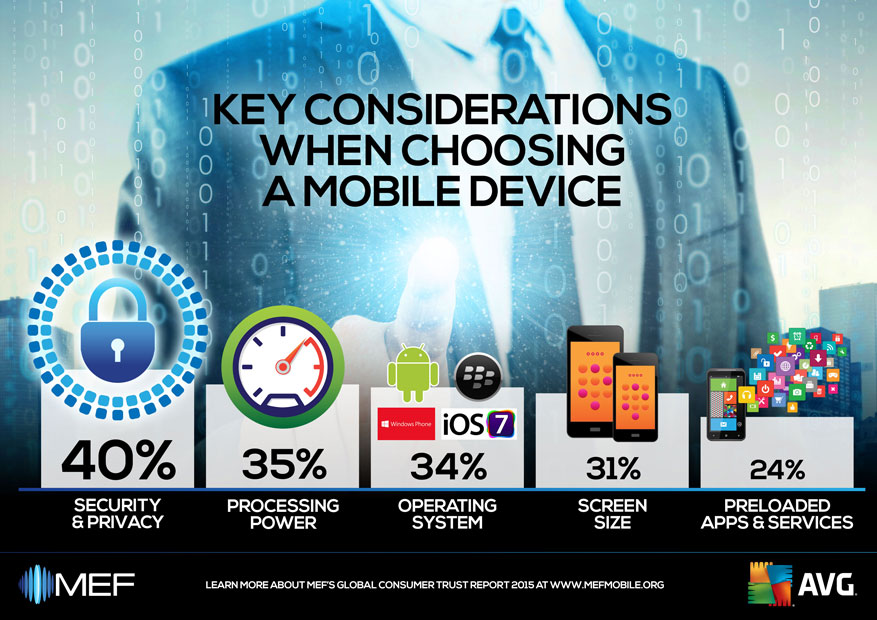
The importance of trust and the relevance of mobile are why this year; we have once again collaborated with MEF to create the Global Consumer Trust Report 2015.

Here are two key points that I’d like you to take away from the report:


Trust is a growing concern

Last year, the report highlighted the growing issue of trust as a barrier to purchase on mobile devices and this year is no different.

  • A lack of trust is again the single most influential factor preventing more downloads and purchases via mobile. 34% named it as such as compared to 30% the previous year.

It won’t come as any surprise after the multitude of hacks we saw in 2014, that awareness and concern around data privacy and trust is up around the globe.

  • China reported the highest trust concerns at 41% and the US saw the largest increase in a lack of trust, up nine points year-on-year to 35%


Trust really does affect people’s behavior

Trust is such a difficult concept to understand, especially when it is concerning something as abstract as the Internet. How do you know if you trust an app? Moreover, how does that trust actually influence your behavior?

This year’s report shows that trust, or lack thereof, really does have an impact (and a growing one at that) on how we engage with apps and services on our devices.

  • 49% of consumers surveyed say a lack of trust limits the amount of apps they download or use compared to 37% in the previous year
  • 72% of mobile media users are uncomfortable sharing personal data such as location or contact details with apps.


It’s also great to see that, in the report, 64% of those studied use software or apps to guard passwords and protect against malware.  Only one in ten (11%) take no steps to protect their device.

MEF Global Consumer Trust Report


We still have a long way to go to ensure that the web is a safe and trustworthy place for everyone, including the next wave of digital citizens coming on line, but we are making progress.

The issues of trust and privacy are starting to come to the fore and with them, they will bring change.

We’ll see changes in the way that users behave online, changes in the way that businesses explain how they use our data and changes in the way that governments form new modern data laws.

Nevertheless, with change comes responsibility. We must all play our own role in forging a brighter, safer and more trustworthy Internet. We must all become responsible digital citizens.


Anthem ‘Medical’ Hack – What should you do?

Anthem Blue Cross Blue Shield, a medical insurance provider in the US, was subject to serious data breach that included personal information of its members past and present.

The data stolen includes names, birthdays, medical IDs/social security numbers, street address, email addresses and employment information including income data.

The type of data that has been reported to have been stolen means that this breach is potentially much more serious than most of the large data breaches we saw last year. These hacks were primarily of credit card and transaction data.

Generally, when credit card account details are taken, victims can limit the damage by stopping their card and changing their password. Credit card companies will also cover most of the liability.

The difference with this theft though is that stolen data is a lot more difficult to track than a simple financial transaction. Social security and insurance information can be used for anything from a false insurance claim to collecting prescription drugs.

If you think that this data breach may affect you then you should carefully check your next health insurance bill. Be sure to check that all the claims are indeed yours and dispute things that seem strange.

It’s important to catch the misuse of your insurance quickly before medical debt notices are issued because of unpaid bills. That could lead to credit rating issues or in the worst case, you could be refused insurance due to a condition that you don’t actually suffer from.

As a precaution here some other actions you should take, not forgetting the above one of checking medical statements:

  1. Ensure your online accounts are not using the same email password combination that you may have had stored with Anthem; change any that are the same as your Anthem details.
  2. Keep a close watch on your credit reports. This will help you identify if someone is using your identity to take a line of credit in your name. Most credit scoring agencies allow you to run a report for free at least once.
  3. Spammers may send emails that look like they are coming from Anthem. Make sure to carefully scrutinize these emails – don’t click on links that look suspicious – and if in doubt contact Anthem to ensure it’s an official communication.
  4. Moving forward, avoid using the same email address or identity across multiple online accounts. For example, have a primarily email address used for recovery of forgotten passwords and account information. Have a secondary email address for offline and online retail transactions. Have a third for financial accounts and sensitive information.

Follow me on twitter @tonyatavg

How secure is your new car?

Car manufacturers regularly introduce new features to make our motoring lives easier and more secure. However in recent week, vulnerabilities have emerged that highlight potential dangers of smart car connectivity.

As reported by The Register, a vulnerability was discovered affecting BMW cars allowing an attacker to open doors and windows via a weakness in the My BMW Remote smartphone app.

BMW have reportedly deployed a software patch for all affected models remotely, but it is worth double-checking with your dealer to make sure it has been applied.

Worryingly, this type of vulnerability is not new.  Keyless entry systems for cars built within the last decade have increasingly come under attack, and exploits only get more sophisticated over time.

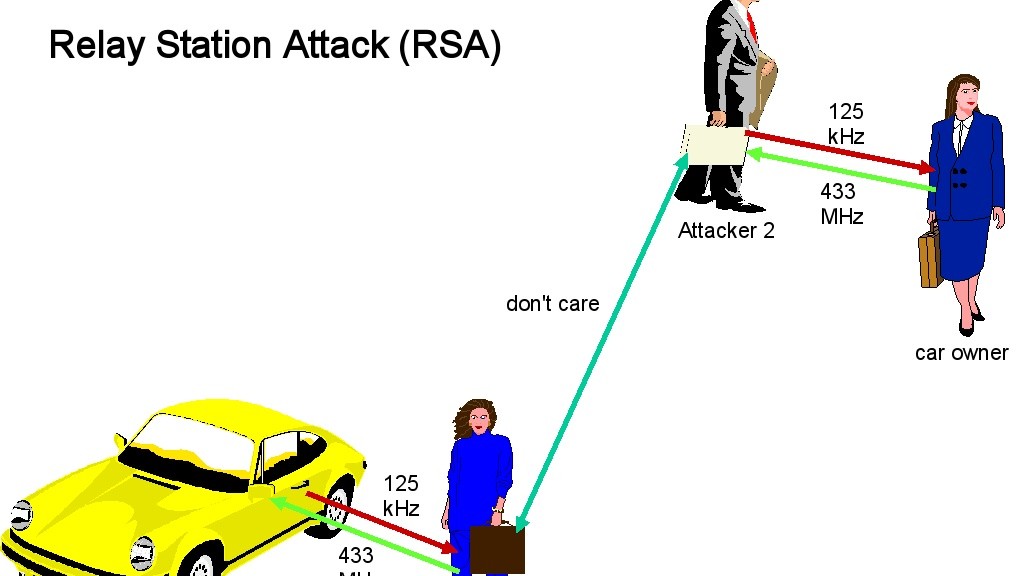
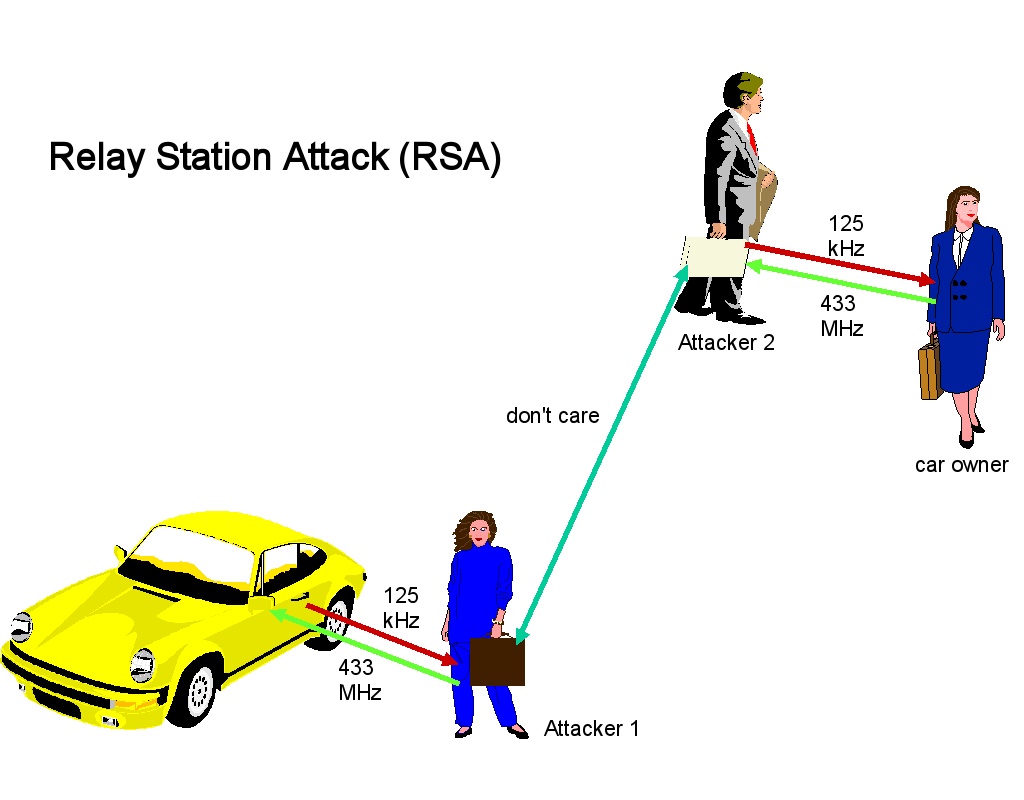
In 2011, Swiss security researchers from ETH Zurich University conducted experiments covering 10 cars from different manufacturers and found serious flaws that could allow someone to open the doors and start the engine of your car using a “relay station attack”.


Relay Attack

Image courtesy of Wikipedia


The research demonstrated that some modern cars using a “Passive Keyless Entry System” (PKES), where you don’t need to insert a key into the car to start it, could be stolen by using a trick to amplify the radio signal transmitted by your keyless remote.

When you park your car at night, where do you leave your keys?  I’ll be placing mine inside a lead box from now on – or taking the battery out!  And let’s hope the car manufacturers eventually get it right in the meantime.

Until next time, stay safe out there.

Grab Our Latest AVG PC TuneUp Update

Fresh off the press: Our engineering team has been working hard to deliver the latest version to the 2015 release of AVG PC TuneUp!

Released last November with improved cleaning capabilities and a new cleaner for your iPad, iPhone and iOS, this first major update (version 15.0.1001.331) doesn’t just provide the regular set of fixes but also greatly enhances cleaning functionality.

Let’s find out what’s new!

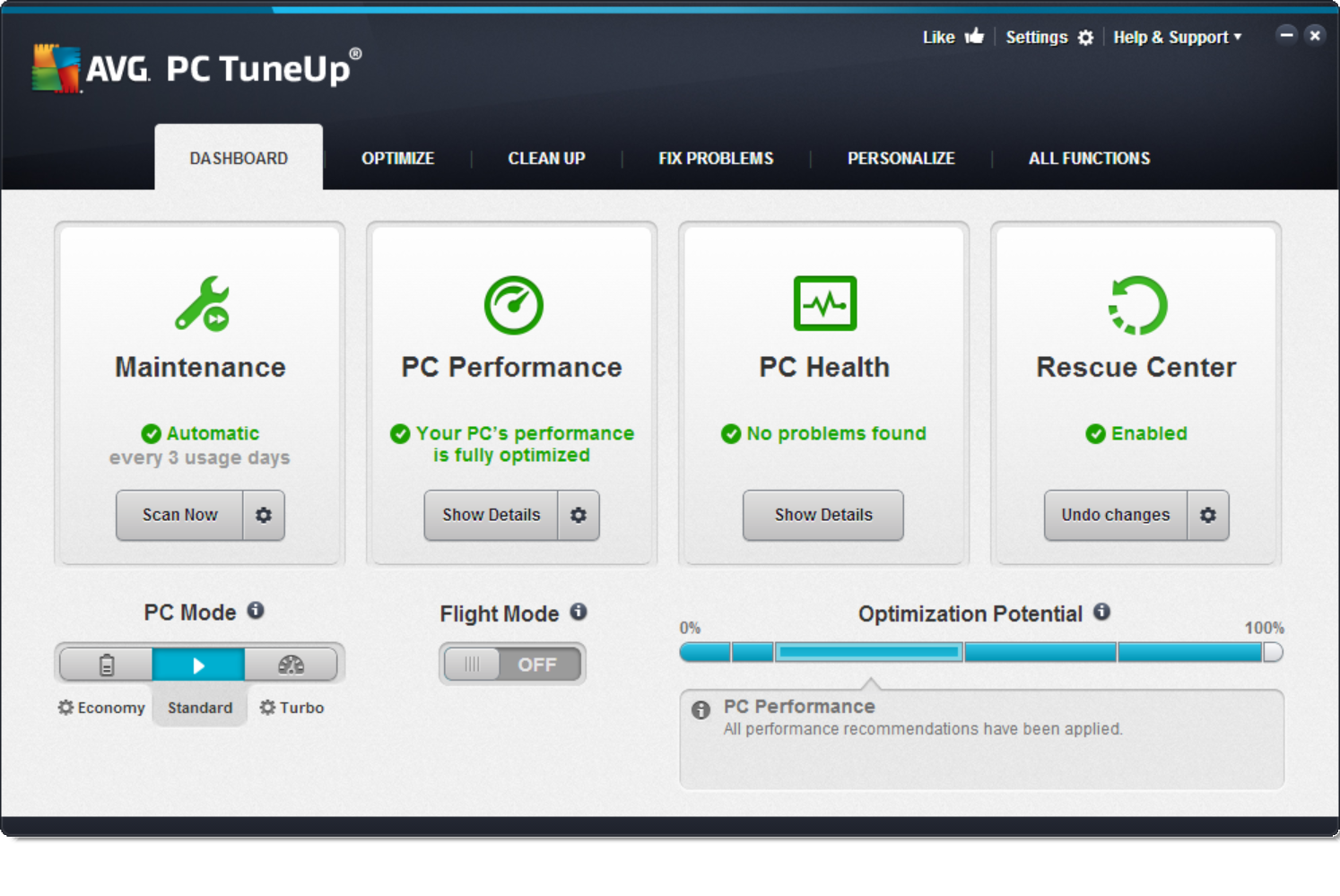
PC TuneUp

The new update brings more under the hood cleaning improvements for a cleaner, smoother working PC!


Greater cleaning for games and media editing programs

We know a lot of PC TuneUp users love to game or edit multimedia at home. That’s why they need our tuning tool to keep these resource-heavy applications running super smoothly and maximise the performance of their machines!

That’s why our Cleaning Definitions Team (who spend day and night looking at ways we can improve the speed of your computer) has identified 26 new and popular multimedia tools and looked for ways to remove the junk files these apps leave behind on your PC:

  • Audio tools: Ableton Live, ACID Music Studio, ACID Pro, Acoustica MP3 Audio Mixer, Adobe Audition, Audacity, Cakewalk SONAR, Expstudio Audio Editor, MAGIX Music Maker, Sound Forge Audio Studio, Sound Forge Pro, WavePad Sound Editor
  • Video tools: Alcohol 120%, Avidemux, AVS Video Editor, Blaze Media Pro, Magix programs, ManyCam, MoviePlus, Photo Pos Pro, Pinnacle Studio, Sony Movie Studio, Sony Vegas, VideoPad Video Editor, Windows Live Movie Maker, Windows Movie Maker

If you use any of these programs, you could benefit from the latest PC TuneUp update. Programs such as these handle many large files, which can leave behind logs and temporary  files that can quickly clog up your hard disk.

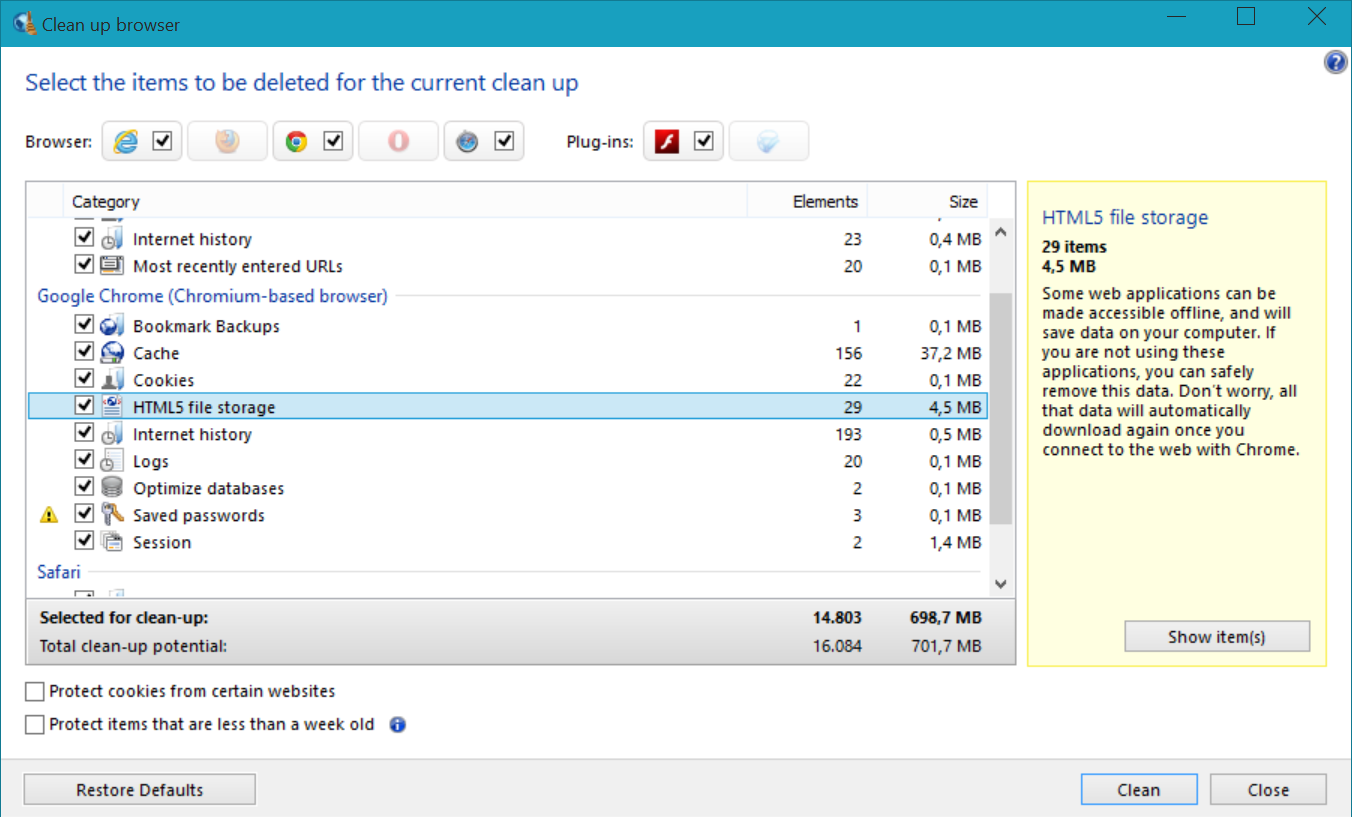
But that’s not all: We’ve implemented a fix that now helps our Browser Cleaner clean up the new cookie format in Google Chrome as well as the HTML5 file storage (see the help description):

PC TuneUp Browser Cleaner


However, in this release we’ve improved the cleaning mechanism for the popular platform Steam, making sure gamers get the best possible performance.

There’s a pattern in Steam, which causes large files to be stored in game folders. These files are often tools such as DirectX and usually only run when you first launch a game.

But once that’s done, you essentially don’t need these files anymore! Yet they remain in the folder. That’s why we’re cleaning up these files and you’ll benefit from all the extra space!


8 New Languages

We’ve seen so much excitement from around the globe for the new AVG PC TuneUp that we decided to translate the performance suite into even more languages: Danish, Chinese (Traditional), Hungarian, Indonesian, Malaysian, Turkish, Serbian (Latin), and Slovak. Simply download the file from our website http://www.avg.com/avg-pctuneup to get the version in your language!


So how do you get it?

Easy: Next time you start AVG PC TuneUp, you should get an update notification – just install your  free update!

If it doesn’t show up, go to “Help & Support” and click on “Check for Updates”.