Category Archives: AVG

AVG

Phishing is on the rise: Are you protected?

Phishing is on the rise as hackers are finding easier and less expensive ways to launch attacks.  Every solution in our AVG Business product portfolio detects and protects against phishing.

Phishing is a security hack to trick you into providing usernames and passwords to your accounts. Usually sent as a legitimate-looking email from a company you may use or buy services from, a phishing hack will ask you to login to your account to verify some information.

The email may communicate that your account has been, or will be, closed down unless you act promptly.  The email is actually not from a legitimate or trustworthy company. With one click, you’ll be directed to a fake website and any login or user information will be sent to the hacker.

The good news is every solution in our AVG Business product portfolio detects and protects against phishing. Educating your business clients is the next step in a good defense.

AVG Business portfolio detects and protects

Our LinkScanner® is a security feature in every AVG Business product, including AVG AntiVirus and Internet Security Business Editions, AVG CloudCare and AVG Managed Workplace.  To protect against phishing, the feature checks web pages in real-time before they open in browsers, displaying immediate alerts to help eliminate click throughs to compromised web pages.

The advanced technology powering this feature takes a multi-layer approach to identify and stop “phishy” emails:

  • First, we scan the web continuously to identify “phishy” emails and websites linking to these.
  • Next, we analyze those websites and also compare them with legitimate sites. In this process, we identify unique characteristics in the way web pages are coded to identify if it is a phishing site – similar to taking a “fingerprint” of the phishing website.
  • Then those “fingerprints” are automatically added to your AVG software’s virus database so it can identify this phishing site and other sites that may use the same or similar code.
  • AVG monitors any web links that you click and stops phishing pages from loading and displays a message alerting you to the danger.


Please share this education about phishing with your business clients and continue to put advanced detection and protection in place with AVG Business solutions.


AVG Signs New Distributors, Strengthens Channel Program

This year, we are leveraging the power of distribution to help our channel partners take their security business to the next level. This is also aligned with our partner-focused approach.

Our distribution strategy will provide access to specialized, geo-specific distribution companies. This will increase ease of doing business for our partners.

Our distribution partners can provide services ranging from logistics to pre-sales, finance and technical support. Our AVG Business Sales team will remain heavily engaged with our growing partner base, and at the same time, develop new accounts and relationships within our distribution partner network.  We will also continue to work with our large top-tier distributors to complement our model.

We have recently onboarded new distribution partners in the UK, Ireland, the DACH region and North America.

And today, EarthBend joined our channel as a new AVG Business distributor for North America and Canada.

Here are a few facts about our new partnerships:

  • EarthBend:
    • EarthBend, based in Sioux Falls, South Dakota, is a fast-paced, fast-growing distributor that serves businesses in the U.S. and Canada
    • AVG will be the primary business security and managed services solutions provider in EarthBend’s product portfolio
    • The specialized distributor is an experienced MSP with a history of selling AVG Managed Workplace and known for its highly skilled, certified account and engineering team
  • CMS Distribution
    • Joined our channel program in March 2016
    • Independent value added distributor in the UK and Ireland
    • Serves 3,000 resellers, including the top 100 value added resellers in the UK
  • ADN Distribution GmbH (ADN)
    • Joined our channel program in May 2016
    • Value added distributor in Central Europe
    • 20+ year history in security, managed services and RMM solutions
  • Infinigate
    • Joined our channel program in May 2016
    • Value added distributor in Europe serving 7,500 resellers (2,500 in Germany)
    • 20-year history in IT solutions
    • Sole focus on IT security (including managed services and managed security solutions)
  • ASBIS
    • Existing AVG distributor, expanded its AVG Business EMEA footprint in May 2016
    • Specializes in IT/communications technology in EMEA emerging markets
    • 27,000 active customers in over 65 countries


We look forward to extending the benefits of our distribution model for our partners as we build out our strong, channel program.

AVG Cleaner Adds 3 New Features to Clean Up Your Phone

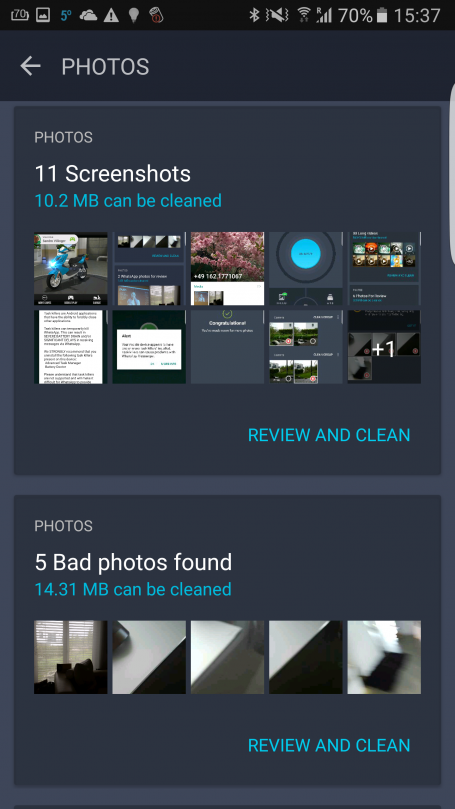
A new release of the AVG Cleaner for Android 3 is now out just in time for spring. (Get it or update to the newest version here, if you haven’t already.) Our engineers have been hard at work finding new ways to clean up even more long-forgotten or useless stuff from your phone. Our latest release (3.1.0.1. to be exact) also cleans out WhatsApp photos, screenshots, and huge videos.

We’ll walk you through the three new additions:

Number 1: WhatsApp cleaning

You think that your apps, music, or photos consume all your phone’s storage? Think again. A big hidden memory eater are your messaging apps. All the photos you send and receive in WhatsApp are stored on your phone. Depending on how active you and your friends are, this can quickly get out of hand.

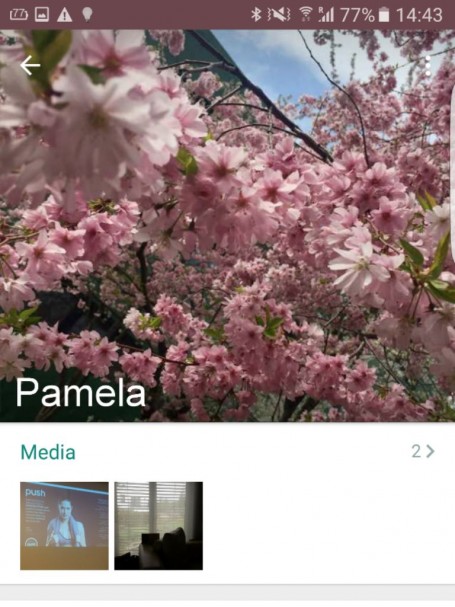
When using WhatApp, you see associated files when you tap on the name of your friend:

/var/www/now.avg.com/18.45.0/wp content/uploads/2016/05/image 2016 05 23

In this example, it is just two photos. Now multiply that by every conversation you have had and every photo you have sent or received. AVG Cleaner reveals how quickly it adds up, and lets you just as quickly clean out files replicated from your photo library.

/var/www/now.avg.com/18.45.0/wp content/uploads/2016/05/^3c3462cc744cf6c1a69d21aceb9873b8dfe8d76be9919d9437^pimgpsh fullsize distr1

Number 2: screenshots

I don’t think one day of my life goes by without me taking a screenshot of an app or desktop software. Screenshots are now used by almost everyone to create quick reminders, share a message, show someone a snapshot of Facebook, provide guidance on an app – and for lots of other quick and dirty uses.

Unfortunately, these shots don’t delete themselves. They also have a tendency to consume a lot of free space. On my Galaxy S6, the average screenshot of an app (e.g., Facebook or Google Maps) or a game is 1-2 Megabytes. That’s because Android stores these shots in uncompressed PNG format, which sports decent quality but can eat up quite a lot of storage.

Our AVG Cleaner for Android shows you leftover screenshots and – with a tap – helps you get rid of them.

/var/www/now.avg.com/18.45.0/wp content/uploads/2016/05/screenshot 20160427 153703


Number 3: huge video

Being more of a tech guy than most, I knew that WhatsApp and screenshots could weigh heavily on my phone. But I completely overlooked large videos that I either took myself or downloaded from the web. I forgot I had almost a gig of these files hidden away when I could’ve used that space for apps or photos that I actually needed.

Our Cleaner takes care of it.  It detects and helps you get rid of these huge videos once and for all!

Ransomware criminals should be “shot at sunrise”

Should be “Shot at sunrise” is the opinion of U.S. politician Michael C.Burgess, the representative for Texas, when talking about the cybercriminals who distribute ransomware that victimizes consumers and businesses.

Ransomware, malicious software designed to block access to a computer system until a sum of money is paid, and the use of exploit kits to distribute it, are adding new challenges to threat detection and protection. And now Angler, an exploit kit, which has been a known Internet threat since 2013, is being used to distribute ransomware. With the sole intent of installing ransomware on victim’s machines.

Our AVG Web Threats team is tracking these widespread ransomware attacks being delivered by the Angler crimeware exploit kit.

The use of exploit kits to distribute ransomware is a new trend – one that could cause widespread ransomware distribution. Exploit kits are software packages readily available for sale and are used by malicious operators to easily create malware that performs a wide variety of malicious functions. The malware is installed on hacked web servers and attacks the machines of visitors to web sites, in many instances, without their knowledge.

There is a common misperception that web users are only at risk if they browse risky sites, however, hacked sites are often brand names and appear safe. Small business sites in particular can be prime targets because they have less security and their visitors typically know the company and trust their brand.

The malware on these sites seeks out vulnerabilities in commonly used tools that improve website experiences, such as Flash, Silverlight and other software that employs Java and PDF-format files. The malware then runs malicious code on the visitors’ machine to install ransomware, backdoors and Spybot clients.

Our AVG Web Threats team has researched a particular instance of a Java exploit commonly found in association with Angler. This threat is detected by AVG, which we’ve been detecting since January. AVG customers who participate in anonymous threat sharing reported 6,123 hacked domains serving Angler in January, 8,260 in February and 4,412 in March.

Angler ransomware installs

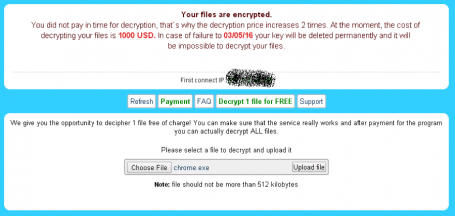
TeslaCrypt is the most common type of ransomware installation currently that’s associated with Angler, according to our AVG Web Threats team analysis of this threat. TeslaCrypt encrypts users’ files, including writeable shares, and messages the user to extort payment for recovering the encrypted data. Paying the ransom to unlock files typically does not result in the recovery of the files.

Below are screen shot examples of ransomware attacks that attempt to extort $1,000 USD, payable through the untraceable currency of bitcoins.

Backdoor installs

Our AVG Web Threats team track the Angler-infected host machines have also tracked incidences of downloading malware known as backdoor malcode (commonly Bedep). Backdoor, or Bedep, can snatch passwords and personal confidential data from visitors’ machines.

Protecting your desktop

AVG recommends that consumers and businesses take the following preventive measures:

  • Frequently backup data and important files; do not leave the backup device connected to the machine
  • Ensure that security software, such as AVG, is up to date
  • Ensure that Windows updates are downloaded and installed; doing this automatically is recommended.
  • Update browsers and ensure you are using the latest versions available

Protecting web servers

Malicious code from the Angler exploit kit is initially installed on the web pages of vulnerable servers. For businesses, standard security precautions and monitoring are the basic defense. Researchers find a large number of Angler injections on WordPress and Apache servers – these should be given an extra measure of scrutiny.

  • Ensure all Operating System patches and updates are applied quickly
  • Regularly review and assess the state of 3rd party software running on the server.  For example, vulnerabilities in packages like WordPress are particularly important, as these are common attack vectors
  • Consider removing site content and 3rd party software that is out of date or not being used
  • Keep backups of websites in a safe place (not on a shared directory); offsite backups are best
  • Monitor web pages for unexpected and unauthorized changes
  • Keep antivirus and other security software, such as AVG, updated
  • Consider using intrusion detection applications, such as AVG

/var/www/now.avg.com/18.45.0/wp content/uploads/2016/05/ransom 1

Our AVG Web Threats team continue to monitor and track threats such as Angler, so that we can deliver the security you need to keep your devices and businesses safe.

What Would You Pay for Your Own Files? The Cost of Ransomware

Alina Simone’s gripping 2015 account of her mother’s extortion ordeal was the first time many non-tech people had heard the term “Ransomware”. It presented a threat that felt intensely personal. It blocked access to data we use to define ourselves: family photos, letters to relatives, tax and financial records, and beloved music and movies.

Flash forward a year, and ransomware is all over the media. The reason for its rise is simple: money.

Before the emergence of ransomware, criminals mainly used (and still use) malware to take control of machines. Malicious code harvested user names, passwords, and credit card numbers. It might have also used infected PCs in a botnet for sending spam or launching attacks that shut down major websites, usually as a decoy while hackers broke in elsewhere.

For Criminals, Ransomware Is Lucrative

Ransomware cuts out the digital middlemen. Rather than collect credit card details that must then be sold on the dark web for a few cents to a few dollars, ransomware demands money directly from the victims. While the amount varies, it tends to be few hundred dollars for individuals.

Yet these small sums are taking a heavy toll. The exact number of ransomware attacks is hard to gauge, as many go unreported. But according to our data they are rising fast. While official complaints about ransomware (and ransoms paid) to the US Department of Justice amounted to only around $24 million in damages in 2015, other numbers are much higher. In April, CNBC estimated the cost of ransomware at around $200 million in the first three months of 2016 alone. Late last year, the Cyber Threat Alliance stated that a single piece of ransomware, CrytopWall v3, resulted in an estimated $325 million in damages worldwide over the course of its lifetime. And as far back as June 2014, the FBI issued a report saying CryptoLocker swindled more than $27 million from users over a two-month period.

Bigger Targets May Mean Bigger Paydays

These numbers speak to the audacity of ransomware purveyors. The long-tail effect of attacking individuals has proven so lucrative, it is unlikely to ever go away. But many organizations also hold sensitive customer data that needs to be protected both to ensure effective service and consumer privacy. That makes them particularly juicy targets to hackers.

Healthcare provides are a case in point. If they lose control of patient information, they may be unable to deliver treatment when needed. There are also strict legal requirements governing the protection of patient data. Both make them subject to lawsuits that could cost them far more than what they would have to pay in ransom. A hospital in Hollywood, California, paid $17,000 in bitcoin to hackers after being locked out of their data. Fortunately, so far, other reported attacks have fared less well. Healthcare providers in Kentucky and Ottawa refused to pay, as no patient data was compromised; and an attack in Germany was quickly contained by fast-acting IT staff.

Still, the hospitals have had to invest considerable time and resources into fighting the attacks. They will also need to launch multiple efforts internally and externally to restore patient trust.

And hospitals are not alone.  A 2016 report by the Institute for Critical Infrastructure Technology, an industry think tank, declares 2016 the year of ransomware, suggesting few organizations are safe. For instance, systems at an Israeli electrical utility were infected by ransomware after a phishing attack. A utility in Michigan has been allegedly attacked. Multiple police stations have been hit and paid ransoms to regain access to their systems. Local governments are increasingly feeling the pressure, with attacks reported in places as diverse as Alto City, Texas, and Lincolnshire, UK. And criminals have subverted online adverts of venerable media organizations, such as the BBC and NYT, turning their websites into potential sources of drive-by ransomware.

The Right Protection Saves Money

This is why protection is essential, especially for individual users, most of whom lack the expertise and resources of even modest city councils and small hospitals. Over a three-month period earlier this year, a conservative estimate by AVG is that its antivirus prevented around $47 million in extortion demands through the interception of just three types of ransomware: Cryt0L0cker, CryptoWall, and TeslaCrypt. And that number says nothing of the mental and emotional costs that would have resulted from feeling violated or the costs of replacing machines, software, and media if a victim decided not to pay.

AVG does not recommend paying. There is no guarantee criminals will release the files. They may also leave a piece of malicious code behind that allows them to strike again. It is better to call tech support, salvage what you can, make frequent backups, and build a fortress around your PC – and thus prevent the writing of another news story like Alina Simone’s.

What is ransomware?

Ransomware – it’s the online threat everyone’s talking about. Crypt0L0cker was one of the first on the scene in 2013; and since then, the costs of attacks continue to grow.

As an individual or business owner, you may be wondering just what ransomware is, what kind of risk it poses to you, and how attacks like these can occur.

Here’s the breakdown.

What is ransomware?

Ransomware is a type of malware with the ability to silently encrypt your files, before demanding payment for their return – often with a time limit.

And not only does ransomware target your most valuable files, like photos, documents and spreadsheets, it can also lock down system files to render your web browser, applications, and entire operating system unusable.

Our VirusLab has analyzed many variants of ransomware, including the well-known Crypt0L0cker, Locky, and TeslaCrypt.

But the threat isn’t limited to PCs. Both Android™ mobile devices and Macs can be infected as well.

How does ransomware get on my PC?

Most commonly, ransomware is spread via malicious email links and attachments – often concealed by changing the file extension and compressing the malicious code into a zip file. Opening the file infects your system.

Ransomware can also be bundled into other applications, such as games, video players, etc. So any application from an unknown or untrusted publisher is a potential risk upon installation.

Once on your system, ransomware works in the background, connecting to a remote server to encrypt single files, whole directories of files, or complete drives.

How do I know if my PC is infected?

You’ll see a message pop up demanding payment, which can range from a few hundred to tens of thousands of dollars. Payment must usually be made in some form of anonymous currency, like Bitcoin.

But even if you pay the ransom, there are no guarantees your files will be unlocked.

So naturally, this kind of malware has incredibly serious consequences, particularly for businesses holding sensitive customer information or internal data that’s not securely backed up.

Does AVG protect against ransomware?

It sure does. Both our PRO and FREE versions of PC antivirus provide protection against ransomware. This goes for AVG Business Editions, too.

Our protection is multi-layered. Not only do we check against known malware variants and behavioral patterns in our virus database, we also further test previously unseen files in a secure virtual environment before they are executed on your PC. This is done using artificial intelligence, sophisticated behavioral analysis and various other methods.

And we automatically update it all, so you stay protected.

Multi-layered security approach battles Ransomware

From Locky to SamSam, JIGSAW to CryptoLocker, today’s ransomware variants can take down businesses with dramatic consequences.

Ransomware will prevent file access, web browsers, applications, and entire operating systems – holding the lifeblood of a business operation ‘hostage’ until a ransom is paid.

At AVG, we use a multi-layered security approach with multiple layers of inspection and testing to identify and eliminate a wide variety of malware, including ransomware. When accessing a file, our multi-layered security approach uses several different inspection and detection techniques, as detailed below, to determine whether the file is malicious.

This is reflected in our security technology engine powering our AVG Antivirus Business Edition and Internet Security Business Edition software solutions.

Simply described, the process includes these layers:

  • Files are first compared to any known variants in a malware database – both the metadata and content of the files are analyzed
  • Files are then tested in an emulator (a virtual computer)
  • Now that the file is running, its behavior is assessed using a variety of techniques, including Artificial Intelligence algorithms
  • Behavioral assessments occur in the AVG application and in the cloud, but they all work together behind the scenes and in real-time to determine whether a file is malicious
  • If the file is determined to be malware, it is quarantined, and AVG’s Crowd Intelligence feature updates all AVG software

We also regularly submit our security software to independent test labs. Results from these independent tests serve as more proof points to the effectiveness of our technology and multi-layer approach. Our latest round of testing by AV-Test.org earned a six out of six rating – the highest rating for protection. In a recent Real-World Protection Test by AV Comparatives, AVG scored a 99.8% detection rating.

It is difficult to predict and guard against everything hackers may throw our way, but in the face of constantly evolving threats, a multi-layered security approach is a smart strategy.

To find out more about our AVG Business Edition solutions, please visit our business security page.

Cleaning Up Your Online Identity

Spring is here! Out with the old and in with the new – a new opportunity to put winter clothes away .Why not clean up your digital life as well?

In my previous blog, I talked about cleaning up your cell phone.  How about cleaning up your online identity?  It’s an important piece of your digital life.  Here are 5 steps to scrubbing your online identity:

  • Google Yourself – You are your own personal brand image. So what are people saying about you and what have you said that might be public? Google yourself to find out where you’re mentioned and what images have been tagged with your name.  Then you can work to clean up what you find.
  • Delete old email accounts – Are your friends receiving weird emails from you? Sometimes the source is that old email address you used a dozen years ago and never check now.  Your contacts are still in the account and vulnerable to hackers and the password you used back then is probably not as strong as it should be. Deleting old email accounts stops hackers from abusing your identity to attack your friends and family.
  • Review old social media posts – Determine if what you posted when you were 18 is still appropriate for you today and consider what an employer or even your kids might think when they see them. And it’s not just about you, if there are pictures of friends that may have been funny at the time, consider taking them offline as well.
  • Strengthen passwords – Use secure passwords to guard yourself against hackers and other vulnerabilities. There are free tools like Dashlane that help you manage your passwords and guide you to make them stronger.  Use different passwords on sites as you never know when your favorite e-retailer could get compromised and you don’t want your password making your whole digital life vulnerable.  For an added layer of protection, you should also turn on two –factor authentication so your smartphone can identify you with your fingerprint or with face recognition.
  • Scrub your history – your surfing history that is. Safeguard your personal information and your location online with a VPN (virtual private network).  VPN protects your data from snooping by encrypting it and it also stops snoopers on public WiFi networks from grabbing your data. A VPN will also hide your location preventing websites you visit from targeting with unwanted ads.  You can download a free one from HMA! here.
  • Check privacy settings – Now that the past is cleaned up, make sure your future posts are in check by managing the privacy settings across your social media platforms and online accounts. There may have been changes to the settings and privacy policies in recent product updates, so ensure you have the level of privacy protection that matches the level of your online activity.  Go and review the settings today.

Even though your online identity is squeaky clean, don’t wait until next spring to do a digital clean up.

To learn more about me and receive the latest news from AVG:

Follow me on Twitter @TonyatAVG

Follow AVG on Twitter @AVGFree

Cleaning Up Your Digital Life

Spring is here! The sun is shining, winter clothes are pushed to the back of the closet, and people are heading to the beaches and parks to embrace spring weather.  Well, at least here in California.

For many of us, we view spring as a time to purge and clean – out with the old and in with the new – a new opportunity to throw out old clothes or to make the garden look a little tidier.  So why not clean up your digital life as well?

Your phone may not be the first thing you think of when you think of Spring Cleaning but if your phone is like mine, then your entire life is on it!  Looking at my photos alone, I have 944 pictures.  Many of them are duplicates, as I always take more than one to make sure I get a good one and then I forget to delete them later.   If I go through them one-by-one it will be time consuming, not to mention that I’ll probably get distracted by messages and other notifications.

That why I recommend you install AVG Cleaner™ for Android™ from the Google play store.  It has a great photo cleaning app that identifies “bad” photos and allows you to review them the way you could review photos in some dating apps, swipe right to keep or left to reject.  It also shows duplicate photos and makes automatic recommendations.

Because photos contain a lot of data, it’s also a good time to review the settings on your phone to ensure that you don’t fall foul of publishing your location when you did not mean to.  Here are a couple things to keep in mind:

–        Photos can contain specific location information stored in metadata within the image itself.

–        The location data usually includes the precise GPS coordinates of where the photo was taken, as well as the time and date it was captured.

It’s an easy task to switch off the feature that allows location data to be stored in the photo.  Here are the steps:

  • Disable location services for the camera on your smartphone.
  • Be aware of location options in apps or online services and social media.

In addition to cleaning out photos, AVG Cleaner™ for Android™ also identifies apps and games that you don’t use, which allows you to delete them to save valuable space.  It also contains tools that give you data on which apps use the most storage, battery and data – all so you can make the decision whether to keep them.  In my phone, I deleted 13 apps; including a parking payment apps in cities where I visited one time and apps I downloaded once just to see what they do.

And of course, I can’t write a blog about cleaning up your phone without mentioning updating your antivirus.  If you have AVG AntiVirus for Android™, open it up to run a scan for viruses.  If you don’t have the app, you can always download it here.

Not only does cleaning your phone make the phone perform better but it’s like new again!  Mine is ready for the next round of stuff that I am going to load on it.  All I need is a new screen protector!

To learn more about me and receive the latest news from AVG:

Follow me on Twitter @TonyatAVG

Follow AVG on Twitter @AVGFree


AVG Business Wins Security Vendor of the Year Award

At AVG, we believe our partners are truly an extension of our ever-growing team. Developing strong relationships with our partners is what keeps us on course to drive mutual growth.

AVG partner Gordon Montgomery, operations director at MCC Computers Ltd., recently shared some excellent feedback. Through the partnership with AVG, MCC has added new services, increased revenue and put new customer retentions strategies in place.

We were impressed by MCC’s results and we submitted these updates to award organizers at the European IT and Software Excellence Awards.  AVG Business was selected as one of 86 finalists from an entry field of more than 400 companies in 31 countries. During the award ceremony on April 14, AVG Business was chosen as Security Vendor of the Year.

We now have another strong accolade that our AVG partners can share with their customers and prospects.

MCC is a perfect example of how partnership accelerates business. We’ve worked with MCC for several years. Using AVG CloudCare, the antivirus side of MCC’s business grew 96% year over year, and anti-spam 29%. Cloud backup, initially a very small part of its business, grew 156% in the first year.

MCC can deploy a range of cloud security solutions for multiple clients from AVG CloudCare’s cloud-based administration platform. AVG CloudCare’s central dashboard and built-in remote access are also key to MCC’s support capabilities.

Gordon shared, “We are revelling in the time AVG CloudCare is saving us. We’ve also reduced our onsite visits, allowing us to focus on productive client service and business growth.”

Gordon also put AVG CloudCare to the test with MCC’s renewal and retention efforts. Through AVG CloudCare’s platform, the MCC team can monitor customers’ systems and identify when renewals or service is needed. After the first year, MCC saw a 97% renewal rate and are now continuing this program each year.

As Gordon sums it up, “Our partnership with AVG Business and products like AVG CloudCare have given us the management control we need to effectively protect our customers and at the same time, build our own business make our customers successful.”

Thank you to MCC and all our partners for their continued support and our joint success.

Please share this award win with your clients.  Thank you!