Category Archives: Antivirus Vendors

Antivirus Vendors

Anthem ‘Medical’ Hack – What should you do?

Anthem Blue Cross Blue Shield, a medical insurance provider in the US, was subject to serious data breach that included personal information of its members past and present.

The data stolen includes names, birthdays, medical IDs/social security numbers, street address, email addresses and employment information including income data.

The type of data that has been reported to have been stolen means that this breach is potentially much more serious than most of the large data breaches we saw last year. These hacks were primarily of credit card and transaction data.

Generally, when credit card account details are taken, victims can limit the damage by stopping their card and changing their password. Credit card companies will also cover most of the liability.

The difference with this theft though is that stolen data is a lot more difficult to track than a simple financial transaction. Social security and insurance information can be used for anything from a false insurance claim to collecting prescription drugs.

If you think that this data breach may affect you then you should carefully check your next health insurance bill. Be sure to check that all the claims are indeed yours and dispute things that seem strange.

It’s important to catch the misuse of your insurance quickly before medical debt notices are issued because of unpaid bills. That could lead to credit rating issues or in the worst case, you could be refused insurance due to a condition that you don’t actually suffer from.

As a precaution here some other actions you should take, not forgetting the above one of checking medical statements:

  1. Ensure your online accounts are not using the same email password combination that you may have had stored with Anthem; change any that are the same as your Anthem details.
  2. Keep a close watch on your credit reports. This will help you identify if someone is using your identity to take a line of credit in your name. Most credit scoring agencies allow you to run a report for free at least once.
  3. Spammers may send emails that look like they are coming from Anthem. Make sure to carefully scrutinize these emails – don’t click on links that look suspicious – and if in doubt contact Anthem to ensure it’s an official communication.
  4. Moving forward, avoid using the same email address or identity across multiple online accounts. For example, have a primarily email address used for recovery of forgotten passwords and account information. Have a secondary email address for offline and online retail transactions. Have a third for financial accounts and sensitive information.

Follow me on twitter @tonyatavg

Parisa Tabriz. Introducing Google’s ‘Security Princess’

parisa tabriz

Neither do princesses only appear in Disney movies nor is there only room for men in technology. There are various women in the ranks of the Mountain View giant but if we are talking about IT security, one of them stands out in particular. She chose her own nickname: she is Google’s ‘Security Princess‘.

She is Parisa Tabriz, one of the 250 engineers responsible for protecting Google Chrome users and the US company’s infrastructure and systems. Tabriz chose her title before a trip to Japan in which she had to give conferences on her work.

Even the White House has hired her services after suffering a cyberattack last October that affected the institution’s IT systems. At least that is what is said on Tabriz’s CV, where it appeared as a top secret mission. But do not look for ‘top secret’ on the document: she deleted this entry after the mission was made public. However, you can read that in November she collaborated with the US Digital Service.

Parisa Tabriz is part of a team of hackers whose job is to basically think like a criminal. They sniff out software vulnerabilities and bugs that could be used by cybercriminals to access Internet users’ data. They have to find them before they do in order to fix them and prevent attacks.

She earned her engineering degree from the University of Illinois, where she discovered her passion for computing. There she joined a special club: its members met up on Friday nights to discuss the ins and outs of Internet security. At that time, Facebook did not even exist and nobody had heard of the ‘blue bird’.

That group of amateurs was particularly interested in steganography, the practice of concealing messages within another item, such as a text or photograph. It is actually a form of encryption used in Ancient Greece (the word comes from the Greek word ‘στεγανος’, which means concealed, and ‘γραφος’, meaning writing). The group used to conceal the information in images of cats that were sent via email.

Parisa joined Google in 2007 as part of the company’s IT security department. Now she is the leader of a team of 30 hackers who, from the US and Europe, prevent attacks related to the Chrome Internet browser.

As soon as the hackers discover a vulnerability, they fix it quickly, so they are constantly updating the software without users noticing their work. They work in the shadows so that your data and Internet purchases are kept secure.

parisa tabriz google

In 2011, they discovered that the Dutch authority that manages Web security certificates (DigiNotar) had been hacked, affecting hundreds of thousands of Iranian Gmail users. All of the signs pointed to the perpetrator of the attack being the Iranian government and the volume of fraudulent certificates was so high that the agency had to close.

As well as leading the security army, Tabriz is responsible for hiring new experts to regenerate the ranks. One way of finding them is through contests and hackathons. Google organizes meetings in which independent hackers can look for bugs in its programs.

However, they must be careful. Some researchers could benefit from their findings and demand money for the information or even sell it to cybercriminals, who would use it for illicit purposes. Governments also use security holes in certain software to monitor companies and citizens.

Therefore, you have to know everything about the steps and advances in cybersecurity. Tabriz attends hacker conferences and meetings worldwide and gives seminars on her work to other members of the company.

The post Parisa Tabriz. Introducing Google’s ‘Security Princess’ appeared first on MediaCenter Panda Security.

Making purchases with security in mind

For other shoppers, a lot of thought may go into the purchasing process. Price is certainly something to consider, but features, design, and reliability are also other factors that many consumers will look at before they make their final decision. With that said, one area that many people forget to think about when buying a new computer or electronic device is security.

With so many stories about hacks and malware in the news today, it’s easy to see why security should also be considered with any tech purchase. After all, a security problem can turn an otherwise satisfying purchase into a nightmare.

Because of this, when it comes to security, the first thing to do is understand what kinds of security features are included on board. Are there options to customize the security settings? How extensive are they?

Outside of the hardware itself, what options are there to install third-party security software? In addition to knowing this, it’s also important to know which third-party options will work best for you and the way that you use the hardware.

While the previously mentioned items would be considered before making the purchase, attention to security doesn’t end once the hardware has been paid for. From the moment the new device is first turned on, make sure that you customize the security settings and install the necessary security applications before doing anything else. The last thing you want to do is forget to take these steps and then pay for it later. Additionally, beyond just the first steps, security should continue to be something that you check in on throughout the life of the device.

Are you going to start making security a part of your checklist when buying computers and other devices?

The post Making purchases with security in mind appeared first on Avira Blog.

How secure is your new car?

Car manufacturers regularly introduce new features to make our motoring lives easier and more secure. However in recent week, vulnerabilities have emerged that highlight potential dangers of smart car connectivity.

As reported by The Register, a vulnerability was discovered affecting BMW cars allowing an attacker to open doors and windows via a weakness in the My BMW Remote smartphone app.

BMW have reportedly deployed a software patch for all affected models remotely, but it is worth double-checking with your dealer to make sure it has been applied.

Worryingly, this type of vulnerability is not new.  Keyless entry systems for cars built within the last decade have increasingly come under attack, and exploits only get more sophisticated over time.

In 2011, Swiss security researchers from ETH Zurich University conducted experiments covering 10 cars from different manufacturers and found serious flaws that could allow someone to open the doors and start the engine of your car using a “relay station attack”.


Relay Attack

Image courtesy of Wikipedia


The research demonstrated that some modern cars using a “Passive Keyless Entry System” (PKES), where you don’t need to insert a key into the car to start it, could be stolen by using a trick to amplify the radio signal transmitted by your keyless remote.

When you park your car at night, where do you leave your keys?  I’ll be placing mine inside a lead box from now on – or taking the battery out!  And let’s hope the car manufacturers eventually get it right in the meantime.

Until next time, stay safe out there.

Grab Our Latest AVG PC TuneUp Update

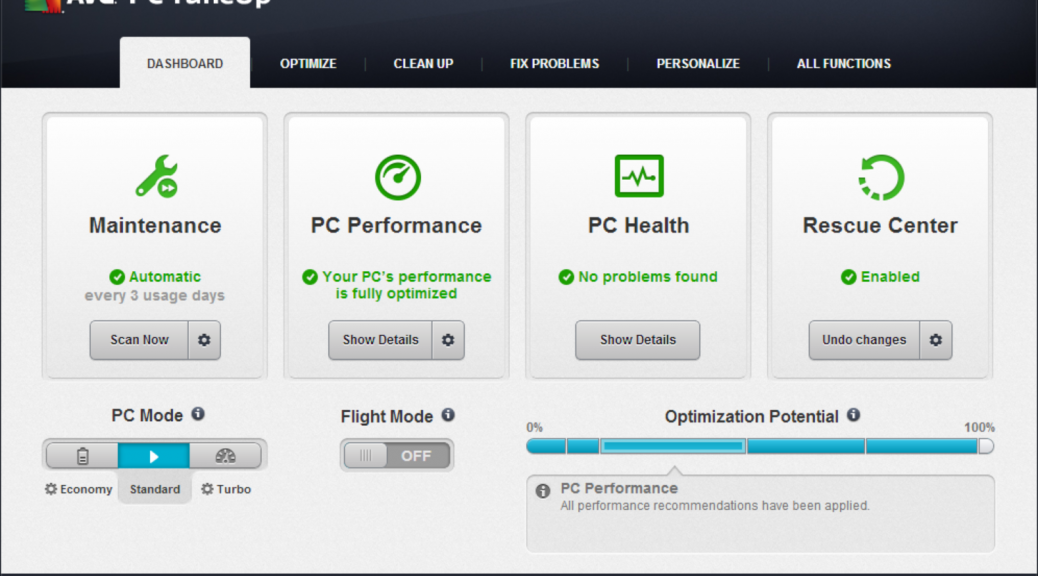
Fresh off the press: Our engineering team has been working hard to deliver the latest version to the 2015 release of AVG PC TuneUp!

Released last November with improved cleaning capabilities and a new cleaner for your iPad, iPhone and iOS, this first major update (version 15.0.1001.331) doesn’t just provide the regular set of fixes but also greatly enhances cleaning functionality.

Let’s find out what’s new!

PC TuneUp

The new update brings more under the hood cleaning improvements for a cleaner, smoother working PC!


Greater cleaning for games and media editing programs

We know a lot of PC TuneUp users love to game or edit multimedia at home. That’s why they need our tuning tool to keep these resource-heavy applications running super smoothly and maximise the performance of their machines!

That’s why our Cleaning Definitions Team (who spend day and night looking at ways we can improve the speed of your computer) has identified 26 new and popular multimedia tools and looked for ways to remove the junk files these apps leave behind on your PC:

  • Audio tools: Ableton Live, ACID Music Studio, ACID Pro, Acoustica MP3 Audio Mixer, Adobe Audition, Audacity, Cakewalk SONAR, Expstudio Audio Editor, MAGIX Music Maker, Sound Forge Audio Studio, Sound Forge Pro, WavePad Sound Editor
  • Video tools: Alcohol 120%, Avidemux, AVS Video Editor, Blaze Media Pro, Magix programs, ManyCam, MoviePlus, Photo Pos Pro, Pinnacle Studio, Sony Movie Studio, Sony Vegas, VideoPad Video Editor, Windows Live Movie Maker, Windows Movie Maker

If you use any of these programs, you could benefit from the latest PC TuneUp update. Programs such as these handle many large files, which can leave behind logs and temporary  files that can quickly clog up your hard disk.

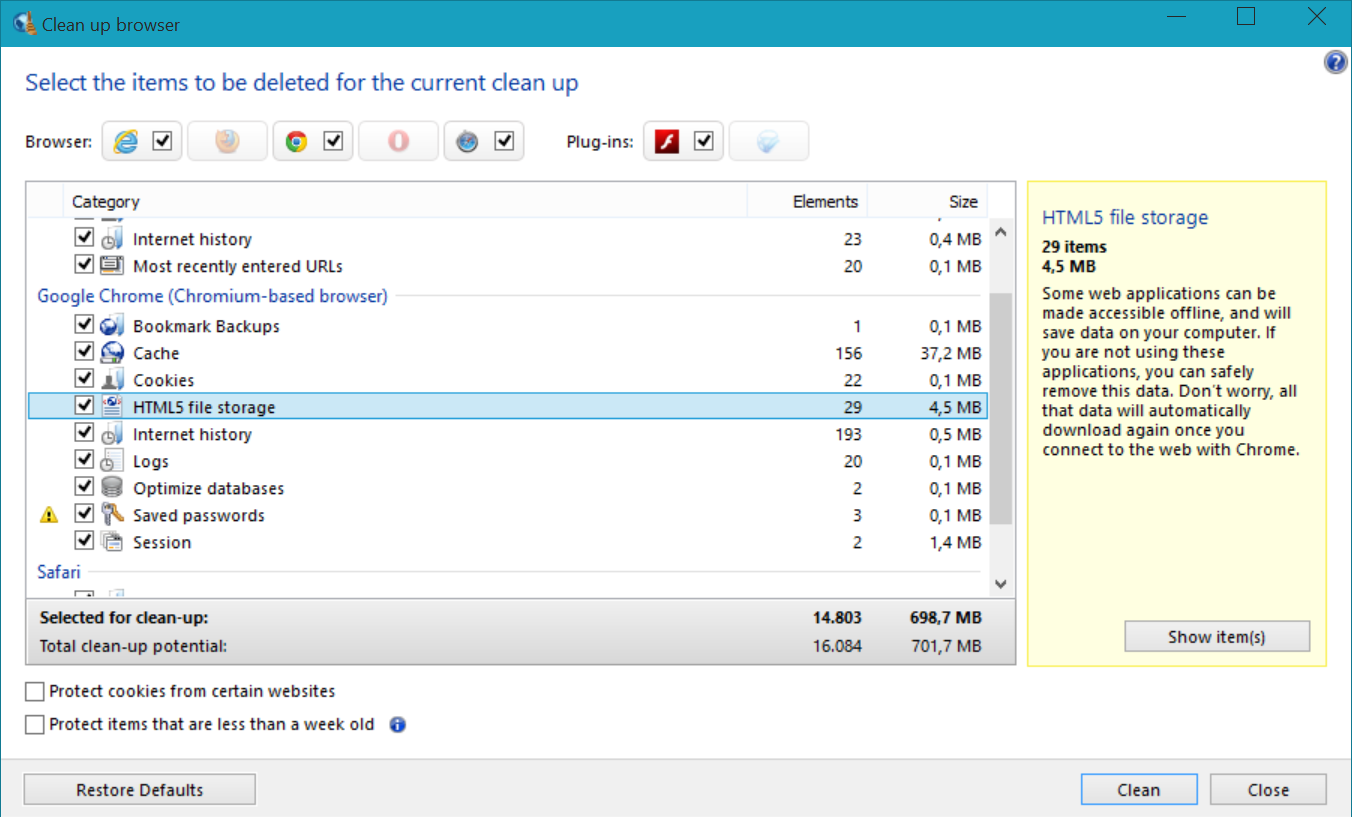
But that’s not all: We’ve implemented a fix that now helps our Browser Cleaner clean up the new cookie format in Google Chrome as well as the HTML5 file storage (see the help description):

PC TuneUp Browser Cleaner


However, in this release we’ve improved the cleaning mechanism for the popular platform Steam, making sure gamers get the best possible performance.

There’s a pattern in Steam, which causes large files to be stored in game folders. These files are often tools such as DirectX and usually only run when you first launch a game.

But once that’s done, you essentially don’t need these files anymore! Yet they remain in the folder. That’s why we’re cleaning up these files and you’ll benefit from all the extra space!


8 New Languages

We’ve seen so much excitement from around the globe for the new AVG PC TuneUp that we decided to translate the performance suite into even more languages: Danish, Chinese (Traditional), Hungarian, Indonesian, Malaysian, Turkish, Serbian (Latin), and Slovak. Simply download the file from our website http://www.avg.com/avg-pctuneup to get the version in your language!


So how do you get it?

Easy: Next time you start AVG PC TuneUp, you should get an update notification – just install your  free update!

If it doesn’t show up, go to “Help & Support” and click on “Check for Updates”.

Newsweek’s Cover Art Controversy

It’s interesting to parse the controversy stirred up by the cover of Newsweek magazine’s February 6, 2015 issue.  But it’s the art illustrating the story “What Silicon Valley Thinks of Women,” not the article itself that is causing all the stir.

The cover is a drawing of a faceless woman in a mini-skirt and heels, with her hemline being lifted up – and, some would say poked –with a cursor.

Reaction to the illustration was immediate (at least in Silicon Valley) and has been on-going. Divided opinions have been aired on blogs, social media and the Today show.

The article itself illustrates some well-documented facts about how working women fare in the tech world in Silicon Valley. Chief among them: the enormous gender gap in tech jobs and how difficult it is for women-led businesses to find funding from VCs, underscored by a dearth of women VC partners.  This thesis is supported by the recent findings of research by Babson College, among others, that I’ve also written about previously.

In a very informal polling of some of my Silicon Valley women friends, four out of five thought the cover accurately characterized the article.

For some, the woman without facial features – besides red lipstick – proved a compelling example of misogyny. For another camp, the cover illustration perpetuated a stereotype and the gender problem in tech.

The cover’s designer, Edel Rodriguez, defended himself and talked about what he was trying to achieve in an interview on the industry website, GigaOM.

“The subject of the article is how women are treated in Silicon Valley. It details the sexual harassment, jokes and treatment that women put up with in the industry. The image represents this harassment. A woman should have the right to dress however she pleases without this happening to them. These men have grown up around technology and video games their entire lives. They see women as objects that they can mistreat. The image conveys the exact moment when the harassment is symbolically taking place.” The full article/interview with Rodriguez can be found here.

Many agree on one thing: the cover art has fulfilled its mission of drawing attention and getting people to read the piece on an important topic!

My thoughts: First, I was happy that Newsweek focused on this important topic and ran a cover story on the challenges of women in tech.  Second: Art is always a matter of personal preference. But in this case, I’m in the camp of don’t blame the art. It’s art imitating real life.

But I do want to say that from my experience there are many companies in Silicon Valley who don’t participate in the harassment depicted in the article and there are many people who advocate for women. As proven with this article, there’s growing momentum in the tech world to address the gender gap. And that’s very good news.

As anyone who has followed my blog posts knows, I am a strong advocate of advancing this discussion.  It’s the basis for a conversation I look forward to leading during my session “Boardroom or Baby” at SXSW 2015.
Speak_IA