A recent indie horror film called It Follows explores an interesting moral grey area. In that film a shape-shifting creature slowly but unstoppably chases a victim. This victim -who faces the inevitable prospect of being worn down and caught- can pass on this curse to someone else by sleeping with them. The question the film poses: Would you sacrifice someone else in order to save yourself?
A recently discovered type of malware is, strikingly, asking internet users the very same question in a real world setting. The context is admittedly far less grandiose –replace shape-shifting monsters with computer hackers- though the name of the new type of malware certainly feels like an allusion to its worthiness as a cyber suspense thriller.
Popcorn Ransomware
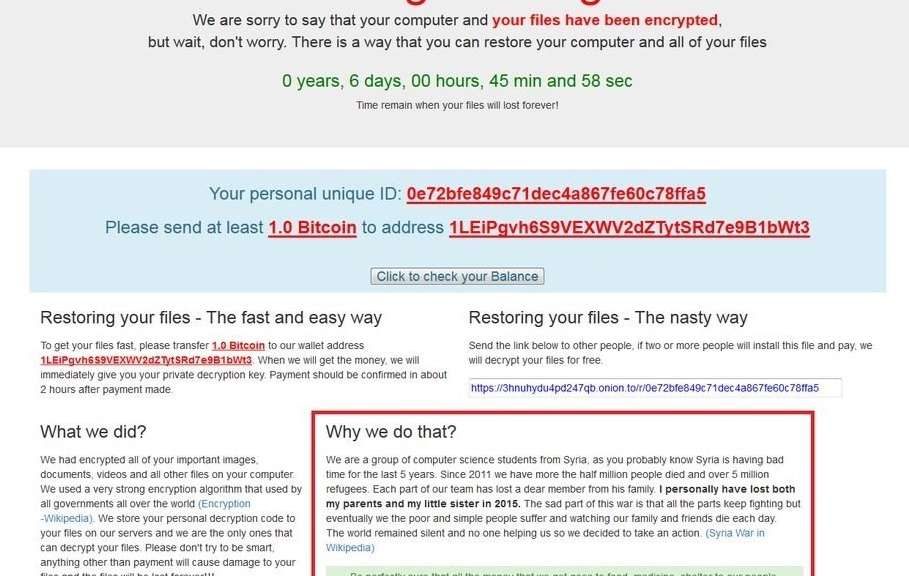
Popcorn Time Ransomware, which is named after but unrelated to a bittorrent client, encrypts the contents of your computer or device (using AES-256 encryption) so you cannot access them. Then it gives you a choice; you can pay a ransom, or sell out people you know.
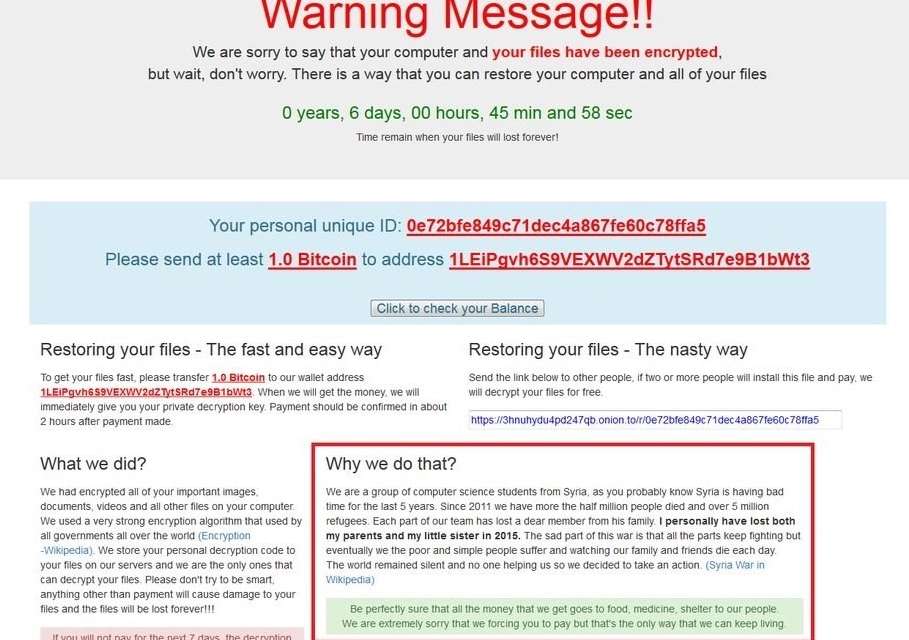
MalwareHunterTeam, who discovered the new ransomware, have reported cases where victims have been given the ability to restore their files for one bitcoin (worth roughly $770 and £610). The second option though, described by its anonymous developers as “the nasty way”, is to send the link on to other people. “If two or more people install this file and pay, we will decrypt your files for free,” the developers say.
If that wasn’t surprising enough, a read of the developers’ information on the ransomware message throws yet another curveball at the infected computer’s owner. The money you are forced to send will, the infectors say, be used as charity.
Yes, you read that right.
The Popcorn Time ransomware developers claim to be computer science students living in war-torn Syria. Due to their horrific circumstances, living with the death of friends and relatives and “with no one helping”, they claim, they are taking things into their own hands. “Be perfectly sure that the money we get goes toward food, medicine and shelter to our people,” they say before actually apologizing for their actions. “We are extremely sorry we are forcing you to pay but that’s the only way we can go on living.” There is, of course, no way to verify this information and it may be completely untrue.
Advice on how to avoid being infected by ransomware varies.
A general rule though is that backing up important files regularly to an external hard drive or cloud storage keeps you one step ahead of any potential attackers. It is also best to download only from reputable sources and be wary of email links that could be part of a phishing attack.
Fear of hackers using our devices to spy on us has long been a fascination in Hollywood. As far back as 1983 the film WarGames explored the realm of computer hacking. Much has changed since then. Hackers have been vilified as well as championed in popular culture; Mr Robot is part of an anti-establishment organization, whilst the popular, hacker founded, Icelandic Pirate Party are making use of a Robin Hood trope to describe their political stance.
The post A New Ransomware Is Testing Our Morality appeared first on Panda Security Mediacenter.