Category Archives: AVG

AVG

From Tesla to Baby Monitors: A Collaborative Approach to Security and Hackers

There was a “car hacking” area at Defcon 23 last week, where Tesla proudly displayed their brand and a new Model S. While there were a couple of other vehicles at the show (in various states of having their electronics torn down), the buzz was all about Tesla.

The Model S was hacked, and that was big news at the conference. After the hack, Tesla fixed the vulnerabilities and delivered patches to their vehicles using an Over The Air (OTA) update. With OTA, drivers didn’t need to bring their vehicles in for service or worry about managing software upgrades; updates happened automatically.

By being an active participant at Defcon, Tesla is showing how to build a positive, trusting and productive relationship with white hat hackers. When the hackers called Tesla with the vulnerabilities, Tesla quickly responded. As a result, they now have a more secure system and better separation between core car systems (engine, brakes, etc.) and the infotainment functions. The differences between Tesla’s approach and the Jeep approach are pretty stark.

Tesla


Manufacturers across industries should take note of Tesla’s engagement of the Defcon community as a model to follow. Companies need to engage and build trust with white hat hackers if they are to fully utilize the knowledge and expertise the community offers.

The Model S is just one example of a Thing connected to the Internet – an IoT device. A Tesla is a big-ticket item, with serious implications if it is compromised. From that perspective, Tesla’s investment in back-end infrastructure and OTA systems makes a lot of sense. Similar infrastructure should be in place for other IoT devices, but is often not.

Take IoT baby monitors, for example. None of the products tested at Defcon met even a minimal level of security, including several products that lack encrypted video and audio feeds. The problem is that a baby monitor is an inexpensive device (compared to a Tesla), and the economics make it harder to justify large investments in security and back end systems. This is a problem (and opportunity) the industry needs to address. Some security frameworks are emerging, but we don’t yet have a comprehensive approach. Until we do, we will see more IoT hacks. While they may not get the media attention the Tesla hack got, in many ways they are just as serious and are more difficult to fix.

We need to get to a place where more IoT vendors are proud to display their brands at Defcon (and other security conferences) because they understand the importance of security and are willing to engage positively with hackers. Perhaps next year, we will see many more companies alongside Tesla at Defcon, proudly displaying their brand.

Parents, have you signed a school digital policy?

When your child starts school in the next few weeks, they may be taking a laptop, tablet or phone to school so that they can access work and content to assist with their education. As parents, we assume that our kids will behave responsibly and obey school rules for online activity.

Most parents have had to sign a school digital policy, detailing exactly what “acceptable behavior” looks like, but how many of us really read the ‘acceptable usage policy’ before we signed it?

I recently had a conversation like this with a colleague here at AVG. They stated that they had signed no such policy and had no clue what I was talking about. Sure enough, a few days later they confirmed that they had signed it and did not read or know it even existed. We assume that all the signatures are for things we fully understand; after all, we went to school, how different can it be?


Check the school policy

Take a look at the policy from Virginia Minnesota Public Schools, in section XI – C, it states ’must be read and signed by the user, the parent or guardian, and the supervising teacher’. I bet the majority of parents signing this never read it and probably don’t even remember signing it.

It’s important that when we send our kids to school with gadgets, that we respect the school rules on devices and usage. My own son went to a school in the Bay Area that even stipulated a minimum specification for the machine, processor, memory etc.


Purchasing a device

As a basic principal, I think its accepted that laptops are productivity devices and tablets are content consumption devices. This is of course changing, as more tablets appear with keyboards and are becoming a hybrid of the two.

When we purchased my son’s laptop, I made sure it was robust ( in fact it has a metal case rather than plastic!) and on advice of the AVG IT department I purchased accidental breakage insurance for the laptop. Sure enough, they were right and we are already on the second one!

The school my son attends has strict rules on laptop use. A teacher needs to give permission for devices to be used in a classroom and there are penalties for use without permission. I like this structure. I watch my son doing homework and gone are the days when the homework needs to be carried back to school. Electronic delivery straight back to the teacher and a log system that shows submission dates and overdue work makes school life very different from my school days.


If in doubt, check

What I am keen to learn about is how school policies stand up to wearable devices. For example, take a smartwatch that allows texting, reading emails and some basic app functionality. Can a child wear this in class and look at their watch during a lesson? I think this makes policing device use challenging for educators as technology moves to devices that are less obvious and wearable by the user.

Be sure that when running to the shop to get your kids new devices this summer that you connect with the school and ensure what you are buying fits with both their recommendation and also that you understand the usage policy and can re-enforce this with your kids.

Three Quick Tips to boost Windows 10 Performance

Windows 10 also brought several new features and settings that can negatively impact performance. It is possible to tweak these features though and mitigate the system slowdown that they cause.

I explored the depths of Windows 10 and have come up with these three quick fixes to help you get your machine get the most out of the new operating system.


Turn off Notifications to conserve Power

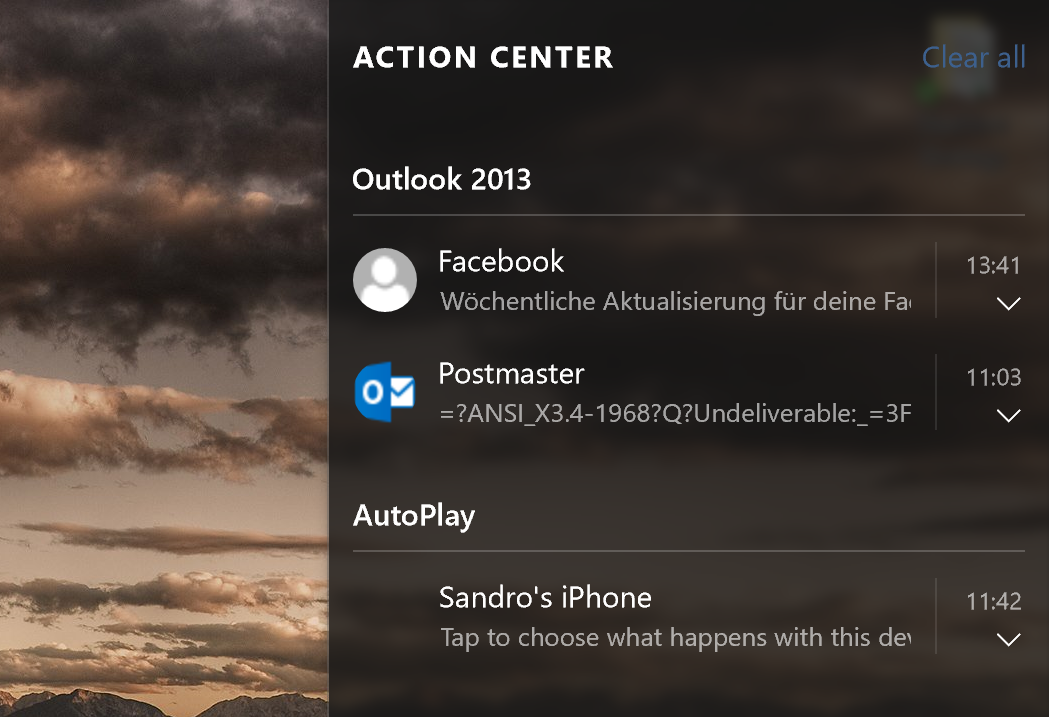
W10 Action Center


Just like iOS or Android, Windows 10 now sports a notification center which gives you a good overview of new emails, updates, plugged in devices and more. Unfortunately, this area quickly becomes too crowded and can contribute to performance and battery drain as Windows 10 frequently checks all apps for new notifications.

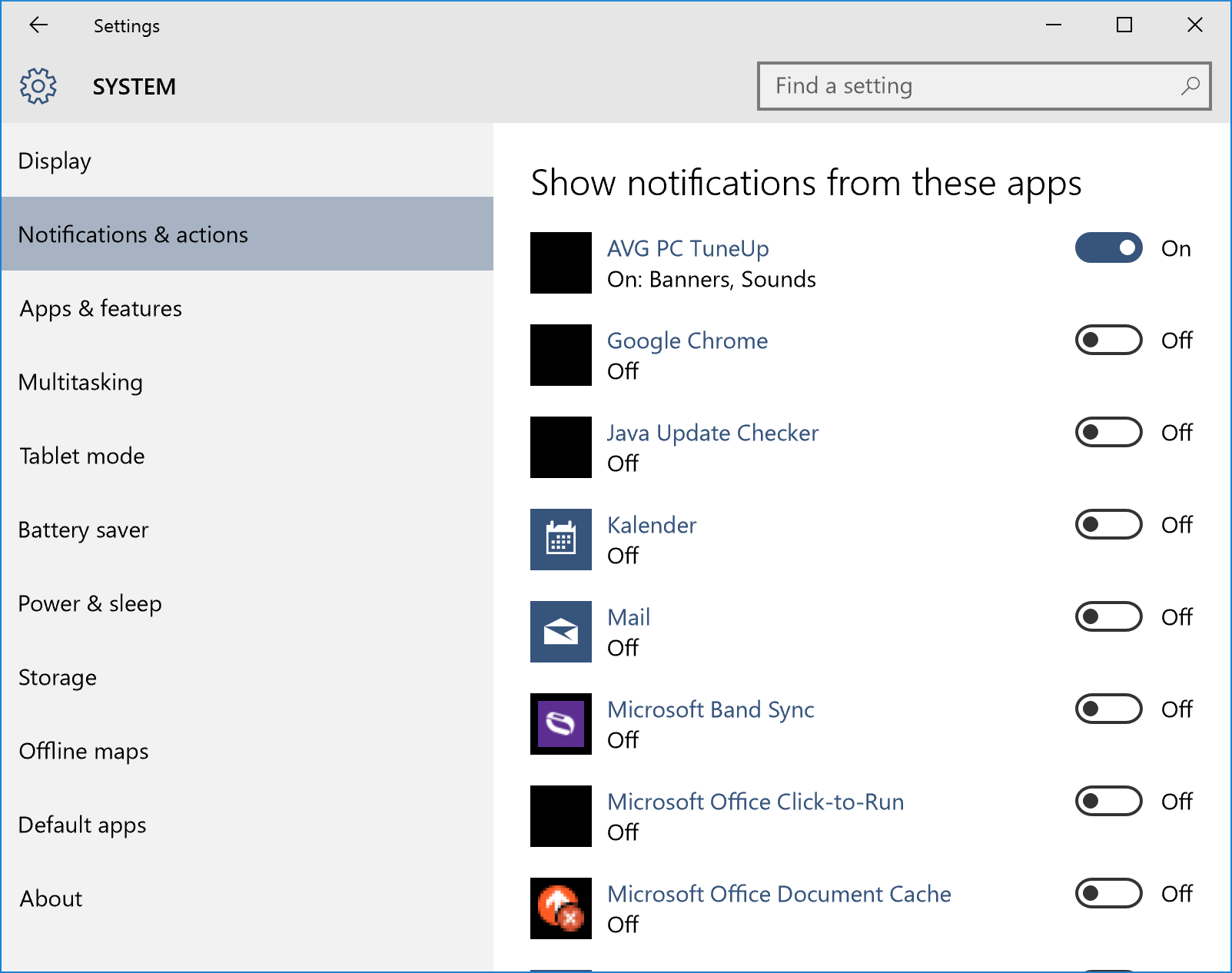
My advice: Limit notifications! The fewer notifications you enable, the less impact it will have on your performance (and battery life on tablets and laptops). To disable them, click on the Start button and click on Settings. Go to System and Notifications and settings.

W10 Notifications


To turn off all notifications, flip the switch on Show app notifications. However, we recommend going through the list and make sure that your favorite applications like AVG PC TuneUp or AVG AntiVirus still keep you posted and updates on threats cleaned.


Turn off Windows Tips

You may have noticed that Windows 10 sometimes shows you tips and tricks for various features, such as how to get apps from the store. The app behind this is called „Show me tips“ which, for some reason, may cause high processor and RAM usage – you’ll notice that if your PC or laptop keeps spinning its fan and is very slow.

While I’m sure that Microsoft is working on a fix for this long-term, here’s how to prevent it from happening right now:

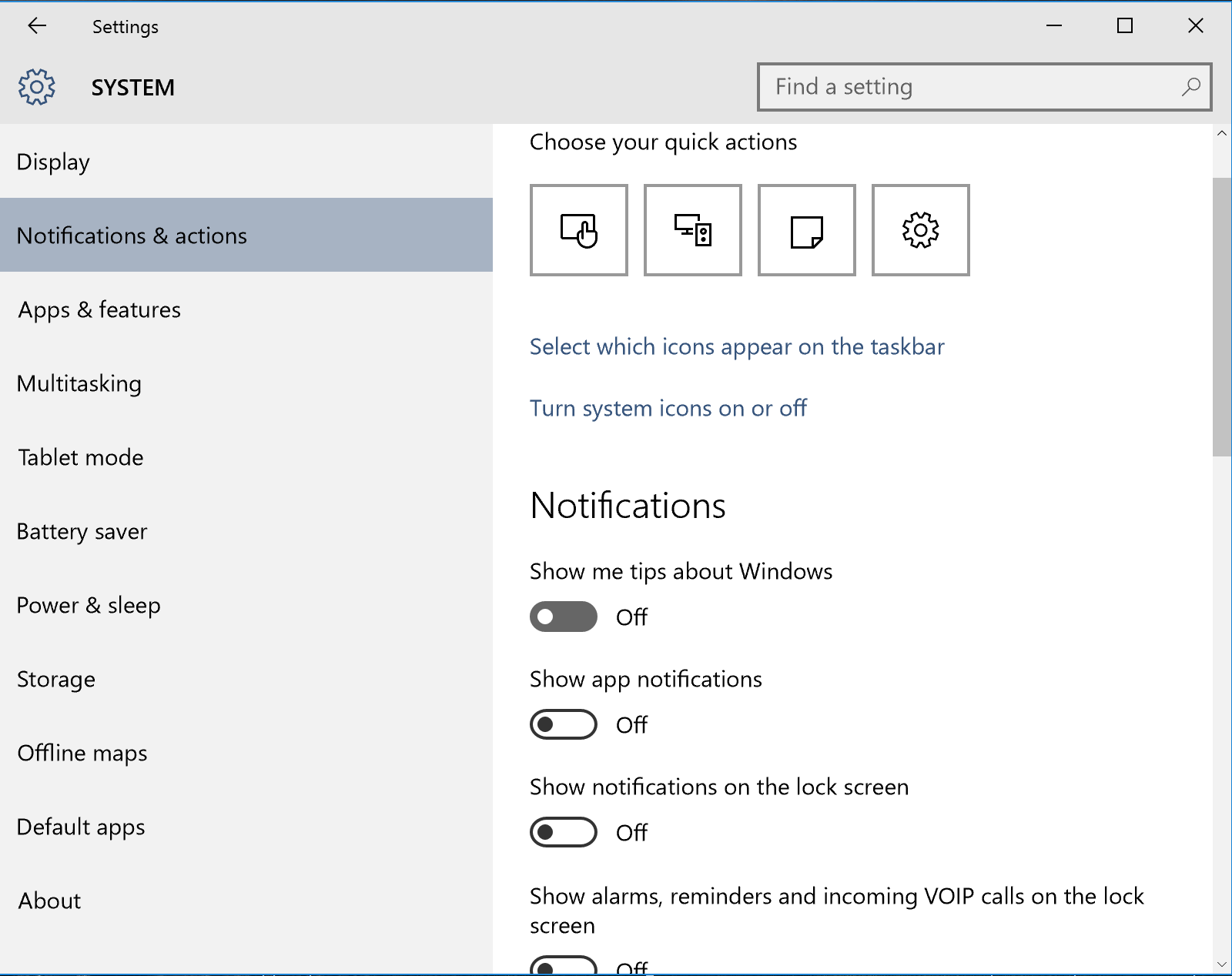
Open up the notification settings as described above and switch off Show me tips about Windows:

W10 Tips


This has helped a lot of people so far (see this Reddit thread for more).


Turn off dynamic color adaptation

The new Windows user interface tries to automatically adjust the color of the window frame and taskbar to the desktop wallpaper. However, there’s a bug which could increase CPU usage quite drastically and reduce your overall performance when this is enabled.

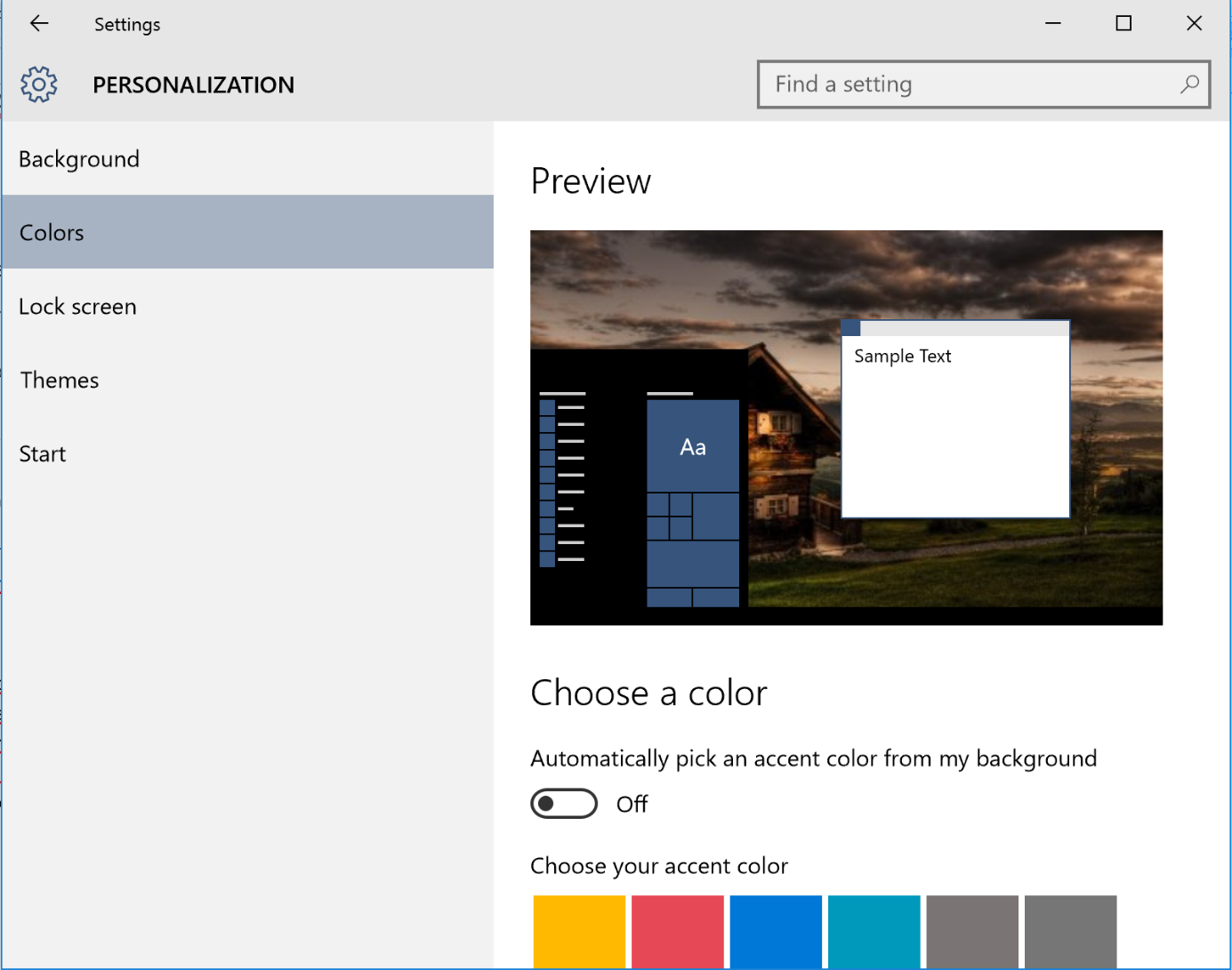
If you feel your PC is running slow, try the following: go to the Start menu and click on Settings. Next, head over to Personalization. Then go to Colors and switch off Automatically pick an accent color from my background.

W10 Accent Color


Done? Let us know if these three tips helped you improve your performance.

Carphone Warehouse reports massive data breach

Bad news if you are a customer of Carphone Warehouse, a leading UK retailer for mobile phones and call plans. Late last week, the company announced that it had suffered a large data breach affecting as many as 2.4 million customers.

The information leaked includes names, addresses, dates of birth and bank details. While as many as 90,000 encrypted credit card details were also stolen.

In a statement, Sebastian James, group chief executive of Dixons Carphone, said:

“We take the security of customer data extremely seriously, and we are very sorry that people have been affected by this attack on our systems.

“We are, of course, informing anyone that may have been affected, and have put in place additional security measures.”

“We took immediate action to secure these systems and launched an investigation with a leading cyber security firm to determine exactly what data was affected.”

If you think that you are potentially affected by this hack, here are two things that you should do as soon as possible to help mitigate any risk posed by unauthorized access to your bank accounts or credit cards.

Suspend your credit card

Naturally, one of the first things you should do is contact your credit card issuer and suspend your card. This means that you’re no longer vulnerable to credit card fraud if the card number has been stolen.

Your bank will issue a new credit card with a new number that wasn’t compromised in a breach.

Set up ID monitoring

I also highly recommend registering with an ID monitoring service. These scour the web searching for your credentials whenever and wherever they pop up. This allows you to take preemptive action against potential scammers.

There are instances of this being offered to data breach victims for free. Target did just that last year after their large hack. Should Carphone Warehouse contact you to say you’re information has been leaked, you should ask them about a similar service.

Beware of more scams

A word of caution, we’re likely to see some phishing attempts from fraudsters offering remedial services for data breach victims. Be very cautious about any email that arrives talking about compensation or other enticing services. Double check that any correspondence you receive is directly from Carphone Warehouse. If in doubt, contact them directly yourself rather than opening a suspicious email.


Four Quick Windows 10 Privacy Fixes

If you’re upgrading from a previous version of Windows or buying a new Windows 10 device (PC, laptop or tablet), then you’ll want to be aware of a few privacy issues surrounding some of the new Windows 10 features.

These four quick tips can help you rest easy knowing you’ve got more control over your data.

Disable Personalised Ads

In order to serve you more appropriate ads, Windows 10 tracks some of your behavior so that they can better understand your likes and dislikes.

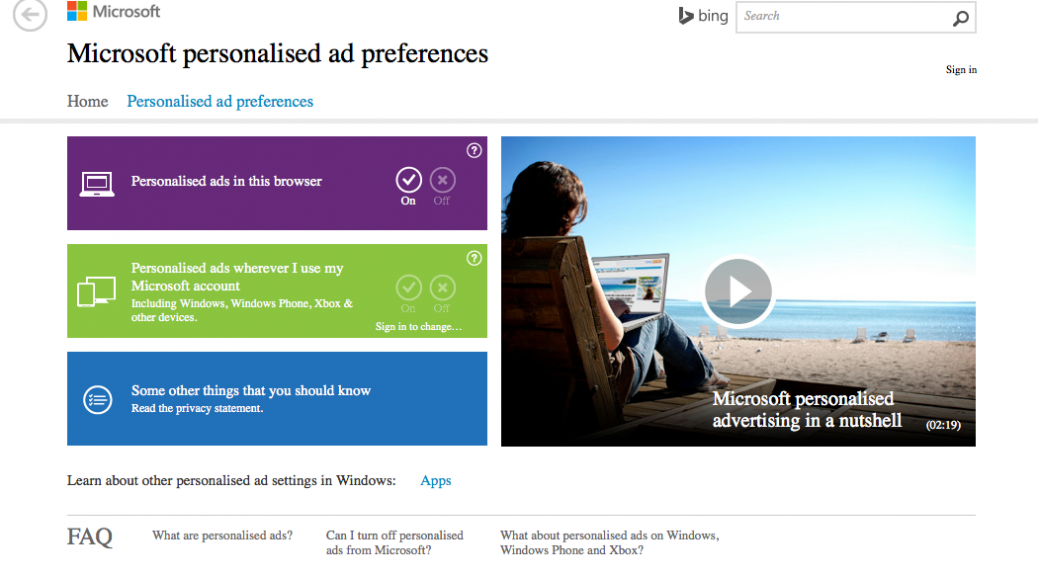
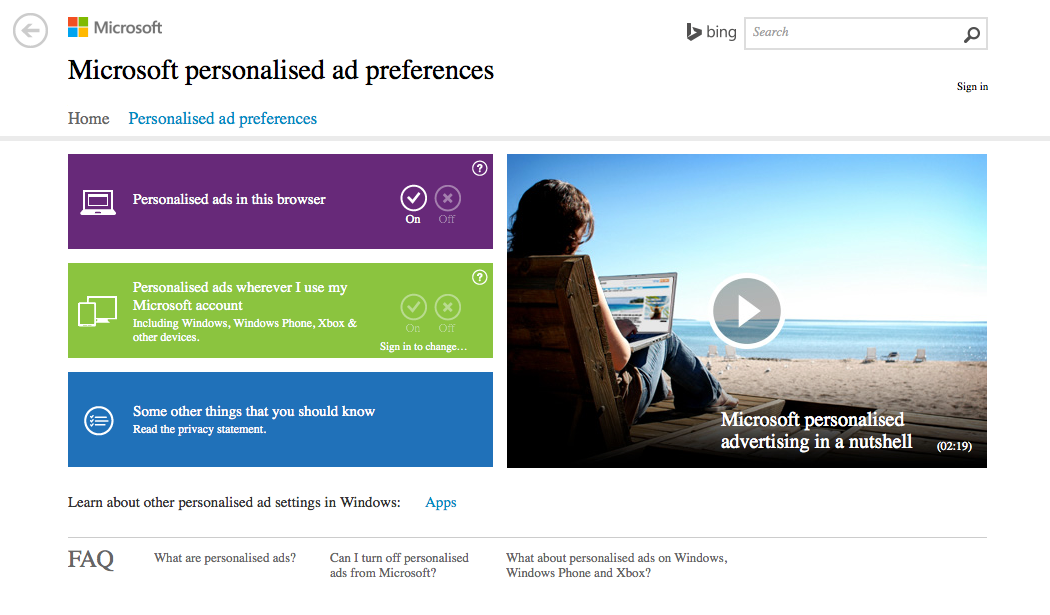
If you don’t want this feature, you can visit this link https://choice.microsoft.com/en-gb/opt-out on your Windows machine to disable Personalised Ads in your Windows Edge browser and wherever they use your Microsoft Account. This will prevent Windows from showing personalised ads and collecting your data across multiple devices.

Windows 10 Personalised Ads


Disable Advertiser ID

To prevent third parties from advertising and collecting your data gathered within Windows from Apps you can disable the Advertiser ID.

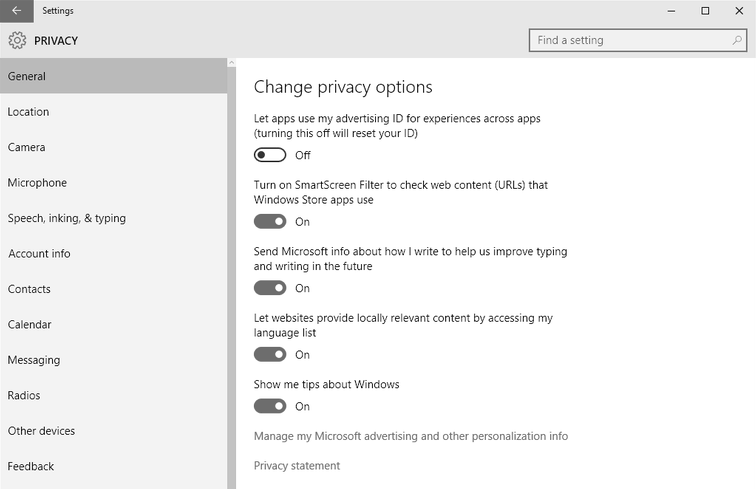
To do this go to ‘Start menu’, open ‘Settings’, choose the ‘Privacy’ option, then select the ‘General’ tab and turn off the 1st option at the top of the list.

Windows 10 Disable Advertiser ID


Disable Wi-Fi Sense

Windows 10 Wi-Fi Sense essentially wants to help you maintain online connectivity on the go, and help you use less mobile data if you’re on a mobile device.

It does this by crowdsourcing networks with other Windows users. It looks for open networks (unsecured or password free networks) and scans your contacts (Outlook Contacts, Skype Contacts and Facebook friends) networks and lets you share Wi-Fi . I

This has some great advantages like not having worry about managing network access, but it does present some issues:

  • People you barely know could connect to your Wi-Fi network.
  • Any questionable activity on your Wi-Fi internet connection could result in you taking responsibility. This means that you have to trust that people accessing and using your connection are doing the right thing.
  • Your Internet connection could suffer significant slowdowns and increased data usage.
  • Open Wi-Fi networks are insecure, and some are setup specifically for nefarious purposes – a hacker can intercept data via packet sniffing or use a man-in-the-middle attack. You might not know if you’ve connected to one automatically and as such are at risk.

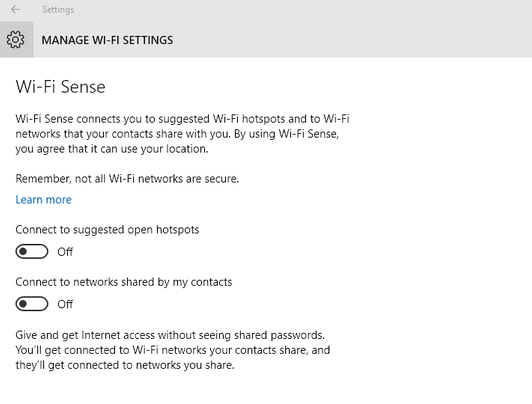
Windows 10 Wi-Fi Sense


If you want to disable the Wi-Fi Sense sharing option then open the Start menu > Settings, Choose the ‘Network & Internet’ option Then click ‘Manage Wi-Fi settings’, and then disable all the options on this page.


Disable location services

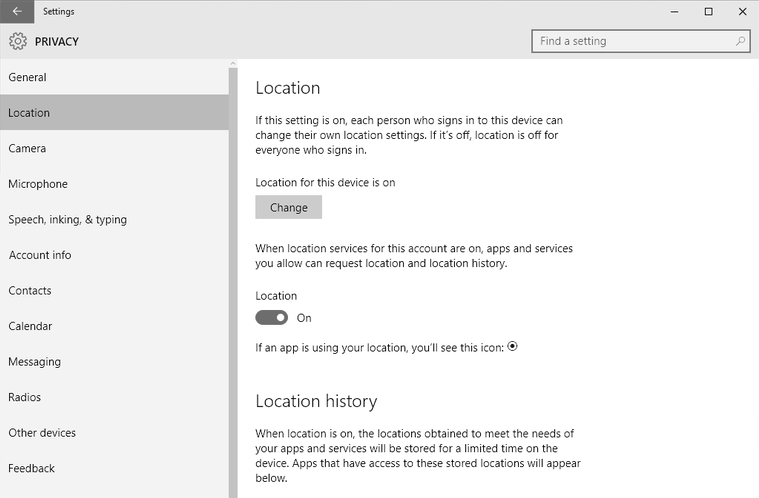
If you don’t like the idea of Windows 10 or its apps tracking your movement, then you’ll want to disable location tracking. Open the Start menu, click Settings and choose the ‘Privacy’ option, then select the ‘Location’ tab

Windows 10 Location Services

You can disable the location services globally or you choose which apps can track location.


We’ve only covered the basics here, but there are additional options available in the Windows 10 privacy settings that you might want to take a look at and customise further, especially if you’re concerned about your privacy.

To go that extra mile and ensure your complete privacy while online, then you can use a Virtual Private Network (VPN) service like hidemyass.com which encrypts your data.

If you would like to chat more about privacy, then please start a conversation with us on Facebook or Twitter. We’d love to hear from you and any tips you might like to share.

Heads-Up Displays: A Driving Solution or Another Distraction?

You may have seen recent reports about the “heads-up displays” (HUDs) technology for cars, where information is projected onto the windshield of the car as you drive. The transparent display provides navigational assistance, speed and other dashboard components, lane change alerts, etc.

The HUD technology was originally developed by the military for fighter pilots, who could see target data and other important information without looking down. But now the technology has entered into the automobile sector and is something we’re going to be hearing a lot more about…

Recently, a startup called Navdy unveiled a link to the auto display and your smartphone information. Other formidable players in this space are Continental and Garmin, among others. Most players have focused to-date on the display of navigational, safety, and instrument information. But it’s clear that with companies such as Navdy, HUD is headed into a more interactive territory.

According to a new market research report published by MarketsandMarkets, the heads-up display space is expected to reach $8.3 billion dollars in five years. (It should be noted this projection isn’t limited to automobiles but also to such other segments as aviation as well. See here.)

Proponents of HUDs believe they will make our roads safer by keeping drivers from fumbling with their smartphones while driving, or even having to look down at their instrument panel. With the projected image on your windshield, the theory goes, you’re able to keep your eyes on the road.

Indeed, on any given day, Distracted.gov estimates over 660,000 vehicles are being driven by someone using a hand-held cell phone. This all too frequently, and often tragically, results in accidents.

A second part of the HUD business proposition may be a pragmatic one: people are going to be using their phones anyway, so this is a better alternative.

But the question is: is it?

Hands-free technology and voice-activation software have equally been touted as benefits for the same reason: users can keep their eyes on the road. Yet, both voice-activation software and hands-free are not panaceas.

In the case of VA technology, it still affects the cognitive part of your brain.  Many of the simple tasks that come with VA technology increase a driver’s cognitive workload. And, depending on the situation, that can be dangerous. Vehicle voice-activated “infotainment” systems that are more complicated or just take longer to navigate created the highest levels of driver distraction and safety risks, according to a recent AAA study.

Hands-free phone technologies also don’t solve the problem of having a conversation, especially an important or emotional one, while driving can be only a little less distracting than juggling a phone. It’s for the same reason: Cognitive distraction.  Many studies back this up, including a groundbreaking one from the National Safety Council.

It would appear that the same question of cognitive distractions applies to new HUD techs.

While we can all appreciate any tools that will make our roads safer— the question is whether turning your windshield into a computer screen is the way to go? For that, we’ll have to wait and see.


Image courtesy of PC Mag

Unicorns: Perhaps Not As Rare As We Thought

So what’s a Unicorn? Here’s the study’s definition: “Many entrepreneurs, and the venture investors who back them, seek to build big, impactful companies valued at a billion dollars or more. We called these companies ‘unicorns’ because what they had achieved seemed very difficult, rare, and relatively unstudied.”

The latest study, the second by the venerable tech startup news site, has some surprises, as well as corroborates what has become conventional wisdom in Silicon Valley.

There’s a lot of data to chew on in the study and you can read the full post here. But parsing through it, there is a lot to learn, whether you’re a start-up, an investor, or just curious about markets.

Here are some of the interesting takeaways that I gleaned.

First, the surprising:


Unicorns are not as rare as we thought

The latest study revels that there are more Unicorns than one might think. There were 84 companies profiled in this year’s study—more than a 100% increase from last year. Granted, a lot of the companies were “paper” Unicorns (companies valued on paper that have not had liquidity events.) But the total value of the companies was $327 Billion and 2.4x the last analysis (“excluding Facebook, which was almost half the value of our last list.”)


Old is the “New” New

As the study maintains, for every wunderkind out there, a seasoned leader or founder (and, perhaps more importantly, a co-founder) may be your best shot at becoming, or finding, a Unicorn.

The study found that companies with educated, tech-experienced, older co-founding teams with a history together have built the most successes in this rarified club. And the co-founding aspect was interesting as well. As the study noted, 86% of the companies had co-founders, or a “super-majority” according to its lingo.

While some of this may be counter-intuitive to the traditional Silicon Valley narrative, it makes sense to me on several levels. An experienced leader can gauge a market, and having a co-founder gives you a chance to bounce ideas off one another, whether it’s reigning in your partner or just having “green-light” time. (I’ve had co-founders in all three of my entrepreneurial ventures.)


In the not so surprising camp:


IoT is gaining impact

This year, the Unicorn study recognized the Consumer Electronics/Internet of Things as its own category. According to the study, five companies, which make up 6% of the list, have raised a combined $266 million on average and are valued at 18x the private capital raised. While it is the smallest of the categories (after E-Commerce, SaaS, Enterprise and “Audience” or ad-driven businesses– ranked by order of value from first to last), to me, this is just another sign that the Internet of Things is ripe for takeoff.


Diversity: Still too Little

This last survey statistic from the study that I’ll share is in diversity, where the numbers fall into the not-so-surprising camp.

While the study determined that 50% of founders or co-founders of Unicorns came from outside the U.S. (from India to Canada) it shows diversity among Unicorns diversity is trending up, but is still low. TechCrunch reports this year the list welcomed two companies with female leaders, compared to no female CEOs on its last list. As well 10% of the co-founders on this year’s list were female, double last year’s survey. Like its average startups counterparts in the valley, 70% of the companies surveyed had no gender diversity at the board level… Please note: the study was unable to track racial or ethnic diversity.

So in terms of diversity, this “rarest of the rare” breed of venture backed tech companies are doing about the same as run of the mill startups and tech companies in Silicon Valley.

Ultimately, when I look at this study, however, I am an encouraged to see that attributes like experience, collaboration, and inclusion, as well as innovation, are being called out as measures of success. These are all values worthy of attention, whether you aspire to be a Unicorn or not.


Title image courtesy of TechCrunch

Camp Google: Inspiring Kids to go Outside

Do you remember your mother or grandmother saying, “It’s a beautiful summer day…what are you doing inside?” Well, online giant Google has heard that message, and wants young children to get offline too, with the help of its Camp Google.

Are the young children in your life starting to act a little restless as we enter the dog days of summer? Although school seems to start earlier than ever, we all know that feeling when waning summer days seem to stretch out longer and longer…Just in time, Google has launched its online summer camp (on July 13), starting with a bevy of science and tech themed adventures. The first was called Ocean Week. This week at camp is Space Week.

I know we’ve written a lot on the topic of kids online, and most of us are worried about the next generation being too connected—and mobile devices turning them into bigger couch potatoes than the previous generation. While it may sound counter-intuitive, Camp Google seems like a great strategy to get that generation (ages 7-10) excited about life and get them out of doors.

The camp explores the outdoors, science, and technology. You don’t even need a Google account to sign up. As Google says, “Camp Google is designed to get kids outside exploring and experimenting with fun science activities.”

And did I mention the camp is free? Sign me up!

There are activities that even sound fun to me: Creating a magnifying glass to explore your backyard? Building crystals? Making a constellation for your bedroom? A levitation device for Space Week?

For budding chefs out there, the current Google Camp Space Week also allows them to participate in a cook off between two junior chefs competing to create a signature dish for astronauts in space. Kids will get a front row seat for all the fun and learn about how space food is made and what’s needed to survive in space.

Exploring a volcano? Google’s got that too, coming July 29t, and with an online escort by a National Park Ranger. Miss a week of camp for a real vacation? Content is there for you to experience the camp after the designated week.

The engineers at Google worked with prestigious educational organizations like Khan Academy and with content experts such as National Geographic Kids, NASA and the National Park Service to develop the excellent content that will get kids to see the potential science has.

The directions and lessons are fun, simple to understand and motivating.

All activities list supplies required (usually basic household items) and also specify when parental supervision that is required as well. With this camp, there are even completion badges too.

To me it seems like the perfect mix of technology and outside awareness with content and interactive engagement really designed to inspire the next generation to pursue science and technology.

I also would like to point out that it seems like a great way to encourage young girls to learn about and explore science and technology in a non-threatening and fun way.

Empowerment, engagement, and exercise…Good job Google!

Introducing the new Facebook Security Checkup

Earlier in August, the world’s largest social networking site, Facebook, unveiled their new Security Checkup feature.

The aim is to create a series of simple tools that help users control which devices are logged into Facebook, receive alerts when new devices log in and tips on creating a strong password.

Video

Facebook Security Checkup


Let’s take a look in more detail:


Log out of unused apps:

If you have multiple devices linked to your Facebook account, you may be surprised to see just how many apps have access to your account. Closely monitoring which apps have access to your account is a great way to help protect your account security and the privacy of your personal information.

It’s worth remembering that apps that have access to your Facebook account also have access to a lot of your personal information. Be selective about which apps you allow.


Login Alerts:

Setting up login alerts is a great way to help you manage access to your Facebook account. Used in conjunction with other security features such as Two-Factor Authentication, login alerts make it very difficult for any unauthorized party to gain access to your account. I’d highly recommend implementing both this and Facebook’s Login Approvals.


Password strength tips:

The final tool in the Security Checkup is some advice both for creating a strong password and also password safety advice.

The advice recommends using a password unique to Facebook, never sharing your password and avoiding dictionary or identifying words.

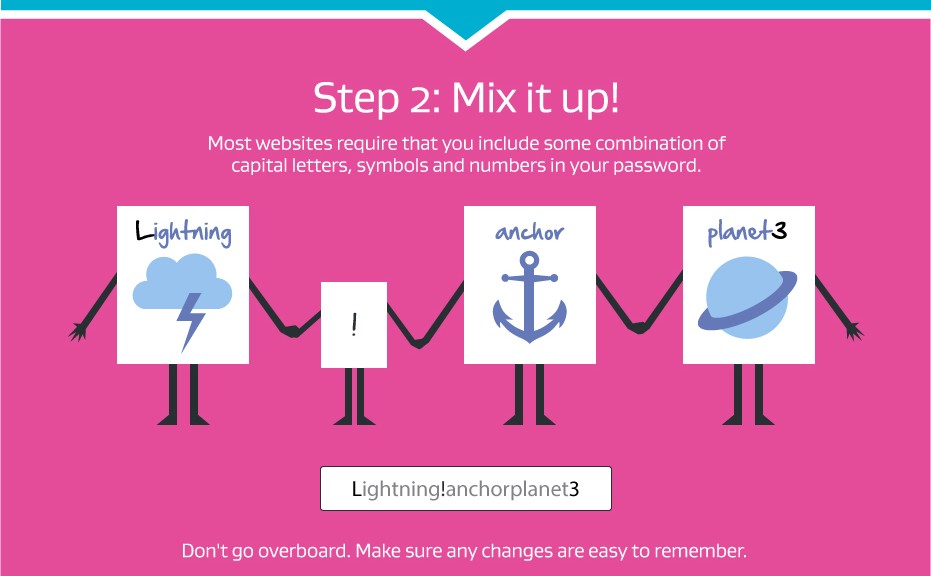
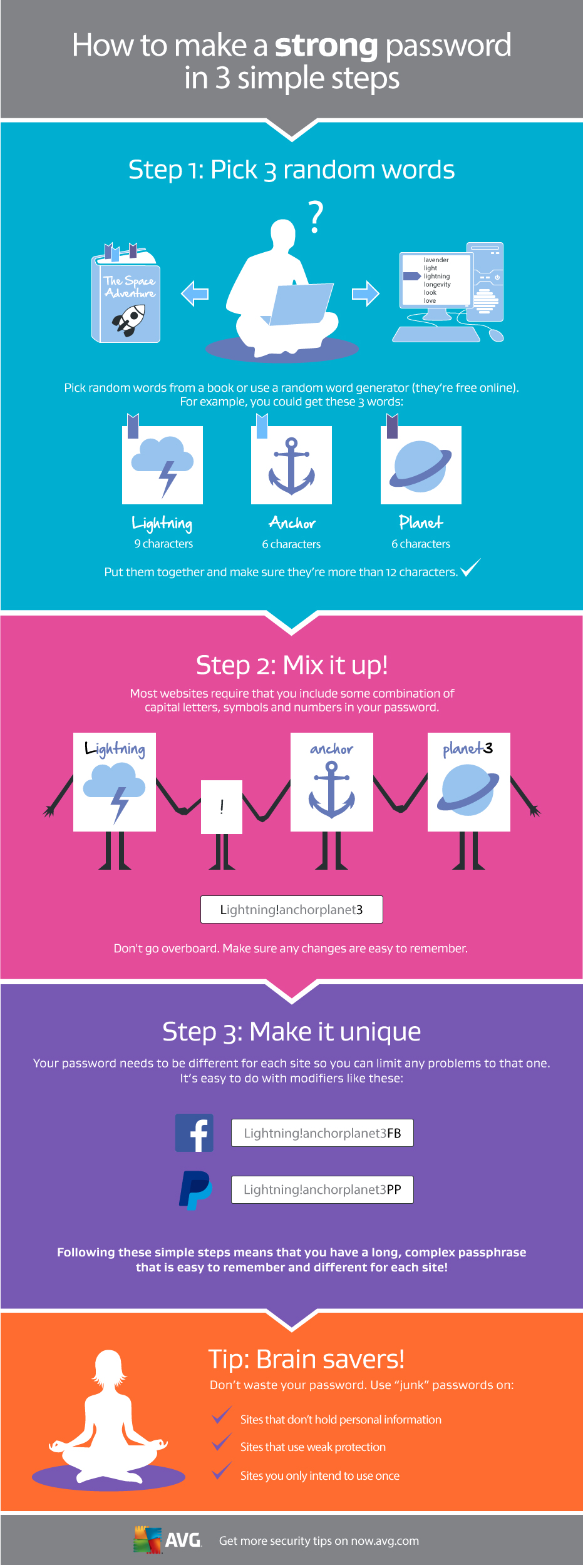
Your password is one of the most important parts of keeping all your online accounts safe, for more information on creating a strong, unique password that’s easy to remember, check out this infographic below.


Making a strong password

San Jose Library Takes a Leading Role in Privacy Literacy

Online child safety issues are only getting more crucial as the average age for children online keeps dipping lower and lower.  In many ways this is a good thing: There are great educational possibilities and it connects young minds to a bigger, wider world. But we know there are many pitfalls.

As my colleague Tony Anscombe recently noted during the Child Internet Safety Summit 2015, all too often people don’t think about digital safety in the same terms as the overall safety of our kids – or begin their education about it as soon as we would, say, street safety. But the best time to start teaching children about Internet safety, literally, is as soon as you let them start using it.

In that vein, I was excited to hear about an online project developed by the Public Library in San Jose California that is designed to help people of all ages understand privacy issues: The Privacy Literacy project. The program is developing online tools that will help people understand digital privacy and make more informed decisions about their online activities.

What better place for families to learn and find tools about digital safety than your local library?

The program was awarded a $35,000 grant earlier this year by the prestigious Knight Foundation and it began prototype testing of its new privacy tool in June.

In an ingenious move, the San Jose library partnered with game developers at San Jose State University’s Game Development Club to create its working prototype.

The result of the collaboration between the gamers and the library is a simple video-game that might remind you (if you’re of a certain age) of Pac-Man. Users follow multiple levels and collect tools as they learn more about privacy and negotiating the online world. The prototype was featured this last June at the American Library Association’s annual conference, held in San Francisco.

“Security, privacy – it’s a scary topic for a lot of people,” project lead Erin Berman told San Jose’s Metro newspaper. “So what I wanted to do was create a way to make it fun.”

As we all know, a tool that makes this process fun is bound to have a greater chance of success!

I should mention that this tool would certainly not be limited to children. For example, many older people without digital access of their own increasingly use tablets and laptops at libraries (just look around at your local library sometime). And many of these people are applying for jobs or aid through these digital devices, often sharing sensitive information. This is a great way to educate these groups at literally the point of entry.

In everything we do, from our products to our Smart User program in support of the Clinton Global Initiative to our Magda and Mo series for children and the many articles we provide for families, AVG advocates online safety. And we applaud all efforts that help educate users about digital security. It is especially encouraging to see libraries become engaged in privacy literacy given their background and relationships to the community.