Tag Archives: featured1

Prevention is better than cure: These eleven threats could compromise your corporate systems in 2015

Threats corporative systems

We don’t know what next year has in store for us, yet predictions are always useful to be better prepared for what might be around the corner. This also applies to IT security. If we analyze current trends in vulnerabilities and attacks, we may be able to forecast patterns for the future and avoid the dangers.

The Spanish government’s National Intelligence Center publishes annual reports detailing the main threats to businesses and organizations, and those that can be expected to be prevalent the following year.  Here we outline the eleven most notable dangers expected in 2015 so you can start to take measures before it’s too late.

  1. Cyber-espionage has been the single greatest threat in recent years and this can be expected to continue over the next few months. Cyber-criminals will continue working to improve methods to attack organizations and companies, as well as making them more difficult to detect.
    The simplest strategy is to choose targets with the least protection, such as contractors, suppliers or private computers. They often use social networks to gather basic information and then use the data on Web services and email.
    Threats corporative systems

  2. It is also important to keep a close eye on a factor that is often ignored: outdated operating systems. Microsoft stopped supporting Windows XP last April, so any vulnerabilities discovered since then won’t be patched, making it an easy target for criminals.
  3. Next year, just as we have witnessed in the last few months, there will be no shortage of ‘watering hole’ attacks. In this strategy, cyber-criminals observe the websites most visited often by an organization and then infect the pages with malware knowing that sooner or later some computers in the targeted organization will be infected.
  4. Something else to bear in mind when talking about threats to companies are mobile devices, as a lot of corporate data now passes through them. The best thing is to protect both smartphones and tablets with an antivirus for Android.
  5. Social networks also represent a possible entry point for cyber-criminals. The professional or personal profiles of employees on sites like LinkedIn or Facebook can be used to get to their email addresses. They are then sent malware via email in the hope of compromising the company’s systems.
  6. Many attacks target data stored in the cloud, as well as that stored on corporate networks. If the information is not properly protected, it can be easy to access files in the cloud. You can never take too many precautions when protecting data from threats.
  7. Another negative statistic is that studies indicate the increasingly sophisticated and damaging malicious code in circulation takes longer to detect. The same thing goes for the removal of malware from infected systems.
  8. Complex attacks on large companies with many systems and admin platforms can go undetected for long periods of time.
  9. However, attacks are no longer limited to computers. Many phone lines are associated to inter-communicating systems, such as alarms or dataphones. ‘Machine to machine’ or M2M communication is the basis for the ‘Internet of Things’.
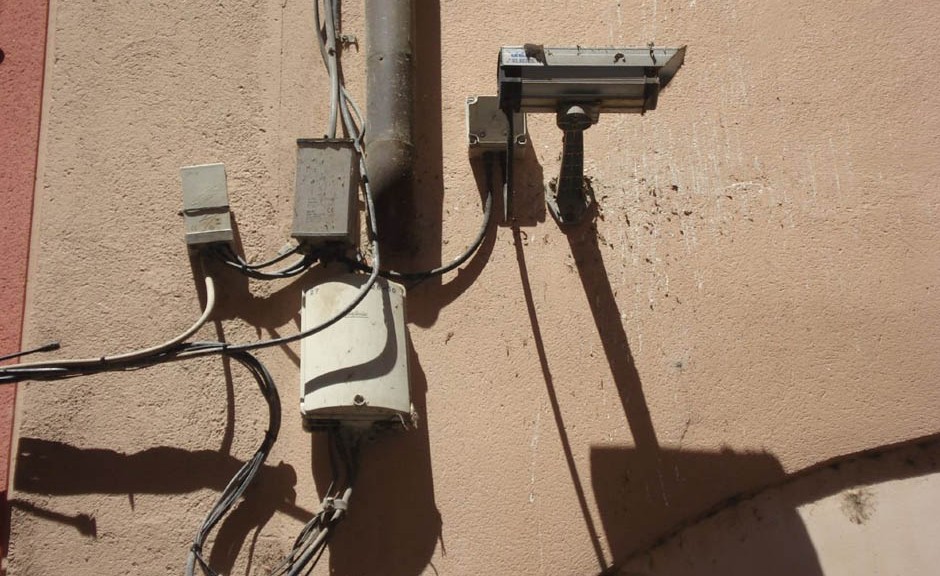
  10. Home automation systems and devices, as well as industrial control systems, have begun to suffer from the first attacks by malicious software. Embedded systems in security cameras and monitors could be compromised if the program developer does not implement adequate protection measures.
  11. Cybercrime is constantly developing new strategies to evade ASLR mechanisms. This automatic process protects the security of operating systems by saving key program data on strategic areas of the hard disk to prevent hackers from deliberately accessing it.

We’ve given you a few pointers, it’s now in your hands to prevent these sorts of attacks. Keeping your computers protected with a corporate antivirus and updating your software are two key practices that you should encourage in your company.

The post Prevention is better than cure: These eleven threats could compromise your corporate systems in 2015 appeared first on MediaCenter Panda Security.


Christmas contest! – Help us to get a safe Christmas!

Christmas contest

As you have no doubt seen, these days we have been posting a series of articles to help ensure everyone enjoys a safe and happy Christmas! We want to help you to be able to shop online without any unpleasant surprises, and avoid falling for any of the typical Christmas scams that are doing the rounds at this time of year.

That’s why we have organized this competition, in order to reward you for helping our content to reach across the globe.

What can you win? Well, we’ve spoken to Santa and he’s going to leave various presents under the Panda Christmas tree. On December 23 and 29 and on January 2, we will reveal the prizes on offer each week to those who share our content.

How can you take part? It’s easy! Share on Facebook or RT on Twitter all the content we post with hashtag #xmaspanda. Prizes will be drawn among those who do this on the days included in the competition.

We will announce the winners on January 12 in this blog. So keep your eyes open!

Remember, Share or RT the posts with #xmaspanda and you could win great prizes.

The post Christmas contest! – Help us to get a safe Christmas! appeared first on MediaCenter Panda Security.

The number of leaked email addresses and passwords has exploded in 2014

The number of leaked email addresses and passwords has exploded in 2014

The statistics speak for themselves: The emails you send and receive every day at work are a time-bomb.

This is not just because they can be an entry point for cyber-crime, such as extortion or malware that can infect your computer, but also because through email, cyber-criminals can steal your account.

In fact, the email account you use in your company is now in more danger than ever before, simply because the number of compromised email accounts has reached astronomical figures.

Just a few months ago, five million Gmail account details were leaked on a Russian cyber-security forum, raising doubts about the security of the Google service, and creating jitters among the service’s millions of users.

However, the scandal of leaked Gmail accounts was barely the tip of the iceberg. Shortly after, Home Depot, the home improvements retails chain, announced a security breach in its payment platform that had compromised the details of no less than 53 million email addresses.  It’s clear then that our details of email addresses can be obtained from anywhere.

As if this weren’t enough, a group of cyber-security experts recently published a study confirming the trend (as if it were really in any doubt): In just three months the details of more than six million accounts have been leaked, along with the corresponding passwords.

 five million Gmail account details leaked

It’s a frightening figure, and more so considering that these are just the confirmed cases.

According to the study, most cases are due to people using company email addresses in private environments and the low levels of security associated with such email accounts.

Trojans infecting poorly protected computers or the use of email accounts with inadequate security are the most probable causes of this increase in the leaking of email addresses and their passwords.

The result of all this is seriously concerning: the use of these passwords by cyber-criminals against the users themselves. Moreover, if millions of account details have been leaked in just the last three months, the amount for the whole of 2014 could be twenty times greater.

Given how this trend underlines that corporate email accounts are not as secure as they should be, it is advisable to implement security measures such as two-step verification or at least frequent changes to email passwords.

The post The number of leaked email addresses and passwords has exploded in 2014 appeared first on MediaCenter Panda Security.

How to disable the WhatsApp blue double check on Android

Android users can now disable the blue double check in WhatsApp. The corresponding update for the app is now available from Google Play.

Do you want to know how to disable it?

How to disable the WhatsApp blue double check on Android

Follow these steps:

  • From the latest version of the app, go to ‘Settings
  • Then go to ‘Account
  • Next ‘Privacy
  • And finally, unselect ‘Read receipts’.

How to disable the WhatsApp blue double check on Android

Don’t forget though, that if you disable read receipts, you won’t be able to see when your messages are read either.

What do you prefer?

The post How to disable the WhatsApp blue double check on Android appeared first on MediaCenter Panda Security.
Avast revisits the biggest threats of 2014

2014 has been an active year for cybercrime. Let’s start with the most recent and then take a look at some of the other important security events of the year.

shutterstock_134221643

State-sponsored espionage

We are ending the year with the most publicized and destructive hack of a major global company by another country – now identified as North Korea. The Sony Entertainment attack, still being investigated by the FBI, resulted in the theft of 100 terabytes of confidential employee data, business documents, and unreleased films. It was an attack on privacy due to the theft of a massive amount of personal records, but also essentially blackmail; aiming to silence something that the North Korean government didn’t like – namely the release of The Interview, a movie depicting an assassination attempt on Kim Jong-Un.

Most of the blame for state-sponsored cybercrime in 2014 has been with Russian or Chinese hackers. Whether private or state-sponsored, these hackers have attempted to access secret information from the United States government, military, or large American companies. Recently, Chinese hackers sponsored by the military were indicted for economic espionage by the U.S. Department of Justice.

Home-Depot-ApronLarge data breaches

Along with the Sony breach, other notable companies that suffered from cybercrime include Home Depot, eBay, Michaels, Staples, Sally Beauty Supply, and others. A significant number of these breaches were begun months or years ago, but were revealed or discovered in 2014.

Nearly 110 million records were stolen from Home Depot; the largest ever breach of a U.S retailer. The cyber-heist included 56 million payment card numbers and 53 million email addresses.

JPMorgan Chase’s data breach impacted nearly 80 million households in the U.S., as well as 7 million small- and medium-sized businesses. Cybercriminals were able to gain access after stealing an employee’s password, reminiscent of the Target breach from 2013. This breach is said to be one of the largest breaches of a financial institution. The FBI is still investigating.

Financial and data stealing malware

GameOver Zeus, called the most infamous malware ever created, infected millions of Internet users around the world and has stolen millions of dollars by retrieving online banking credentials from the infected systems.

Tinba Trojan banking malware uses a social engineering technique called spearfishing to target its victims. The spam campaign targeted Bank of America, ING Direct, and HSBC customers using scare tactics to get customers to download a Trojan which gathered personal information.

Chinese hackers were at it again, and again, targeting South Korean banking customers with banking malware using a VPN connection. The customers were sent to a look-alike webpage where they were unknowingly handing cybercrooks their banking passwords and login information.

Software vulnerabilities

Many of the breaches that occurred in 2014 were because of unpatched security holes in software that hackers took advantage of. The names we heard most often were Adobe Flash Player/Plugin, Apple Quicktime, Oracle Java Runtime, and Adobe Acrobat Reader.

Avast’s selection of security products have a feature called Software Updater which shows you an overview of all your outdated software applications, so you can keep them up to date and eliminate any security vulnerabilities.

ShellshockNumerous new exploits

Flaws in software led to Shellshock and Heartbleed, two names that struck terror in IT administrator’s hearts.

Heartbleed takes advantage of a serious vulnerability in OpenSSL. It allows cybercrooks to steal encryption keys, usernames and passwords, financial data and other sensitive data they have no right to, and leaves no trace of the operation.

Shellshock ended up affecting more than half of the websites on the Internet. Hackers deployed malware on legitimate websites in order to retrieve confidential data from compromised computers.

Ransomware

Another name that made headlines was a group of malware dubbed ransomware, such as CryptoLocker, and its variants Cryptowall, Prison Locker, PowerLocker, and Zerolocker. The most widespread is Cryptolocker, which encrypts data on a computer and demands money from the victim in order to provide the decryption key.

Avast detects and protects its users from CryptoLocker and GameoverZeus.  Make sure you back up important files on a regular basis to avoid losing them to ransomware.

Ransomware made its way from desktop to Android during the year, and Avast created a Ransomware Removal app to eliminate Android ransomware and unlocks encrypted files for free.

Privacy attacks

Mac users were shocked, celebrities mortified, and fans titillated by news of the iCloud hack which lead to the online publication of numerous private photos of Hollywood famous celebrities. The serious cloud breach was launched using brute force methods on targeted iCloud accounts.

Social engineering

The art of deception is a highly successful method for cybercrooks. The weakest link in security is the end-user, and hackers take advantage of us all the time using social engineering schemes.

shutterstock_204144223 (2)Phishing

In a phishing or spearphishing attack, hackers use email messages to trick people into providing sensitive information, click on links, or download malware. One of the most famous instances was the Target breach, in which hackers got a network password from a third party vendor that worked for Target, to get into the network and compromise their point-of-sale machines in November 2013.

Social media scams

Social channels, like Facebook, offer a perfect environment for social engineers. They can create buzz, grab users’ interest with shocking content, and encourage people to share the scams themselves. Scams often come in the form of fake video links which lead to surveys and rogue webpages.

Exploit kits for sale

The Avast Virus Lab observed increased activity of malware distributed through exploit kits this year. These kits, often for sale on the deep web, allow cybercrooks to develop customized malware threats in order to attack specific targets. Zeus source code was used to develop Gameover, and the Zeus Gameover network was used to download and install Cryptolocker.

Avast Software’s security applications for PC, Mac, and Android are trusted by more than 200-million people and businesses. Please follow us on FacebookTwitter and Google+.

5 tips to avoid a ‘nightmare before Christmas’

Christmas-nightmare

  • If you’re going away, don’t post details on social networks about where you are or when you’re returning. It’s better not to share this kind of information with others on your Facebook or Instagram account.
  • If you order a taxi for the company’s Christmas party, remember that all the apps on your phone require certain permissions. Sometimes, these can be abusive and reveal more information than you would like.
  • Protect your computer and your Android devices with antivirus software. At Christmas we use these devices more than ever, sending WhatsApp or email greetings, etc. If you want to download a free antivirus, choose the one that best meets your needs and stay safe online this Christmas.
  • Both on your phone and your computer you should only keep installed the applications you really use. We all like to download and try out apps and programs that look interesting, but after some time many of them accumulate without being used. All of these will slow down your system, so get rid of those you don’t use to improve performance.
  • Use your common sense. No one should ask you to send confidential data via email, so when somebody does ask you, you should be suspicious and, obviously, not send any details.

The post 5 tips to avoid a ‘nightmare before Christmas’ appeared first on MediaCenter Panda Security.
The Snowden effect: Has cyber-espionage changed the way we view security?

snowden

In the history of international espionage in general and specifically in the case of the US National Security Agency (NSA), there has been a turning point. Previously, everyone speculated about the extent to which the USA was monitoring us, yet without there being any clear evidence of this. Who has never thought that someone, somewhere was keeping track of all the messages you write on Facebook or in emails?

Thanks to Snowden of course, we know now this is true. The NSA has been spying left, right and center on all the tools that people use every day: data from Microsoft, Facebook, Yahoo, Google, Skype and YouTube were carefully analyzed by the NSA and the FBI. Even Hollywood couldn’t have come up with such a scarcely credible plot. Yet they hadn’t foreseen that Edward Snowden, one of their employees would jump ship and reveal their little secret to The Guardian and The Washington Post

Over a year later, the ex-CIA operative continues to be a famous name. One Internet security survey of more than 20,000 people across 24 countries, organized by the Canadian Centre for International Governance Innovation (CIGI) has revealed that 60% of participants in the survey had at some time heard of Snowden. Germany was the country where most people had heard of him: some 94% of respondents. Not so surprising when you think that Chancellor Angela Merkel had had her phone tapped by US spies.

Some 85% of Chinese citizens also know who Snowden is, and with good reason. He revealed that Washington had been spying for years on China and Hong Kong. Paradoxically, citizens of these countries are more aware of Edward Snowden than those from his native soil: just 76% of Americans know what he did. Kenya is bottom of this particular ranking: just 14% of the population is conscious of just how far the tentacles of the U.S. security agency spread around the globe.

security

In fear of the all-seeing eye of the U.S. ‘Big Brother’, 39% of respondents who knew about Snowden have taken measures to improve their privacy and security because of the scandal. Curiously, citizens of India are those that have been most diligent in protecting themselves (69%), followed by those in Mexico and China. The French, Swedish and Japanese have barely changed their security habits, while in the USA, some 36% have improved their privacy. Perhaps most are resigned to their government’s knowing who they are friends with on Facebook or how many hours they spend playing Candy Crush, as they suppose there is not much they can do about it anyway.

Indirectly, the Snowden case and the widespread paranoia about the possibility that governments are spying on your digital life has had other effects, even for those who weren’t aware. Some two-thirds of respondents confessed to being more concerned about their privacy than a year ago, while 62% say they are aware that government agencies in other countries may be secretly spying on them online. A similar figure, 61%, expressed concern that their own government could be monitoring everything they do on the Web.

It also turns out that we now change passwords more than ever to protect our privacy. Some 39% of respondents claimed they regularly change their passwords, and that they do so more frequently than in the previous year. So even if you have to click the ‘Password reset’ button a hundred times because your brain is unable to remember which digit you changed the last time, at least you won’t feel that someone is reading your confidential data.

Moreover, 43% of respondent confessed to avoiding certain Web pages, just in case, and 73% said that they wanted their personal details and private information stored physically on a secure server.

More than one year on, the Snowden revelations continue to resound in the halls of power and across cyber-space, though it’s rare to see the young IT engineer in the media. He now lives in Moscow, reads Dostoevsky and spends his days watching ‘The Wire’. Revealing that the world is not secure and that the U.S. government has its nose in everyone’s business has led to a life in exile for this brave man, though at least it has served to encourage all of us to improve our security.

If after reading this article your level of paranoia has gone from Def Con 5 to Def Con 1, we remind you that you can also safeguard the privacy of the data on your phone with Panda Mobile Security, our free antivirus for Android.

The post The Snowden effect: Has cyber-espionage changed the way we view security? appeared first on MediaCenter Panda Security.
The five top WhatsApp stories of 2014

whatsapp-news

WhatsApp is undoubtedly one of the most popular apps, with few users yet to install it on their smartphones. It is now one of the most widely used types of communications worldwide.

This has inevitably led to a continuous stream of news stories in 2014 about WhatsApp, and in particular, about scams that exploit the app or the new features introduced to the app.

The five top WhatsApps stories of 2014

1. Facebook buys WhatsApp

Breaking News: Facebook buys WhatsApp. US $19,000 was the incredible amount that changed hands.

However, when the news broke, users’ main concern was how this would affect them. Would user privacy be compromised?

In the end these were just rumors, as so far nothing much has changed.

2. Reading contacts’ chats

The ability to read the chats of your WhatsApp contacts. This was the tempting offer made by a group of cyber-criminals to entice users into their trap.

In this case, it was supposedly an application that would allow you to read your contacts’ messages. In reality however, when you installed it on your device, you would be subscribed to a premium-rate SMS service.

3. WhatsApp reaches 600 million users

In August this year, WhatsApp reached 600 million active users around the world.

This was announced by the CEO and co-founder of the app who was keen to underline that these were active users (those that had used WhatsApp at least once in the previous month), and not just registered users.

This most popular messaging app is also, however, the most popular target for cyber-criminals.

4. WhatsApp Gold, special scam version

One example of the above are the scams that end up subscribing users to premium-rate SMS services. In this case, what they were offering was the ‘Oro’ (Gold) version of WhatsApp with a special design and emoticons.

This app was promoted by cyber-criminals on Twitter. Once again, this was just another lie to scam users, as we reported back in October.

5. Blue Double Check

And the year has ended more or less as it started. With news that was as much welcomed as it was feared. Confirmation that your message has been read now comes in the form of blue check marks.

WhatsApp users were quick to react and the developers were forced to think again. They have now announced that future versions will include the option to remove this feature. No doubt this is good news for many users.

Who would argue that WhatsApp will continue to be an endless source of news in 2015? We’ll be waiting!

The post The five top WhatsApp stories of 2014 appeared first on MediaCenter Panda Security.
South Korea hit with banking malware using VPN connection

South Korean banks have been attacked by hackers again!

This is not the first time we reported malware which targets Korean banking customers. In the past, we wrote about Chinese threats against Korean Windows users and last year we published a series of blogposts, Fake Korean bank applications for Android (part 1, part 2, part 3), about malware targeting mobile platforms.

The Korean banking malware is based on the same principle previously used. The customer executes the infected binary, which modifies Windows hosts file. This file contains a list of domains with assigned IP addresses.  Malware, however, may modify this file. When a customer wants to visit his online bank website, he is redirected to the IP address specified in the hosts file, not to the original bank website!

XP Debugging2

The piece of malware we will discuss in this blog post performs the above mentioned modification of system settings. However, when we looked into the modified hosts file, we noticed something unusual.

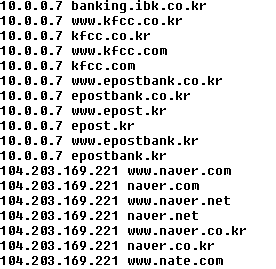
hosts

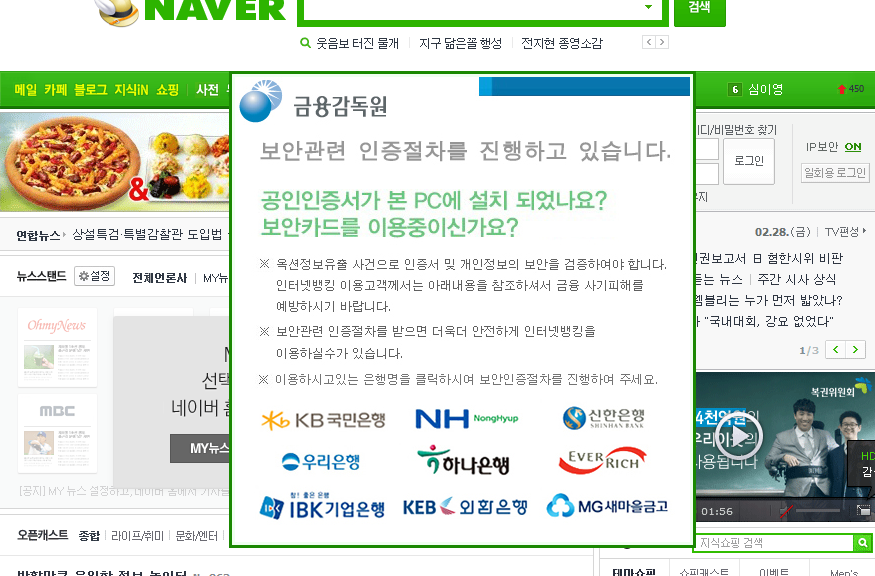
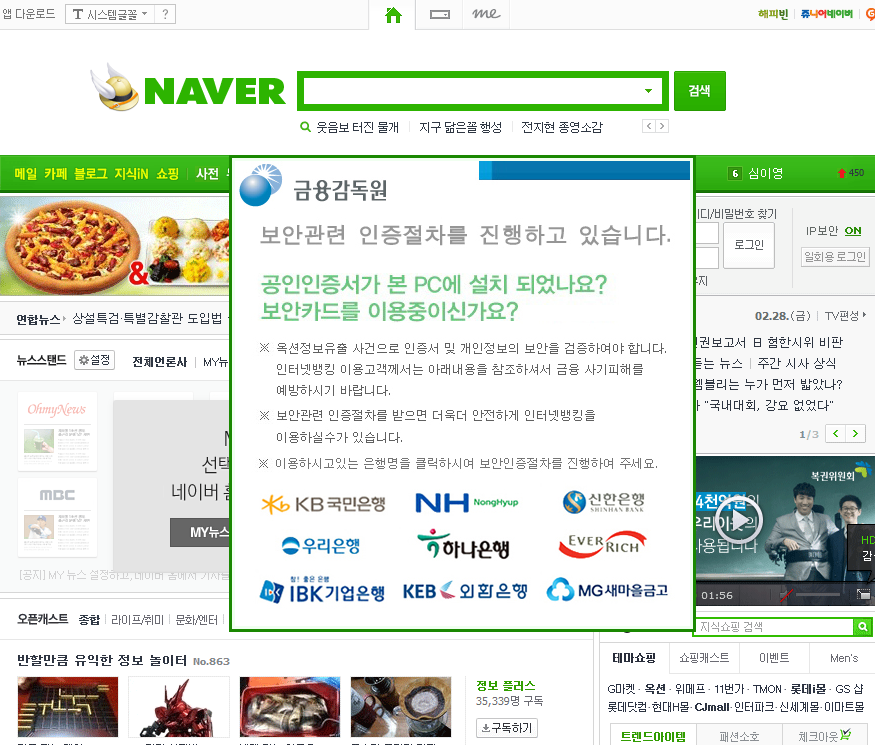
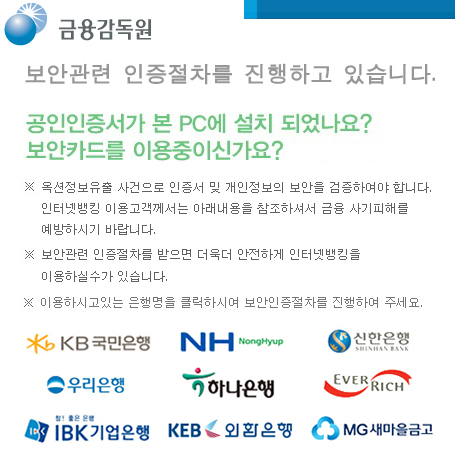
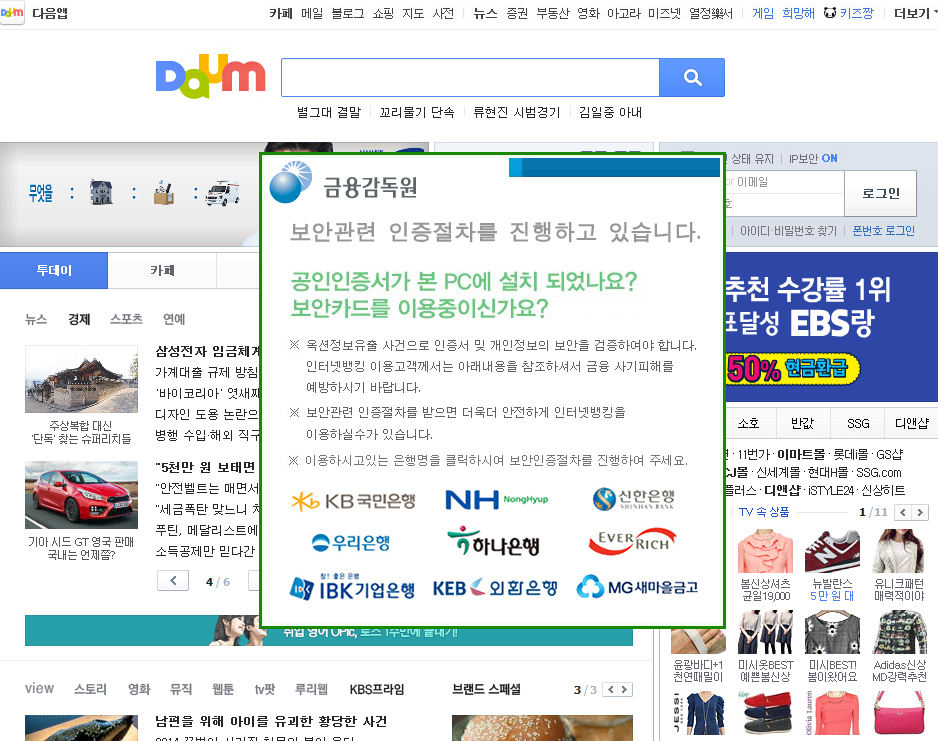
As you can see in the figure above (shortened screenshot of hosts file), the malware redirects many websites of South Korean banks to the IP address 10.0.0.7. If you try to enter this address into your web browser, you probably won’t get any response, because this is the private IP address. The other websites which belong to South Korean search engines, like Naver, are redirected to the publicly accessible IP address. When visiting any of these search engines on the infected machine, the following banner is displayed on the top of the regular website.

popThe image says:

Do you have a security software or program in your PC or Do you have a security card? Due to hacking incidents and potential of compromising users’ information if you want to use internet banking you need to do identification procedure.

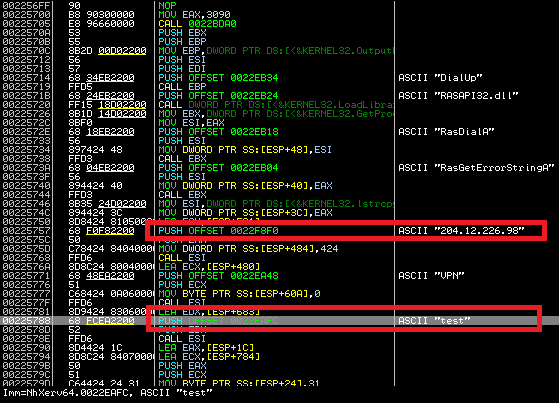
We found one very interesting technical detail about the malware behavior – it uses a VPN connection! When a user clicks on one of the bank’s logos below, he is connected to a VPN and the fake banking website is displayed. At first, the malware connects to the C&C server and obtains configuration by GET request on 69.30.240.106/index.txt. The C&C answer includes a link to an executable modifying the hosts file and VPN server IP address.

900
test.exe
vpn=204.12.226.98

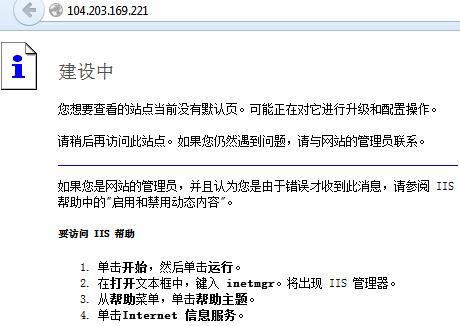
The executable is responsible for properly rewriting %windows%system32driversetchost file, which is queried for address translation before querying DNS on Windows machines. For example, if you want to go to www.naver.com the system first accesses the host file, and if there is a match it uses the specified IP address (104.203.169.221) for that site which differs from the original DNS records – 202.131.30.12 for our geographical location.

The malware targets Korean bank customers who access the following bank websites:

www.nonghyup.com, nonghyup.com, banking.nonghyup.com, www.nonghyup.co.kr, nonghyup.co.kr, banking.nonghyup.co.kr, www.shinhan.com, shinhan.com, www.shinhanbank.com, shinhanbank.com, www.shinhanbank.co.kr, shinhanbank.co.kr, banking.shinhanbank.com, banking.shinhan.com, banking.shinhanbank.co.kr, www.hanabank.com, hanabank.com, www.hanabank.co.kr, hanabank.co.kr, www.wooribank.com, wooribank.com, www.wooribank.kr, wooribank.kr, www.wooribank.co.kr, wooribank.co.kr, www.kbstar.com, kbstar.com, www.kbstar.co.kr, kbstar.co.kr, www.keb.co.kr, keb.co.kr, ebank.keb.co.kr, online.keb.co.kr, www.ibk.co.kr, ibk.co.kr, www.ibk.kr, ibk.kr, mybank.ibk.co.kr, banking.ibk.co.kr, www.kfcc.co.kr, kfcc.co.kr, www.kfcc.com, kfcc.com, www.epostbank.co.kr, epostbank.co.kr, www.epost.kr, epost.kr, www.epostbank.kr, epostbank.kr

The bank domain names are translated into a private network address range (10.0.0.7) and the search engines are translated to webserver running IIS. Webserver runs a Chinese version of IIS, as shown from the error message displayed when supplying incorrect header information.

iis
The malware, however, is not connected to the VPN all the time. The malware searches for the active Internet Explorer windows and if found, depending on Internet Explorer version, it locates browser’s address bar and extracts the currently entered url address. If URL belonging to any of the banks is found, VPN connection is established.

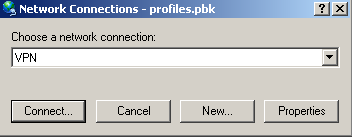
At first, malware drops a file %USERPROFILE%profiles.pbk, which includes the basic configuration. The credentials for VPN (name and password) are hard coded in the binary. The connection is made with help of Windows RAS API interface.

rasdial

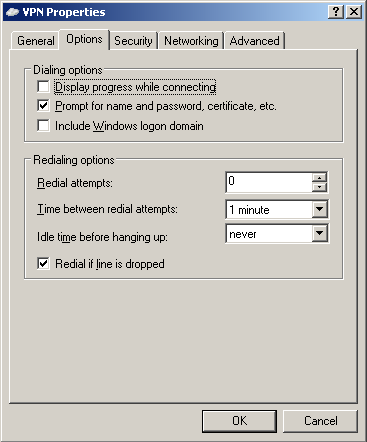
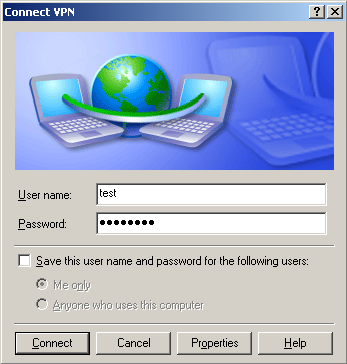
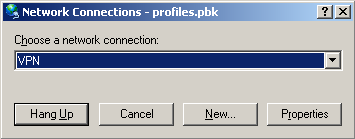
If we want to verify the VPN connection in Windows, we can simply locate the dropped PBK file and double click on it. In properties, we will choose “Prompt for name and passwords, certificate, etc.” We enter the username and password, which we previously extracted from the malicious binary. After pressing the “Connect” button, we are connected to the VPN, and if hosts file is properly modified, we can access the fake bank websites. After pressing “Hang Up”, we can disconnect from VPN.

pbk01

pbk02

pbk03

pbk04


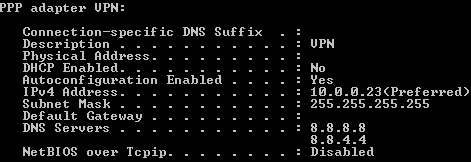
After a successful connection, “ipconfig /all” command lists PPP connection to VPN, with the current machine’s assigned private IP address. At this moment, the infected machine is connected into the private network and it can access contents hosted on 10.0.0.7.

vpn

Example of visiting bank’s website on a compromised computer

When a customer visits nate, daum or naver on an infected machine, he is presented with the following banner.
XP Debugging1

After clicking on the logo of a bank, the customer is presented with the following modified website (the example below was taken for epostbank.kr, however this attack works the same way for the other banks). If the customer clicks on any link on the fake bank website, he is presented with an error message. The message says that the additional security measures are available. After clicking OK, the fake verification process starts.
epostbank_errormsg
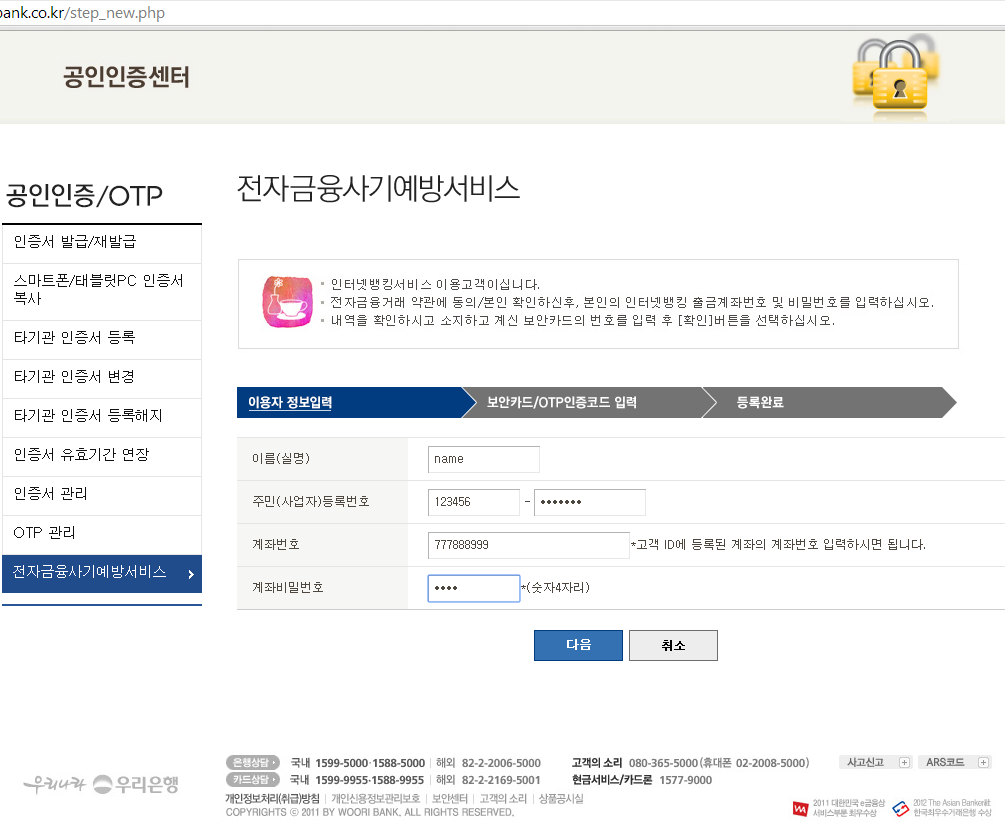
The customer is asked to fill in some personal details.
epostbank01
Then he is asked for a phone number and numbers in his security card.
epostbank02
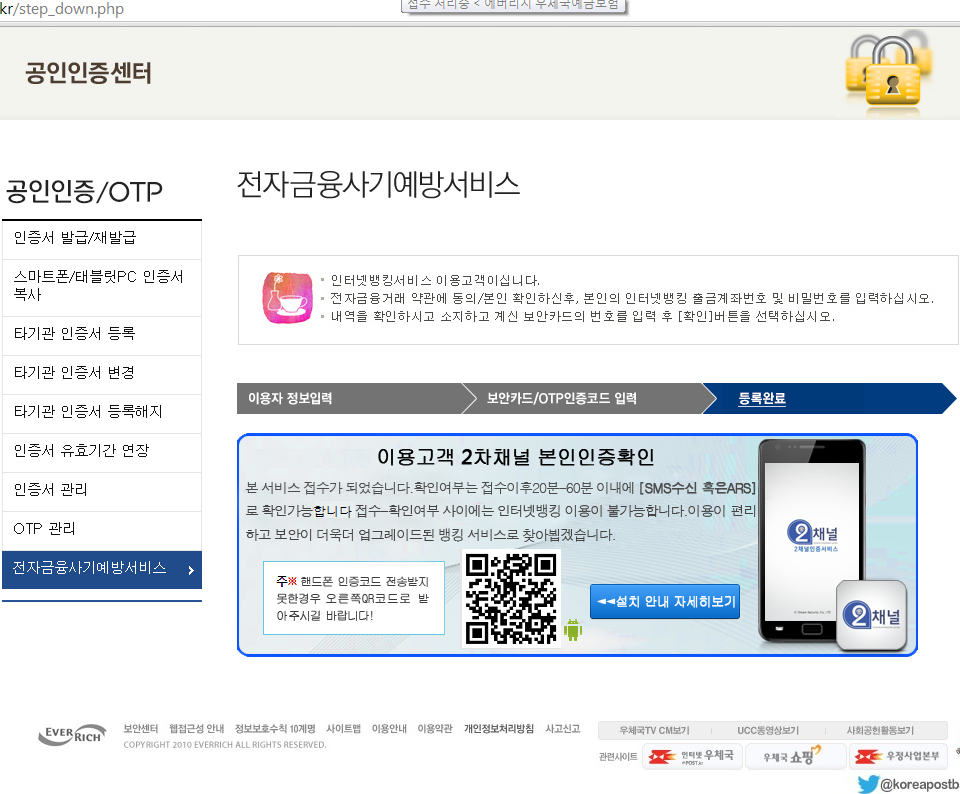
Lastly, he is presented with a link to download a malicious Android application. At the writing of this blog post, the link to the malicious Android app is not working anymore.
epostbank03

SHAs:

Original dropper

1C22460BAFDDBFDC5521DC1838E2B0719E34F258C2860282CD48DF1FBAF76E79

Dropped DLL, C&C communication

FDF4CAA13129BCEF76B9E18D713C3829CF3E76F14FAE019C2C91810A84E2D878

Hosts file modifier

1D1AE6340D9FAB3A93864B1A74D9980A8287423AAAE47D086CA002EA0DFA4FD4


Acknowledgements:

This analysis was jointly accomplished by Jaromir Horejsi, David Fiser and Honza Zika.

Leave the tracking to the post office – not online advertising!

The holidays are here and many are opting to shop online for their holiday gifts, whether it’s to avoid the crowds or because time is running out. Online shopping is a convenient option, everything is almost guaranteed to be in stock, there are no lines and your purchase gets delivered to your doorstep. But, can this season’s holiday shopping come back to haunt you online? 

Ad networks, whether via browser extensions or cookies, track your online browsing activities to target ads tailored to your interests. Some see this is as a good thing as you are only shown ads for products or services that would be useful for you, while others may think it’s creepy that the Internet knows about your guilty pleasures. The holidays are about giving and generosity, so your online browsing activities may differ from what they are the other eleven months of the year. You may be researching whether you should purchase a round or square shovel for Uncle Jack, who put gardening tools on his holiday wish list, or which game you should order for your daughter. Now, do you really want to have ads for gardening tools and games for kids following you around the Internet?

How to shop undercover

Whether you want to protect your privacy or simply want to avoid targeted ads that may result from holiday shopping for family and friends, Avast is here to help!

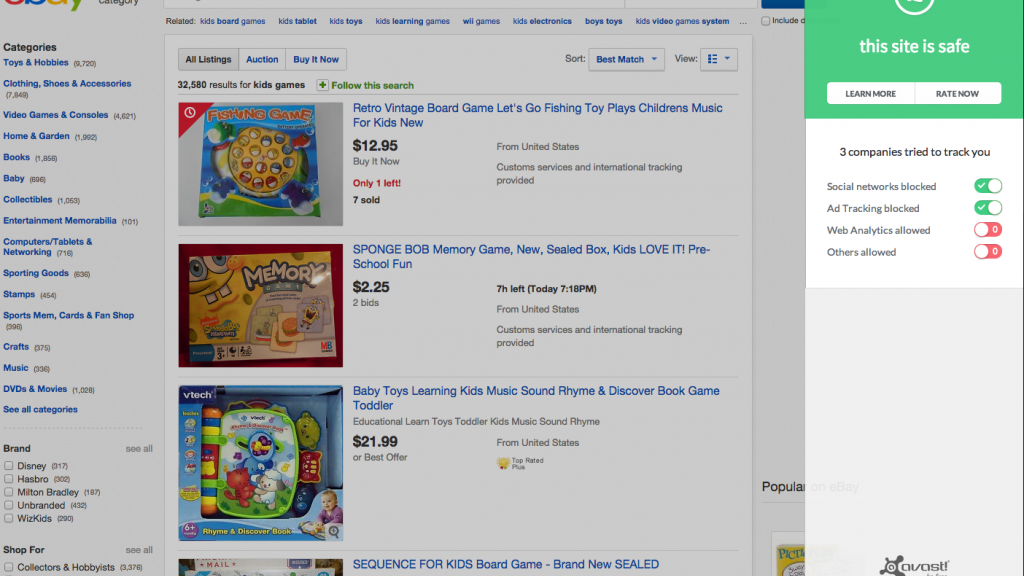
Avast Online Security comes with a Do Not Track feature. Do Not Track identifies tracking software and shows you a list of all tracking and analytics programs that are trying to track your online behavior. You then have the option to choose which tracking software you want to deny or allow to track your online behavior.

Online ad tracking Do Not Track

By denying tracking software, you eliminate your digital footprint and exclude targeted ads from following you while you browse. Most browsers do come with some form of Do Not Track, but they rely on HTTP Do Not Track headers. Avast on the other hand uses proprietary technology that cannot be overridden by servers.

Avast Browser Cleanup is another tool that will help ward off targeted ads. Browser Cleanup removes unwanted or poorly rated toolbars that could also be keeping an eye on your browsing sessions. Since Avast Browser Cleanup launched in February 2013, it has identified more than 40 million different toolbars, 95 percent of which have been rated as “bad” by Avast users.

Leave the tracking this holiday season to shipping companies and the post office, not online advertising! Avast wishes you and your loved ones safe and happy holidays (and shopping :))!

Avast Software’s security applications for PC, Mac, and Android are trusted by more than 200-million people and businesses. Please follow us on FacebookTwitter and Google+.