Tag Archives: featured1

What is the Bash bug, and how do I prevent my systems from being Shellshocked?

Shellshock is a newly discovered security flaw that has been around for 22 years, and works by exploiting the very nature of web GUI.

Shellshock

Working in the same way as SQL injection, Shellshock allows users to insert Bash (a Unix-based command processor, or shell) commands into a server via a web form or similar method, and exploits the very nature of environment variable handling, which is that after assigning a function to a variable, any trailing code in the function will be then executed.

Where the SQL injection vulnerability allows a hacker access to the database, Shellshock gives the hacker an authentication-free access to the server, which makes it much more powerful. With this type of access, one with malicious intent could create a worm that could multiply and reproduce the exploit across entire networks to collect or modify data, or open other security holes that would otherwise be closed. Though Bash does not natively run on Microsoft Windows machines, it can be ported, but it is not yet known if the vulnerability will remain present.

Ok, so I get it, it’s dangerous. Am I vulnerable?

Absolutely.

Why?

Because Unix has a much wider grip on our networks than most people can really appreciate. Due to its ubiquity, everything from routers and smartphones, TVs, cars and more could be exploited. Worse, is that many of those devices are very difficult to update. Your home router, for example, has control of all your incoming and outgoing network traffic, and if someone has that, not only do they have the potential to collect your data, but to enable ports, disable the firewall, and further their access into your network infrastructure. With that being said, if you are running any versions of Unix or Mac, and haven’t familiarized yourself with this vulnerability, you’re well overdue.

Luckily, many vendors have now patched for Shellshock by updating Bash, but at this time, Apple users should wait for an update.

I’m running Unix. What do I do now?

First, it’s best to find out if you’re affected. Specifically, are you running Redhat, Ubuntu, Fedora, CentOS (v5-7) CloudLinux, or Debian? If so, then run this command to find out if you’re vulnerable.

$ env x=’() { :;}; echo vulnerable’ bash -c “echo this is a test”

If you see nothing but “this is a test,” you’ve successfully run the exploit, and you’ve got some work to do.

Luckily, most Linux distributions have issued fixes, so you can simply run your update manager. For those who haven’t, you can do so manually by running the following commands:

yum update bash

OR

sudo apt-get update && sudo apt-get install bash

Help, I have a Mac!

Are you infected? Run this command from your shell and find out.

$ env x=’() { :;}; echo vulnerable’ bash -c ‘echo hello’

If you’ve got Mac machines in your environment that can be exploited, you can disable the exploit by temporarily changing the default user shell. For IT administrators that have the know-how, get started right away – but for those that have to ask “how?,” it’s best to keep your eyes peeled and wait for an official update from Apple.

Thank you for using avast! Antivirus and recommending us to your friends and family. For all the latest news, fun and contest information, please follow us on Facebook, Twitter and Google+. Business owners – check out our business products.


How to identify the warning signs of work-from-home scams

howto2_enHome-based jobs are attractive to people who are looking to supplement their regular or retirement income, those who want part-time employment, or those who want to save money on child care or gas. Many people have dreams of being entrepreneurs and working independently of traditional businesses. Cybercrooks take advantage of this to create fake offers for work-from-home opportunities.

Sharp-eyed avast! Facebook fan, Timothy B., shared a post that he received for a work-from-home scam.

Facebook work from home scam 1


The post says,

Good morning Facebook ready to start my day and start looking for 9 people that are very serious in wanting to change their live around financially who want to be there own boss?who want to work when they want ?who wanna make an extra $500-$2000 every week from home ?who serious enough to take the risk of $40 to change there life around ?yes with $40 you can how? Inbox me for more information

Work-at-home and get-rich-quick schemes have been around for a long time, first appearing in people’s real mailboxes, on TV, and in magazine advertisements. Cybercrooks have created variations of this scam to harvest email addresses and contact lists from Facebook. Social networking makes it easy to create fake profiles and identities quickly.

The grammatically-challenged swindler from Timothy B.’s newsfeed entices potential victims with the ease and flexibility of working from home whenever they want. The message promises big earnings, and all you need to do is make a $40 investment to find out how. This scammer will most likely try to get you to wire money and then collect your personal information.

Warning signs of a work-from-home scam

  • No business name or contact address – No legitimate company will advertise for jobs without stating their name, brand identity and physical contact address.
  • You’re required to pay a fee for additional information. Legitimate employers don’t charge a fee to hire you or to get you started. Don’t send money for directories or start-up kits.
  • Promises of exceptional earnings.
  • Claims that no experience is necessary or resume is required.
  • Asks for personal information like a Social Security or bank account number over the Internet.

How to report a scam

File a report with the Internet Crime Complaint Center – In order to file a report, you’ll need to provide the following information:

  • Your name, mailing address, and telephone number.
  • The name, address, telephone number, and web address, if available, of the individual or organization you believe defrauded you.
  • Specific details on how, why, and when you believe you were defrauded.

Report the company to the Better Business Bureau (BBB) – If you have a company name or web address, use the BBB’s search tool to find out if there have been complaints filed. You can file your own complaint online.

Report spam on Facebook – The best way to report abusive content or spam on Facebook is by using the Report link that appears near the content itself. To report something someone posted on your Timeline:

  1. 1. In the top right of the post, click the down-pointing arrow
  2. 2. Select I don’t like this post
  3. 3. Select I think it shouldn’t be on Facebook and follow the on-screen instructions

Thank you for using avast! Antivirus and recommending us to your friends and family. For all the latest news, fun and contest information, please follow us on Facebook, Twitter and Google+. Business owners – check out our business products.

Have you got an account with Viator? Change your password!

tripadvisor hacked

Viator has been hacked by cyber-crooks who have managed to access users’ bank details. Of the 1.4 million customers, it is still not known how many have been affected by the attack.

The company has confirmed that it has hired IT experts to discover what happened and how the criminals were able to hack the system. Although there are still not too many details about the incident, it has been confirmed that the attack took place between September 2 and 3.

It appears that Viator became aware of the attack through complaints from users about unauthorized payments with the cards they had used on its service.

To prevent further data theft, Viator is asking users to change their account passwords and keep a close eye on their credit card transactions.

More| How to create strong passwords

The post Have you got an account with Viator? Change your password! appeared first on MediaCenter Panda Security.

The Home Depot confirms hacker attack. 56 million credit and debit cards compromised

the home depot

The Home Depot, the home improvement retailer, has confirmed that its servers have been attacked and that 56 million credit and debit card details have been compromised.

According to the The Wall Street Journal, the company has also acknowledged that, in some cases, the accounts associated to the cards have been drained.

In addition, fraudulent transactions have appeared across the USA as the criminals use stolen card details to buy prepaid cards, electronic goods and even groceries.

This attack comes just months after a similar attack on Target Corp. and there could be a connection, as the same tool –BlackPOS- was used to exploit the vulnerability.

The security breach may have affected customers who shopped in any of the almost 4,000 stores that the company has in the U.S. and Canada between April and September.

Do you want to know how to prevent theft in your company?

The post The Home Depot confirms hacker attack. 56 million credit and debit cards compromised appeared first on MediaCenter Panda Security.

Avast! Mobile Security gets award from AV Comparatives

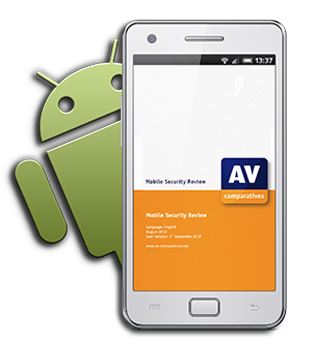
AV Comparatives Aug2014AV Comparatives awarded avast! Mobile Security for its malware protection and highly developed theft-protection.

Most people would not dream of neglecting the security of their PCs or laptop, but those same folks forget that the device in their pocket is just as powerful, if not more so. You’ve heard it before –your expensive smartphone, which stores personal data, private photos, Internet banking information and even company data, is an attractive target for cybercrooks and thieves.

AV Comparatives, an independent organization which tests antivirus products and mobile security solutions, released new testing results and gave avast! Mobile Security the highest “Approved Award” for Android security products.

avast! Mobile Security has a wide range of features with innovative functionality. We particularly liked the wide range of configuration options and remote commands, which provide the user with a comprehensive remote control function,” wrote the authors of the final report.

AV Comparatives gives avast! Mobile Security it's Approved Award for mobile security and anti-theft features.

AV Comparatives gives avast! Mobile Security it’s Approved Award for mobile security and anti-theft features.

Malware protection

Mobile phones attacks are getting more and more sophisticated, and it is growing exponentially. “We now have more than 1 million malicious samples in our database, up from 100,000 in 2011,” said Avast’s CCO, Ondřej Vlček. “Mobile threats are increasing – we expect them to reach the same magnitude as PC malware by 2018.”

avast! Mobile Security scans all installed applications for malware and has various real-time protection shields which protect against

  • Malicious apps and phishing sites
  • Sites containing malware
  • Typo-squatting if an incorrect URL is entered
  • Incoming messages with phishing/malware URLs
  • Malicious behavior during read or write processes

Anti-theft protection

Avast! Anti-theft is a stand-alone app that can be installed separately from avast! Mobile Security. The app is hidden from view, and can be accessed remotely for functions such as lock, locate and wipe, redirection of calls, texts and call logs, etc.

In addition to the malware and anti-theft protection, AV Comparatives liked the standalone avast! Mobile Backup which enables personal data to be backed up to Google Drive.

The Backup, App Locker and Privacy Scan features, which were promised last year, have now been implemented and complete the program’s functionality. (avast! Mobile Security) is a very comprehensive security product with a wide range of configuration options.

Protect your Android smartphone and tablet with avast! Mobile Security and Antivirus from the Google Play store.

Thank you for using avast! Antivirus and recommending us to your friends and family. For all the latest news, fun and contest information, please follow us on Facebook, Twitter and Google+. Business owners – check out our business products.



Twitter has joined the Bounty Programs. Now only Apple remains.

In the technology world, it is now quite common for companies to reward the efforts of those advanced users who dedicate some of their time to uncovering security holes in their programs or platforms.

Although there are still some who are yet to be convinced of the effectiveness of such ‘bounty programs’, many firms apparently see them as being extremely useful, not just to discover new bugs that have gone undetected, but also to get these expert users on their side.

bounty programs - hackers

Such is the value of what is at stake, that most technology companies now have bounty programs in place. A while back, we described the world of bounty programs, and how rewards can fluctuate depending on the company and the importance of the security hole.

Twitter was still among those that had yet to take up the idea. The social network seemed reluctant to put its hand in its pocket to encourage experts to find bugs in its service. Now the company has announced that it’s offering a minimum reward of $140 (get it?) for those who find security holes in Twitter.com, ads.twitter, mobile Twitter, TweetDeck, apps.twitter, as well as in the apps for iOS and Android.

This sum is still way off what others are offering. Bounty programs at firms like Facebook or Google reward users that uncover vulnerabilities with amounts upwards of $500 and$1000 respectively.

bounty programs - facebook

And it’s not only the money that’s different, Twitter’s bounty program also uses a new platform which offers information to anyone who wants to see what each company is offering.

This platform, called HackerOne, is a kind of notice board on which companies announce new features of their bounty programs and where those looking to profit from their ability to sniff out vulnerabilities can easily discover whether it’s worth their while, depending on the money on offer.

This platform was set up in 2012 by several experts who had previously worked in IT security for companies like Facebook, Google or Microsoft. In their previous jobs they had been responsible for coordinating the implementation of bounty programs, so they had first-hand knowledge of the issue. They decided to offer different technology companies, no matter how big or small, the option to delegate the coordination of their bounty programs.

Companies that have taken up the offer include Yahoo!, Square, Automattic and 4chan. So even without offering the same amounts as other firms, there are many companies who, while saving on the costs of running bounty programs, are also addressing the concerns of users who want reassurance that there are no holes in the security of the companies’ platforms. Something that users have been demanding of Twitter for some time.

bounty programs - reward

Apple, still reluctant

The only leading technology company still to launch its own bounty program is none other than Apple. The company has so far taken no steps in this direction, despite the scandals that threatened to tarnish its image in early September when users, including celebrities, had leaked photos, which were hosted in iCloud, published on the Internet. Had there been a program for rewarding hackers that find security holes, perhaps one of those that did find the vulnerability might have warned security officials of the problem and enabled them to act in time. 

They say money can’t buy happiness, but it helps. That’s why, perhaps as a lesson to Apple, the Russian hacker who discovered such a hole in the company’s iCloud was quick to boast of his discovery. As Alexey Troshichev admitted, he would have warned the company about the flaw in the platform if there was a reward. But as there wasn’t, he decided to share the information on Github, where many other experts were able to exploit the hole maliciously, thereby highlighting the importance of bounty programs.

The post Twitter has joined the Bounty Programs. Now only Apple remains. appeared first on MediaCenter Panda Security.

“The new iPhone 6 recharges with two minutes in the microwave”: A new urban myth about Apple

Remember when some Apple users ‘lost’ their phones after believing stories about the iOS7 making the iPhone waterproof?

After the presentation of the latest new features in Apple devices and the new iOS8 operating system, the Internet is full of articles either in praise of or criticizing the company’s latest efforts. Users, eager to find all the latest information and the best tips on how to get the most from the new iPhone 6, scour forums and blogs to stay up-to-speed with everything about these new releases.

That’s why it’s no surprise to find these types of practical jokes doing the rounds on the Web, or to encounter some poor unsuspecting user, who perhaps expecting more than is reasonable from the new device, falls for the trick.

This story took the form of an advert, similar in style to the one launched by Apple on 4chan, announcing the new ‘Wave’ feature of iPhone, which could supposedly recharge the phone in the microwave.

wave iphone 6 apple

So do you believe everything you read on the Internet?

More | iOS 8. Apple increases user privacy

The post “The new iPhone 6 recharges with two minutes in the microwave”: A new urban myth about Apple appeared first on MediaCenter Panda Security.

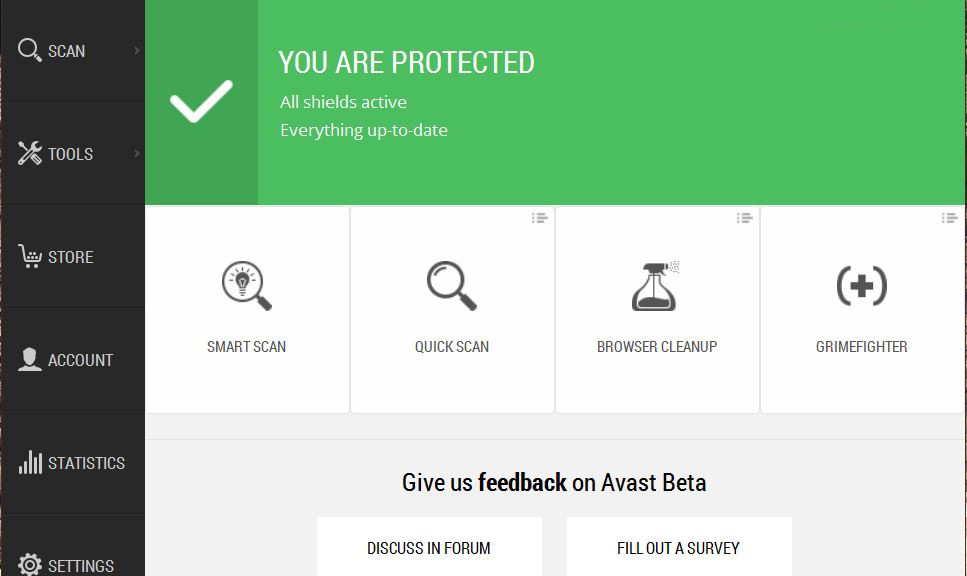
Join the Avast Beta 2015 and share your feedback

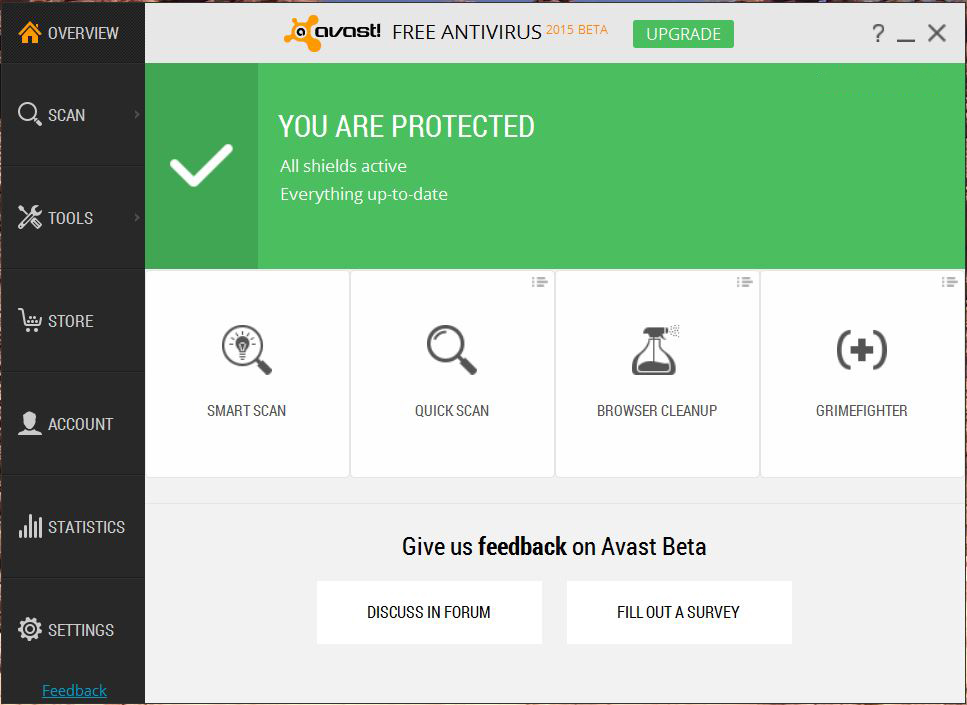
The Avast developers invite you to participate in the Avast 2015 beta test.

2015-Avast-beta

Your participation gives the team working on the latest versions of the world’s most trusted security products a chance to hear your voice – what’s working for you and what is not, how you like the experience, if you see performance or connectivity problems, etc. There are multiple new low-level functions which impact the whole system, so we need your feedback to tune everything for the final release.

Two new features introduced in Avast Beta 2015

Avast NG

Avast NG is a hardware-based virtualization solution capable of running each Windows process in a standalone, safe, virtualized environment (VM) which is fully integrated to your desktop. Each process is executed in its own instance of VM, which means it’s totally isolated from other applications. This feature is now powering Avast DeepScreen, resulting in better detection. The technology will also power the Sandbox and SafeZone components in the final release.

GrimeFighter Free

GrimeFighter will offer free cleaning of junk files and tuning of system settings. These tasks are performed by our Zilch and Torque minions.

Changes and other new features

  • Home Network Security scans your home network for vulnerabilities like WiFi status, connected devices, and router settings.
  • HTTPS scanning is able to detect and decrypt TLS/SSL protected traffic in our Web-content filtering component. This feature will protect you against viruses coming through HTTPs traffic as well as adding compatibility for SPDY+HTTPS/ HTTP 2.0 traffic.
  • SecureDNS protects against DNS Hijack on router/client including unsecured networks, public ones, etc. This feature is active in the paid versions only.
  • Smart Scan integrates all on-demand scans into one scan with different results and recommendations. Includes Antivirus, Browser plugins, Software updates, Home Network, and GrimeFighter.

To learn more about the Avast Beta 2015 , what to test, known issues, and to leave comments, visit the avast! Community forum thread dedicated to the beta test.

Avast Beta 2015 installation links

http://files.avast.com/beta9x/avast_free_antivirus_setup.exe
http://files.avast.com/beta9x/avast_pro_antivirus_setup.exe
http://files.avast.com/beta9x/avast_internet_security_setup.exe
http://files.avast.com/beta9x/avast_premier_antivirus_setup.exe

Thank you for using avast! Antivirus and recommending us to your friends and family. For all the latest news, fun and contest information, please follow us on Facebook, Twitter and Google+. Business owners – check out our business products.



Panda Security launches new 2015 Consumer Line with XMT Smart Engineering Engine #Panda2015

  • Panda Security’s new consumer product line is now available. New solutions are lighter, safer and easier to use than ever before, and are based on the new XMT Smart Engineering architecture, a new engine for a new technological era
  •  Panda Global Protection 2015, Panda Internet Security 2015, Panda Antivirus Pro 2015, Panda Mobile Security and Panda Gold Protection leverage the power of cloud computing to combat maware threats

Madrid, August 13, 2014

Panda Security, The Cloud Security Company, today announced the launch of its new line of consumer solutions. Panda Global Protection 2015, Panda Internet Security 2015, Panda Antivirus Pro 2015, Panda Mobile Security 2.0 and Panda Gold Protection are the five products included in the security company’s 2015 consumer line which this year boasts the new XMT Smart Engineering engine as its main new feature.

The results of the latest comparative tests conducted by independent laboratories such as AV-Comparatives, AV-TEST and Virus Bulletin, where Panda Security achieved the best scores in detection, protection and resource use, showcase the excellent capabilities of the new XMT engine. With XMT, different technologies interact with each other to achieve new levels of efficiency and greater detection and disinfection power to eradicate all threats.

“In a context in which 160,000 new malware samples are created every day, as reported by PandaLabs’ Q2 report, we are very much aware that we have to provide users with the best protection. And the best thing is that the engine with which we’re achieving the highest detection ratios in the industry’s leading tests is the basis of all our endpoint protection products,” said Álvaro Elorriaga, Global Retail Director at Panda Security. “Our aim is to continue integrating technologies in the platform to stay in pole position when it comes to detection, and provide our users with maximum protection and minimum impact on their systems”.

Minimum impact on performance

Designed to provide complete protection with minimal performance impact, Panda Security’s new 2015 Consumer solutions harness the power of cloud computing to combat the myriad security threats users face today: viruses, hackers, online fraud, identity theft and all other known and unknown threats.

new antivirus

“The new 2015 Consumer line is based on four pillars that have allowed us to further improve our security solutions, adjusting them to our customers’ needs: protection, lightness, flexibility and stability”, explained Hervé Lambert, Retail Product Marketing Manager at Panda Security.  

Cross-Platform Protection

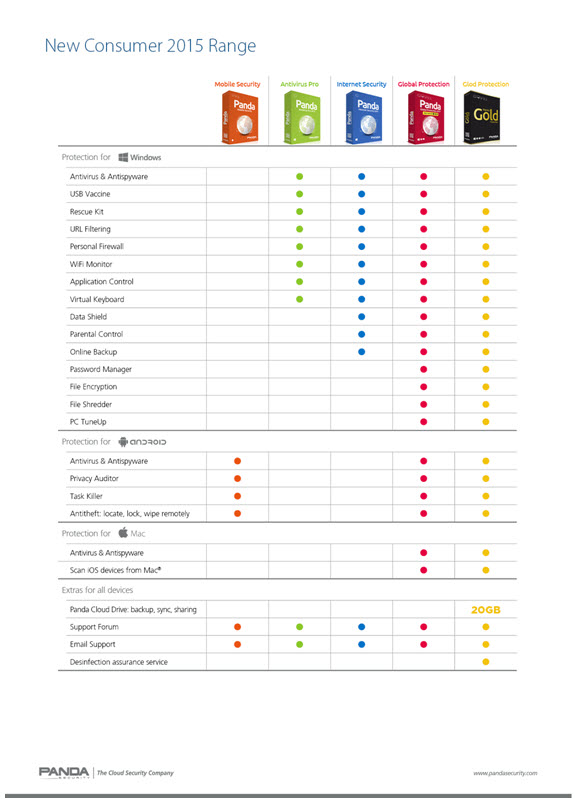
In addition to the new XMT engine, one of the most noteworthy features of Panda Security’s new 2015 solutions is the cross-platform protection provided by Panda Global Protection 2015 for Mac environments and even mobile devices. Furthermore, advanced users will find an additional layer of protection with Data Shield, a new module to protect user data against malware such as ransomware that tries to access sensitive information with malicious purposes (theft, deletion and encryption).

Additionally, the 2015 versions of Panda Internet Security and Panda Antivirus Pro include improved protection capabilities against viruses, hackers and Wi-Fi intrusions thanks to a Wi-Fi monitor that provides full visibility into all the devices connected to the wireless network. Along with these features, Panda Internet Security 2015 helps protect users’ children, identity and data with parental control, application control and online backup functionalities. “Despite Panda Antivirus Pro is the most basic solution in the entire line –it protects Windows environments only–, the truth is that it is much more than a simple antivirus. Besides providing fast and intuitive protection, it also includes other features such as a firewall, virtual keyboard, rescue kit and multimedia options”, explained Hervé Lambert.

New Panda Mobile Security Now Available on Google Play

Additionally, the new Panda Mobile Security 2.0 is now available on Google Play. This solution, designed to protect Android devices, includes features such as geolocation and anti-theft to remotely locate, lock and wipe lost or stolen devices. The new version is much more intuitive and user-friendly than before thanks to a brand new look and feel.

Panda Gold Protection

Panda Security’s 2015 Consumer product line also includes Panda Gold Protection, a complete solution designed to protect users’ data regardless of the device they are using: PC, Mac, and Android smartphones, tablets and Smart TVs. Panda Gold Protection is the only product in the entire 2015 line that features Panda Cloud Drive, an online backup and sync service with 20 GB of free space that allows users to store files securely in the cloud and access them from any computer, mobile device or Web browser at any time.

Users who want to take a free trial of Panda Security’s new 2015 solutions can go to http://www.pandasecurity.com/homeusers/

Also, users who want to buy Panda Security’s products can do so online on the company’s website or at the usual points of sale (retailers, dealers, shopping malls, etc).

Main features of Panda Security’s 2015 Consumer solutions


new consumer 2015 range

About Panda Security

Founded in 1990, Panda Security is the world’s leading provider of cloud-based security solutions, with products available in more than 14 languages and millions of users located in 195 countries around the world. Panda Security was the first IT security company to harness the power of cloud computing with its Collective Intelligence technology. This innovative security model can automatically analyze and classify thousands of new malware samples every day, guaranteeing corporate customers and home users the most effective protection against Internet threats with minimum impact on system performance. Panda Security has 80 offices throughout the globe with US headquarters in Florida and European headquarters in Spain

Panda Security collaborates with The Stella Project, a program aimed at promoting the incorporation into the community and workplace of people with Down syndrome and other intellectual disabilities, as part of its Corporate Social Responsibility policy.

For more information, please visit www.pandasecurity.com/


The post Panda Security launches new 2015 Consumer Line with XMT Smart Engineering Engine #Panda2015 appeared first on MediaCenter Panda Security.

Presentation of the 2015 Consumer Antivirus Solutions

Today is not just another Monday! Aching muscles, photos in red jumpsuits, exciting stories… What are we talking about? About the presentation of our 2015 product line, of course!

Unashamedly proud of our new XMT scan engine, on Friday we decided to launch the new range in style at Carlos Sainz Karts in Madrid. We brought together representatives from the media to present our new antivirus and explain all the new features they would find in this new product line.

But before we tell you all about them, let’s tell you their names: Panda Global Protection 2015 Multi-Device, Panda Internet Security 2015 Multi-Device, Panda Antivirus Pro 2015 and Panda Mobile Security 2.0.

New Antivirus Panda 2015

What better place to talk about engines than a go-kart track? So we had our Global Retail Director, Alvaro Elorriaga, tell everyone about the revolutionary power of our new XMT™ engine. “Threats have changed and this means we have to change the way we scan, detect and disinfect.”

Panda 2015 Alvaro Elorriaga

The XMTâ„¢ engine, which is in all the new Panda products, includes a new protection system, new heuristic technologies, new behavior analysis features and new anti-exploit technologies.

What’s more, Herve Lambert, Product Marketing Manager, explains that “the latest independent industry tests”, carried out by AV-Comparatives, AV-TEST and Virus Bulletin, “demonstrate the power of the new engine included in Panda Security’s latest solutions.”

2015 Consumer Product Line Features

During the presentation, our colleague Herve explained in more depth our product features, including the Data Shield, a layer of data protection that prevents one of the fastest-growing threats: ransomware. This dangerous malware infects computers and locks them until the user (or company) pays a ransom.

Herve also talked about other new features, such as the Wi-Fi Monitor, which lets you know what devices are connected to your network; and Application Control, which lets you set run permissions for the programs installed on your computer.

Finally, Pablo Alonso, Consumer Sales Director for Spain, praised “the effort made by Panda Security in terms of pricing and licensing.”

The Panda Security race

Given that we were at the go-kart track, what other way to end the day than racing karts!? So, journalists and our Panda Security colleagues donned suits and helmets to organize our very own Grand Prix. Needless to say, some fared better than others. ;)

Karts Panda 2015

It was soon apparent who had driven a kart before and who was a first-timer. After some warm-up races and two semi-finals, the winner was our friend and colleague Pablo Alonso (thanks Pablo for flying the flag for Panda!).

Panda 2015 team

Many thanks to all of you who joined us on the day!

The post Presentation of the 2015 Consumer Antivirus Solutions appeared first on MediaCenter Panda Security.