Tag Archives: News

All four major browsers hacked at pwn2own

Last week computer hacking competition pwn2own once again took place at the CanSecWest conference in Vancouver.

During the competition, hackers and security researchers are challenged to exploit popular software and devices using previously unknown vulnerabilities.

Successful hackers win the device that they exploited, a cash prize, and a “Masters” jacket celebrating the year of their win.

Pwn2own 2015 was an incredibly eventful competition with over $500,000 dollars of rewards issued and all four major browsers successfully hacked, some in under a second.

News of ubiquitous software being hacked in such a short time can often leave us feeling despondent about the state of security but I believe that competitions such as pwn2own give us cause for optimism.

Cash prizes for hacking at competitions and bug bounty programs, such as those run by Google and Facebook, motivate hackers and researchers to use their skills to help improve security and not just exploit it.

As long as vulnerabilities are disclosed to the right parties when they are discovered, it helps to reduce the window of opportunity for malicious hackers to turn a profit.

Remember to update

While software manufacturers were likely hoping to come through pwn2own 2015 unscathed, most will now set about fixing and patching their products and services to mitigate these newly discovered threats.

Expect new security updates in the near future and remember to always keep your operating system and programs up to date.

Title image courtesy of securityaffairs.co

Hacking Hollande, Merkel and Cameron’s eyes through their photos in Google

eye

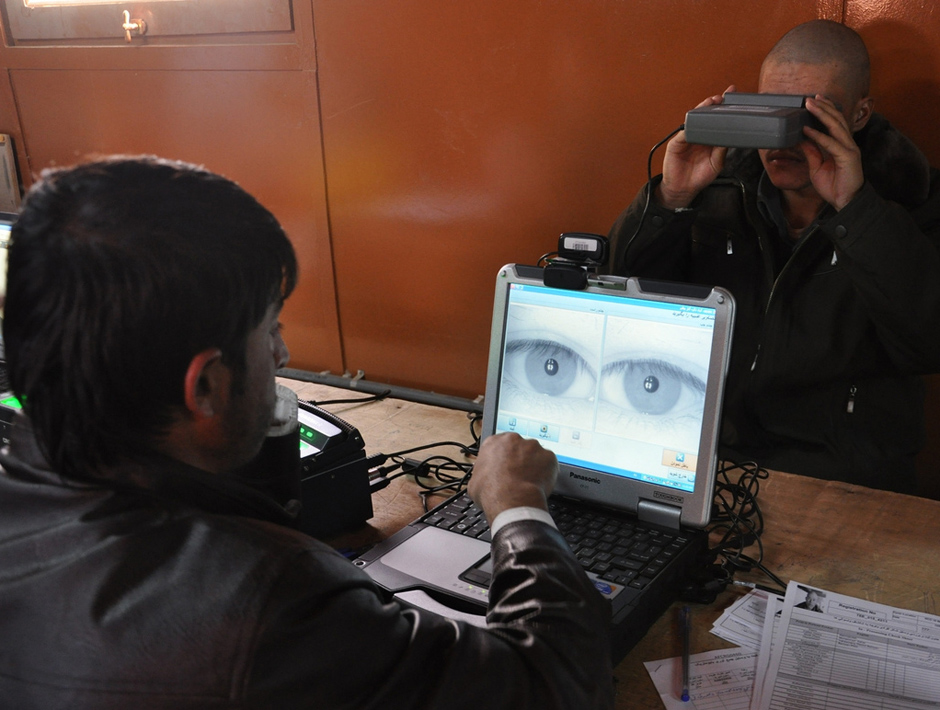
In Origins, a movie released last year, appears a worldwide biometric signature file different to the fingerprint’s one; an iris readings record. Although this disturbing reality is still unthinkable, there have been many steps in incorporating eye scanners as a method of personal identification.

This technology is already being used in some companies to control their employees’ entrance and exit, as well as in corporations with strict security measures. But, its daily use is getting closer. Mobile phones manufacturers like Samsung, Nokia and Fujitsu have announced that their upcoming models will have an iris scanner among its features.

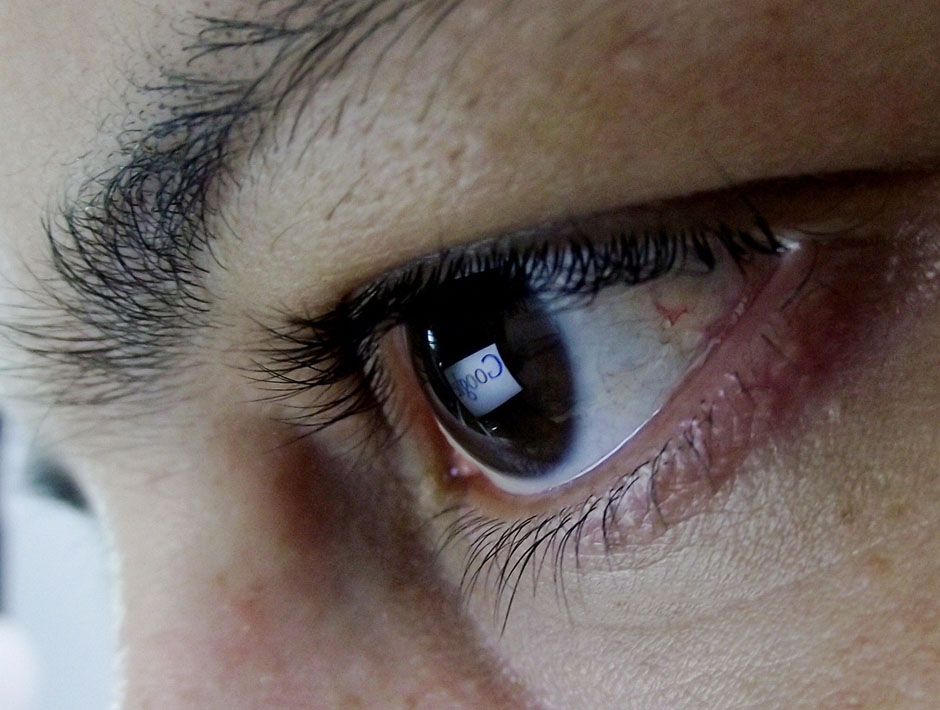
Maybe in the future it would be enough to peer at the screen to unlock your mobile phone or access some of its features. If so, you’d better check the pictures you upload on the Internet. Jan Krissler, expert in computer security for Telekom Innovation Laboratories, proved that some of these biometric systems can be evaded simply using snapshots taken from Google Images.

Krissler had previously exposed the vulnerabilities of fingerprint readers. In December he copied none other than the German’s defense minister, Ursula Von der Leyen
eye scanner

On that occasion he used the Verifinger recognition program to read Von der Leyen’s fingerprint, that he had photographed himself in a public event. Then he printed the result on a transparent surface, applied latex and there it was a fingerprint clone! However, he wasn’t been able to do further verification or testing.

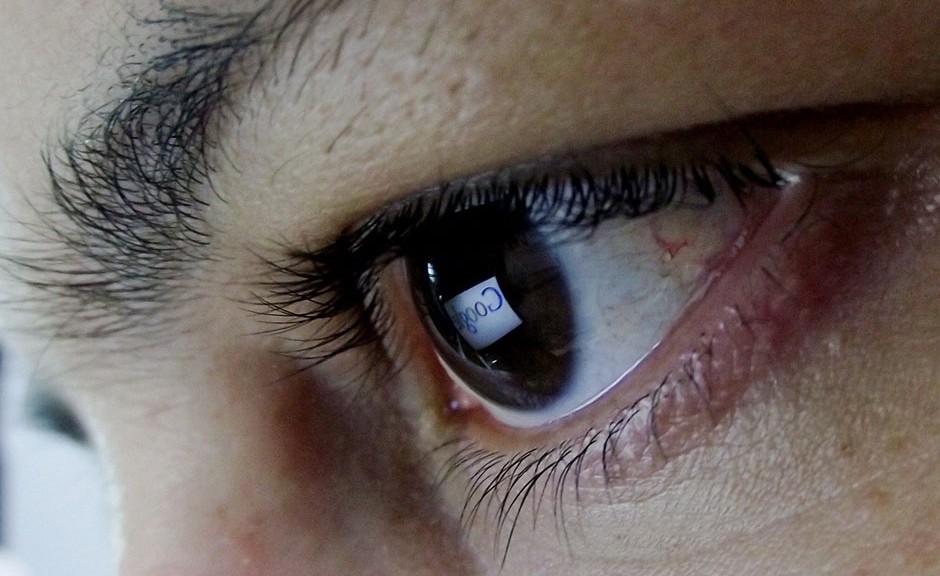
This time, Krissler claimed he can do something similar with eye scanners without using his own camera. As we mentioned, you just need to search with certain premises in Google Images. The first one is that the target’s eyes must have enough brightness, as the researcher used a system based on infrared light, Panasonic’s Authenticam BM-ET200 which is one of the most extended technologies.

You also need a high quality image; size and clarity are important, to a certain point. In his tests he succeeded to use iris with diameters that did not exceed 75 pixels. It’s easier to deceive an eye scanner than a fingerprint reader, you don’t even have to make a clone, just print the picture and show it to the device, and it will mix it up with the real one.

Surely we all have a picture with these qualities, but it will never surpass the amount there is of any famous person, including politicians. Just type Barack Obama or François Hollande on Google and thousands of snapshots will emerge, of all sizes and shapes.
angela merkel

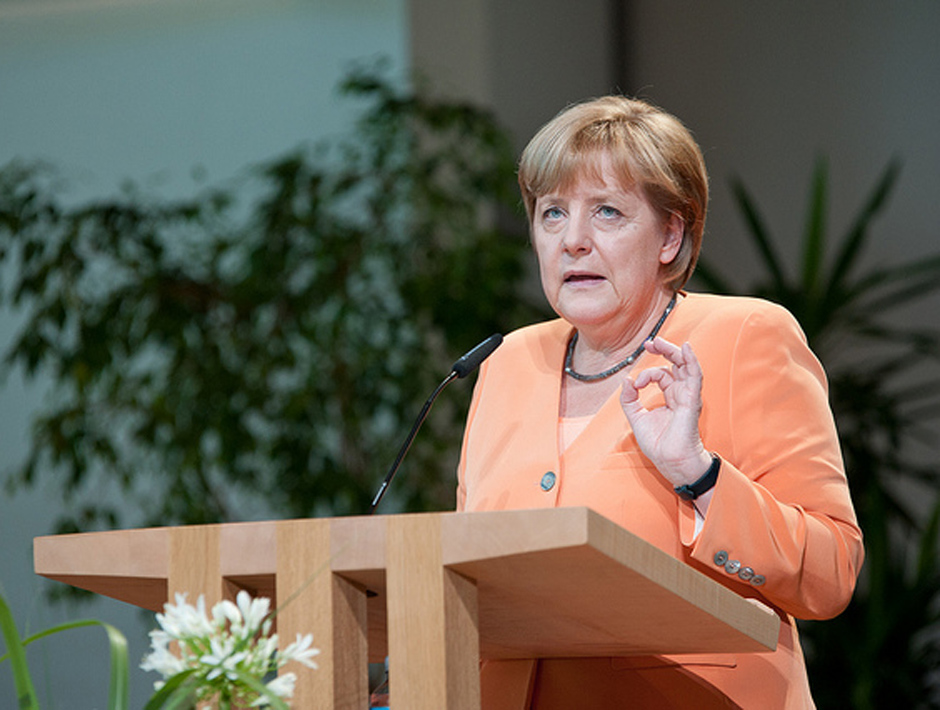
Krissler searched the faces of Vladimir Putin, Hillary Clinton, and David Cameron among others, before choosing Angela’s Merkel to carry out his verification. He chose an iris with a 175 diameter of the German Chancellor which Panasonic’s scanner recognize without a problem.

However, in an actual attack, the process wouldn’t end here, and the remaining steps are complicated. Accessing the biometric readers which Merkel or other politicians would use is not as simple as getting their picture.

Furthermore, although Fujitsu’s technology is also based on infrared light there are other methods, and there is the possibility to apply protection filters to the pictures. Despite these obstacles and reservations, Krissler wants his findings to be a warning to manufactures so they implement safety measures to future developments and to future users so they watch what they post, never better said!

The post Hacking Hollande, Merkel and Cameron’s eyes through their photos in Google appeared first on MediaCenter Panda Security.

Twitch hacked, resets all passwords

On March 23rd, online video-game streaming service Twitch issued a notice that users accounts may have been hacked.

As a result of the hack, Twitch reset of all account passwords and stream keys.

In an email to users, Twitch explained what has happened and what information was potentially accessed by attackers. This included:

  • Usernames
  • Email addresses
  • Passwords
  • First and last name
  • Phone number
  • Address
  • Date of birth
Twitch


This isn’t the first time that hackers have targeted Twitch and its users. Some of the most well-known streamers were attacked as far back as 2013.

Choosing a new strong password

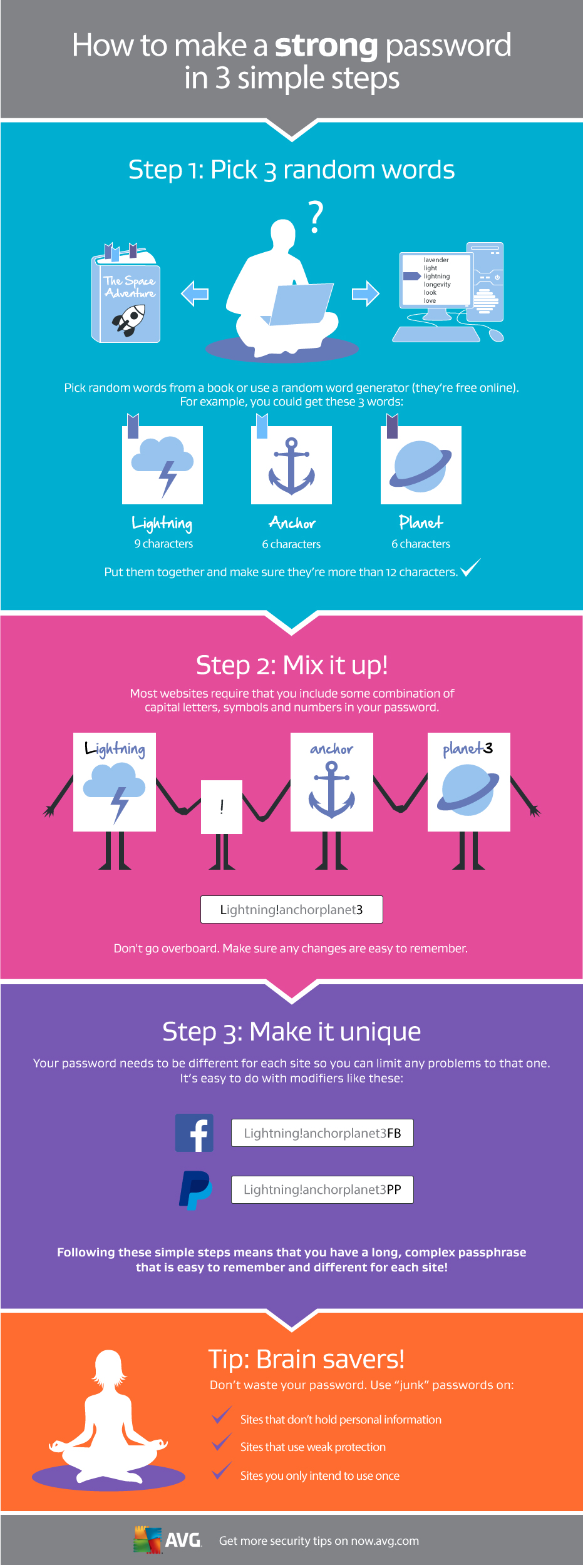
For the millions of Twitch users, the challenge remains to pick a secure and strong new password for their Twitch account. It’s important to create a new password for any account that shares the same username/password combination as their Twitch account.

Making a Strong Password

TechHire: A New Initiative to Pay Dividends in Diversity in Tech

Companies and organizations from Starbucks to the Federal Government are desperate for tech workers, so there is no reason not to recruit the best talent whatever it resides.

It was also encouraging to see that these concerns are ongoing at our country’s highest levels. On March 9, President Obama announced the TechHire Initiative before the National League of Cities. It’s a new program that includes a grass-roots campaign to achieve greater diversity in the tech world.

In his remarks to city leaders, the President stated, “When these jobs go unfilled, it’s a missed opportunity for the workers, but it’s also a missed opportunity for your city, your community, your county, your state, and our nation.  And here’s something else:  If we’re not producing enough tech workers, over time that’s going to threaten our leadership and global innovation, which is the bread and butter of the 21st century economy.” You can learn more here.

It was no coincidence that President Obama unveiled the campaign at the National League of Cities convention, which is made up of mayors and community leaders from around the U.S., as TechHire involves local communities, local leaders in a number of ways.

For example, on a training and teaching basis, it includes universities and community colleges but also nontraditional approaches like “coding bootcamps,” and online courses.

The President announced that 20 cities and regions across the country, from Louisville to Portland, will work together to recruit and place applicants in some the 120,000 vacant positions and to develop more fast track tech training opportunities.

In other words, it’s addressing the current employee shortage and the pipeline issue simultaneously – a great approach, in my opinion.

The President also announced $100 million in new Federal investments to train and connect more workers to good jobs in technology and other in-demand fields. The initiative will provide training and employment support to those in need including individuals with child care responsibilities, disabilities, limited English or disconnected youth.

Here are just a few examples of the initiative in action:

  • In St. Louis, 150 employers will partner with local non-profit Launchcode, to train women and underrepresented minorities for tech jobs.
  • In New York City, the Tech Talent Pipeline has announced new commitments to prepare college students in the City University of New York system for and connect them to paid internship opportunities at local tech companies.
  • A $100 million competition has been launched to connect Americans with disabilities and disconnected youth to jobs in technology and other in-demand fields.


I know many of my readers are small business owners and managers.  I think we can all agree that tech and innovation are major parts of any business proposition these days.

I’m excited about this new initiative because it addresses a real need for employers. It is inclusive and engages local communities, where real work and progress can be made—and tracked!  People can get involved and learn more at #TechHire on social media and follow @WhiteHouseOSTP on Twitter.

Judith Bitterli answers your questions on Women in Tech

  • Why are there fewer women studying technology but more women using it?

  • Do you think more women would be in tech if there wasn’t so much misogyny in the media?

Video

Judith Bitterli Answers Your Questions on Women in Tech


  • Do women in tech jobs earn as much as their male counterparts?

  • Women in tech are facing time management issues. What can they do to solve this problem?

Video

Judith Bitterli Answers Your Questions on Women in Tech


  • Should young girls be discouraged that tech is a male dominated field?

  • What do companies like AVG do to encourage young women to start a career in tech?

Video

Judith Bitterli Answers Your Questions on Women in Tech


  • Do you think suppliers and consumers can work together to encourage more women to have a career in tech?

  • Is there an effort to feature women who are excelling as an example for others?

Video

Judith Bitterli Answers Your Questions on Women in Tech


Thank you for all your questions, if there’s something you’d like to ask me, please let me know by getting in touch via Twitter @JudyatAVG.


Are Facebook’s new guidelines for inappropriate content enough?

The new policy, which runs to 2,500 words is designed to remove the confusion over why some content gets removed and some doesn’t.

So what kind of things are included in the new  guidelines?

Several things that you would expect to be deemed inappropriate were listed, for example:

  • Bare buttocks
  • Female breasts that show a nipple
  • Text that contains vivid detail of a sexual act
  • Praising or supporting terror groups
  • Altered images or video considered bullying
  • Hate speech
  • Criminal activity
  • Self injury


The list goes on and is a step in the right direction for users, but does it go far enough?

For example you could still post graphic images or video and if, and only if, someone complains then an interstitial page will be shown warning viewers that there is a potentially graphic or upsetting graphic image.  Why should this content be on the site at all?

It seems that while many of the obvious things that we would not expect to see in normal life are being blocked, some still are allowed. I recently saw a clip spreading around that showed the murder of the French policeman in the Charlie Hebdo attack earlier this year.

While no terror group can exist on Facebook, that doesn’t seem to stop people sharing graphic inappropriate content relating to violence, discrimination or other unwelcome things.

While I applaud any move that reduces the amount of inappropriate content on a social network used by minors, I still feel that they could do more.

I wonder whether there is a revenue motive at hand. Graphic videos are accompanied by ads around them and when they go viral then so do the ads around them.  And remember kids of 13 could be watching this content legally!

Can you imagine if a major news network showed the actual murder on TV, there would be public outrage and complaints to regulators, so why are we allowing it to happen online.

I believe we should look further into why some issues seem acceptable online but not in the real world. In my eyes, the rule should be as simple as “if you can’t see this offline in a public place then it is unacceptable to allow it online in a public place”.

Follow me on twitter @tonyatavg

Women in Tech Speak Out at SXSW

I am in awe of the women who came to my conversation “Boardroom or Baby” at SXSW this past weekend. They were bright, energized, passionate and very engaged in the conversation.

I started the session by asking the women to team up and decide what they believe to be the single most important issue to help women succeed in tech.

Video

Judith Bitterli Boardroom or Baby Session Highlights from SXSW

As you are probably aware, currently women comprise about only 30% of the tech workforce and make roughly 77 cents on the dollar of what a man makes in tech.

We have a lot of work to do to close the gender gap, but based on the energy coming out of room # 407 at SXSW, I am very hopeful we can get there! I am committed to helping and one of the ways I will contribute is to take each of the items put forth by the group and write a blog offering up counsel on how to successfully navigate the issue. I will be bringing in subject matter experts and life experts to help. Below is the list. If you feel I missed anything please get in touch via Twitter @judyatAVG.

My question to the group was: What is the single most important thing we can do to help women succeed in tech?

Here are their answers in their own words below:

  • Make your career goals known.
  • Speak up and stand up for what you think is right.
  • Don’t let men talk for you; make sure your voice is heard.
  • Work hard.
  • Gain people’s respect.
  • Build and use your network
  • Find a strong female leader in the workplace as a mentor. Break the “Bro” club.
  • Fight against confidence loss when you’re in a room of male leaders.
  • Female diplomacy – speak up
  • Mentorship: Be a mentor to other women and girls. Find a female mentor higher up.
  • Find a sponsor.
  • Create formal sponsor programs, so that men can mentor women without social stigma.
  • Build resources for keeping and supporting a woman’s ability to stay working after she has a baby.
  • Stand up for what we need, realizing the value you bring.
  • Own your own career path to success.
  • Don’t operate from a place of fear.
  • Make people understand that flexibility does not equate to laziness, so don’t be afraid to ask for it.
  • Create awareness on the issue.
  • Make it an issue all care about, not just women.
  • Show the value to the bottom line or success to the business, so everyone is onboard with empowering women.
  • Strip names off of resumes.
  • Reach and speak out to younger girls in elementary school and middle school.
  • De-genderize toys.
  • Speak up in meetings and having a point of view.
  • Build more STEM work in elementary school for young girls.
  • Don’t be the first to tear another woman down.
  • Connect with other women below and beside you and find what you can do to help them achieve their goals.
  • Women should support women.
  • Have a support system in place for mothers.
  • Mentor other women.
  • Find male allies.
  • Get in the mix (female diplomacy).
  • Talk about issues.
  • Remove negative stigma on the term “emotional”.
  • Have more forward conviction in the forward progress we want to see.
  • Educate girls at a young age – letting them know the opportunities are there (Girls who Code).
  • Start off strong. Ask for what you deserve.
  • If you think you can do it go for it!
  • Inner belief: skills, ability, desire.
  • Attitude: stop apologizing, be assertive, and take charge.
  • Maternity leave.
  • Making a “girl playground”.
  • Start girls young in tech.
  • Encourage women not to be afraid to go into a male driven field. Make it welcoming in both culture and environment.
  • Create policies that give flexibility to maternity leave.

I was struck by how many individual issues were highlighted. If you would like to hear about any of these in particular on Twitter, please let me know and I will try to prioritize it.

I plan to address these issues on Twitter as well as a dedicated Facebook page as well as here on the blog.

Remember, change happens when like-minded people band together for a common cause. This is our cause:  removing gender bias from the workplace and not allowing women to be penalized for having a baby.

To all the women in tech attending my session at SXSW- and beyond, I thank you and encourage you to stay strong and continue to speak out!

Judith

USB Killer reminds us what untrusted really means

If this “USB Killer” invention is real, then plugging in one of these unknown devices could electrocute your defenseless PC or Mac, and damage it beyond repair.

It’s a far cry from today’s worst-case-scenario of getting infected by malware and it’s a timely reminder to anybody who stumbles across a USB device by chance – you’ll want to think twice before plugging it in.

Indeed the natural curiosity of what happens when someone finds a USB stick in a public place is well documented, and as far back as 2010 it even spawned the concept of the USB dead drop.

This latest news adds to a growing concern around the security of all USB devices.  Last year researchers Karsten Nohl and Jacob Lell revealed a number of attacks known as BadUSB that has since uncovered a swathe of problems where malware could be transferred at a hardware layer with very little ability to protect against this type of threat.

But we have previously warned about the dangers of anything ‘untrusted’ – be it software, apps and hardware devices.  Your security these days relies more on trust than ever before, as outlined recently by our CEO Gary Kovacs in his keynote speech at Mobile World Congress.


What to do if you find an unknown USB device?

NEVER connect it to your PC or Mac. At best it will contain Malware, or at worst it may be a USB Killer (although unlikely).

Try to return it to its owner. Ask around or check if it has a label on it; or leave it where you found it, in case the owner returns to find it.

Consider destroying the USB device. Remember, if the device isn’t yours – neither is the data that it might contain.

Until next time, stay safe out there.

Women in Tech: The Conversation Continues at SXSW  

I was struck by the mea culpa issued last week by former Huffington Post and Washington Post manager-turned entrepreneur Katharine Zaleski. Her commentary, posted on Fortune.com on March 3, was entitled: “I’m sorry to all the mothers I worked with.

Zaleski said: “I didn’t realize how horrible I had been, until I had a child of my own.”

Then, she recounted the eye rolling and “silently slandering” that she participated in with colleagues – aimed at working moms who couldn’t make end of day meetings or meet for drinks after work.

That was before her personal journey and becoming a mother herself. “Empathy is a great teacher,” she said.

Zaleski has since founded PowertoFly, a job matching platform for women in highly skilled positions across tech and digital that they can do from home, or in an office, if they choose.

The time commitment to parenting contradicts office culture, Zaleski noted in her video interview with Fortune that runs alongside her column.  “We need to end the idea that work value is based on physically being there.”  In other words, she advocates, that we need to value output over time in office.

As Zaleski acknowledges, work at home and/or flexible work schedules is one solution to the problem for moms – though not the only one.

On that note, I am super excited to have the conversation “Boardroom or Baby: The Choices Women have in Tech,” at SXSW this Saturday (3:30 p.m. JW Marriott Room 407) which delves into the heart of this topic.

There are many considerations and questions women need to ask themselves if they are considering having a family and a career in tech. I’m fond of using the analogy of wedding planning:  Many of us carefully plan for our wedding day – a one day event in our lives – but don’t plan for the critical decisions we must make about our careers and our families.

As Zaleski noted in her interview: 1 billion women will be coming into the workforce in the next 10 years – 80% of which will be mothers (based on U.S. Census Bureau estimates). Yet, as she also noted, today we also see more women dropping out of the work force, more than at any time since the 70s. As she advocates, “We have to find a way to allow women to careers while they also have lives.”

You don’t need to be a woman, or to have a child to understand this is a problem that we need to address.

This is why I believe ‘women in tech’ has become one of the major discussions at this year’s SXSW- and of our time. As I noted in my previous blog, there are quite a few sessions and conversations taking place on the topic of women in tech, gender equality and diversity. It underscores that the time is finally now for this issue in our industry.

In preparation for my talk, we interviewed nearly 20 Silicon Valley women in tech, along with some men, for their perspective on gender equality in the tech workplace today.


Video

Boardroom or Baby?


We received some amazing and thought provoking insights, which I will be sharing in my session, here and on Twitter and Facebook.

I also want to thank all of the remarkable people who participated in interviews for my session, among them: Julie Hanna, entrepreneur and board chair at Kiva; Robin Abrams, veteran tech CEO , and her daughter, Libby, a new entrant in the tech workforce. Also, Sheila Brady, former engineering director at Apple, and Barbara Krause, Silicon Valley PR pro, and her daughter Emily, another new tech workplace entrant. Also, Stephanie Boudreau, program manager for Google Hangouts, and Robin Starbuck Farmanfarmaian, a health, IT and bioscience executive and entrepreneur.

Finally, I want to call out that we at AVG are also delighted to be the sponsor of the Mothers’ Room for SXSW this year, for the entire festival. If you are a mom attendee, come check it out.

It’s located in Room 1 in the Convention Center. It’s a quiet comfortable place to feed and change your baby, entertain yourself, and keep siblings busy.

We at AVG know that for moms and all parents, looking after our families is job number one. Not only physically but in cyberspace as well…

I look forward to continuing our conversation at SXSW Interactive and beyond.

Join us in person or at @judyatAVG #techwomen #SXSW.

AVG AntiVirus Wins Top Rated Security Product 2014

“Does exactly what it says on the tin” was an advertising slogan that appeared in the UK in the 90s. It resonated well with consumers due to its simplicity. Today, it’s a common term referring to something that is straightforward and does the job.

I am reminded of this phrase when I read the recent independent test results for the AVG AntiVirus products. The results show that AVG products are delivering our promise to protect our users from malware. Lets take a moment to review the recent results…


VB100

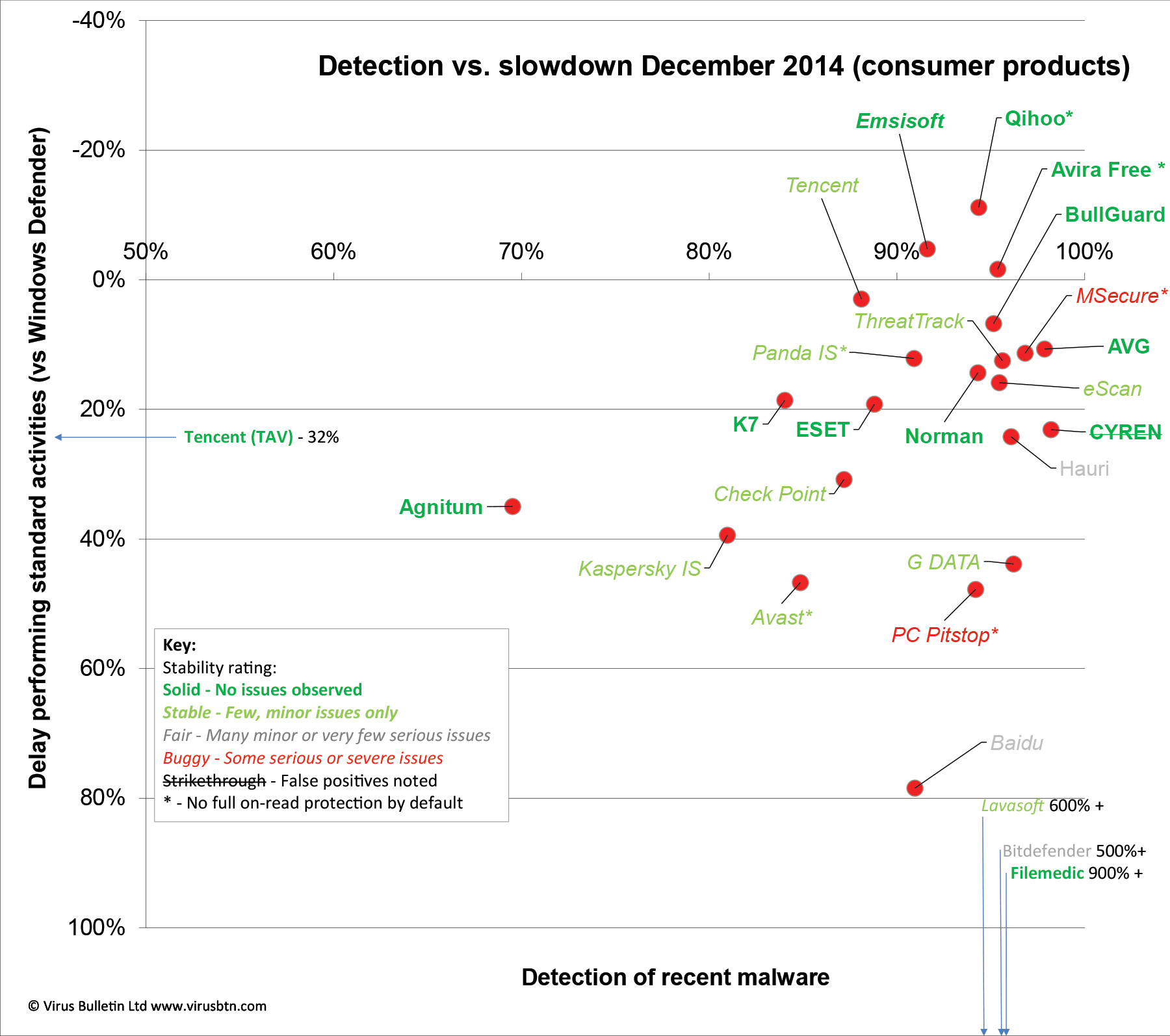
Virus Bulletin (VB) tested 39 Anti-malware solutions running on Windows 7 Professional and AVG AntiVirus received the top RAP result with 91.6%. The test measures a products detection rates on the newest samples available as well as an unknown sample to see how quickly and accurately they detect it. Click here to see the full test results.

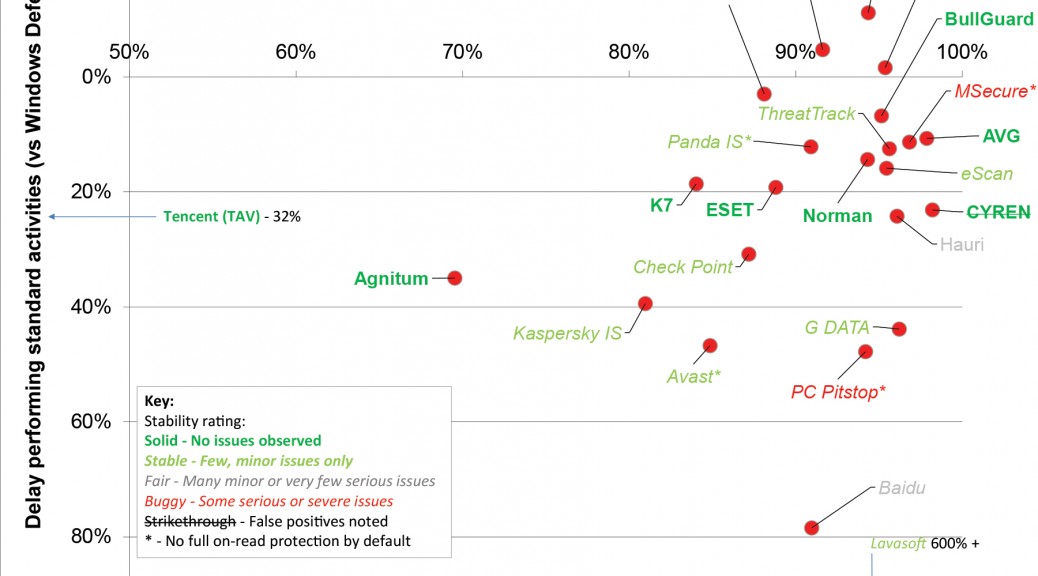
But it’s not just about An important part of providing the best protection is that the detection engine doesn’t slow down the performance of the machine. VB tested the performance impact slowdown vs detection and there was nothing to worry about here either, as you can see here.

VB100

AV-Comparatives

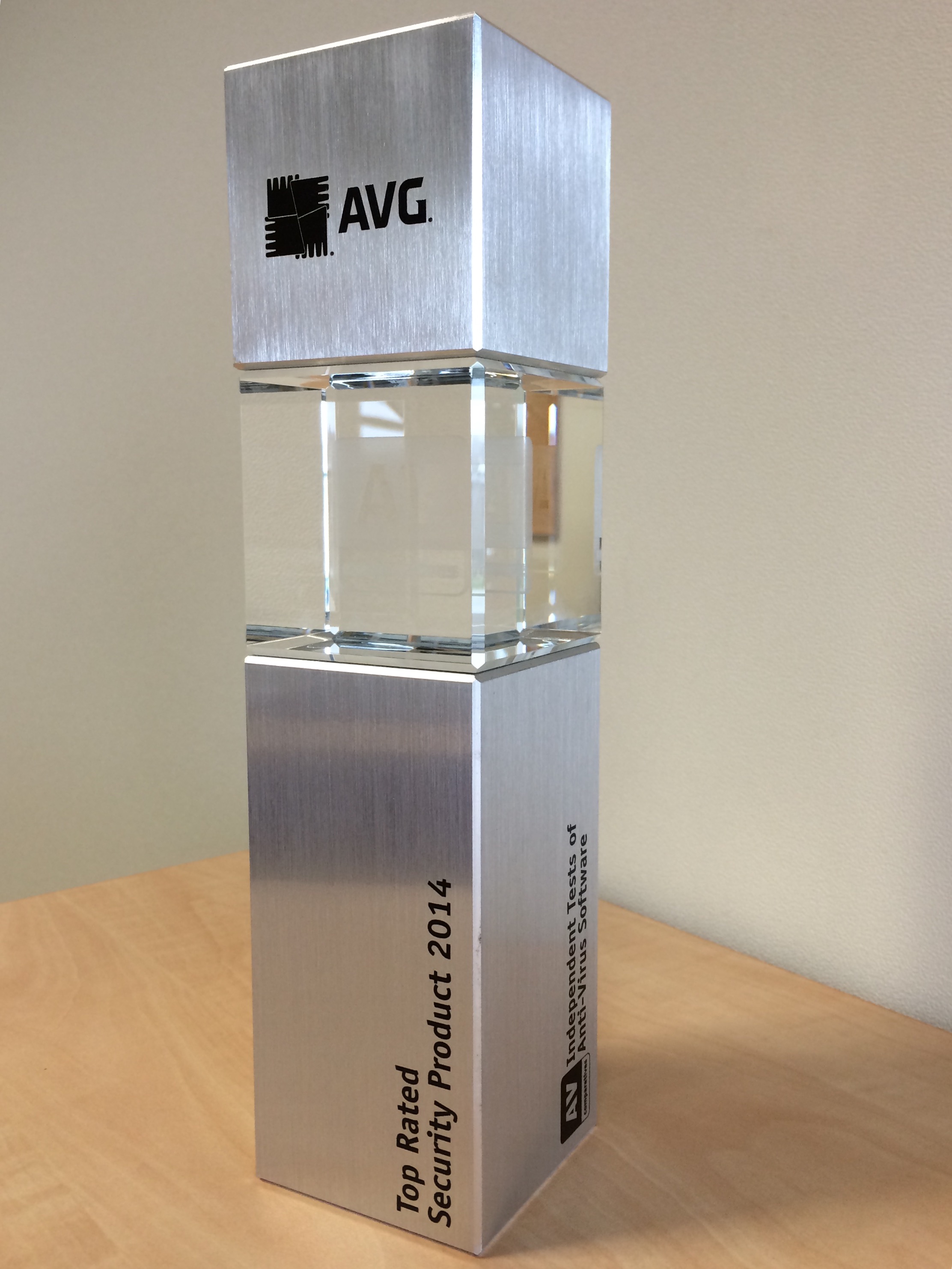
Detecting malware is of course extremely important but its also critical that malware is removed once detected and AV-Comparatives conducts a test that measures the quality of removal and AVG AntiVirus achieved ‘Gold’ status in this test along with ‘Top Rated Security Product 2014’.

AV Comparatives


In summary the above tests show that the AVG AntiVirus products really do ‘exactly what it says on the tin’ for detection, performance and in the removal of malware.

It should give you the confidence to use the Internet without worry as AVG has you covered.

Follow me on twitter @tonyatavg