This proof of concept exploit allows any attack to reboot any CX9020 PLC and add random (Web) users to be configured.
Monthly Archives: October 2015
Bamboo Java Code Execution
Bamboo had a resource that deserialised arbitrary user input without restriction. Attackers can use this vulnerability to execute Java code of their choice on systems that have a vulnerable version of Bamboo. To exploit this issue, attackers need to be able to access the Bamboo web interface.
TalkTalk ‘receives ransom demand’ for cyberattack
TalkTalk’s chief executive has confirmed that she has received a ransom demand from an individual or group claiming responsibility for the cyberattack.
The post TalkTalk ‘receives ransom demand’ for cyberattack appeared first on We Live Security.

Joomla Update Patches Critical SQL Injection Vulnerability
Joomla released a new version of its CMS Thursday, 3,4,5, that addresses a critical SQL injection vulnerability that could have let attackers gain access to data in the backend of any site running the platform.
How to get the best out of your computer

You have surely, at one point or another, missed the speed at which your computer once worked when it was new. Now, when you turn it on, it takes an eternity to start up and you’re sat there wasting time.
With time it is normal for the performance of your PC to drop due to the buildup of unnecessary files which reduce the space available on the hard drive.
Likewise, the fragmentation of files, which can also take excessive amounts of time, plays a role in slowing down your PC’s performance.
With this in mind, it is recommended that you do a clean out of your PC every so often, eliminating unnecessary files, etc.
Seeing as we can’t give you a new computer, we came up with a solution to help your PC regain its former glory. Even if you didn’t think it possible, you can do this with an antivirus software.
Cleaning the PC: solution for a slow computer
The PC Tuneup feature is present in the 2016 antivirus protection line through the Panda Global Protection 2016 and Panda Gold products.
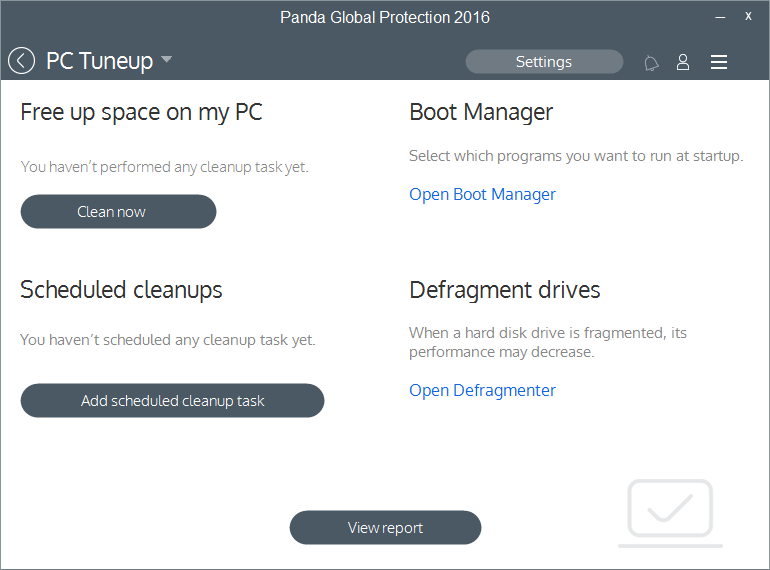
With this you can:
- Clean cookies and unnecessary, temporary files that can slow down your PC.
- Eliminate invalid entries on the register which can affect your PC’s start up.
- Manage the start up of your computer. You will be able to see all running programs and deactivate them if necessary. Also, the product constantly monitors and advises the user in the event of a program installing itself during the start up process.
- Optimize your Android devices to increase performance and battery life.
Do you want to try it out? Give our new 2016 consumer solution products a go and tell us what you think!
Remember that we can only help you if you contact us via the technical support page.
The post How to get the best out of your computer appeared first on MediaCenter Panda Security.
CVE-2015-6975 (iphone_os, itunes, mac_os_x)
CoreText in Apple iOS before 9.1, OS X before 10.11.1, and iTunes before 12.3.1 allows remote attackers to execute arbitrary code or cause a denial of service (memory corruption) via a crafted font file, a different vulnerability than CVE-2015-6992 and CVE-2015-7017.
CVE-2015-6979 (iphone_os)
GasGauge in Apple iOS before 9.1 allows attackers to execute arbitrary code in a privileged context or cause a denial of service (memory corruption) via a crafted app.
CVE-2015-6981 (iphone_os)
WebKit, as used in Apple iOS before 9.1, allows remote attackers to execute arbitrary code or cause a denial of service (memory corruption and application crash) via a crafted web site, a different vulnerability than other WebKit CVEs listed in APPLE-SA-2015-10-21-1.
CVE-2015-6982 (iphone_os)
WebKit, as used in Apple iOS before 9.1, allows remote attackers to execute arbitrary code or cause a denial of service (memory corruption and application crash) via a crafted web site, a different vulnerability than other WebKit CVEs listed in APPLE-SA-2015-10-21-1.
CVE-2015-6986 (iphone_os)
com.apple.driver.AppleVXD393 in the Graphics Driver subsystem in Apple iOS before 9.1 allows attackers to execute arbitrary code via a crafted app that leverages an unspecified “type confusion.”