-----BEGIN PGP SIGNED MESSAGE-----
Hash: SHA1

 _______________________________________________________________________

 Mandriva Linux Security Advisory                         MDVSA-2014:190
 http://www.mandriva.com/en/support/security/
 _______________________________________________________________________

 Package : bash
 Date    : September 26, 2014
 Affected: Business Server 1.0
 _______________________________________________________________________

 Problem Description:

 It was found that the fix for CVE-2014-6271 was incomplete, and
 Bash still allowed certain characters to be injected into other
 environments via specially crafted environment variables. An
 attacker could potentially use this flaw to override or bypass
 environment restrictions to execute shell commands. Certain
 services and applications allow remote unauthenticated attackers to
 provide environment variables, allowing them to exploit this issue
 (CVE-2014-7169).

 Additionally bash has been updated from patch level 37 to 48
All posts by 007admin
Shellshock, the security hole in Bash that affects Linux and OS X

A security hole has been discovered in Bash that jeopardizes the security of Linux and Mac users. This vulnerability, dubbed ‘Shellshock’, affects the command interpreter in these operating systems.
So what does this mean? To give you an idea, this flaw could allow a cyber-criminal to remotely access a system using Bash and insert spyware designed to steal confidential information or even take control of the system.
The hole was discovered by Stephane Schazeblas and it would appear that it is more serious than Heartbleed, the vulnerability discovered in the OpenSSL library last April. According to the CVSS rating of the security hole, Shellshock has a score of 10, while Heartbleed was rated 5.
What can you do to protect yourself from the Bash vulnerability? Update your software and keep your operating system up-to-date.
* Many thanks to our colleague from Critical Malware, Daniel Garcia, for his help.
The post Shellshock, the security hole in Bash that affects Linux and OS X appeared first on MediaCenter Panda Security.
Week in security: Bash Bug, BlackEnergy and hoax attacks
This week, a serious software vulnerability, which rapidly became known as the ‘Bash Bug’ or ‘Shellshock’ dominated the headlines, as two other faked news stories showed that hoaxes can fool the world very easily these days.
The post Week in security: Bash Bug, BlackEnergy and hoax attacks appeared first on We Live Security.

Several vulnerabilities in extension phpMyAdmin (phpmyadmin)
Release Date: September 26, 2014
Component Type: Third party extension. This extension is not a part of the TYPO3 default installation.
Affected Versions: version 4.18.2 and below
Vulnerability Type: XSS, CSRF
Severity: Medium
Suggested CVSS v2.0: AV:N/AC:M/Au:S/C:P/I:P/A:N/E:ND/RL:O/RC:C (What’s that?)
References: PMASA-2014-8, PMASA-2014-10
Problem Description: With several usage actions it is possible to trigger XSS in various components. By deceiving a logged-in user to click on a crafted URL, it is possible to perform remote code execution and in some cases, create a root account due to a DOM based XSS vulnerability in the micro history feature.
Solution: An updated version 4.18.3 is available from the TYPO3 extension manager and at http://typo3.org/extensions/repository/download/phpmyadmin/4.18.3/t3x/. Users of the extension are advised to update the extension as soon as possible.
Credits: The vendor of the phpMyAdmin upstream software credits Ashutosh Dhundhara (PMASA-2014-8) and Olivier Beg (PMASA-2014-8). Thanks to Andreas Beutel for providing a TYPO3 extension package with an updated phpMyAdmin version.
General advice: Follow the recommendations that are given in the TYPO3 Security Guide. Please subscribe to the typo3-announce mailing list to receive future Security Bulletins via E-mail.
DSA-3037 icedove – security update
Antoine Delignat-Lavaud from Inria discovered an issue in the way NSS (the
Mozilla Network Security Service library, embedded in Wheezy’s Icedove),
was parsing ASN.1 data used in signatures, making it vulnerable to a
signature forgery attack.
DSA-3036 mediawiki – security update
It was discovered that MediaWiki, a wiki engine, did not sufficiently
filter CSS in uploaded SVG files, allowing for cross site scripting.
What is the Bash bug, and how do I prevent my systems from being Shellshocked?
Shellshock is a newly discovered security flaw that has been around for 22 years, and works by exploiting the very nature of web GUI.
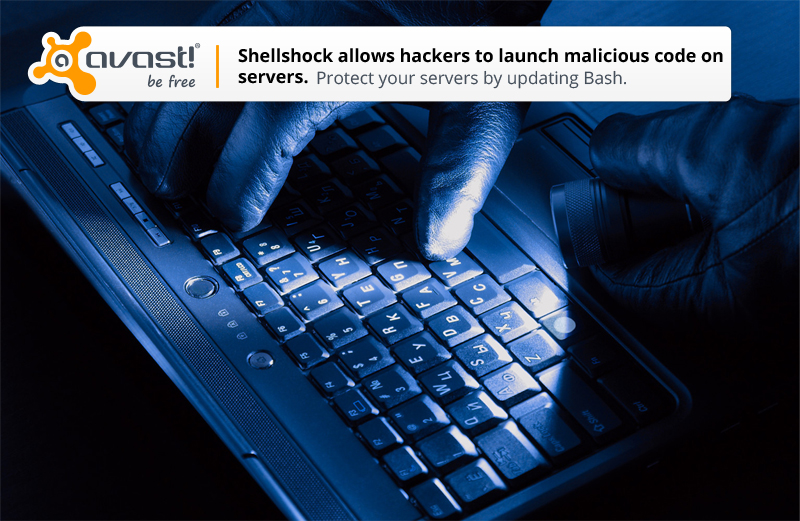
Working in the same way as SQL injection, Shellshock allows users to insert Bash (a Unix-based command processor, or shell) commands into a server via a web form or similar method, and exploits the very nature of environment variable handling, which is that after assigning a function to a variable, any trailing code in the function will be then executed.
Where the SQL injection vulnerability allows a hacker access to the database, Shellshock gives the hacker an authentication-free access to the server, which makes it much more powerful. With this type of access, one with malicious intent could create a worm that could multiply and reproduce the exploit across entire networks to collect or modify data, or open other security holes that would otherwise be closed. Though Bash does not natively run on Microsoft Windows machines, it can be ported, but it is not yet known if the vulnerability will remain present.
Ok, so I get it, it’s dangerous. Am I vulnerable?
Absolutely.
Why?
Because Unix has a much wider grip on our networks than most people can really appreciate. Due to its ubiquity, everything from routers and smartphones, TVs, cars and more could be exploited. Worse, is that many of those devices are very difficult to update. Your home router, for example, has control of all your incoming and outgoing network traffic, and if someone has that, not only do they have the potential to collect your data, but to enable ports, disable the firewall, and further their access into your network infrastructure. With that being said, if you are running any versions of Unix or Mac, and haven’t familiarized yourself with this vulnerability, you’re well overdue.
Luckily, many vendors have now patched for Shellshock by updating Bash, but at this time, Apple users should wait for an update.
I’m running Unix. What do I do now?
First, it’s best to find out if you’re affected. Specifically, are you running Redhat, Ubuntu, Fedora, CentOS (v5-7) CloudLinux, or Debian? If so, then run this command to find out if you’re vulnerable.
$ env x=’() { :;}; echo vulnerable’ bash -c “echo this is a test”
If you see nothing but “this is a test,†you’ve successfully run the exploit, and you’ve got some work to do.
Luckily, most Linux distributions have issued fixes, so you can simply run your update manager. For those who haven’t, you can do so manually by running the following commands:
yum update bash
OR
sudo apt-get update && sudo apt-get install bash
Help, I have a Mac!
Are you infected? Run this command from your shell and find out.
$ env x=’() { :;}; echo vulnerable’ bash -c ‘echo hello’
If you’ve got Mac machines in your environment that can be exploited, you can disable the exploit by temporarily changing the default user shell. For IT administrators that have the know-how, get started right away – but for those that have to ask “how?,†it’s best to keep your eyes peeled and wait for an official update from Apple.
Thank you for using avast! Antivirus and recommending us to your friends and family. For all the latest news, fun and contest information, please follow us on Facebook, Twitter and Google+. Business owners – check out our business products.
What to do about Shellshock bash bug on Mac OS X, web servers, routers, and more
The “Bash Bug” or “Shellshock” vulnerability means a wide range of devices, servers and computers, including Mac OS X, will need to be patched to prevent abuse by malicious persons. Here’s advice about what to do and links to more in-depth resources.
The post What to do about Shellshock bash bug on Mac OS X, web servers, routers, and more appeared first on We Live Security.

4Chan: destructive hoaxes and the Internet of Not Things
The media have associated a number of destructive hoaxes with 4chan: people need some historical perspective on how the site actually works.
The post 4Chan: destructive hoaxes and the Internet of Not Things appeared first on We Live Security.
