Tag Archives: Antivirus

AVG achieves top scores from AV-Test and AV-Comparatives

Are there things in life that you can really say you are 100% sure about, I am sure there are a few but not very many.

In the last week here at AVG our virus research teams and engineers have achieved not just one great test result, but two. The AV-TEST results show that AVG achieved 100% detection of real-world malware and 100% detection of widespread malware. Then followed the AV-Comparatives Malware Removal report awarding AVG with the highest award mark of Advanced+.

Whether you are a consumer or business looking to make a decision on what Anti-Virus/Malware product to use, then independent results from internationally recognized testing organizations should help you make the right decision.

For businesses selecting the right product to stay safe is particularly important, in many cases you are not just protecting your company data but also the personal information that you hold about your customers.

The double 100% result from AV-TEST is particularly important as this shows that our products are protecting you without compromise whether the threat is new and only just appeared, as detailed in the real-time test, or whether it’s a known malware variant that is widespread.

I asked Andreas Marx, CEO of AV-TEST what the significance of the 100% result means, he said “Here at AV-TEST we understand that consumers and businesses rely on specialist organizations such as ourselves to test products they rely on for their security and protection. When a vendor scores 100% in both the real-time and widespread sections of our protection test, it provides a data point that allows consumers and businesses to make informed decisions. We congratulate AVG for achieving the 100% result in our August test.”

Detecting malware and stopping it from carrying out its malicious intent is important, but knowing that it has been completely removed from a device is also extremely important. The AV-Comparatives award for Malware Removal shows that we have excelled in this area too.

At an industry conference I asked Andreas Clementi, Founder and CEO of AV-Comparatives about the Malware Removal report and the AVG result, he said “An important factor for users of Anti-Malware products is not only its ability to detect malware but also its ability to remove the threat and all of the components that it installed. At AV-Comparatives we conduct an annual Malware removal test that shows a products efficiency to clean up after an infection, AVG has achieved an Advanced+ rating for 2 years in a row which shows great consistency.”

It’s important to understand that testing anti-malware products is undertaken and a point or period in time, so the results reflect the moment that these tests were carried out.

Of course our teams are motivated to continue with flawless detection results, and with the release of our new versions of our Ant-Virus range of products there are additional security features designed to provide improved detection. You can see more details in my article about our product release.

Indulge me in this moment of unashamed promotion of AVG and allow me to proudly acknowledge the commitment and dedication of the AVG teams that have delivered these awesome results, which they proudly develop to protect you, our customers.

Follow me on Twitter @TonyatAVG

Why independent testing is good for Avast Antivirus

avtest_certified_homeuser_2015-08

Avast Free Antivirus just received another AV-Test certification for its stellar protection against real-world threats, performance in daily use, and usability.


Yay! It’s like collecting another trophy for the display case or another blue ribbon to hang on the wall, but what does it really mean? How is this type of testing useful for you, our customers?

Ondrej Vlcek, Avast’s Chief Operations Officer explains,

Because of the overwhelming growth of malware targeting consumers and businesses, labs like AV-Test Institute have become an invaluable independent source of data to Avast. Their research has influenced our engineers to expand their knowledge of malware, revolutionize diagnostic and detection methods, and facilitate strategies to get real-time updates to hundreds of millions of people who put their trust in our antivirus products.”

Here’s a little background on the testing lab.

AV-Test Institute is an independent lab designed specifically for testing and researching malware. Located in Magdeburg, Germany, they inhabit 1200m² (12,900 ft²) of space with 3 server rooms and a variety of main and secondary laboratories.

Safety protocols

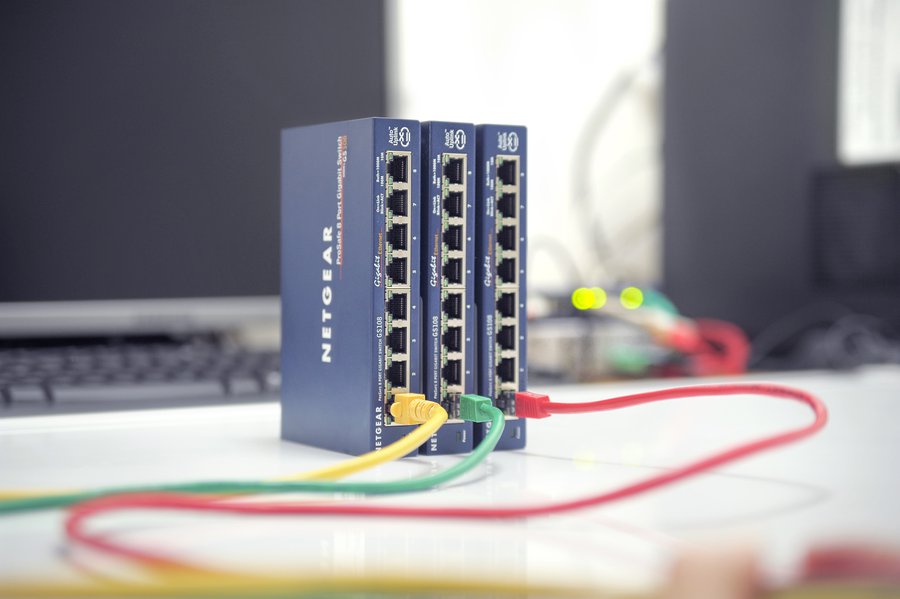
AVTest labs networks

image via www.av-test.org

Just like a specialized facility that deals with infectious agents, AV-Test has set up safety protocols to avoid accidental infections. The hazardous material they store includes 330 million pieces of malicious test data collected over the past 15 years. Every day, they collect another 390,000 new samples of malware.

Thirty specialists work in three labs with more than 100 workstations connected to three physically separate networks: Red for all the test malware with no internet access, Yellow has limited internet access for malware testing, and Green has full internet access so they can download and update programs.

Test Procedures

Every two months, antivirus products are run through a series of tests using a pre-determined configuration that mimics that of the real world. The AV-Test lab looks at three areas: Protection, Performance, and Usability.

In the August 2015 round,  22 products were run through grueling tests. The products can earn a maximum of six points in each of the three test categories for a total of 18 points.

For example, in the Protection category, Avast Free Antivirus had to recognize over 330 zero-day malware attacks, which means they are new, still unknown threats. In the second phase, the objective was to recognize and defend against just under 45,000 known malware threats from the AV-Test reference sets. The average results for the July and August test were 98% detection for zero-day. Avast Free Antivirus scored 99% and 100%, for an average of 99.5%. Avast Free Antivirus identified 100% of widespread and prevalent malware in the second phase. We improved our overall score over the previous test by a half a percentage point, which makes a difference in the real world.

Certification

The award of an AV-TEST CERTIFIED seal of approval is evidence that Avast Free Antivirus has achieved the level of performance and protection defined by the AV-Test labs.

Tests like these, and the ones by Austrian lab AV-Comparatives, are not only for security geeks, but useful for our customers. Even if you never read over the results, you can be guaranteed that we take them seriously and strive to use the information to create the best products we can to protect your home and business PCs, Macs, and Android smartphones and tablets.


Follow Avast on FacebookTwitterYouTube, and Google+ where we keep you updated on cybersecurity news every day.

AV-Comparatives describes AVG AntiVirus for Mac® as ‘flawless’

While this makes us at AVG proud it’s the commentary that the editor uses to describe our Mac product that really pleases us. “AVG AntiVirus is a simple, easy to use antivirus program for Mac, with all the essential features. Its detection of Mac malware was perfect”.

In fact the test results state that not only did the AVG product score 100% in the detection of Mac malware but it also scored 100% in Windows Malware Detection. We at AVG believe that you should feel protected across all of your devices, so we work hard to block the bad stuff regardless of which operating system you prefer.

Our Mac product is simple and easy to use, with features to scan the ‘Entire Mac’, ‘File Scanner’ and ‘Real-Time Protection’ it could not be easier to keep your Mac secure.

If you are one of those Mac users sitting there without protection then you need to think about the assets and information that you have on your machine. While there are limited examples of malware for the Mac platform it could be devastating if it infects your machine.

Imagine taking the view that you have never seen someone you don’t know try opening the front door of your house, so you leave it unlocked. On the day that the chance burglar does try the door and its unlocked then the burglary is likely to be very bad as there is nothing stopping them from emptying your entire house.

Loading the AVG Antivirus product on you Mac, just like locking your door, is a preventative measure that all Mac users should take to stay safe. And what makes this even more compelling is that it’s completely free.

Download AVG AntiVirus for Mac from here.

You can follow me on Twitter @TonyatAVG and find my Google+ profile here.
Avira’s Secure Browser: Plans and Tactics (Part 2)

The goal with the browser is to create an easy-to-use, secure and privacy respecting browser. These are the more advanced tactics we will be using:

Our Cloud DBs

Adding cloud features to file scanning was a large success. The detection quality of malicious files went straight up. Short:

On the client there is a behaviour detection kind of pre-selection. If a file is suspicious the cloud server is asked if the file is already known

If unknown:

  • An upload is requested
  • The file is uploaded to the server
  • There we have several detection modules that cannot be deployed on the customers PCs (an AI with a large database, sandboxes for behavior classification, etc. ). They scan and classify the file
  • The database is updated
  • The results are sent back, you are protected

We built incredible databases covering malicious files during the last years. We should have something similar for the browser and use our large knowledge base and server side classification tools for web threats as well.

It should look something like that:

  • The browser detects something strange (“behavior detection”), this is called pre-selection
  • It asks the backend database if this is already known
  • If not: relevant data (URL, file, …) is uploaded for inspection
  • Our server based tool (and our analysts) will classify the upload and update our databases
  • The result is sent back directly (within milliseconds. Yes, the tools are that fast. We will try to improve our analysts 😉 )
  • You are protected
  • We are improving our “evil parts of the internet” map.

To get there we will have to improve the signal-to-noise ratio. We are only interested in malicious pages. If the pre-selection in the browser is too aggressive and sends non-malicious pages to us, it‘s a waste of CPU cycles and bandwidth. With millions of users as a factor, even minor slips will be expensive and annoying for everyone involved.

We will also remove private data before sending it (we are not interested in user data. We are spying on malware). Personal data is actually toxic for us. Servers get hacked, databases stolen, companies gag-ordered. Not having that kind of data on our servers protects us as well as you. I mean just think of it: Some web pages have the user name in the URL (*/facepalm*). I do not think we can automatically detect and remove that trace of data though. But maybe we could shame the web pages into fixing it …*/think*

The parts in the source that collect the data and prepare them for sending are Open Source. Here I am asking you to NOT trust us and review the code! :-)

I hope we find a simple solution to display the data being sent to us before sending. The only problem is that it could have a negative impact on your browsing experience. Having a modal dialog when you expect a page to load …

One option could be to at least offer a global configuration to switch cloud requests off (always, in incognito mode only, never) and show you in logs what got sent.

Advertising
We are selling libraries and databases covering malicious files and web pages.

You want your own AV? Or protection technology in your Tetris game to make it unique? Just contact our SI department and make a deal.

Other companies have thousands of web-crawlers simulating user behavior to identify malware.

Millions of real Avira users are our scouts and sensors.

Some branding

We need some branding. That would include Avira specific changes in the browser (names, logos, some other texts). But also links. This is not only relevant for brand-awareness but also to keep our users away from Chrome/Chromium support to avoid confusion (“Which Chrome version do you have ?” … listens … “we never released that, can you please click on “about and tell me the version number” … listen … “WTF?!?” => Confusion) and direct them to our support – who actually CAN help.

Hardening

We will always improve the build process. There are compiler switches for features called Position Independent Executable (PIE), Fortify Source, etc. that we should enable on compilation (many are already enabled). Most time here will be spent on ensuring that they do not get disabled by accident, are enabled on all platforms, and do not slow down the browser. This task can start simple and suddenly spawn nasty side effects. This is why we need TestingTestingTesting.

TestingTestingTesting

Google added the Hotwords feature to Chromium and Chrome. It’s a nice feature. But it switches on the microphone and “spies” on the user (this is a convenience feature many users want). For our secure and privacy respecting browser this crossed a line though. This is the reason why we will have to verify that no “surprise !!!”-Extensions get installed by default. One more task for our testers that add verification tasks to the browser to handle our specific requirements. Keep in mind: Chrome and Chromium already have very good unit-tests and other automated test cases. We just need some extra paranoia. That’s the job for our testers in the team.

More transparency

We will write blog posts covering all the features. The attacks they block, their weaknesses, what we did and will be doing to improve them. We will offer you a guided tour Down the Rabbit Hole. Go with us as far as you dare.

TL;DR:
There is so much we can do to improve the browser; without touching the core.

We reached the bottom of this specific Rabbit Hole.

Thorsten Sick

#content .entry-content
.bq{width:100%;border:1px
solid #dde5ed;margin-top:0px;margin-bottom:25px}#content .entry-content
.quest{margin:0px;font-weight:bold;font-size:16px;text-shadow:0px 1px 0px #f8fafb;padding:6px
11px;background:#eaeff5;border-top:1px solid #f4f7fa;border-bottom:1px solid #dde5ed}#content .entry-content
.text{line-height:19px;margin:0px;padding:10px;font-size:14px;background:#f8fafd;color:#758fa3}#content .entry-content .text
p{line-height:19px;background:#f8fafd;font-size:14px;color:#758fa3}

The post Avira’s Secure Browser: Plans and Tactics (Part 2) appeared first on Avira Blog.

Avira’s Secure Browser: Plans and Tactics (Part 1)

The Gordian knot

In order to have a secure browser, security issues have to be fixed in a certain time frame. This sounds logically, right? For us that’s only a few days after we get to know about them. Chrome fixes vulnerabilities with every release, so we are also forced to release in sync with the Chrome releases. But every change we make in the Chromium source code causes merge conflicts. When changes made by us (and which are Avira specific) and changes made by Chromium developers overlap our tools cannot combine them together. After about 150 changes we had one conflict per week. This meant spending hours untangling code.

The sword to slice through the knot: We will not introduce differences to the Chromium code.

Let’s see the browser more like a Linux distribution (Ubuntu, for example). We select the best tools. Combine them. Maintain them. Optimize them.

Open Source Extensions

There are awesome security extensions for browsers out there. Let’s just invest some man-years, copying their features. We can make closed source versions of those extensions which are almost as good as the original – but OURS!

… just kidding …

We decided to say ‘hello’ to the communities and explained our plans to them. We already started to contribute and will contribute even more (we struggled with the foundation for the browser longer than expected, so we are a bit behind the original time frame – but more about that in another post). The first extensions are integrated, more are upcoming and planned. Efficient engineering. A win-win situation.

Contributing to Chromium

Only code differences between our browser and Chromium cause issues. If we want a security feature and contribute the code to Chromium we do not have differences nor merge conflicts. We accidentally protect more people than we have to, but nobody is perfect. 😉

We already did contribute a stash of changes that allow simpler branding (see below). But the HTTPS-Everywhere guys alone have a wish list of 2-3 large Chromium code changes. Our next steps will be to extend the extension programming interface (API) because we want more information available in the extensions. For example right now the encryption details (used cypher suite, Certificates) cannot be seen from an extension. That means that something like Calomel cannot be written for Chrome so far.

Contributing to 3rd party code

Chromium contains more than 100 third party libraries. They can contain vulnerabilities, bugs and flaws. When we find something we fix it and send the patches upstream (= to the authors). We are currently experimenting with the best way to release as many fixes per week as possible. As soon as we have figured out a good solution, we will inform you via another blog post.

Our own extensions

Of course we already integrated ABS (Avira Browser Safety) and our Safe Search. This is a no brainer. So let’s just move on.

Our external tools

Right now we plan on integrating our AV scanner into the browser. We already scan with the WebGuard, but the future of the internet is encryption (more HTTPS, o/). Webguard is a proxy, and scanning encrypted traffic with a proxy causes lots of crypto-headache. Luckily the browser does decrypt the data (it has to) as soon as it gets there: Scanning the content of the decrypted data packages directly inside the browser solves said crypto-headaches.

As of now WebGuard is fine. But of course we already plan for the future. When the future is here we will be ready – with scanning abilities in the browser.

This above are only about 50 % of what we plan on doing. Stay tuned for two more and rather advanced tactics that we plan on using and which will be described in the next blog post!

TL;DR:
There is so much we can do to improve the browser. Without touching the core.

Halfway down the Rabbit Hole. Time for a break.
Thorsten Sick

The post Avira’s Secure Browser: Plans and Tactics (Part 1) appeared first on Avira Blog.

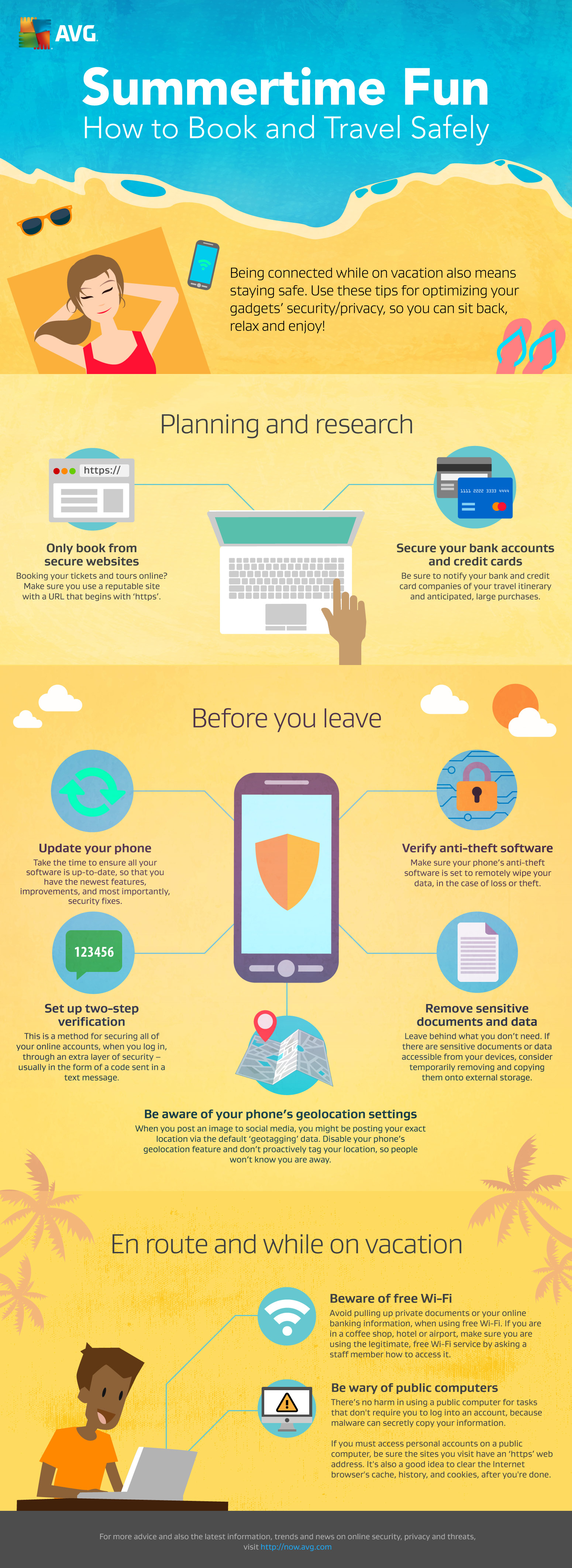
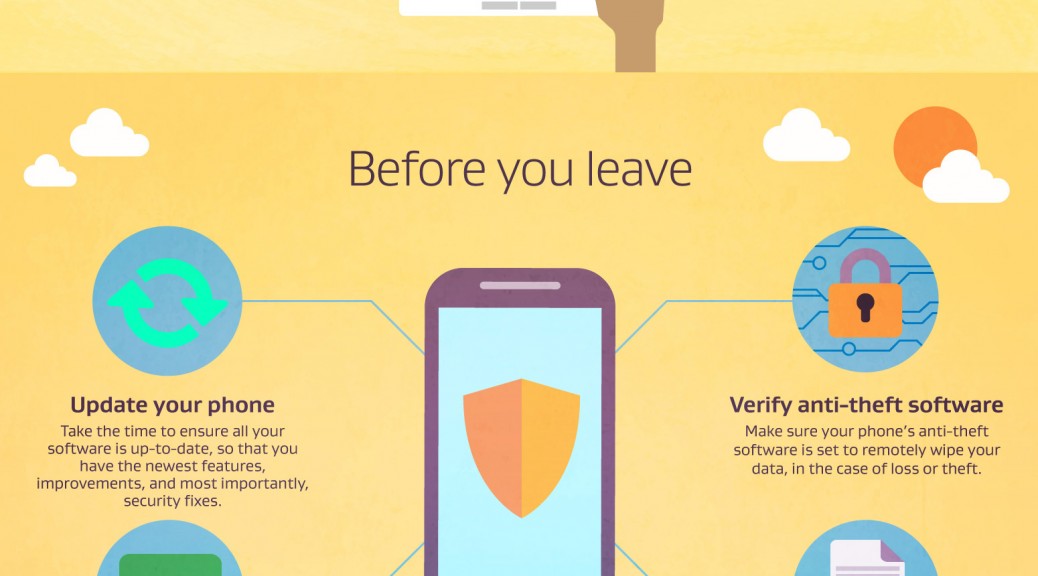
10 Tips to stay safe online this summer vacation

I recently got back from a family holiday in Yellowstone where there was no Internet connection at all. For me it was a blissful digital detox but my son didn’t take so kindly to it. He would jump onto any public network that appeared, regardless of its security, in an attempt to get himself back online where he could game and chat with his friends.

It got me thinking that, from start to finish, there were a lot of things during a summer vacation that could lead to some risky online behavior.

With that in mind, I’ve put together my 10 tips to help you and your family stay safe while booking, travelling and enjoying your vacation.


Summer Travel Tips


Read more

For full details on all the above tips and more, check out my simple fact sheet.

Three reasons to protect your Windows 10 machine with AVG

If you’re on Windows 7 or 8.1, the free upgrade to Windows 10 is quite compelling as it sports the return of the Start menu, a fresh look and some exciting new features.

Windows 10


But with millions of users upgrading, it becomes the next big target for hackers and scammers.  Having robust security software will be no less important on Windows 10 than on previous versions.

AVG helps keep you safe, no matter whether you’ve upgraded your old PC or got a brand new one. Here’s three reasons why AVG can help keep you safer than the Windows 10 built in Windows Defender:


Better Protection

In AV Comparatives monthly real-world protection study, Windows Defender provides a 90.9% protection rate which is just not competitive. AVG scored 99% with zero false positives in May of 2015.

AVG Internet Security


Better Reviews

PCMag wrote in April 2015: ‘It’s true that Windows 8 and 8.1 come with antivirus protection built in, but you can’t rely on it to protect you against malware attacks.’ – According to the reviews, the detection hasn’t improved noticeably with Windows 10, so specialist solutions are recommended. 

On the other hand, Windows 10 compatible AVG AntiVirus Free 2015 has 4/5 stars on CNET and 8/10 on Top Ten Reviews.


More features

While the built-in protection could help you against viruses, there are a wide variety of threats on the Internet.

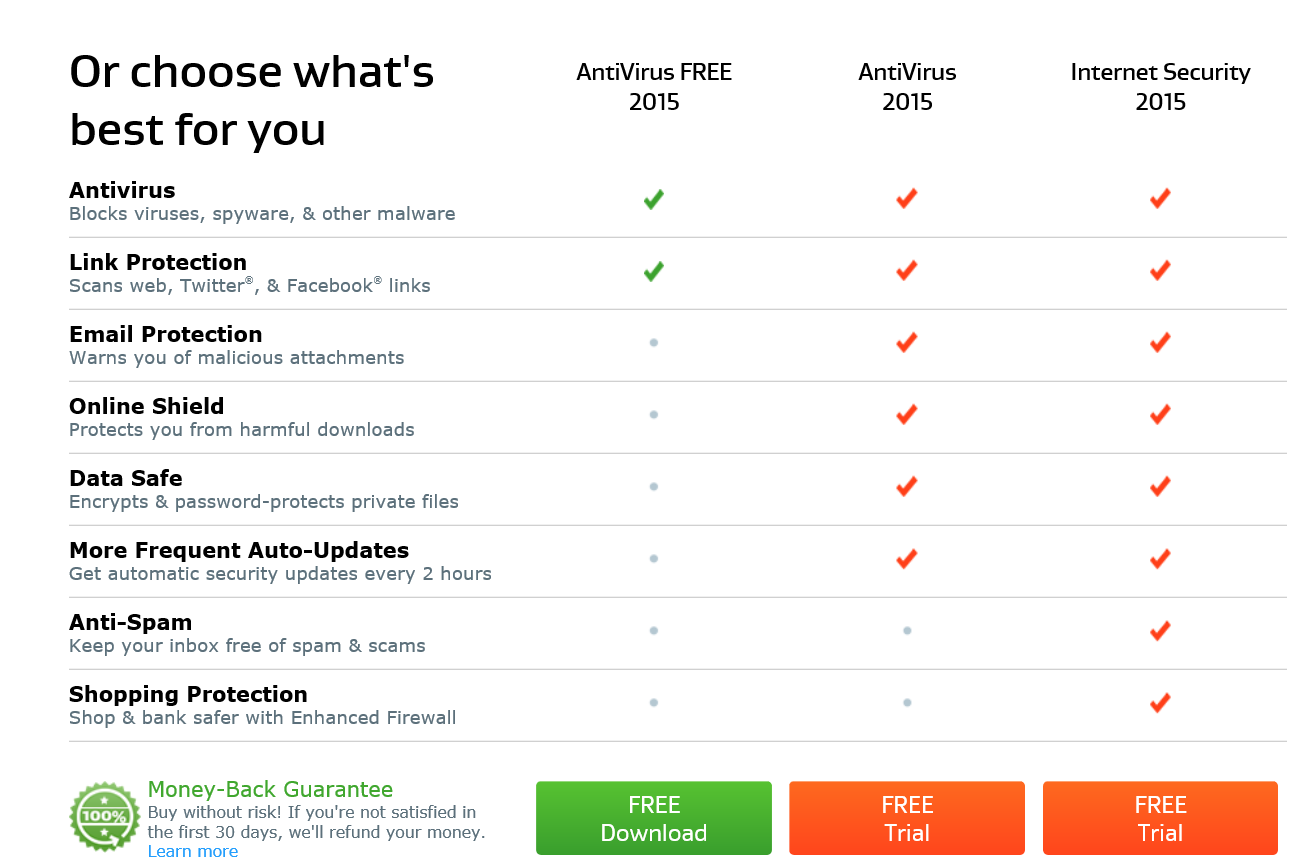
A good, free antivirus product such as AVG AntiVirus sticks out of the pack by not just offering critical on-demand scans or real-time protection, but also anti-phishing mechanisms, URL scanning and behavior-based detection scans. And with the full-featured AVG Internet Security Suite you will get not just the award-winning antivirus protection, but the following essentials on top:

  • E-Mail Protection: Detects infected or rogue inbound attachments so they can’t damage your PC.
  • Online Shield: Checks files before you download them to ensure they are safe
  • Data Safe: Encrypts and stores your valuable documents
  • More frequent updates: Checks for updates every 2 hours if you want to.
  • Anti-Spam: Stops spammers and scammers getting to you.
  • Shopping Protection with Enhanced Firewall: Blocks hackers attempting to access the private data stored on your PC.

AVG Product Selector


All our AVG security products are 100% compatible with Windows 10 and help protect you from all threats going forward.


Existing Users: How to Ensure Ongoing Protection

Are you running AVG AntiVirus, AVG Internet Security or AVG Protection? If so, then you should’ve already received the free update to the latest product version which is tested and ready for Windows 10, as detailed here in this blog post.

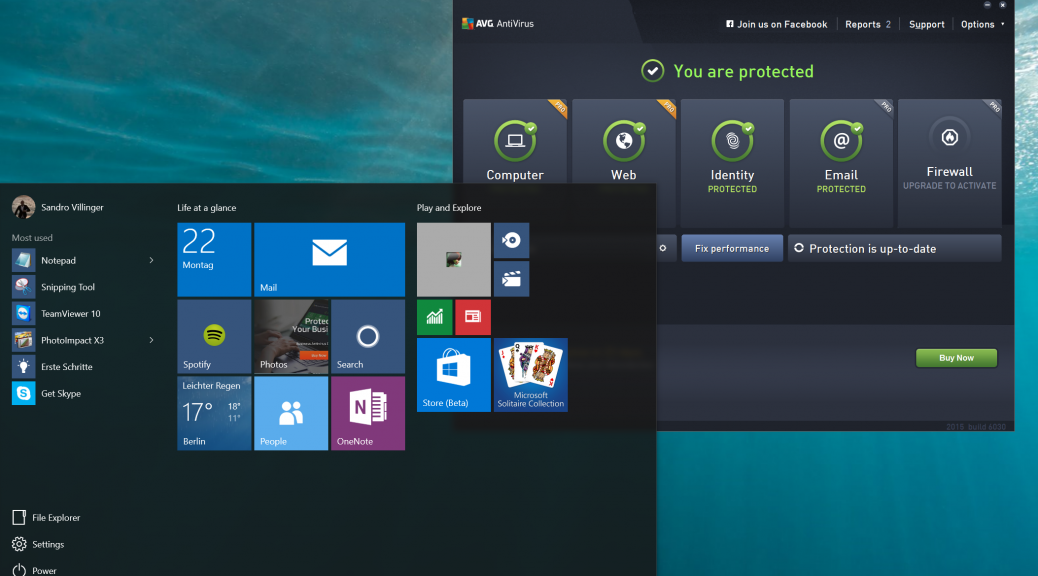
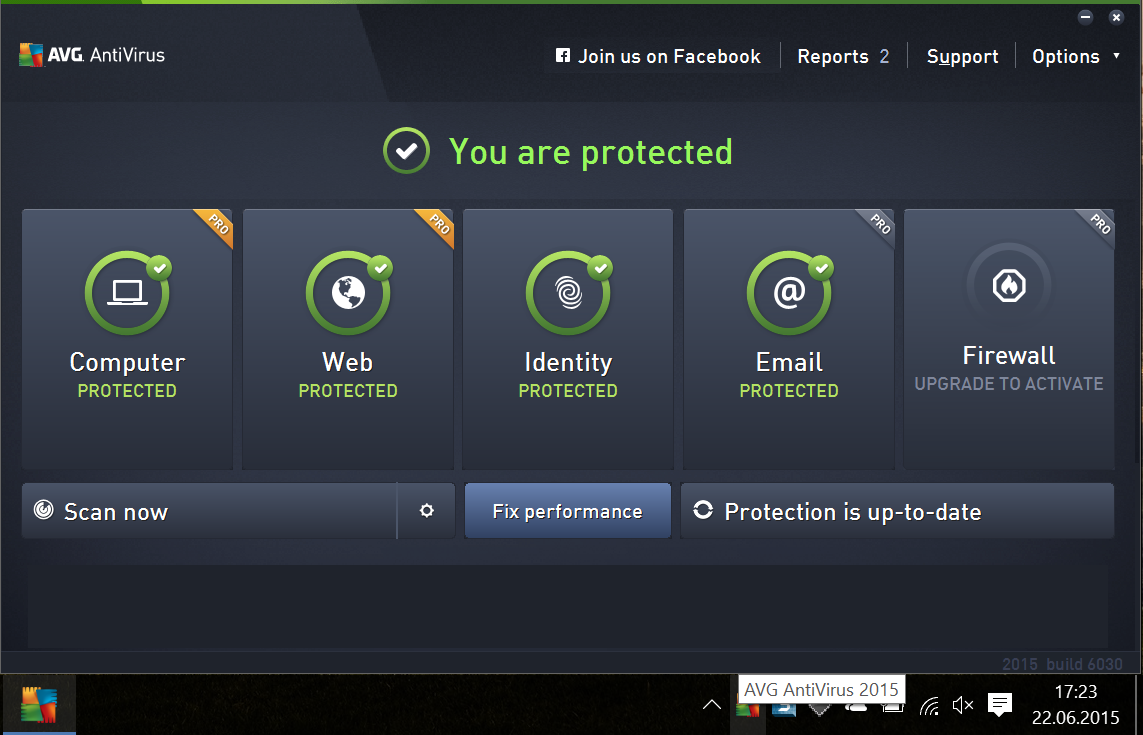
If you don’t see the latest dashboard (such as the one below), then there’s a slight chance something went wrong and you may have to download the latest versions:

  • AVG Internet Security, AntiVirus, or AntiVirus Free users click here.
  • AVG Protection or Ultimate bundle customers click here.

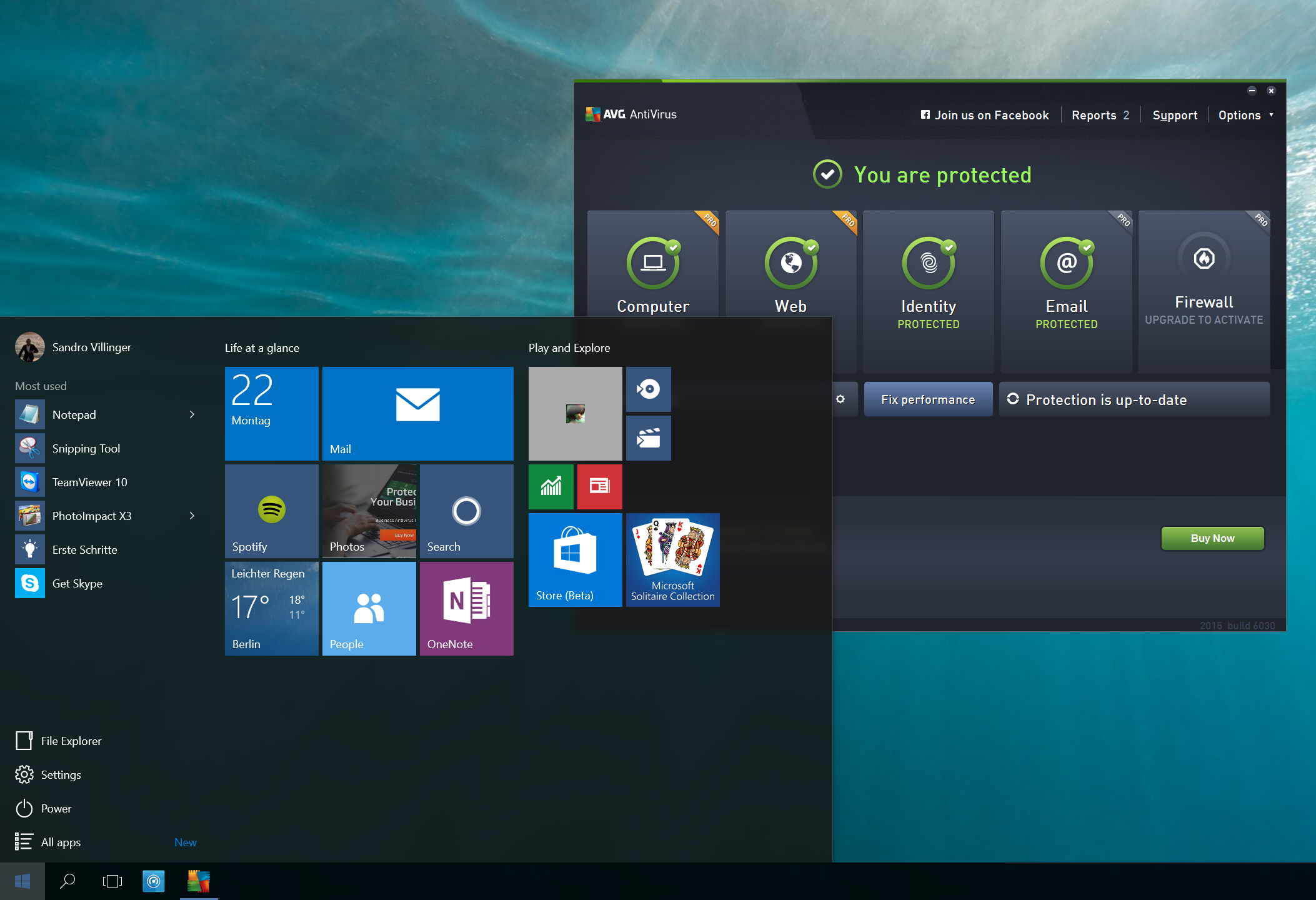
Done? Perfect. Once you’ve upgraded from Windows 7 or 8 to Windows 10, all you need to do is check your task bar and see whether your AVG product is still active.

AVG Dashboard


If for some reason, the protection is inactive or you can’t find the AVG icon, please download and install the latest versions as mentioned above. That’s all it takes! Again, this process should be fully automated and won’t need to manually update.


Arizona school simplifies and saves with Avast’s free business software

Avast for Business just made life easier and saved money for administrator Dale Kvittem-Barr at Peace Lutheran Church and School.

Avast for Business protects a private school for free

Avast for Business simplified a private school’s security management – for Free!


Schools house a large quantity of sensitive data and Kvittem-Barr knows that security software is a must. But, managing 50 devices is a challenge.

“When I started here, we had Norton and each computer had its own individual license. It was a nightmare. I switched all of the school’s computers to the free Avast consumer product. When I heard there was a free business solution and that it had a centralized management dashboard I knew we had to have it.”

With Avast for Business, Kvittem-Barr no longer has multiple licenses to manage and he can see his entire network anytime, anywhere.

“The cloud-based system makes sense because the entire network can be updated constantly from the dashboard so I don’t have to run around to every computer anymore.”

For his mixed platform networks, Kvittem-Barr says Avast for Business just works for him.

“We have Macs and PCs so to be able to protect them both with the same console is great!”

And the software keeps him continuously informed about threats to the school.

“The notifications have been really helpful because I can see which computers are being hit harder than others and make sure I focus on those.”

Budget is an issue for all schools and Kvittem-Barr said that his school’s savings with Avast for Business were substantial. As for plans to spend the savings he says,

“Yeah, we were actually able to purchase a lot more computers and a device charging cart.”

Find out how your school can save money with Avast for Business.