Tag Archives: featured1

Fernando Andrés appointed Global PAPS General Manager at Panda Security

Panda Security today announced that Fernando Andrés has been appointed as the company’s new Global PAPS General Manager. Andrés’ mission will be to lead the global development of the PAPS business line, one of the flagships in the security vendor’s corporate strategy.

During his professional career, spanning over 20 years in companies such asSaleforce.com and Microsoft, Andrés has held key executive positions in the sales management, business development and channel development areas in the cloud computing, Internet services and applications sectors.

Fernando Andrés holds a Bachelor’s Degree in Computer Science from the University of Castilla La Mancha (Spain), and completed the IESE Business School’s Advanced Management Program in Business Administration.

Global PAPS General Manager  at Panda Security

Fernando Andrés

Extensive experience in the IT sector

From 2009 to 2014, Andrés held a number of management positions at Salesforce.com, including Corporate Sales Director for South Europe at Salesforce.com EMEA and Director of Channel Business Development at Salesforce.com Spain.

Prior to that, he held different positions at Microsoft for more than a decade, ultimately serving as SaaS Sales Director from 2004 to 2009.

Prior to joining Microsoft, Andrés was employed at ICL Fujitsu and Kodak.

“PAPS (Panda Advanced Protection Service) is a revolutionary product in the industry. It is a next-generation security solution with a completely new, disruptive approach that ensures maximum malware detection and security through an integrated management service. It is very exciting to be part of such an innovative, effective and successful project which will represent a huge leap forward not only for Panda Security, but also for the entire IT security sector,” said Fernando Andrés.

The post Fernando Andrés appointed Global PAPS General Manager at Panda Security appeared first on MediaCenter Panda Security.

WhatsApp could confirm when messages have been read


whatsapp doble check

The dream of some and the nightmare of others may soon come true. WhatsApp is apparently considering a system for notifying users when the messages they have sent have been read.

When the app first came out, many thought that the double check symbol meant the message had been read. However, it was made clear that the only thing that the two ticks represent is that the message has been delivered successfully.

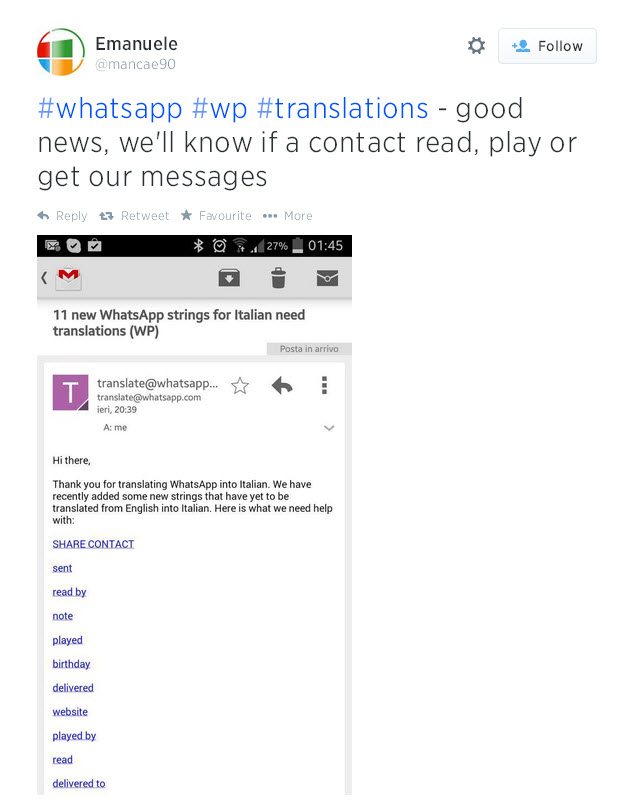
The news was leaked after WhatsApp asked a user to translate some terms into Italian. These included: «reproduced by», «sent by», «delivered» and «birthday», though suspicions were raised by the phrase «read by» which has led to all sorts of speculation.

whatsapp read by

This feature is similar to the D (Delivered) and R (Read) messages in BlackBerry Messenger although it appears it is still in trial phase.

What do you think? Would you be in favor of WhatsApp telling you if a message had been read? Or would that be infringing on your privacy?

The post WhatsApp could confirm when messages have been read appeared first on MediaCenter Panda Security.

Apple denies its services were hacked

apple


“Celebgate” -as the theft and publication of private photos of more than 100 actresses and models has come to be known – is not only affecting the direct victims of the theft but also the companies that have been implicated in the affair.

Initially, it was thought that the leaks could be due to a potential security hole in iCloud, Apple’s virtual storage platform, but the company has announced that, after a 40-hour investigation, they have discovered that the accounts of these celebrities “were compromised by a very targeted attack on user names, passwords and security questions.” Adding that these attacks have “become all too common on the Internet.”

Apple denies that the hacking of the accounts of actresses such as Jennifer Lawrence, Kirsten Dunst and Kate Upton was the consequence of a vulnerability in its iCloud or ‘Find my iPhone‘ services. Although some of the victims have already had their say on the issue.

kirsten dunst twitter

The company has also announced that it continues to work with the police to help identify the criminals involved and encourages all users to choose a strong password and double check their security systems.

More | How to create strong passwords

The post Apple denies its services were hacked appeared first on MediaCenter Panda Security.

Survey shows the person you trust the most may be spying on you

People expect that they are being watched online in cyberspace, but who would expect to be spied on by the people closest to them? You better watch out – your partner may be spying on you more than the NSA: One in five men and one in four women admitted to checking their partner’s smartphone in a survey with 13,132 respondents conducted by AVAST in the United States.

shutterstock_198273875

Playing detective

The survey found that while the majority of women check their partner’s device because they are nosey, a quarter of married women suspect their spouse is cheating on them and want to find evidence.

Married women are not the only ones who suspect their partner is cheating on them. The reason why most men pry on their partner is because they too are afraid their better half is being unfaithful and want to confirm their suspicions – especially if the relationship is fresh.

Caught red handed

One may think that people who snoop on their significant other to find evidence of cheating or lying are being paranoid. Unfortunately, the majority of them are not paranoid–their gut feeling is often correct. Seven out of ten women and more than half of men who turn to their partner’s device to find proof their partner is deceiving them, have found evidence. Which of the two sexes is more likely to confront their partner regarding their findings? Women. The survey revealed that women are 20% more likely than men to confront their partner with the facts.

“Picking” the mobile lock

Cracking their partner’s device passcode wasn’t necessary for the greater number of snoopers. A shockingly high percentage of respondents claimed they didn’t need a passcode to gain entry to their significant other’s device. Women did, however, have an easier time with 41% reporting their partner’s device did not have a passcode compared to the 33% of men. Coming in at a high second, both male and female respondents claimed to know their partner’s device passcode because their partner had shared it with them in the past, unknowingly setting themselves up to get caught.

An eye for an eye

More than half of men and women who check their significant other’s device think their partner checks their device as well. There seems to be a low level of trust between partners who feel the need to keep tabs on their significant other.

The survey results show that respondents who just started dating and check their new companion’s device are less likely to suspect their new love of doing the same, compared to snoopers in established relationships. People in long term relationships were the most likely to think their partner does the same behind their backs.

Tips to protect your privacy

Be it from your partner or somebody who finds your lost phone – you should always protect your mobile devices from prying eyes.

  • Protect your mobile devices with passcodes!

Everyone should protect their smartphones and tablets with passcodes, even if you aren’t worried about snoopers. Passcodes not only make it more difficult for nosey partners to access secrets and surprises, but can also protect your data should your device get lost or stolen.

  • Lock your precious apps

Apps that contain sensitive information deserve an extra layer of protection. With avast! Mobile Security’s app locking feature you can password protect your most precious apps.

  • Free your phone from old data – and back it up

Backing up your mobile data allows you to save your data to the cloud so you can delete old data from your phone. This not only prevents data loss, whether you lose your phone or accidentally delete data from your phone, but can prevent your partner from finding out about activity you want to keep to yourself. avast! Backup backs up your call log history, SMS, contacts and photos for free.
Thank you for using avast! Antivirus and recommending us to your friends and family. For all the latest news, fun and contest information, please follow us on Facebook, Twitter, Google+ andInstagram. Business owners – check out our business products.

Think celebrities are the only ones that can get hacked? Think again…

News broke on Sunday that nude photos of female celebrities were posted on the photo sharing site 4Chan. Along with the news came many theories and discussions as to how the hacker managed to collect intimate photos and videos from a long list of celebrities. While figuring out how the hacker accessed these intimate files will hopefully patch vulnerabilities, there are general steps that everyone should take now to protect their personal data.

Don’t blame the cloud

shutterstock_208714210

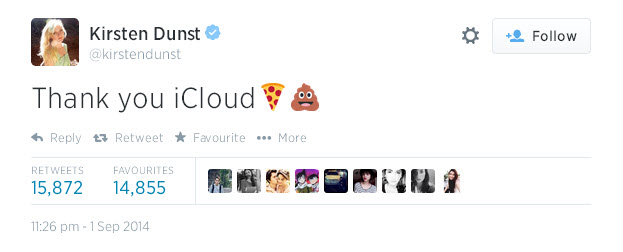
One of the theories circulating on the Internet is that iCloud was hacked via a vulnerability in Apple’s “Find My iPhone” app. Kirsten Dunst, one of the celebrities whose private photos were hacked tweeted the following: “Thank you iCloud”. Should Kirsten and the other hack victims be blaming the cloud though? The iCloud hack theory is just a theory, the hackers could have gained access to celebrity accounts via phishing mails or gained passwords from celebrity insiders. The hackers could have gained access to celebrity email and password combinations through breaches like the recent eBay breach or Heartbleed, which affected nearly two-thirds of all websites, including Yahoo Mail, OKCupid and WeTransfer. If the celebrities whose photos have been exposed were affected by these breaches and used the same passwords on several accounts, including iCloud, it would have been easy for the hackers to steal their personal photos.

Even if the hacker got the data by hacking iCloud accounts, the cloud should not be blamed. The hacker, first and foremost, should be blamed. However, we all should know that there are bad guys out there and we need to protect ourselves and our personal data from them. The lack of cybersecurity awareness amongst these celebrities also deserves a portion of the blame.

Know where you are saving what

Back in 2011, when nude photos of Scarlett Johansson and Mila Kunis appeared, we learned that celebrities are not immune to hacks, in fact they were specifically targeted and will probably be targeted again. It seems that many celebrities did not learn the importance of cybersecurity from the 2011 hack. Every mobile user, celebrities included, should be learning a lesson from this awful and unfortunate event and be re-thinking where they are saving their intimate and personal data.

Many mobile users are unaware of the fact that their data is no longer only saved to their hardware. Many devices and apps come with automatic cloud back up features. Cloud based back up can be a very useful tool to prevent data loss, but if you want to delete intimate photos from your device you should also remember to delete it from the cloud. 

How to protect your accounts


Whether the hackers gained access to the data via an iCloud vulnerability, phishing scams, or by using brute force programs there is one common denominator: passwords.

Mobile malware specialist, Filip Chytry recommends the following to protect your accounts:

  • Use strong passwords – Strong passwords are critical when it comes to protecting online accounts. Strong passwords should be at least 8 characters long, contain a combination of letters, numbers, and symbols. Ideally, you should not be able to remember your own password the first time you try to log into your account with your new password. You should update all of your passwords every three months and after news of account breaches.
  • Use different passwords for each of your accounts – It is not easy to remember different passwords for all your online accounts, but it is vital that each online account has a different and strong password. Passwords need to be thought of as keys, you wouldn’t want your house key to open your car – passwords and online accounts should be no different. Password managers like avast! EasyPass can help you secure your passwords and accounts.
  • Enable two factor authentication – Many sites and services offer two factor authentication, meaning you are required to enter a pin number sent to your mobile device, in addition to your password, in order to gain access to your account. This helps verify that the person trying to log into the account is the actual account owner and in fact a real person (not just a program trying to hack accounts).
  • Download anti-virus protection for your mobile device – Anti-virus protection, such as avast! Mobile Security, not only protects your mobile devices from malware, but can also protects you from phishing links. Phishing sites look like legitimate sites designed to trick you into giving up your log in credentials, which may be how the hackers who published the nude photos gained access to celebrity accounts.

If it can happen to them it can happen to you

We often put celebrities on pedestals, but at the end of the day they are normal people just like you and I. No one is immune to hacks per se, but being aware of where you store your sensitive data and using the proper tools to protect your data can prevent hackers from accessing it. We should all take this situation as an opportunity to learn how to protect our very personal information.

Thank you for using avast! Antivirus and recommending us to your friends and family. For all the latest news, fun and contest information, please follow us on Facebook, Twitter, Google+ andInstagram. Business owners – check out our business products.

Teaching cyber-security from school age

As the Internet increasingly becomes part of our everyday lives and we use new technologies in all areas of our life, there’s an ever greater need for professionals capable of guaranteeing our security in these areas.

However, in a field as new and complex as cyber-security there is still a lack of people prepared to work in it. As we saw recently, in the United States there is already a plan under way to tackle the situation: training army veterans to become cyber-warriors and consequently, helping them to adjust to civilian life again.

Yet this is only one of the solutions put forward, and there are others that take a longer view. To ensure the future of the profession, the only viable plan for the long term involves educating children in this area and stimulating their interest in computing in general and specifically in IT security.

Along such lines, countries like the USA and the UK have projects that will hopefully provide the cyber-warriors of the future.

cyber competition

The UK’s Cyber-Centurion challenge

In the UK in fact, an initiative called Cyber Centurion has been launched to get thousands of youngsters competing in teams in a cyber-security challenge.

The key to the initiative is that young people will be in direct contact with situations that a real cyber-security expert could encounter. In fact, the challenge, which is to be held in two rounds, involves downloading a virtual computer full of vulnerabilities that could present opportunities for a cyber-criminal. What the teams (comprising 4 to 6 youngsters and one adult) have to do is identify these vulnerabilities and patch them as soon as possible.

As this is the first edition of the challenge, there will first be a practice round in October before the two competition rounds. The top six teams will then battle it out in April 2015 in the Grand Final. The winners will be awarded a scholarship at Northrop Grumman, one of the largest defense contractors in the United States and maker of the B-2 stealth bomber who is funding this initiative with a view to uncovering future talents in IT security.

This however isn’t the only cyber-security initiative in the UK. The Cyber Centurion challenge is supported by Cyber Security Challenge UK , a platform funded by the British government that has organized other educational initiatives such as workshops and other challenges in schools, colleges and universities across the UK.

CyberPatriot

In fact, this exciting British initiative is really an adaptation of the US Cyber Patriot program, the National Youth Cyber Education Program. This program is now in its seventh edition and is also funded by Northrop Grumman, which claims to have already dramatically reduced America’s cyber-security talent shortage.

This search for US Cyber Patriots involves three programs:

  1. A competition among high school students similar to the one that will begin in a few months in the UK (where the teams have to identify and fix vulnerabilities in an operating system to prevent cyber-criminals from entering),
  2. A camp organized for the first time this summer and which aims to teach the principles of cyber-security in an entertaining way and
  3. An initiative that will take basic IT security knowledge to primary schools and teach children how to protect themselves on the Internet.

Internet competition

So why in the US and the UK is there so much interest in students learning firsthand what it takes to be a cyber-security professional and not any other job?

Basically, because the future (and the present) will require IT professionals dedicated to cyber-security. Moreover, international threats and attacks can now come across the Internet, so another profession of the (short-term) future will be cyber-warriors, who even now are being recruited by companies like Northrop Grumman. This will no doubt be the army of the future.

The post Teaching cyber-security from school age appeared first on MediaCenter Panda Security.

Labor Day Reflection: The 77% Rule and Women in Tech

You don’t have to be anti-man to be pro-woman.

–Jane Galvin Lewis


Yesterday while I was observing Labor Day, the day set aside to celebrate the social and economic advancement of the American worker in the U.S.— it provided some time to reflect and consider the topic of women in the workforce and specifically pay parity.

What if I gave you 77 cents for every dollar you earned? Would you feel fairly compensated? Unfortunately, that’s generally the wages the average working woman makes as opposed to her male counterparts.

The 77 cents for every dollar? That’s a generalization that averages in all jobs across the board.  The good news is that the tech industry is more progressive. Pay parity, according to various surveys, is equal in our industry as long as the job titles are the same.

Of course, the catch is that women aren’t as likely to have the top titles. (For a more in-depth look at this you can go to one survey at Dice.)

Nevertheless, I believe tech is a great place for women and has a rich tradition, from Ada Lovelace to Admiral Grace Hopper. When I began in tech, role models were few.  Today, if you look around today, there are a number of role models for women starting out: Marissa Mayer, Sheryl Sandberg, and Susan Wojcicki, to name a few. But the playing field is still far from level.


Where and how can we level the playing field?

Maybe online? As reported in a survey by freelance job site Elance, women in technology are finding more opportunities online than on-site. According to their survey of 7,000 global independent professionals, 80% of respondents also said they’re optimistic about the future of high-tech professions for women even though a majority still sees a lag in pay equality and encouragement from parents and/or teachers.

Fabio Rosati, CEO of Elance, noted,  “Online work provides an attractive avenue to neutralize gender discrimination around the world and create flexible professional opportunities not available in traditional job markets.”

That’s one solution. I think another has got to be education. Basically, education is a great lever to pay parity.  And, backing programs such as Girls Who Code is a great way to get young women engaged in technology.

Mentoring is also another great avenue. It’s something I’m proud to say I use to measure my success as well.

I hope to share more of my thoughts and experiences at SWXS this coming year as a featured speaker on the topic “Boardroom or Baby.” You can support me and continue to raise awareness for the issue by going here to vote for my presentation.  Voting closes Friday, Sept. 5th – so go check out the SXSW PanelPicker and vote today!

Jennifer Lawrence: Victim of a security hole in iCloud?

jennifer lawrence oscar

If you are on Twitter you may have noticed the actress Jennifer Lawrence has been ‘Trending Topic’ since yesterday afternoon.

jennifer lawrence twitter


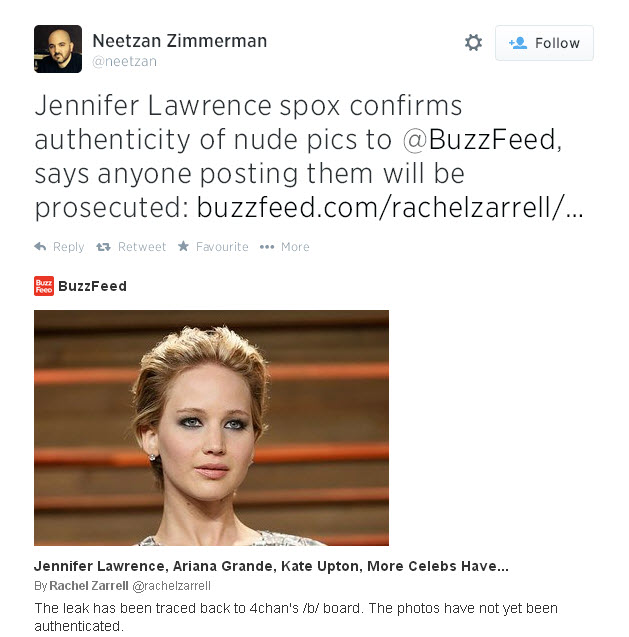
The reason? The leak of nude photos of the 2013 Academy Award winner on the /b/ forum of 4Chan.

She has confirmed the story, although she is apparently not the only victim.

jennifer lawrence spokeman


Other models and actresses such as Kirsten Dunst, Kate Upton or Ariana Grande have also allegedly had pictures leaked, although not all these cases have been confirmed. Meanwhile, Mary E. Winstead has acknowledged the authenticity of the pictures that have been circulated, while Victoria Justice has denied that some photos allegedly of her are authentic.

It is still not clear how ‘Celebgate’ (as some are referring to this massive hacking) was carried out. Some sources have suggested a possible security breach in iCloud, Apple’s virtual data storage platform, though the company has yet to confirm this.

Until it is known how these images were stolen, the best anyone can do is apply common sense and ensure they use strong passwords to access their services. We also recommend that users check their Apple ID account.


The post Jennifer Lawrence: Victim of a security hole in iCloud? appeared first on MediaCenter Panda Security.

Back to school…for the rest of us

“You’ll never know everything about anything, especially something you love.”

–Julia Child

All across the nation, parents are breathing sighs of relief as their children head back to school.

But how about ourselves? As I’ve mentioned before, I’m a strong believer in lifelong learning. It keeps us focused, interested, and engaged. It helps our communities. And whether you want to teach or learn, there’s a place for you, either in person or online.

While I have the greatest respect for traditional universities and our wonderful community colleges, there are so many resources available online today that make it easy to stay active and engaged in learning. Back in the early 2000s when I started an early online learning company that did classes for consumers on all sorts of topics sponsored by major brands – we were a bit ahead of our time. Now technologies –specifically video applications- have evolved so much to support and make online classes truly visual, interactive and engaging.

Though we juggle our work, projects, kids and other commitments and it can be crazy, many of the online courses are self-paced, making them more manageable.  And BTW, a report by the U.S. Department of Education has found that classes with online learning (either solely or as a component) on average produce stronger student learning outcomes than do classes with solely face-to-face instruction – especially among older learners.

Here are some of the best distance learning apps and sites that I’ve come across. These can be used whether you want to share your knowledge or want to learn…or, ideally, both! Here are five I recommend, with a bonus thrown in for good measure!


Canvas

Canvas is an open source platform for online collaboration that’s designed to be easy to use. It’s free and used by more than 800 colleges and universities. A sampling of courses shows a wide range of diverse material from “The Great Depression to the War on Terror,” a history course presented by a Seattle Central Community College Professor, to “Parenting in the Digital Age,” a course by the director of technology from an Indiana school district. These self-paced courses include video lectures, discussion forums, group work and more. Canvas’ motto is Keep Learning, something I think we can all agree with!

Coursera

The Coursera online portal also hosts classes from major universities around the country and the world, basically providing a way for you to learn at your own pace or audit classes from the comfort of your desktop. It currently boasts 9 million students, 737 courses and 110 partners, with both free and paid courses. In its specialization area you can take a group of courses, for example, to earn a Cybersecurity Certificate from the University of Maryland (for a fee). They also offer financial aid, by the way!

ePals

ePals says it’s “where learners connect”. It maintains a community of collaborative classrooms engaged in cross-cultural exchanges, project sharing and language education. It’s a sharing site that offers a way for groups of students around the world to be matched up and paired with other classrooms, and allows teachers to create their own projects or collaborate on others. It’s all about learning through experience.  I think this site is what the future is going to look like…at its best: People all over the world sharing knowledge together.

edX

edX is one of the leading sites for accessing free, open online courses. Harvard and MIT founded this platform, and offers classes from those amazing institutions, as well as classes from a growing list of partners. One course coming this week that caught my eye is UT Austin’s course on “Ideas of the Twentieth Century.”

iTunes U

Apple’s site and app for online and connected learning, iTunes U provides thousands of audio and video courses on-demand and the world’s largest catalog of free education content. You can access learning and presentations from many top schools and universities worldwide, including Stanford, Harvard, MIT and more.


And now for the bonus…

Don’t have time to commit to a class this fall? There’s an awesome YouTube presentation featuring Carl Sagan, Arthur C. Clark and Stephen Hawking here about “God, The Universe, and Everything Else.” Now that’s education in less than an hour.

Happy back to school, everyone!

Microsoft Office 365 service module offers MSPs the best of both worlds

Life for a managed services provider (MSP) is seldom straightforward.   Support staff in the service center have long had to juggle between screens as they log in and out of numerous applications from different vendors in the course of their day-to-day remote management operations. Over the years advances in technology have created ever more diverse technical environments for them to manage.  Nowadays it’s commonplace for customers to have a mix of traditional on-premise IT along with mobile devices and the latest cloud-based applications. The number of management screens just keeps on multiplying – all the while pushing up the time and costs of administration.

The Microsoft® Office 365™ cloud-based collaboration, communications and productivity software platform is a good example.  Its combination of Exchange e-mail, SharePoint online, Lync VoIP and conferencing online, web hosting via SharePoint and the Office Web Apps has proved extremely popular with businesses of all sizes. Indeed Microsoft’s own executives have described it as the fastest growing business in its history. Little surprise, then, that it has also gained a strong channel following with more than 60 percent of top MSPs seeking to wrap their services around one of the market’s current best sellers.

Yet managing this along with a multitude of other applications is no picnic.  Our MSP partners have been telling us that they would like a more convenient way to administer hybrid physical and online environments so that they can add value for customers with the Office 365 cloud platform.  In view of the large numbers of MSPs using Office 365, developing a solution to help our customers support and obtain recurring revenue streams from supporting Office 365 with ease and simplicity has been a priority.

The Microsoft Office 365 service module for AVG Managed Workplace®, just released, goes some way towards addressing this issue. It allows our channel partners to provide management services such as user password resets and mailbox policies – which Microsoft typically will not do – via a single screen through AVG Managed Workplace. In fact the module allows MSPs to remotely perform five of the most popular management tasks. Apart from the two already mentioned you can also set license expiration alerts, receive service down notifications and managing users without using Windows PowerShell®. Other administrative tasks can be accessed without any additional logins.

Allowing administrators to view all the essential information they need about cloud-based and on-premise applications together within the same screen in this way gives IT services providers the best of both worlds.  In so doing it neatly solves problem of multiple logins for partners and helps them to run their operations more efficiently.

Our simplification of Office 365 management for services providers is a clear demonstration of our commitment to our channel partners.  We will continue to add modules to AVG Managed Workplace that allow IT service providers reap productivity benefits and deliver long-term value to their customers.

In summary, the Office 365 service module represents a first step in developing easy ways to manage cloud data within AVG Managed Workplace – something that appears destined to become commonplace as more everyday objects and devices are IP-connected to form the Internet of Things. It also further enhances the wide range of productivity benefits already available to MSPs who use AVG Managed Workplace to remotely manage the IT of their entire customer-base through the same, single pane of glass.