UK mobile company Three has fallen victim to a major data breach, with up to six million customers reported to have been affected.
The post Three mobile network experiences data breach appeared first on WeLiveSecurity.

UK mobile company Three has fallen victim to a major data breach, with up to six million customers reported to have been affected.
The post Three mobile network experiences data breach appeared first on WeLiveSecurity.
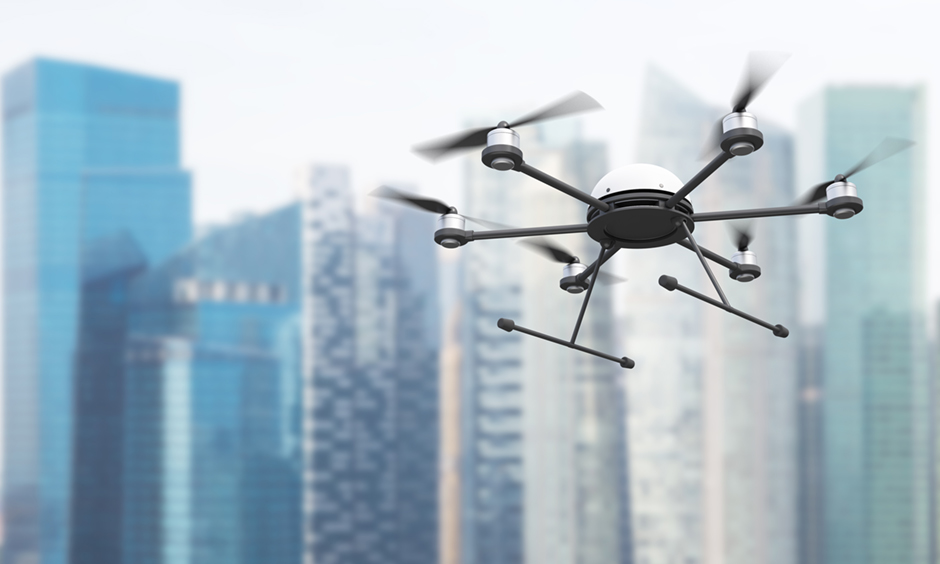
Drones have conquered the world: they are used to hunt down tax evaders and illegal hunters, help suppress wildfires, find victims after natural disasters… They even serve as flying cameras to assist in filming movies and for aerial photography.
Online retail giant Amazon, for example, is planning on using drones for commercial delivery in order to fly purchases right to customers’ front doors. Despite being originally developed for military purposes, drones are slowly finding their place into our everyday lives. However, just as with every other technology, these unmanned aerial vehicles can pose a serious threat if they fall into the wrong hands.
Among other things, drones can be used as highly effective spies. Their ability to get close to almost any place where confidential data is stored (for example, an office) without being seen, makes them the perfect spy. Not only because of their ability to carry cameras and capture images through windows, but also because they can make the perfect weapon to carry out sophisticated cyber-attacks.
Drones can be used by cyber-criminals to easily get their malicious tools close to their target without having to overcome the physical barriers that the potential victim may have in place (security guards, access control systems, biometric sensors, surveillance cameras, etc.).
A drone could hide, for example, a jammer, a malicious hotspot, a device to launch attacks via Bluetooth or NFC, etc. The number of ways in which these aerial devices can be used to spy on victims and steal confidential information is almost endless.
Such is the risk that there are countries such as Sweden that have ruled that camera drones qualify as surveillance cameras, banning their use unless the drone operator has the necessary permit.
However, a cyber-criminal that wanted to use a drone to carry out an attack would still have another option: to take control of someone else’s device. Unfortunately, many of today’s models have vulnerabilities that could allow a remote attacker to take control of them.
Drone manufacturers have the responsibility to increase the security of their aircrafts to mitigate the security and privacy concerns raised by them. As this technology becomes ever more present in our lives, it is clear that the notion of safety and security in IT systems cannot be limited to computers and smartphones, but should also reach other high-flying devices. In this respect, having the cyber-security protection that best adapts to your needs is absolutely essential.
The post Camera drones: A flying spy is peeping into your window appeared first on Panda Security Mediacenter.
WhatsApp is to add encrypted video calling to its service on Monday, as it continues to bolsters security on the app.
The post WhatsApp to offer encrypted video calling appeared first on WeLiveSecurity.

A teenager has admitted being behind last year’s TalkTalk cyberattack, explaining he compromised the company’s website to “show off” to his friends.
The post Teenager admits to TalkTalk cyberattack appeared first on WeLiveSecurity.

The financial repercussions of a data breach have been highlighted by the $1 million fine handed out to Adobe Systems for a 2013 security incident.
The post Adobe fined $1 million for 2013 data breach appeared first on WeLiveSecurity.


That hard disks, pen drives and other physical storage devices are an attractive target for cyber-criminals wanting to steal confidential information from enterprises is something that company managers are well aware of. And, in fact, they try to educate their employees about the need to use those tools properly.
However, the now-popular digital cloud, used by businesses to store increasing amounts of sensitive information, must also be taken into consideration when designing a company’s cyber-security strategy. Moving to the cloud has powerful benefits – cost savings, easy access to files from anywhere, convenience, etc.- yet it also poses some risks that must be identified and controlled.
According to a recent study published by the prestigious Ponemon Institute, the majority of businesses have not or do not know if they inspect their cloud services for malware.
The majority of businesses have not inspected their cloud services for malware.
According to the study, while 49 percent of business applications are now stored in the cloud, fewer than half of them are known, officially sanctioned or approved by the IT Department.
While respondents understand the risk of data breaches, nearly a quarter could not determine if they had been breached, and nearly a third couldn’t determine what types of data were lost in the breach(es). Neither do they know how the breach(es) occurred.
This and similar studies seem to indicate that enterprises rely too much in the security measures adopted by cloud service providers themselves and that, all too often, companies leave the protection of their most valuable secrets and assets almost exclusively in the hands of third parties such as Amazon or Slack.
To resolve this situation, CISPE, a coalition of cloud service providers operating in Europe, has published the sector’s first code of conduct aimed at ensuring data security and confidentiality. Compliant cloud infrastructure providers will be able to identify themselves with a ‘Trust Mark’ that will provide additional security assurance for customers, especially corporate ones.
Nevertheless, despite the measures taken by these Internet giants to ensure the integrity of the information stored on their servers, companies and their employees cannot ignore their own responsibility to keep corporate data and documents secure. Just as they take good care of their hard drives and pen drives, they should also take care of the cloud to prevent their data from ending up in the wrong hands.
The post Companies don’t take proper care of the data they store in the cloud appeared first on Panda Security Mediacenter.

Something as apparently inoffensive as employees keeping up with the lives of ‘celebs’ on the Internet could be far more dangerous than you think for your company’s IT systems. Whether you like it or not, some employees take advantage of dead time (and not-so-dead time) to look for all the latest gossip and news on the Web.
There may not be anything too risky about reading reputable newspapers online to see the latest news or check out your team’s results (although there have been cases of malware-laden ads in online newspapers). However, gossip columns and other celebrity stories have become a serious threat for the security of computers and mobile devices.
Cyber-criminals are well aware of the interest generated by the lives of the stars, which is why they have come up with specific strategies to bait users into downloading malicious programs on their computers when they access this content.
Cyber-criminals are well-aware of the interest generated by the lives of the stars.
The first step that the average user takes when looking for information about celebs is to ask Google. Yet some searches are more risky than others. Some famous people and related events offer more potential for attackers, as was the case recently with Brad Pitt and Angelina Jolie after their separation became public.
New film or music releases are also a popular weapon for criminals whose aim is to infect users’ computers and devices looking for passwords and other confidential information. Whenever a new story breaks, searches related to those involved increase dramatically and it becomes easier to infect users with malware hidden on malicious websites with related stories.
New film or music releases are also a popular weapon for criminals.
In order to minimize the threat, apart from having an efficient policy for controlling the way your employees use your company’s devices, the most effective measure is awareness. Firstly, your company’s workers should learn to distinguish between trusted pages and those that could potentially be used by criminals to infiltrate your systems. They should also avoid any links to illegal downloads, whether direct or via ‘torrent’ (highly in demand when a new film or song is released).
Of course, you can get an additional guarantee of protection against malware that exploits users’ fascination with celebrity news by having a security solution to protect all your devices, such as Panda Security’s corporate solutions.
The post Searching for celebrity news on Google can be dangerous for your computer appeared first on Panda Security Mediacenter.
Concerns over unprotected customer data sharing on WhatsApp and Facebook results in UK Information Commissioner threatening to enforce action.
The post ICO concerned about privacy protection on WhatsApp/Facebook appeared first on WeLiveSecurity.


Warning – the following article may contain spoilers
Charlton Brooker’s Black Mirror television series has become something of a phenomenon thanks to its almost prophetic predictions about society and technology. Set in the very near future, Black Mirror borrows technology stories from the media, and imagines the worst possible outcomes to create a bleak view of the world that we are creating today.
What makes Black Mirror so compelling is that the storylines are simultaneously outlandish and plausible. More impressive is the fact that some of the predictions have actually come true.
As the third season of Black Mirror airs on Netflix, it’s time to consider how close to reality the latest round of predictions really are.
Hackers take control of a Kenny’s laptop, and use the webcam to secretly film him in a compromising situation. Kenny then receives a string of ransom texts to his phone, demanding he follow the supplied instructions or risk the embarrassing video being leaked to his friends, family and the rest of the world online.
The reality is that malware already exists to hack into computers, activating the web cam remotely. And like most malware, you probably won’t even notice anything is wrong until you receive a ransom demand or similar.
To prevent being spied on, some people take the extreme step of taping over their webcam – a method favoured by Facebook CEO Mark Zuckerberg.
Just as effective (and much easier to manage) is to protect your computer with a robust antivirus application like Panda Security that can detect and block malware before it can install itself.
The Metropolitan Police investigate the brutal murder of a journalist in London. All the evidence seems to point to the woman’s husband, but of the detectives assigned to the case suspects that social media may also play a part.
As more deaths follow, it is discovered that a swarm of robot bees has been programmed to kill anyone trending online with the hashtag #DeathTo. The mob mentality of social media users is unwittingly singling out individuals for death.
The robot bees may not yet exist, but the vicious hashtags that accompany each attack in Black Mirror certainly do. Cyberbullying is widespread, and really does cause lasting damage to the victim, leading to stress, depression and, in extreme cases, suicide.
Online bots that respond to trending hashtags already exist, helping to spread viral messages, or trigger specific actions for companies that monitor social media. The artificial “intelligence” to drive a swarm of robot bees is ready, even if the technology is not.
To avoid attracting the attention of trolls online, parents should consider installing a comprehensive internet security package like Panda Gold Protection (you can download a free trial here). This will allow you to block access to sensitive sites – including social media – protecting your family against simple, unintentional mistakes becoming headline (life-threatening) news.
Black Mirror makes for uncomfortable viewing – mainly because it is so close to the reality we know. The dire outcomes of each episode are just realistic enough to create a terrifying view of the future. Fortunately you can avoid starting some of these chains of events with some effective internet security software.
For more help and advice about staying safe online, please get in touch.
The post Black Mirror – How much is already real? appeared first on Panda Security Mediacenter.
Google has announced new measures that resolve a security loophole that allows certain websites to circumnavigate its Safe Browsing service.
The post Google fixes Safe Browsing security loophole appeared first on WeLiveSecurity.