Tag Archives: News

How many devices do you have in your home?

It’s probably more than you think. There are the obvious ones such as laptops, tablets and smartphones. But did you think of your smart TV, games console or even your refrigerator? Our homes are very quickly becoming digital environments with dozens of connected devices making up what is known as The Internet of Things.

You may have already heard of devices such as Nest that offer smart solutions to everyday functions like heating your home, but while it may sound futuristic, it is very much part of reality.  As an industry, the Internet of Things was already worth well over $30 billion in 2013 and is set to surpass $70 billion by 2018.

The transition to a digitally connected world has well and truly begun. Whether you track your daily activity using a fitness wearable, have your home alarm system linked to your phone or simply stream movies to your television, that’s all part of living in an increasingly connected world.

In an ideal world, this connectivity would be seamless and integrated. In reality though, each of these connected devices are being developed in isolation across dozens of different verticals. The end result is a fractured market that can make it confusing and difficult for you to keep track of all your devices.

There must be an easier way. A simple product that can help you control your personal Internet of Things without the hassle of managing each one individually.

And that’s the idea behind AVG Zen™. We want to make managing your digital world as simple as possible. We want to avoid the culture of countless notifications, constantly prompting you and pulling you back to manage your devices. The idea behind AVG Zen is to offer peace of mind.

The vision is that someday, AVG Zen will help you track all of the devices on your personal Internet of Things.  Today, AVG Zen is already a powerful tool that can take much of the hassle out of managing your many devices (and those of your family).

Video

Welcome to AVG Zen

As a central dashboard, AVG Zen allows you to monitor and manage the security and performance of your devices by adding them to your AVG Zen network. It’s an incredibly easy and powerful way to ensure that your PCs, Mac and Android devices are locked down and running smoothly.

That’s AVG Zen – and we are working to ensure it will continue to bring peace of mind to  your connected world as that world continues to grow.


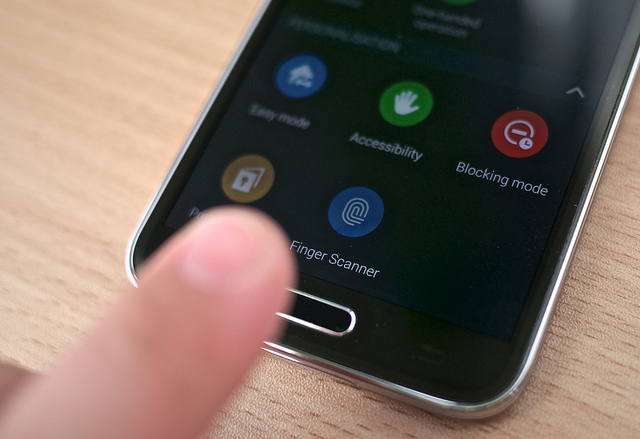
Want more security? How about the first credit card that reads your thumbprint?

Was it 3798 or 7389? This is the typical doubt we all have when standing in front of the point-of-sale terminal and about to pay: you think that’s the right number, though when you go to enter it, you still have a feeling that the screen might laugh at you for keying in the wrong PIN.

At some time or another, credit card PINs will give you a headache: First, it’s hard to memorize them and at some point you’ll probably make a mistake entering the number. And what if it the number itself gets stolen? Luckily, this is a problem that could soon have a solution, as the most secure password is something that you have with you 24 hours a day, 365 days a year: your fingerprint.

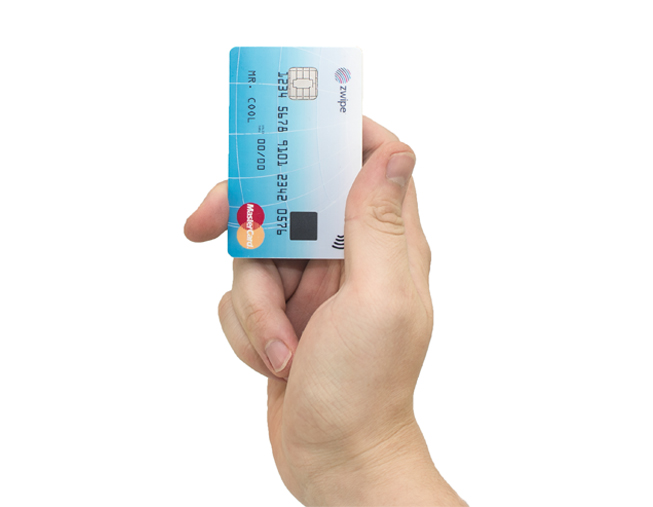
Perhaps even your next credit card won’t ask you to enter a PIN when you go to pay for something, rather just place your finger on the card. MasterCard is already working on it. Along with the Norwegian tech startup Zwipe, the credit card company has come up with the first card with an in-built thumbprint reader to verify the cardholder’s identity.

credit-card

With this innovation, biometrics have come another step closer to our everyday lives, although this is not the only example. Apple has already introduced biometrics in the Apple Pay digital payment platform, which leverages Touch ID, the fingerprint recognition technology in iPhone 6.

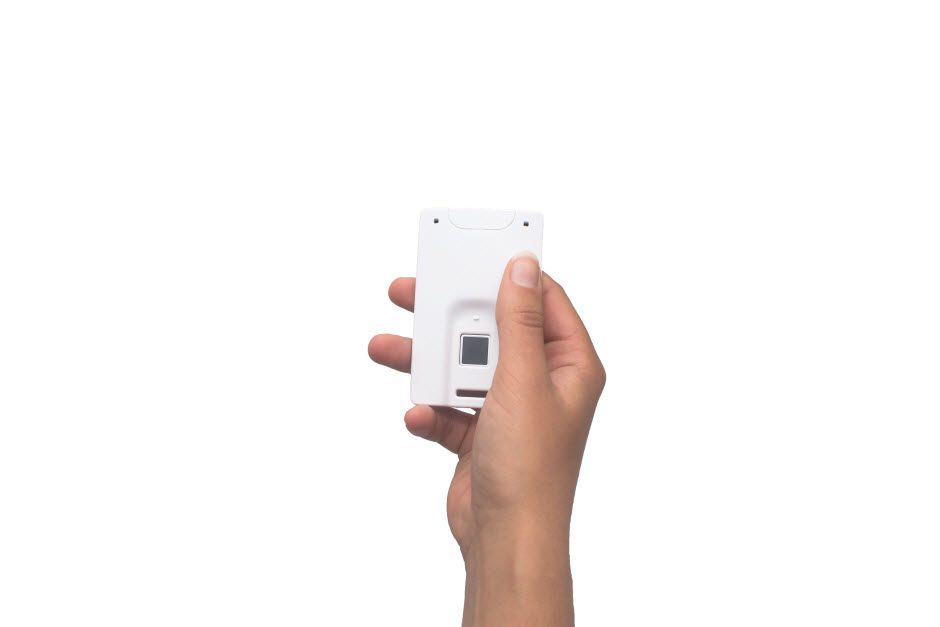
The biometric system used by MasterCard is similar to that employed by Apple: At one end of the card there is the print reader, where the cardholder simply places a thumb to verify their identification. So it could soon be goodbye to all those tedious passwords and PINs.

The cards don’t need batteries to run the technology, instead the fingerprint scanner is powered by energy emitted by the payment terminals, as Zwipe CEO, Kim Humborstad, explains: “All standard contactless terminals dispatch a radio frequency (RF) signal, and we use that RF energy to power the card.”

The card is already a reality, and although there is no specific date, they could be in our wallets by 2015. Everything depends on the banks, who will have to decide whether to commit to biometrics as a secure method of identification.

credit-card-prototype

No one can doubt the usefulness of this innovation, but is it completely secure? It’s probably more secure than having a password that you often forget or that could be stolen if written down on a piece of paper, although it’s still not completely secure.

You don’t need to worry about thieves stealing your card and slicing off your thumb to get your thumbprint, as there are far less gruesome ways of compromising the security of the system. Apple’s Touch ID system has already had its vulnerabilities highlighted, both on the latest iPhone and the previous version.

However, biometric systems such as fingerprint readers developed by Apple or MasterCard, or iris pattern identification are options that are not only being considered for credit card authentication, but also as keys for the smart homes of the future.

Biometrics, however, are not perfect. “If an identity thief or criminal has the necessary resources and motivation, they can make a replica of your thumb from a latent print,” explains Julián Fiérrez, Associate Professor at the Universidad Autónoma de Madrid, and an expert in these types of technologies.

Even though the system is not the panacea, it would seem that leading companies now see fingerprint recognition as the future. “Our belief is that we should be able to identify ourselves without having to use passwords or PINs.”, says president of security solutions at Mastercard, Ajay Bhalla. “Biometric authentication can help us achieve this – our challenge is to ensure the technology offers robust security, simplicity of use and convenience for the customer.”

The post Want more security? How about the first credit card that reads your thumbprint? appeared first on MediaCenter Panda Security.

Don’t fall for these scams this Halloween!

Facebook Reset Scam

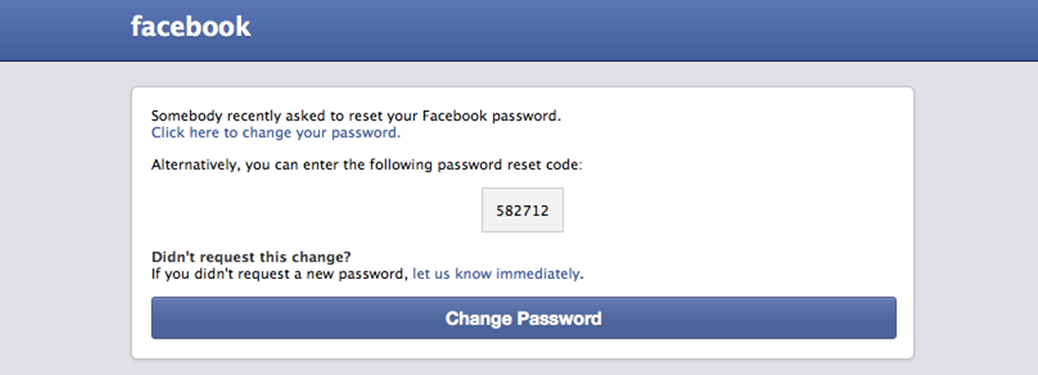
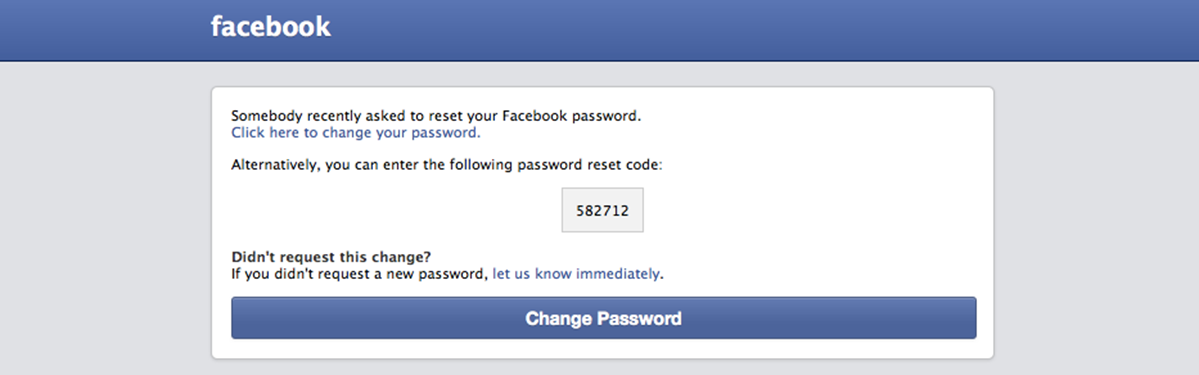
The Facebook reset requests arrived via email and text message: “Somebody asked to reset your Facebook password.” At first it was annoying; then it was worrisome – a possible scam/phishing target.

Facebook says that these alerts are sometimes triggered due to a person mistakenly entering the same name and then, when their password doesn’t work, the customer asks for a reset. That might be possible in certain cases, but just based on the constant messaging, this was clearly beyond a normal user mistake, and an imitator scam.

Facebook Reset Scam

Let’s set aside the fact that although I have unlimited mobile data, many people don’t, and would end up paying for these unwanted texts. What’s more problematic is thinking about the many users who unsuspectingly fall for the request, click away and sign away their passwords.

Facebook says it will never ask you for your password, so if this happens to you, resist the urge to click. Any time you receive an urgent call to action in an email, be wary.  Don’t click on links contained in emails as a general rule. Instead, go to Facebook manually and look at the notifications. Needless to say, keep your anti-virus software up-to-date and use a password manager to keep your passwords safe and secure.


Facebook itself advocates the following steps:

  • Use an up-to-date browser
  • Use unique logins and passwords for each of the websites you use.
  • Check to see that you’re logging in from a legitimate Facebook page with the facebook.com domain.
  • Be cautious of any message, post or link you find on Facebook that looks suspicious or requires an additional login.


IRS and Other Scary Calls

You might imagine getting a voice message from the IRS wouldn’t be good news. And it’s not! This is a current scam making the rounds: Someone claiming to be an officer of the Internal Revenue Office leaves a message for you or your legal representative to call their hotline regarding an extremely time sensitive issue – before they take legal action. I was immediately suspicious: Would the IRS really leave me a phone message if there were an issue? The answer is “No.”

What’s really scary is that the IRS reported in August 2014 it had received 90,000 complaints and identified approximately 1,100 people who have fallen victim, given up credit card numbers, etc. and lost an estimated $5 million from these scams.  You can learn more about the same on IRS. gov.

Fast forward to another cell scam: persistent calls received from an unknown number in the local area code. No voicemails were left. But after the calling persisted several times a day for a few days, you become curious as to who was calling. When I rang the number I got a “This number has been disconnected” message…

Lots of research later and it’s unclear as to whether this is just some weird harassment or part of the “One-ring” cell phone scam that the FTC has issued warnings about. In the latter scenario, scammers are using auto-dialers to call cell phone numbers across the country. They let the phone ring once and hang up — hoping you’ll call back, either because you believe a legitimate call was cut off, or you will be curious about who called. If you do, chances are you’ll hear something like, “Hello. You’ve reached the operator, please hold.” While waiting, you rack up some hefty charges — a per-minute charge on top of an international rate. The FTC notes: There’s no danger in getting the call: the danger is in calling back and racking up a whopping bill. If you’re tempted to call back, try checking the number first through online. Go here to learn more.

As for persistent calls, you can block them. You can block calls on both Android and iOS phones. On an iPhone look on your list of recent calls, just click the “i” in the circle to the right of the number. It will open an info tab, just scroll to the bottom and click block number. You should also report the number to your service provide (AT&T, Verizon, etc.) to get them blocked there.Halloween comes and goes, but scary scams will continue, and it requires a higher level of awareness from all of us! Check out AVG’s Facebook page for ongoing alerts and simple tips to help your friends be more safe online!

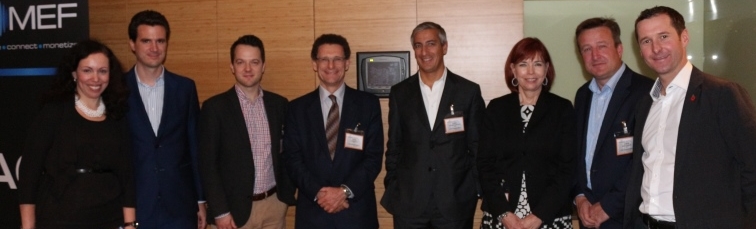
MEF Appoints Judith Bitterli to Global Board

Established in 2000, MEF is the global trade association for companies wishing to monetize their products & services via mobile. It is a global presence offering impartial and powerful voice for pioneering companies from across the mobile content and commerce value chain.

AVG has been a member of MEF for two years, and has already participated in the AppPrivacy working group to develop a quick and easy privacy policy generator for app developers. AVG also sponsored the MEF Global Consumer Trust Report which examines trends in mobile business and examines barriers to growth for the mobile economy.

The MEF Board

In her new role, Judith will be providing insight and expertise to the MEF as the world becomes more focused on the Internet of Things.

Judith won’t have long to wait to get involved in MEF activities as she will be participating in a panel on trust, privacy and consumer engagement in mobile at the MEF Global Forum in San Francisco in November.

Images courtesy of MEF

White House wants to replace passwords with selfies

selfie-girls

There’s one question that appears on any Internet platform on which you have to verify your identity with a password: “Forgotten your password?” Companies nowadays know how forgetful we users can be. Particularly when it comes to remembering a complex sequence of letters and numbers that we’ve had to conjure up.

And that’s not all. There are the PINs for your cell phone, your credit card… There are now so many things to commit to memory that it sometimes seems that we just don’t have enough neurons to deal with it all.

As the technology giants are well aware of this human limitation, some are now including fingerprint sensors in devices, so owners confirm their identity simply by placing a finger on the screen. Many mobile devices also include a voice recognition option, though this is rarely activated by users.

fingerprint

These methods of identification however are still not entirely practical. At least this is what the President’s cybersecurity coordinator, Michael Daniel, believes. He wants to get rid of passwords from the White House forever.

One of the more unusual alternatives suggested by Daniel is for the President’s staff to use selfies.

It would seem that these snap shots could now be used for something other than just posting on social networks. Daniel’s plan would involve installing a series of sensors around the building which could recognize the faces of those entering certain areas of the President’s residence.

Instead of having to stand right in front of the sensor, staff could just show the screen of their cell phones displaying a clear and recognizable selfie.

selfie-obama

Daniel believes that technology companies have begun to realize that security measures must not only be functional, they must also take into account how users behave. If these measures are too complicated or difficult, people just won’t use them, he warned.

That’s why selfies could be the perfect answer, as even world leaders have taken to this latest digital craze.

The post White House wants to replace passwords with selfies appeared first on MediaCenter Panda Security.

AVG Technologies Announces New Managed Workplace® Enhancements to Partners at Cloud Summit

AVG’s RMM platform continues to evolve to give partners even tighter applications’ integration experience, reducing cost and complexity

AMSTERDAM and SAN FRANCISCO – October 23, 2014 – AVG Technologies N.V. (NYSE: AVG), the online security companyâ„¢ for 182 million active users, today gave partners attending its Cloud Summit in Arizona a first-look preview of key new features in AVG Managed Workplace®9.0, its open eco-system Remote Management & Monitoring (RMM) tool for IT resellers and managed services providers (MSPs).

Following continued close consultation with its partner-base, AVG is unveiling a number of significant technical refinements to its RMM platform that will enable MSPs to deliver an even more tightly integrated range of streamlined services through the same integrated management console.

Key advances among the new integration features and benefits for MSPs of the enhanced AVG Managed Workplace RMM platform are:

  • Increased automation – extends automation best practices in a scalable, repeatable manner to transform an MSP’s service delivery, thereby reducing the cost of creating and maintaining secure compliant devices
  • Enhanced reporting and alerting – refinements in automated, real-time alerting increase quality and breadth of data available to enable a fast, focused response to help remediate issues before they have a chance to escalate, helping to save time and money.
  • Boosted patch management – increases in efficiency of patch scheduling ability help proactively close the gap between patch availability and patch application, reducing vulnerabilities on individual devices and avoiding costs.

“Recent industry events like Shellshock and Gameover Zeus have shown businesses that it is still best to leave your IT in the hands of experts,” said Mike Foreman, General Manager, SMB, AVG Technologies. “Incorporating the constructive feedback from our partners, combined with a set of technical enhancements to our RMM platform provides our partners with enhanced levels of protection and control that will let their customers sleep at night.”

AVG’s business security portfolio is supported by a worldwide network of more than 10,000 partners.  Its pedigree in this area makes it ideally positioned to help smaller IT companies and MSPs harness low cost, cloud-based tools so they can transition into fully-fledged managed services businesses.

In October 2012 AVG introduced AVG CloudCare™, a cloud-based administration platform offering resellers a new way to implement and manage services such as antivirus, content filtering, online backup and email security services for their business customers. In June 2013 it added AVG Managed Workplace, an open eco-system Remote Management & Monitoring (RMM) tool. AVG‘s vision is to make the lives of MSPs and their business customers as easy as possible, regardless of whether staff are in the office, at home, or on the road.

AVG Managed Workplace 9.0 is scheduled for general availability from November 2014.

About AVG Technologies (NYSE: AVG)

AVG is the online security company providing leading software and services to secure devices, data and people.  AVG has over 182 million active users, as of June 30, 2014, using AVG’s products and services including Internet security, performance optimization, and personal privacy and identity protection. By choosing AVG’s products, users become part of a trusted global community that engages directly with AVG to provide feedback and offer mutual support to other customers.

Good News from the Government

With all the data breaches making headline news, and more importantly, affecting millions of Americans, the Obama administration announced a strong government plan to add security for debit cards that are used for federal benefits such as Social Security.

Specifically, in an executive order signed at the Consumer Financial Protection Bureau, President Obama ordered that government agencies that process payments employ enhanced security features.

Those measures include launching a chip and PIN initiative that the government has named “BuySecure” initiative. Chip and PIN means that secure information is embedded in a chip in a credit card and users must enter a PIN number in order to use the card, much like they currently do with a debit card. The President moved without Congress on this one, which if anything highlights the importance and the need for haste in this matter.

Chip and PIN reduces the chance of fraud, as I pointed out in an earlier post (see here).

The point is that smart cards are revamped credit cards with microchips that store your data on the card. Chips are better than magnetic strips because the strips use the same technology as a cassette tape (remember those?) and thus are easy to copy. But chips generate a unique code each time they are used. So, while criminals can still steal your card and still commit fraud and sell data, they can’t copy your card and create more fraudulent ones under your name. It’s a big step in the secure data direction.

The major catch with the chip cards, until now, is that most retailers don’t have the technology for them just yet. The main companies that have had breaches have announced plans to install the new technology (this includes Home Depot, Target, etc., and it is also interesting to note that Walmart was ahead of the curve on this one).

But no doubt with the government behind this movement, it’s going to push this technology and added security into the mainstream, essentially making it the new way of doing business via credit.

Thus far there has been some foot-dragging on chips, not just because retailers will have to upscale to the new technology, but also as banks and retailers have argued over who is in fact responsible for security. This should definitely speed up, and resolve, the process.

“There is a need to act and [to] move our economy toward stronger, more secure technologies that better secure transactions and safeguard sensitive data,” the White House said in a statement.

President Obama, speaking about the motivation behind the order, said, “Identity theft is now America’s fastest growing crime. These crimes don’t just cost companies and consumers billions of dollars every year; they also threaten the economic security of middle-class Americans who worked really hard for a lifetime to build some sort of security.”

AVG is glad that the government recognizes identity theft, cyber security, and data breaches as increasingly crucial problems. These are definitely issues that is not only a drag on the economy and businesses, but also affect peoples’ lives, and livelihood. I applaud the President’s bold move on chip and PIN.

AVG Technologies Previews New Identity-as-a-Service “CloudCare SSO” at Cloud Summit

AMSTERDAM and SAN FRANCISCO –  22 October, 2014 – AVG Technologies N.V. (NYSE: AVG), the online security company for devices, data and people, today unveiled a preview of its new Identity-as-a-Service (IDaaS) services to partners attending its Cloud Summit in Phoenix, Arizona.   Managed services provider (MSP) partners at the Summit had an exclusive first-look at how AVG’s full Cloud-security and remote monitoring & management (RMM) services portfolio can help MSPs deliver secure sign-on (SSO) for easy, one-click security and control over their customers’ cloud applications and mobile data.  Partners will soon be able to experience the breakthrough integration of Multi Factor Authentication, Secure Sign-On, Mobile Device Management and Mobile Application Management all managed through Active Directory to ease complexity and simplify management.

“The aim of today’s game changing advance in the expansion of AVG CloudCare’s cloud-based security and mobile management capabilities is to help MSPs grow their businesses further by enhancing the levels of protection and control built in to their customer services,” said Mike Foreman, AVG’s General Manager, SMB. “We know that with the rapid adoption of mobile, BYOD and Cloud applications customers will require additional expertise from partners to help control and manage all their users’ applications and data.  We are listening. That’s why, for the first time in this space, AVG is combining Centrify’s IDaaS capability with our existing RMM platform to provide a single, secure access layer to all our Cloud services as well as more than 2,500 of the most popular Cloud-based business apps for partners and their business customers.”

Underlying technology for AVG’s new IDaaS capability is driven by Centrify, a leader in unified identity management across cloud, mobile and data center environments.  Management of multiple passwords is a major headache for businesses, especially as they adopt more and more mobile and cloud-based applications.   Figures show up to 80 percent of end user breaches are password related. Furthermore, industry events like the Heartbleed bug have raised popular consciousness of the need for stronger password protection, especially in sectors like financial services or health where tight data security and privacy requirements are mandatory.

“IDaaS is solving real problems for the enterprise and thanks to the initiative of market-savvy companies like AVG the technology will soon be giving AVG partners and their businesses the same benefits in a format they can afford,” said Shreyas Sadalgi, Centrify’s SVP of Business Development for Centrify. “We are thrilled to be working closely with AVG, a globally respected security brand with one of the largest active partner bases in the industry.

An exclusive preview of the Centrify IDaaS solution is available to resellers and MSPs attending AVG’s inaugural Cloud Summit for partners taking place from October 20th-22nd 2014 at The Sheraton Wild Horse Pass Resort in Chandler, Arizona.

For more information or to contact sales for a free, not for resale account, please email [email protected]

AVG’s business security portfolio is supported by a worldwide network of more than 10,000 partners.  Its pedigree in this area makes it ideally positioned to help smaller IT companies and MSPs harness low cost, cloud-based tools so they can transition into fully-fledged managed services businesses.

In October 2012 AVG introduced AVG CloudCare™, a cloud-based administration platform offering resellers a new way to implement and manage services such as antivirus, content filtering, online backup and email security services for their business customers. In June 2013 it added AVG Managed Workplace, an open eco-system Remote Management & Monitoring (RMM) tool. AVG‘s vision is to make the lives of MSPs and their business customers as easy as possible, regardless of whether staff are in the office, at home, or on the road.

About Centrify

Centrify provides unified identity management across data center, cloud and mobile — resulting in one single login for users and one unified identity infrastructure for IT. Centrify’s software and cloud services let organizations securely leverage their existing identity infrastructure to centrally manage authentication, access control, privilege management, policy enforcement and compliance across on-premise and cloud resources. More than 5,000 customers have deployed Centrify across millions of servers, workstations, and applications. With Centrify, organizations are reducing their costs associated with identity lifecycle management and compliance by over 50 percent.

About AVG Technologies (NYSE: AVG)

AVG is the online security company providing leading software and services to secure devices, data and people.  AVG has over 182 million active users, as of June 30, 2014, using AVG’s products and services including Internet security, performance optimization, and personal privacy and identity protection. By choosing AVG’s products, users become part of a trusted global community that engages directly with AVG to provide feedback and offer mutual support to other customers.

All trademarks are the property of their respective owners.

70 Percent of MSPs Must Adapt Services to Capitalize on Internet of Things, AVG Study Reveals

AMSTERDAM and SAN FRANCISCO – October 22, 2014 – Roughly 1-in-4 (26 percent) small- to medium-sized businesses (SMBs) and managed services providers (MSPs) expect the Internet of Things (IoT) including multiple devices, wearables and Cloud-based services in general to generate more money for them than any of the other current big IT trends, according to a new survey announced today by AVG Technologies N.V. (NYSE: AVG), the online security company for devices, data and people. Almost three out of five (57 percent) SMBs agreed that IoT will help boost their revenues, a sentiment that was echoed by around two-thirds (67 percent) of MSP respondents. However just 18 percent of SMB respondents thought their IT provider was ahead of the curve regarding IoT management while 70 per cent of MSPs themselves admitted the need to adapt their services to meet customer expectations in this regard.

“Our MSP partners are telling us that the ‘Internet of Things’ is the one IT trend making an immediate difference to their bottom line and the business customers that they serve. A massive 7 out of 10 stated they need to amend their offerings to enable business growth.”  said Mike Foreman, AVG’s general manager, SMB

The study*, which interviewed 1,770 small businesses and MSPs in the U.S., Canada, the UK, Germany and Australia, also revealed more than half (55 percent) of MSP respondents say customers are demanding Internet of Things related services and over three quarters (77 percent) are planning to expand their service/product portfolio. However, they had better adapt quickly. Of those SMBs with an IT provider, 68% feel that their provider could improve their service with regard to Internet of Things offerings and understanding.

“The study shows clearly that as businesses grow to rely more and more on the Internet of Things and Cloud-based services to help generate revenue most MSPs are still some way short of being ready to help customers’ manage this,” continued Mike Foreman. “The research strongly indicates that MSPs need to significantly up their game and demonstrate enhanced levels of protection and control over their customers’ ever changing data and device needs.”

A summary of the other key findings in the study were:

SMBs

Almost half (46%) of SMBs think that the Internet of Things will be the IT trend that has the greatest impact on their organization over the next five years. An even higher proportion -around seven in ten (71%) – say that due to the Internet of Things their organization will need to take extra steps to secure and protect their data

  • Around three fifths (62%) of SMB respondents report that their organization has budget specifically assigned over the next 12 months for the development of Internet of Things solutions. 49% have a moderate or substantial budget assigned for these solutions.
  • Only 18% of SMB respondents say that their IT provider is completely ahead of the curve with regard to the Internet of Things and the potential for their business. Of those with an IT provider, 68% feel that their provider could improve their service with regard to Internet of Things offerings and understanding.
  • The majority (84%) of SMB respondents say that their organization has purchased mobile devices within the last year, spending an average of over $6,500 on these devices. Of those who have purchased mobile devices within the last 12 months, SMB respondents estimate that their organization spends an average of around $4,500 in hidden costs annually.

MSPs

  • Over half (55%) of MSP respondents state that customers are demanding Internet of Things related services and seven in ten (70% but only 56% Germany) say that they will amend their services based on the wants of the customer.
  • However, less than two fifths (38%) of MSPs say that their organization currently has an integrated remote monitoring and management platform.
  • Around three fifths (58%) of MSP respondents say that they will need to join up with cutting edge partners in order to successfully offer Internet of Things-related services. Currently only 38% of MSP respondents feel that the vendors they work with are cutting edge.
  • Furthermore around three in ten MSP respondents feel that their current vendor helps make efficiency savings (31%) or productive gains (25%) for their customers.

* AVG commissioned independent technology market research specialist Vanson Bourne to undertake this research.  1770 interviews were carried out during September 2014 with IT and marketing decision-makers of organizations with of 1 – 500 employees with and 85/15 per cent split between SMBs and MSPs. Interviews were performed across five countries: UK, US, Canada, Germany and Australia. Respondents to this research came from a range of industry sectors, with only the public sector excluded.

For more information, please see our video on the survey findings:

http://www.prnewswire.com/news-releases/70-percent-of-msps-must-adapt-services-to-capitalize-on-internet-of-things-avg-study-reveals-573155550.html

About AVG Technologies (NYSE: AVG)

AVG is the online security company providing leading software and services to secure devices, data and people.  AVG has over 182 million active users, as of June 30, 2014, using AVG’s products and services including Internet security, performance optimization, and personal privacy and identity protection. By choosing AVG’s products, users become part of a trusted global community that engages directly with AVG to provide feedback and offer mutual support to other customers.

All trademarks are the property of their respective owners.

Mac OS-X users hit with “iWorm” Malware

The warning is particularly relevant to those users who choose to download pirated software. As reported on The Safe Mac, the “iWorm” Trojan malware has been distributed through a pirate software website offering infected commercial software applications, such as Adobe Photoshop, Adobe Illustrator, Microsoft Office and Parallels.

This particular Trojan malware has been identified as being able to receive commands from the remote attacker and can inspect and transmit your files from your Mac. iWorm can also download and execute additional components – potentially causing serious havoc and compromising your privacy.

Mac users who choose to download untrusted applications from pirate websites are often completely unaware of the risks; easily blindsided by the immediate cost-savings of avoiding purchasing the software legitimately.

All iWorm Trojan malware is detected by AVG Antivirus for Mac including:

  • Virus OSX/iWorm.A
  • Trojan OSX/Iservice.B

While the prevalence of Mac malware remains relatively low when compared to Windows PC users, it’s no reason for Mac users to be complacent. Make sure you protect all your devices today.

Until next time, stay safe out there.