RHSA-2015:0715-1: Moderate: openssl security update

Red Hat Enterprise Linux: Updated openssl packages that fix multiple security issues are now
available for Red Hat Enterprise Linux 6.

Red Hat Product Security has rated this update as having Moderate security
impact. Common Vulnerability Scoring System (CVSS) base scores, which give
detailed severity ratings, are available for each vulnerability from the
CVE links in the References section.
CVE-2015-0209, CVE-2015-0286, CVE-2015-0287, CVE-2015-0288, CVE-2015-0289, CVE-2015-0292, CVE-2015-0293

RHSA-2015:0718-1: Critical: firefox security update

Red Hat Enterprise Linux: Updated firefox packages that fix two security issues are now available for
Red Hat Enterprise Linux 5, 6, and 7.

Red Hat Product Security has rated this update as having Critical security
impact. Common Vulnerability Scoring System (CVSS) base scores, which give
detailed severity ratings, are available for each vulnerability from the
CVE links in the References section.
CVE-2015-0817, CVE-2015-0818

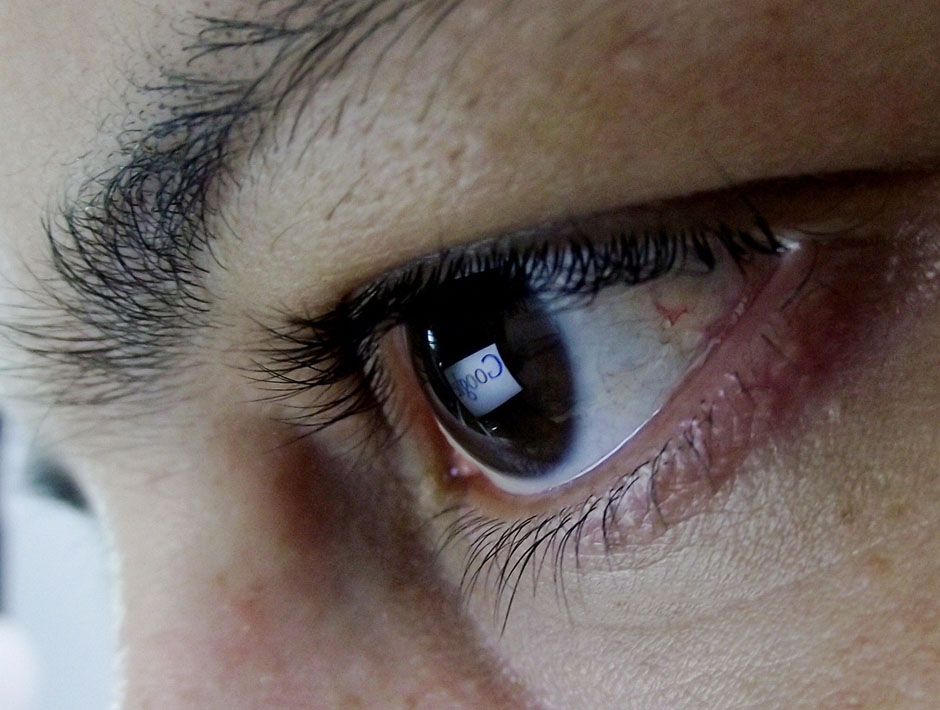
Hacking Hollande, Merkel and Cameron’s eyes through their photos in Google

eye

In Origins, a movie released last year, appears a worldwide biometric signature file different to the fingerprint’s one; an iris readings record. Although this disturbing reality is still unthinkable, there have been many steps in incorporating eye scanners as a method of personal identification.

This technology is already being used in some companies to control their employees’ entrance and exit, as well as in corporations with strict security measures. But, its daily use is getting closer. Mobile phones manufacturers like Samsung, Nokia and Fujitsu have announced that their upcoming models will have an iris scanner among its features.

Maybe in the future it would be enough to peer at the screen to unlock your mobile phone or access some of its features. If so, you’d better check the pictures you upload on the Internet. Jan Krissler, expert in computer security for Telekom Innovation Laboratories, proved that some of these biometric systems can be evaded simply using snapshots taken from Google Images.

Krissler had previously exposed the vulnerabilities of fingerprint readers. In December he copied none other than the German’s defense minister, Ursula Von der Leyen
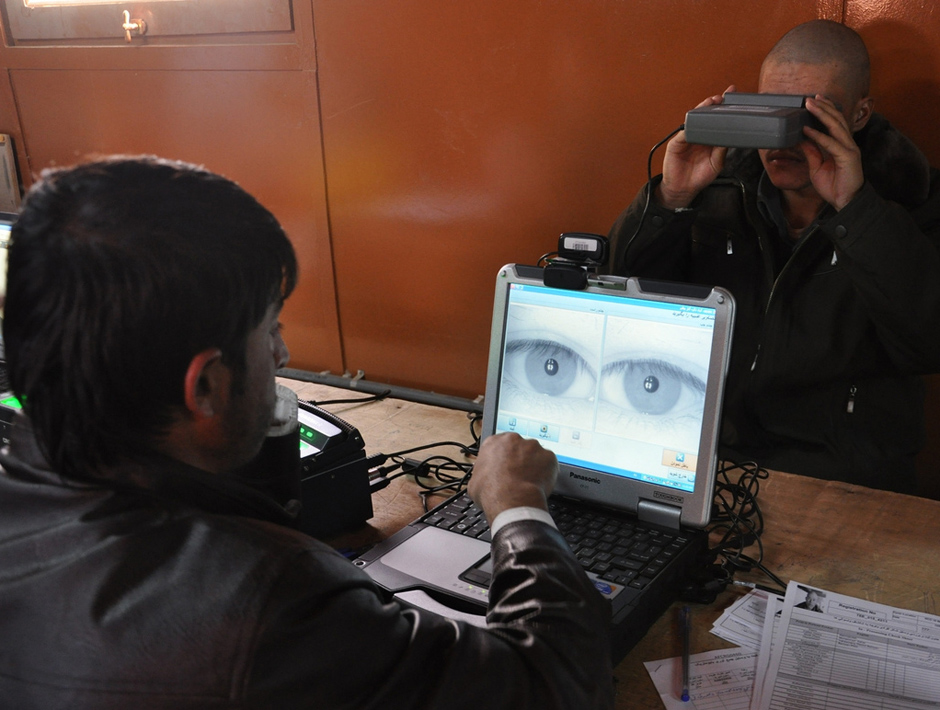
eye scanner

On that occasion he used the Verifinger recognition program to read Von der Leyen’s fingerprint, that he had photographed himself in a public event. Then he printed the result on a transparent surface, applied latex and there it was a fingerprint clone! However, he wasn’t been able to do further verification or testing.

This time, Krissler claimed he can do something similar with eye scanners without using his own camera. As we mentioned, you just need to search with certain premises in Google Images. The first one is that the target’s eyes must have enough brightness, as the researcher used a system based on infrared light, Panasonic’s Authenticam BM-ET200 which is one of the most extended technologies.

You also need a high quality image; size and clarity are important, to a certain point. In his tests he succeeded to use iris with diameters that did not exceed 75 pixels. It’s easier to deceive an eye scanner than a fingerprint reader, you don’t even have to make a clone, just print the picture and show it to the device, and it will mix it up with the real one.

Surely we all have a picture with these qualities, but it will never surpass the amount there is of any famous person, including politicians. Just type Barack Obama or François Hollande on Google and thousands of snapshots will emerge, of all sizes and shapes.

angela merkel

Krissler searched the faces of Vladimir Putin, Hillary Clinton, and David Cameron among others, before choosing Angela’s Merkel to carry out his verification. He chose an iris with a 175 diameter of the German Chancellor which Panasonic’s scanner recognize without a problem.

However, in an actual attack, the process wouldn’t end here, and the remaining steps are complicated. Accessing the biometric readers which Merkel or other politicians would use is not as simple as getting their picture.

Furthermore, although Fujitsu’s technology is also based on infrared light there are other methods, and there is the possibility to apply protection filters to the pictures. Despite these obstacles and reservations, Krissler wants his findings to be a warning to manufactures so they implement safety measures to future developments and to future users so they watch what they post, never better said!

The post Hacking Hollande, Merkel and Cameron’s eyes through their photos in Google appeared first on MediaCenter Panda Security.
USN-2539-1: Django vulnerabilities

Ubuntu Security Notice USN-2539-1

23rd March, 2015

python-django vulnerabilities

A security issue affects these releases of Ubuntu and its
derivatives:

  • Ubuntu 14.10
  • Ubuntu 14.04 LTS
  • Ubuntu 12.04 LTS
  • Ubuntu 10.04 LTS

Summary

Several security issues were fixed in Django.

Software description

  • python-django
    – High-level Python web development framework

Details

Andrey Babak discovered that Django incorrectly handled strip_tags. A
remote attacker could possibly use this issue to cause Django to enter an
infinite loop, resulting in a denial of service. This issue only affected
Ubuntu 14.04 LTS and Ubuntu 14.10. (CVE-2015-2316)

Daniel Chatfield discovered that Django incorrectly handled user-supplied
redirect URLs. A remote attacker could possibly use this issue to perform a
cross-site scripting attack. (CVE-2015-2317)

Update instructions

The problem can be corrected by updating your system to the following
package version:

Ubuntu 14.10:
python3-django

1.6.6-1ubuntu2.2
python-django

1.6.6-1ubuntu2.2
Ubuntu 14.04 LTS:
python-django

1.6.1-2ubuntu0.8
Ubuntu 12.04 LTS:
python-django

1.3.1-4ubuntu1.16
Ubuntu 10.04 LTS:
python-django

1.1.1-2ubuntu1.17

To update your system, please follow these instructions:
https://wiki.ubuntu.com/Security/Upgrades.

In general, a standard system update will make all the necessary changes.

References

CVE-2015-2316,

CVE-2015-2317

USN-2540-1: GnuTLS vulnerabilities

Ubuntu Security Notice USN-2540-1

23rd March, 2015

gnutls26, gnutls28 vulnerabilities

A security issue affects these releases of Ubuntu and its
derivatives:

  • Ubuntu 14.10
  • Ubuntu 14.04 LTS
  • Ubuntu 12.04 LTS
  • Ubuntu 10.04 LTS

Summary

Several security issues were fixed in GnuTLS.

Software description

  • gnutls26
    – GNU TLS library

  • gnutls28
    – GNU TLS library

Details

It was discovered that GnuTLS did not perform date and time checks on
CA certificates, contrary to expectations. This issue only affected
Ubuntu 10.04 LTS. (CVE-2014-8155)

Nikos Mavrogiannopoulos discovered that GnuTLS incorrectly verified that
signature algorithms matched. A remote attacker could possibly use this
issue to downgrade to a disallowed algorithm. This issue only affected
Ubuntu 10.04 LTS, Ubuntu 12.04 LTS and Ubuntu 14.04 LTS. (CVE-2015-0282)

It was discovered that GnuTLS incorrectly verified certificate algorithms.
A remote attacker could possibly use this issue to downgrade to a
disallowed algorithm. (CVE-2015-0294)

Update instructions

The problem can be corrected by updating your system to the following
package version:

Ubuntu 14.10:
libgnutls-deb0-28

3.2.16-1ubuntu2.2
Ubuntu 14.04 LTS:
libgnutls26

2.12.23-12ubuntu2.2
Ubuntu 12.04 LTS:
libgnutls26

2.12.14-5ubuntu3.9
Ubuntu 10.04 LTS:
libgnutls26

2.8.5-2ubuntu0.7

To update your system, please follow these instructions:
https://wiki.ubuntu.com/Security/Upgrades.

In general, a standard system update will make all the necessary changes.

References

CVE-2014-8155,

CVE-2015-0282,

CVE-2015-0294

USN-2541-1: Linux kernel vulnerabilities

Ubuntu Security Notice USN-2541-1

24th March, 2015

linux vulnerabilities

A security issue affects these releases of Ubuntu and its
derivatives:

  • Ubuntu 12.04 LTS

Summary

Several security issues were fixed in the kernel.

Software description

  • linux
    – Linux kernel

Details

The Linux kernel’s splice system call did not correctly validate its
parameters. A local, unprivileged user could exploit this flaw to cause a
denial of service (system crash). (CVE-2014-7822)

A flaw was discovered in how Thread Local Storage (TLS) is handled by the
task switching function in the Linux kernel for x86_64 based machines. A
local user could exploit this flaw to bypass the Address Space Layout
Radomization (ASLR) protection mechanism. (CVE-2014-9419)

Dmitry Chernenkov discovered a buffer overflow in eCryptfs’ encrypted file
name decoding. A local unprivileged user could exploit this flaw to cause a
denial of service (system crash) or potentially gain administrative
privileges. (CVE-2014-9683)

Sun Baoliang discovered a use after free flaw in the Linux kernel’s SCTP
(Stream Control Transmission Protocol) subsystem during INIT collisions. A
remote attacker could exploit this flaw to cause a denial of service
(system crash) or potentially escalate their privileges on the system.
(CVE-2015-1421)

Update instructions

The problem can be corrected by updating your system to the following
package version:

Ubuntu 12.04 LTS:
linux-image-3.2.0-79-omap

3.2.0-79.115
linux-image-3.2.0-79-generic

3.2.0-79.115
linux-image-3.2.0-79-powerpc-smp

3.2.0-79.115
linux-image-3.2.0-79-powerpc64-smp

3.2.0-79.115
linux-image-3.2.0-79-virtual

3.2.0-79.115
linux-image-3.2.0-79-generic-pae

3.2.0-79.115
linux-image-3.2.0-79-highbank

3.2.0-79.115

To update your system, please follow these instructions:
https://wiki.ubuntu.com/Security/Upgrades.

After a standard system update you need to reboot your computer to make
all the necessary changes.

ATTENTION: Due to an unavoidable ABI change the kernel updates have
been given a new version number, which requires you to recompile and
reinstall all third party kernel modules you might have installed. If
you use linux-restricted-modules, you have to update that package as
well to get modules which work with the new kernel version. Unless you
manually uninstalled the standard kernel metapackages (e.g. linux-generic,
linux-server, linux-powerpc), a standard system upgrade will automatically
perform this as well.

References

CVE-2014-7822,

CVE-2014-9419,

CVE-2014-9683,

CVE-2015-1421

USN-2542-1: Linux kernel (OMAP4) vulnerabilities

Ubuntu Security Notice USN-2542-1

24th March, 2015

linux-ti-omap4 vulnerabilities

A security issue affects these releases of Ubuntu and its
derivatives:

  • Ubuntu 12.04 LTS

Summary

Several security issues were fixed in the kernel.

Software description

  • linux-ti-omap4
    – Linux kernel for OMAP4

Details

The Linux kernel’s splice system call did not correctly validate its
parameters. A local, unprivileged user could exploit this flaw to cause a
denial of service (system crash). (CVE-2014-7822)

A flaw was discovered in how Thread Local Storage (TLS) is handled by the
task switching function in the Linux kernel for x86_64 based machines. A
local user could exploit this flaw to bypass the Address Space Layout
Radomization (ASLR) protection mechanism. (CVE-2014-9419)

Dmitry Chernenkov discovered a buffer overflow in eCryptfs’ encrypted file
name decoding. A local unprivileged user could exploit this flaw to cause a
denial of service (system crash) or potentially gain administrative
privileges. (CVE-2014-9683)

Sun Baoliang discovered a use after free flaw in the Linux kernel’s SCTP
(Stream Control Transmission Protocol) subsystem during INIT collisions. A
remote attacker could exploit this flaw to cause a denial of service
(system crash) or potentially escalate their privileges on the system.
(CVE-2015-1421)

Update instructions

The problem can be corrected by updating your system to the following
package version:

Ubuntu 12.04 LTS:
linux-image-3.2.0-1461-omap4

3.2.0-1461.81

To update your system, please follow these instructions:
https://wiki.ubuntu.com/Security/Upgrades.

After a standard system update you need to reboot your computer to make
all the necessary changes.

ATTENTION: Due to an unavoidable ABI change the kernel updates have
been given a new version number, which requires you to recompile and
reinstall all third party kernel modules you might have installed. If
you use linux-restricted-modules, you have to update that package as
well to get modules which work with the new kernel version. Unless you
manually uninstalled the standard kernel metapackages (e.g. linux-generic,
linux-server, linux-powerpc), a standard system upgrade will automatically
perform this as well.

References

CVE-2014-7822,

CVE-2014-9419,

CVE-2014-9683,

CVE-2015-1421

USN-2543-1: Linux kernel (Trusty HWE) vulnerabilities

Ubuntu Security Notice USN-2543-1

24th March, 2015

linux-lts-trusty vulnerabilities

A security issue affects these releases of Ubuntu and its
derivatives:

  • Ubuntu 12.04 LTS

Summary

Several security issues were fixed in the kernel.

Software description

  • linux-lts-trusty
    – Linux hardware enablement kernel from Trusty

Details

Eric Windisch discovered flaw in how the Linux kernel’s XFS file system
replaces remote attributes. A local access with access to an XFS file
system could exploit this flaw to escalate their privileges.
(CVE-2015-0274)

A flaw was discovered in the automatic loading of modules in the crypto
subsystem of the Linux kernel. A local user could exploit this flaw to load
installed kernel modules, increasing the attack surface and potentially
using this to gain administrative privileges. (CVE-2013-7421)

The Linux kernel’s splice system call did not correctly validate its
parameters. A local, unprivileged user could exploit this flaw to cause a
denial of service (system crash). (CVE-2014-7822)

A flaw was discovered in the crypto subsystem when screening module names
for automatic module loading if the name contained a valid crypto module
name, eg. vfat(aes). A local user could exploit this flaw to load installed
kernel modules, increasing the attack surface and potentially using this to
gain administrative privileges. (CVE-2014-9644)

Update instructions

The problem can be corrected by updating your system to the following
package version:

Ubuntu 12.04 LTS:
linux-image-3.13.0-48-generic-lpae

3.13.0-48.80~precise1
linux-image-3.13.0-48-generic

3.13.0-48.80~precise1

To update your system, please follow these instructions:
https://wiki.ubuntu.com/Security/Upgrades.

After a standard system update you need to reboot your computer to make
all the necessary changes.

ATTENTION: Due to an unavoidable ABI change the kernel updates have
been given a new version number, which requires you to recompile and
reinstall all third party kernel modules you might have installed. If
you use linux-restricted-modules, you have to update that package as
well to get modules which work with the new kernel version. Unless you
manually uninstalled the standard kernel metapackages (e.g. linux-generic,
linux-server, linux-powerpc), a standard system upgrade will automatically
perform this as well.

References

CVE-2013-7421,

CVE-2014-7822,

CVE-2014-9644,

CVE-2015-0274

USN-2544-1: Linux kernel vulnerabilities

Ubuntu Security Notice USN-2544-1

24th March, 2015

linux vulnerabilities

A security issue affects these releases of Ubuntu and its
derivatives:

  • Ubuntu 14.04 LTS

Summary

Several security issues were fixed in the kernel.

Software description

  • linux
    – Linux kernel

Details

Eric Windisch discovered flaw in how the Linux kernel’s XFS file system
replaces remote attributes. A local access with access to an XFS file
system could exploit this flaw to escalate their privileges.
(CVE-2015-0274)

A flaw was discovered in the automatic loading of modules in the crypto
subsystem of the Linux kernel. A local user could exploit this flaw to load
installed kernel modules, increasing the attack surface and potentially
using this to gain administrative privileges. (CVE-2013-7421)

The Linux kernel’s splice system call did not correctly validate its
parameters. A local, unprivileged user could exploit this flaw to cause a
denial of service (system crash). (CVE-2014-7822)

A flaw was discovered in the crypto subsystem when screening module names
for automatic module loading if the name contained a valid crypto module
name, eg. vfat(aes). A local user could exploit this flaw to load installed
kernel modules, increasing the attack surface and potentially using this to
gain administrative privileges. (CVE-2014-9644)

Update instructions

The problem can be corrected by updating your system to the following
package version:

Ubuntu 14.04 LTS:
linux-image-3.13.0-48-powerpc-smp

3.13.0-48.80
linux-image-3.13.0-48-powerpc-e500mc

3.13.0-48.80
linux-image-3.13.0-48-generic-lpae

3.13.0-48.80
linux-image-3.13.0-48-powerpc-e500

3.13.0-48.80
linux-image-3.13.0-48-generic

3.13.0-48.80
linux-image-3.13.0-48-powerpc64-smp

3.13.0-48.80
linux-image-3.13.0-48-lowlatency

3.13.0-48.80
linux-image-3.13.0-48-powerpc64-emb

3.13.0-48.80

To update your system, please follow these instructions:
https://wiki.ubuntu.com/Security/Upgrades.

After a standard system update you need to reboot your computer to make
all the necessary changes.

ATTENTION: Due to an unavoidable ABI change the kernel updates have
been given a new version number, which requires you to recompile and
reinstall all third party kernel modules you might have installed. If
you use linux-restricted-modules, you have to update that package as
well to get modules which work with the new kernel version. Unless you
manually uninstalled the standard kernel metapackages (e.g. linux-generic,
linux-server, linux-powerpc), a standard system upgrade will automatically
perform this as well.

References

CVE-2013-7421,

CVE-2014-7822,

CVE-2014-9644,

CVE-2015-0274