Tag Archives: Social Media

How to disable the WhatsApp blue double check on Android

Android users can now disable the blue double check in WhatsApp. The corresponding update for the app is now available from Google Play.

Do you want to know how to disable it?

How to disable the WhatsApp blue double check on Android

Follow these steps:

  • From the latest version of the app, go to ‘Settings
  • Then go to ‘Account
  • Next ‘Privacy
  • And finally, unselect ‘Read receipts’.

How to disable the WhatsApp blue double check on Android

Don’t forget though, that if you disable read receipts, you won’t be able to see when your messages are read either.

What do you prefer?

The post How to disable the WhatsApp blue double check on Android appeared first on MediaCenter Panda Security.

How technology will change the way we behave in 2015

As 2014 comes to an end, it is time to look ahead to 2015. This year though, rather than give my predictions about emerging technology, my mind is drawn to our behavior and the changing the way we actually interact with technology.

There are three areas in which I foresee the most change during 2015 thanks to increased public interest and acceptance:


We will start using privacy based solutions

The discussion about privacy; my right to be me and own my data has been gaining momentum in the last five years. We are rapidly losing control over our personal data and identities in today’s fast moving digital world. The advertising world collects ever more data to try and predict our needs based on who we are and our behavior. 2014 has shown us that our online identity isn’t safe from advertisers, hackers or even governments.

So the problem of who controls my identity becomes more and more interesting to the actual owners – each and every one of us. . Laws around how to keep and secure data, and restrictions about sharing it are on the way through movements like the Right to Be Forgotten.

In the passing year we have seen lots of solutions focusing on sharing using “Privacy by design” to be the key feature, apps like Snapchat , Whisper, Secret, Tinder, Tumblr, the Silent circle messaging and their Blackphone. These applications are chat, photo sharing and social media where the privacy and trust is built in.

So the market demand for privacy oriented solutions is there and the technology has existed for several years. The missing key ingredient that will drive it into the mass market is how business can make money from privacy. In the next year I expect to see more and more monetization concepts to make money from solutions that provide anonymity and privacy. The market demand is there and the technology is there…


We will fall in love with electronics (again)

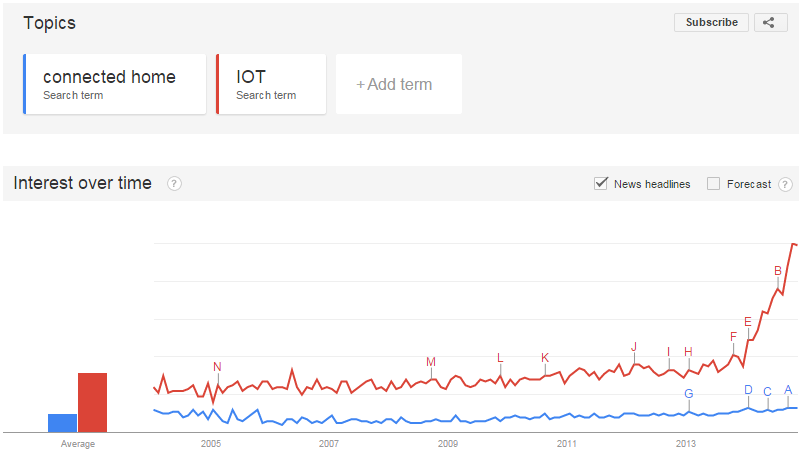
Since the 90’s, the idea of a connected smart home has excited millions. The idea of an electric light that will turn on when you step in the room and you can close with a clap is not new. But it is only in the last year that the idea of Internet of Things has really started to be feasible.

The good news is that electronics are back and so is software. After all it is through software that we interact with devices and makes them seem exciting and new. Over the last 15 years we have tried to create value in software by adopting various business models. From the Freemium model, giving limited functionality and then charge when features are added through the models that monetize through Google Ads and search up to the SaaS models where it is not the software you pay for but a service that comes with it…

In 2014, we saw Fitbit emerge as a leading wearable device, and a big part of this is software that makes it seem very personal to every one of us. It was the same with the GoPRo camera – transferring a simple camera into high end extreme sports filming equipment. In 2015 I expect many devices will evolve to become connected and take on new roles in our digital world. Software will be an important factor in deciding which devices are successful, it’s through software that devices become personal and relatable.


We will search less and discover more

Since the beginning of the internet, search has taken a cardinal place in our interaction with data. First Yahoo and then Google made sure our homepage is a search page.

Microsoft went on and translated this behavior into the application on the PC, and now we have a search box almost in everything and everywhere…

With Adwords technology Google cracked the way to monetize search behavior. The search term that the user enters translated to ads that the user wants at that moment.

Smartphones arrived and quickly become a main vector for search, both of the Internet and of ever growing app stores. Importantly they also heralded the arrival voice recognition technologies and of voice search. But as technology advances there is a quest to predict the search. To analyze requests and behavior so that the information we seek is already there waiting for us. We can see it in action with programs like Google Now that collects information about you from a range of sources and tries to predict what you need, whether it’s directions to work, your flight times that day or what the weather will be like.

But in less obvious move, many successful mobile apps have removed the search field and actually providing people with suggestions or things to discover as a way increasing engagement as well as servicing and increasing the value of apps and services.

There are many examples of this discovery mechanic in online news where services like Outbrain and Tabula offer more content to people who read news, and monetize through pay-per-click

Other examples of discovery replacing search are popular apps like Instagram, Flipboard and Facebook where people are encouraged to roam and discover news, pictures or friends.

Perhaps the best example of this is Tinder where rather than searching for match, the app makes constant suggestions that the user accepts or rejects


I think in 2015 we will see this trend getting stronger and more apps and services will increase the promotion of content to their customers as a way to keep them interested in using the application or service.


The five top WhatsApp stories of 2014

whatsapp-news

WhatsApp is undoubtedly one of the most popular apps, with few users yet to install it on their smartphones. It is now one of the most widely used types of communications worldwide.

This has inevitably led to a continuous stream of news stories in 2014 about WhatsApp, and in particular, about scams that exploit the app or the new features introduced to the app.

The five top WhatsApps stories of 2014

1. Facebook buys WhatsApp

Breaking News: Facebook buys WhatsApp. US $19,000 was the incredible amount that changed hands.

However, when the news broke, users’ main concern was how this would affect them. Would user privacy be compromised?

In the end these were just rumors, as so far nothing much has changed.

2. Reading contacts’ chats

The ability to read the chats of your WhatsApp contacts. This was the tempting offer made by a group of cyber-criminals to entice users into their trap.

In this case, it was supposedly an application that would allow you to read your contacts’ messages. In reality however, when you installed it on your device, you would be subscribed to a premium-rate SMS service.

3. WhatsApp reaches 600 million users

In August this year, WhatsApp reached 600 million active users around the world.

This was announced by the CEO and co-founder of the app who was keen to underline that these were active users (those that had used WhatsApp at least once in the previous month), and not just registered users.

This most popular messaging app is also, however, the most popular target for cyber-criminals.

4. WhatsApp Gold, special scam version

One example of the above are the scams that end up subscribing users to premium-rate SMS services. In this case, what they were offering was the ‘Oro’ (Gold) version of WhatsApp with a special design and emoticons.

This app was promoted by cyber-criminals on Twitter. Once again, this was just another lie to scam users, as we reported back in October.

5. Blue Double Check

And the year has ended more or less as it started. With news that was as much welcomed as it was feared. Confirmation that your message has been read now comes in the form of blue check marks.

WhatsApp users were quick to react and the developers were forced to think again. They have now announced that future versions will include the option to remove this feature. No doubt this is good news for many users.

Who would argue that WhatsApp will continue to be an endless source of news in 2015? We’ll be waiting!

The post The five top WhatsApp stories of 2014 appeared first on MediaCenter Panda Security.

Facebook’s new privacy policies and your data security

Facebook privacy policy for 2015

Facebook doesn’t want you to be in the dark about their new privacy policies.

2015 is arriving and, as usual, tech companies start to launch their updates for the new year. However, it looks like someone is sparking some debate with its recent policies that are to be implemented in less than a month. That someone is… Facebook.

After all the controversy around the Facebook Messenger app last summer, the world’s largest social media company is under fire, again!

Recently, Facebook published their new terms, data policies, and cookies policies that the network will launch January 1st. Basically, the update says that every user of Facebook’s services agree, among other changes, with the utilization of tools that can help to aggregate data in order to create more customized ads – the company also introduces ways to guarantee basic data security.

I’ve noticed that the way I’ve received the ads in my profile is quite different to what it used to be. After simply browsing through a website related to a specific theme, let’s say, football or software, I immediately start to receive wall post offers related to that topic, company, or product that I researched online. Imagine how it’s going to be in 2015 after the new policy has been officially launched?

Is Facebook spying on you?

Would the world’s largest social media website be spying on us? They have admitted publicly that it’s quite easy to monitor online activities, and they do hold a lot of data on their members, which makes people feel a bit uncomfortable. Just search for articles about it, and you’ll see.

Facebook’s goal with this new privacy policy is to help users “understand how Facebook works and how to control your information.” This introduces an element of decision-making on the user’s behalf.

Some of the updates you can expect to see are:

Discover what’s going on around you: Facebook is working on ways to show you the most relevant information based on where you are and what your friends are up to.

Make purchases more convenient: People in some regions will see a Buy button, making purchasing easy because you don’t have to leave Facebook. And you get targeted ads based on what you are interested in, like me seeing an increased number of football and software ads.

Make you part of the Facebook ecosystem: You will be even more invested in the “Facebook family” because they are making Instagram, WhatsApp, and the growing number of companies, apps and services that Facebook is acquiring work together more seamlessly.

Your data is still under your control

You should be concerned about the contents and data that you publish on Facebook, because sometimes they make you look like an idiot, but don’t go off the deep end thinking that your social network will steal your privacy! You are still under control of your data!

To help you maintain control, Facebook wants you to understand how they use your information and find information about privacy on Facebook at the moment you need it. Tips and suggestions can be found in Privacy Basics.

It’s also necessary for you to take some precautions, such as:

  • Use strong passwords to access your profiles and accounts
  • Don’t share sensitive information in social media channels
  • Take double precaution with fake websites
  • Only proceed with online payments when logged to https pages

And, obviously, use a good antivirus that will help you with all the above procedures! No matter what tools online companies and social media websites are using to better understand your behavior in the “Internet of Things”, you are still under control of your data. Do your part and live a health virtual life!


BlackBerry Messenger. The app that lets you chat only to those you want to.

BBM-iphone

A few years back, when we discovered that our parents’ business phones could be used for more than just sending emails, something changed. BlackBerry Messenger made everyone want to switch to this new device which let you chat with friends for free.

I have to admit that practically all my friends started out with a BlackBerry and for months we did nothing but send messages back and forth via the application. I remember worrying about whether the message that had been delivered (the famous ‘D’) had been read, or when I didn’t get a reply after a message that had been read (‘R’).

Over time, it became apparent that other apps, such as WhatsApp and Viber offered just as much and more. That’s why we left BB chat behind in favor other messaging apps.

Previously BBM could only be installed on BlackBerry devices, while competitors had versions for all operating systems. But now you no longer need to feel nostalgic about the dancing, hugging icons, because you can now download BBMessenger for Android,  iOS  or Windows Phone, free.

Though it seems incredible, I still speak with a friend who only has BBM, and what’s more, he has no interest in WhatsApp or other such apps.

BBM-chat

The great advantage that it offers, according to my friend, is that you can speak only to whom you want to. BBM continues to work by invitation. This means that to add someone to your contacts they have to give you their app PIN. So in the end you have a list of contacts that you have ‘chosen’. Other than that, the way it works is pretty much the same as before.

New features in BlackBerry Messenger

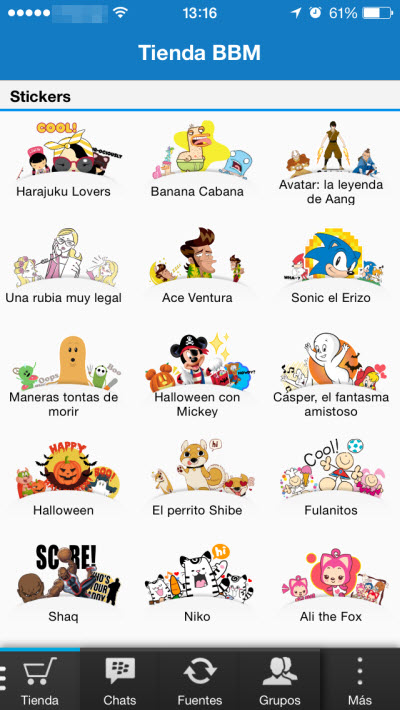
Perhaps one of the more interesting new features is the BBM store. It’s a sticker store, a bit like Line where you can buy different images to add to your chats.

BBM-stickers

Another thing you will come across with the new BBM are the chats on the BBM Channels, which could be between people, brands or communities. For example, you could create a new channel to talk about a given topic or sign up to an existing BBM Channel.

What do you think? Do you miss your BBM chats? Vintage is now the latest thing, and they don’t come more vintage then BBM…


The post BlackBerry Messenger. The app that lets you chat only to those you want to. appeared first on MediaCenter Panda Security.

How to strengthen the security of your Twitter account

twitter-security

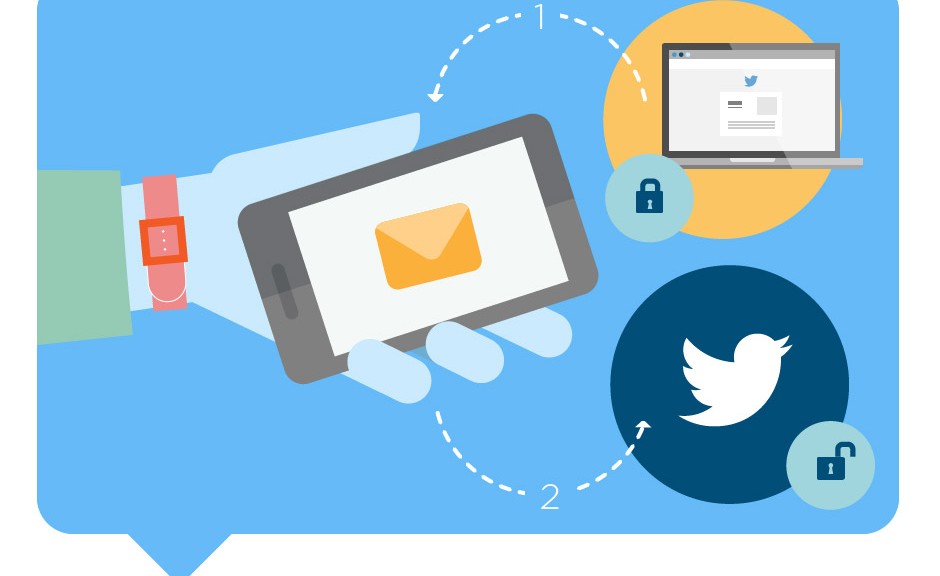
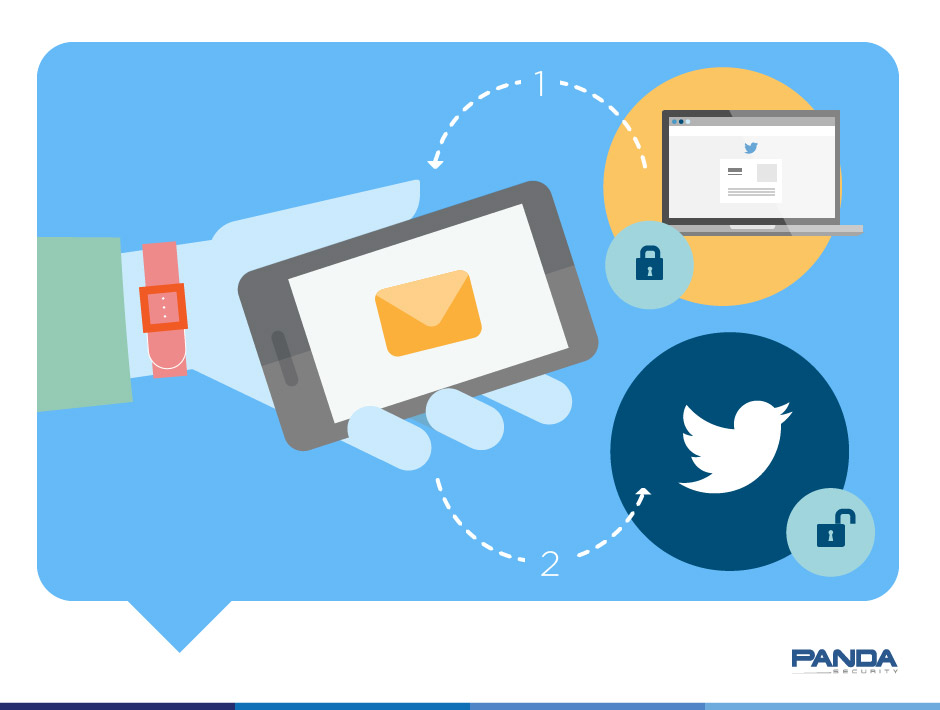
Like Facebook and Gmail, Twitter also lets you strengthen the security of your account through the session login procedure.

This way, you can prevent unauthorized access to your account as in order to enter, you will need a code that Twitter sends to the phone number you provide.

Here we tell you step-by-step how to activate this feature.

How to strengthen access verification in Twitter

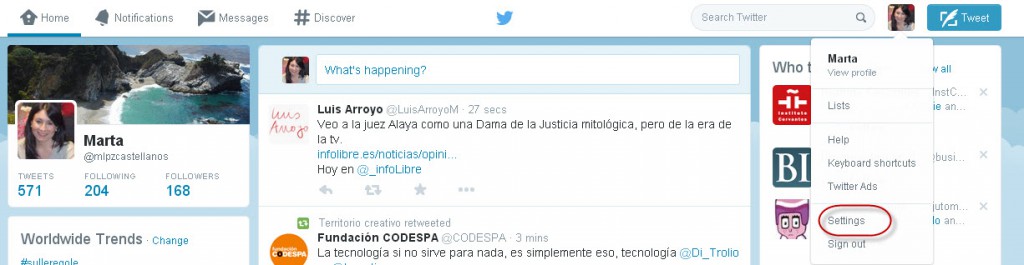
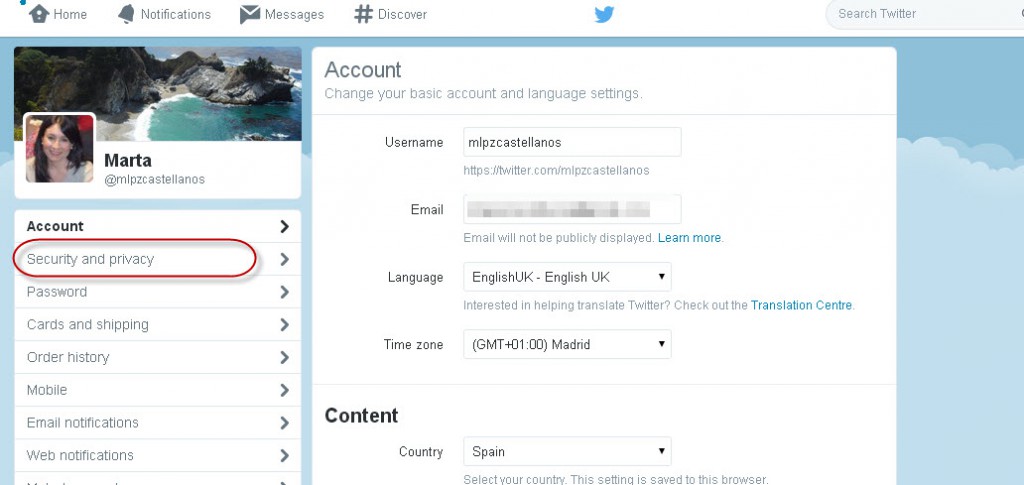
The first thing you have to do is go to your Twitter account. Go to “Settings” and from there, go to “Security and Privacy”.

twitter-settings

twitter-security-privacy

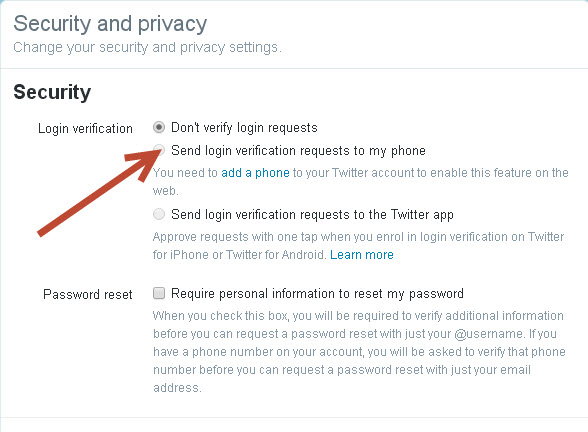
There, select “Send login verification requests to my phone”.

twitter-send-login

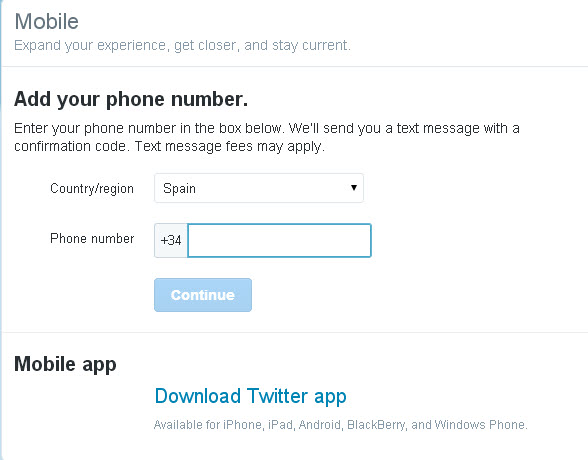
Then add the telephone number that you want the code to be sent to. The logical thing is to include the number of the phone that you usually carry around with you.

twitter-mobile

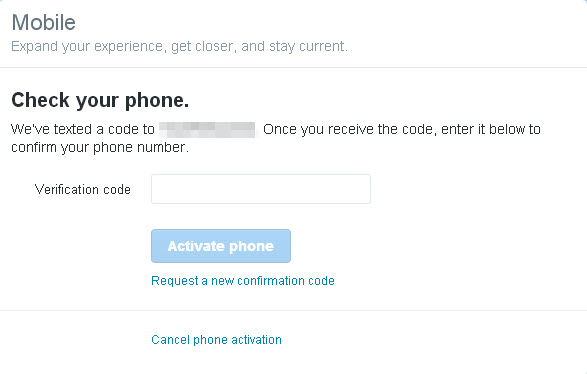
Twitter will immediately send you an SMS with a code that you’ll have to enter here.

twitter-code

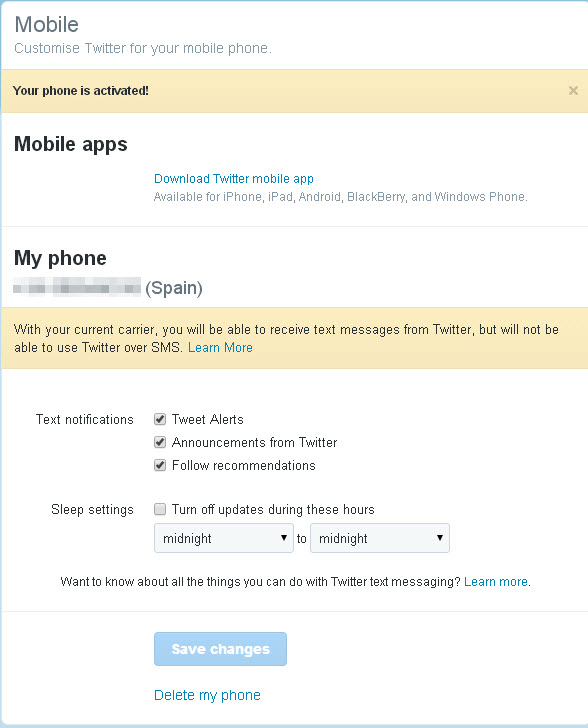
And once you have done that, you’re finished!

twitter-phone-activated

So as you can see, it’s easy to boost security in Twitter. So will you do it?

The post How to strengthen the security of your Twitter account appeared first on MediaCenter Panda Security.